

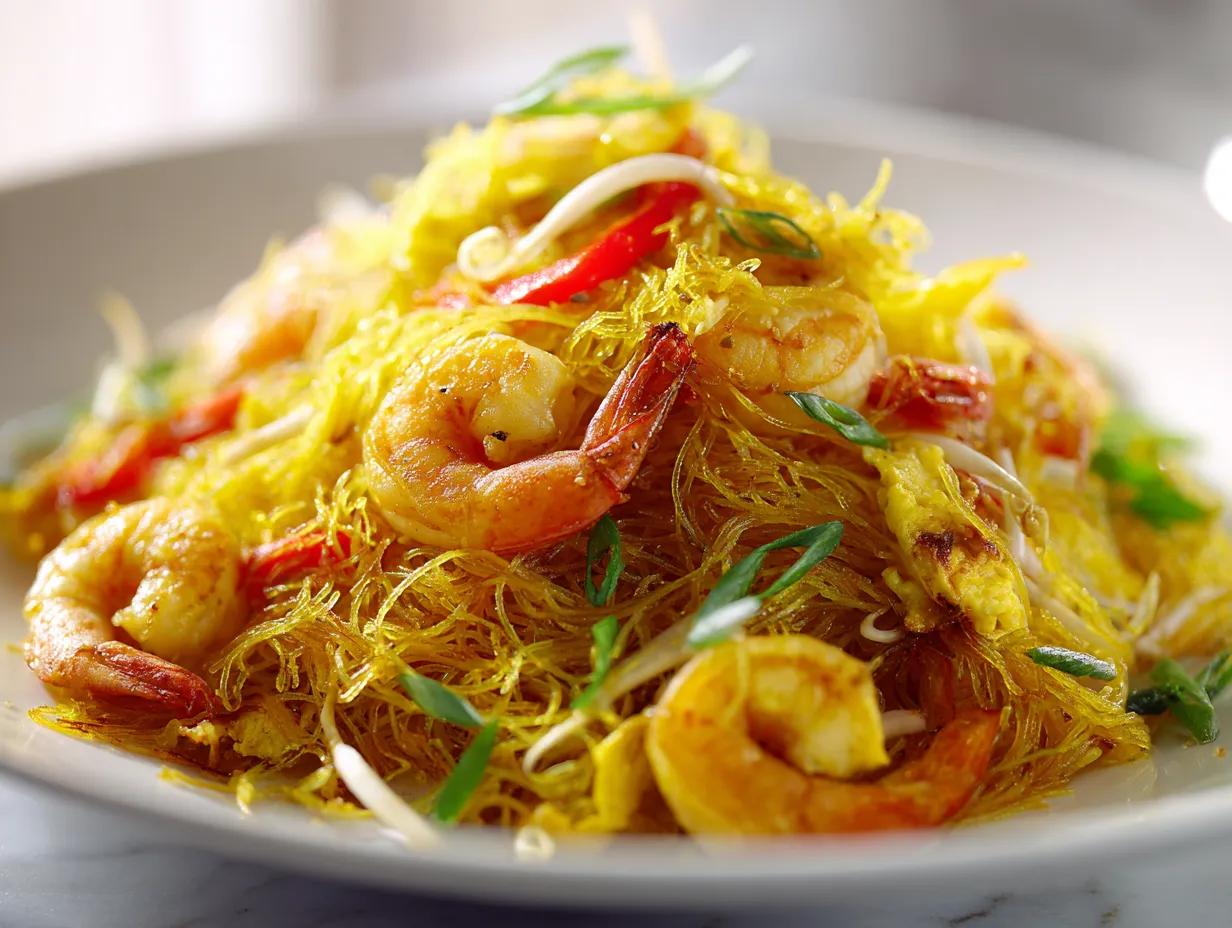
Singaporean Noodle Curry Shrimp is a vibrant, aromatic noodle dish featuring tender shrimp, delicate rice noodles, colorful vegetables, and a fragrant curry-seasoned sauce. Every bite combines savory, spicy, slightly sweet, and citrusy flavors for a restaurant-style meal that can be prepared easily at home.The dish brings together the familiar flavors of Singapore-style curry noodles with juicy shrimp, bell peppers, carrots, onions, and cabbage.
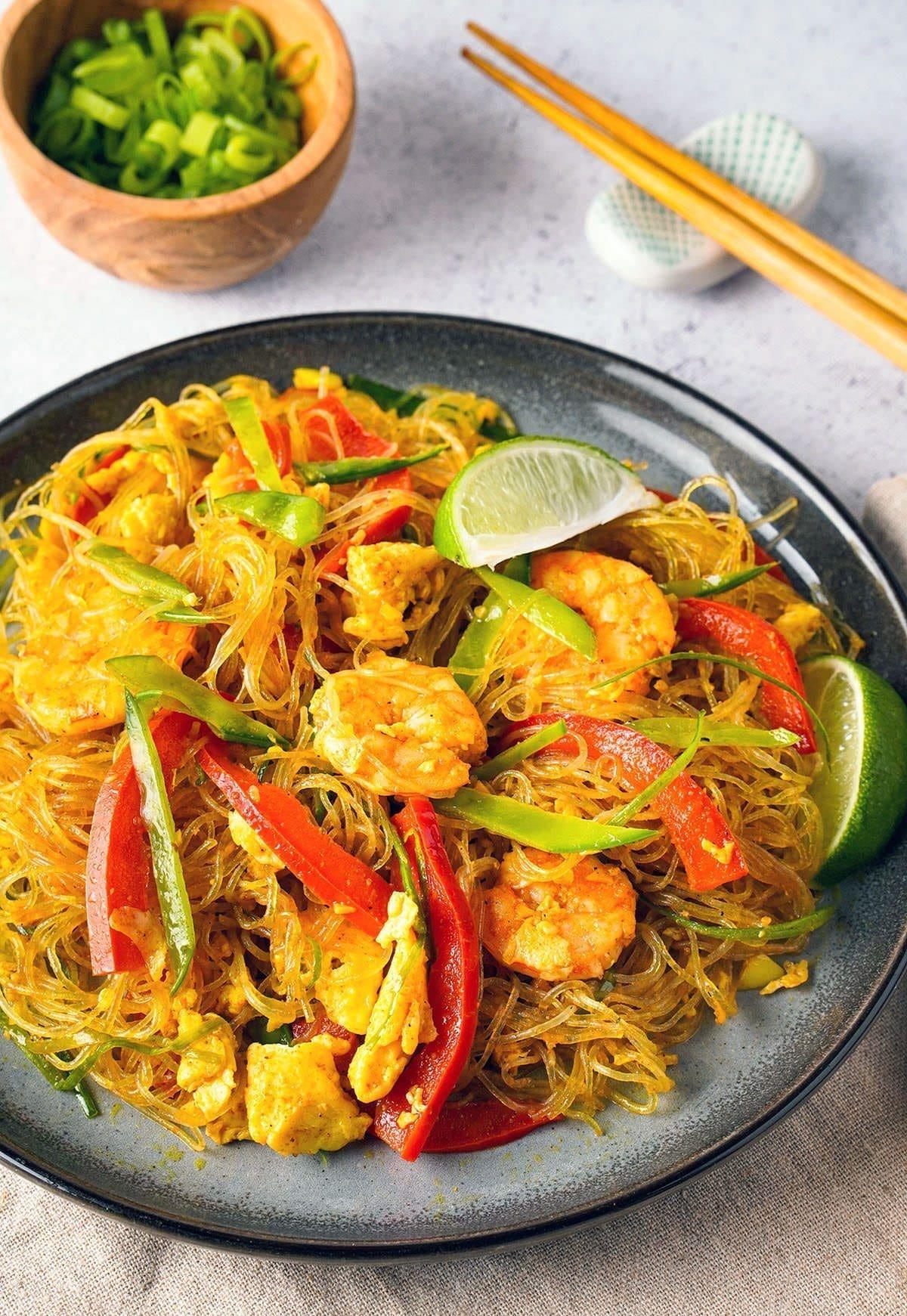
Singaporean Noodle Curry Shrimp:
A blend of curry powder, garlic, ginger, soy sauce, and sesame oil creates a deeply aromatic sauce that coats the noodles beautifully without making them overly heavy.Perfect for a quick weeknight dinner, this recipe comes together in about 30 minutes and is easy to customize. Add extra vegetables for a lighter meal, increase the chili for more heat, or substitute chicken or tofu for the shrimp. Serve it hot with fresh cilantro, lime wedges, and sliced green onions for a delicious finishing touch.
History:
Singaporean cuisine reflects the island nation’s diverse culinary heritage, influenced by Chinese, Malay, Indian, Peranakan, and other food traditions. Noodle dishes are particularly important in Singapore, with countless variations featuring seafood, meat, vegetables, sauces, and spices.
Singapore-style curry noodles are known for their distinctive yellow curry flavor, often paired with rice noodles and a combination of vegetables and protein. Curry powder provides the dish with its characteristic color and fragrance, while ingredients such as soy sauce, garlic, ginger, and chili contribute layers of savory and spicy flavor.
Subscribe to our youtube channel Kitchenpedia for more delicious recipes and hit the like button if you enjoyed this youtubevideo. Share it with your friends and Family.
Singaporean Noodle Curry Shrimp

Ingredients
For the Noodles and Shrimp
- 12 ounces thin rice noodles
- 1 pound large shrimp, peeled and deveined
- 1 tablespoon vegetable oil
- 1 tablespoon sesame oil
- 1 small yellow onion, thinly sliced
- 1 red bell pepper, thinly sliced
- 1 medium carrot, julienned
- 2 cloves garlic, minced
- 1 tablespoon fresh ginger, grated
- 3 green onions, sliced
For the Curry Sauce
- 2 tablespoons curry powder
- ¼ cup low-sodium soy sauce
- 1 tablespoon oyster sauce
- 1 tablespoon rice vinegar
- ½ teaspoon chili flakes, optional
- 1 teaspoon toasted sesame oil
For Garnishing
- Fresh cilantro
- Sliced green onions
- Lime wedges
- Toasted sesame seeds
Instructions
- Cook the rice noodles according to the package directions.
- Avoid overcooking them because they will continue cooking when tossed with the hot sauce.
- Pat the shrimp dry with paper towels.
- Season lightly with a pinch of salt and black pepper.
- In a small bowl, whisk together the curry powder, soy sauce, oyster sauce, rice vinegar, honey, chili flakes, broth, and sesame oil.
- Heat vegetable oil in a large wok or skillet over medium-high heat.
- Add the shrimp and cook for approximately 1–2 minutes per side, until pink, opaque, and cooked through.
- Add sesame oil to the same wok.Stir-fry for approximately 2–3 minutes.
- Stir-fry for approximately 30–60 seconds until fragrant.
- Pour the prepared curry sauce into the wok.
- Stir everything together and cook for approximately 1–2 minutes, allowing the curry powder and other flavors to blend.
- Using tongs, gently toss the noodles with the vegetables and sauce until evenly coated.
- Toss gently until the shrimp are warmed through and evenly distributed.
- Add sliced green onions and fresh cilantro.
- Serve immediately with lime wedges and optional fresh chili slices.
Notes
- Don't overcook rice noodles because they can quickly become soft and sticky.
- Pat shrimp dry before cooking for better browning.
- Use medium-high heat to stir-fry the vegetables quickly.
- Keep the vegetables slightly crisp for better texture.
- Adjust curry powder according to its strength and your preference.
- Low-sodium soy sauce gives you better control over the saltiness.
- Add lime juice just before serving for maximum freshness.
- Serve immediately because rice noodles are best when freshly tossed.
Tips for Singaporean Noodle Curry Shrimp:
- Use a large wok: Extra space makes it easier to toss the noodles without breaking them.
- Prepare everything first: Stir-frying moves quickly, so have your ingredients ready before cooking.
- Don’t overcrowd the shrimp: Cook them in a single layer for even cooking.
- Avoid overcooking shrimp: Remove them from the wok as soon as they become opaque.
- Bloom the curry: Briefly cooking curry powder with the aromatics helps release its fragrance.
- Keep noodles slightly firm: They will absorb some sauce while cooking in the wok.
- Balance the flavors: Add more lime for acidity, honey for sweetness, or chili for heat.
- Finish with fresh herbs: Cilantro, green onions, and lime provide a fresh contrast to the aromatic curry.
FAQs for Singaporean Noodle Curry Shrimp:
Q: What type of noodles should I use?
Thin rice vermicelli or Singapore-style rice noodles work particularly well. Thin wheat noodles can also be used if preferred.
Q: Is Singaporean noodle curry spicy?
It can be. Curry powder provides warmth, while chili flakes or fresh chilies add additional heat. Adjust the chili according to your preference.
Q: Can I use frozen shrimp?
Yes. Thaw frozen shrimp completely and pat them dry before cooking.
Q: Can I use cooked shrimp?
Yes, but add them near the end of cooking just long enough to warm them through. This prevents them from becoming rubbery.
Q: Can I substitute chicken for shrimp?
Absolutely. Thinly sliced chicken breast or boneless chicken thighs work well.
Q: Can I make this vegetarian?
Yes. Replace the shrimp with tofu, mushrooms, edamame, or additional vegetables. Use a vegetarian oyster sauce alternative if needed.
Q: Can I add coconut milk?
Yes. For a creamier curry noodle dish, add about ½ cup coconut milk to the sauce. You may need to adjust the soy sauce and curry powder.
Q: What vegetables can I add?
Broccoli, snow peas, bean sprouts, mushrooms, spinach, bok choy, or baby corn are excellent choices.
Q: How long do leftovers last?
Store leftovers in an airtight container in the refrigerator for 3 days.
Q: Can I freeze the noodles?
Freezing is not recommended for the best texture because rice noodles can become soft after thawing. The shrimp and sauce can be prepared separately and frozen if desired.
Conclusion:
Singaporean Noodle Curry Shrimp is a quick and flavorful meal that brings together tender shrimp, fragrant curry, delicate rice noodles, and colorful vegetables in one irresistible dish. The combination of garlic, ginger, curry powder, soy sauce, sesame oil, and lime creates layers of flavor without requiring complicated cooking techniques.
Ready in about 30 minutes, this recipe is ideal for busy weeknights when you want something more exciting than an ordinary noodle dinner. It can also be easily customized with chicken, tofu, additional vegetables, or coconut milk. Serve it straight from the wok with plenty of fresh herbs and lime for a colorful and satisfying meal.