

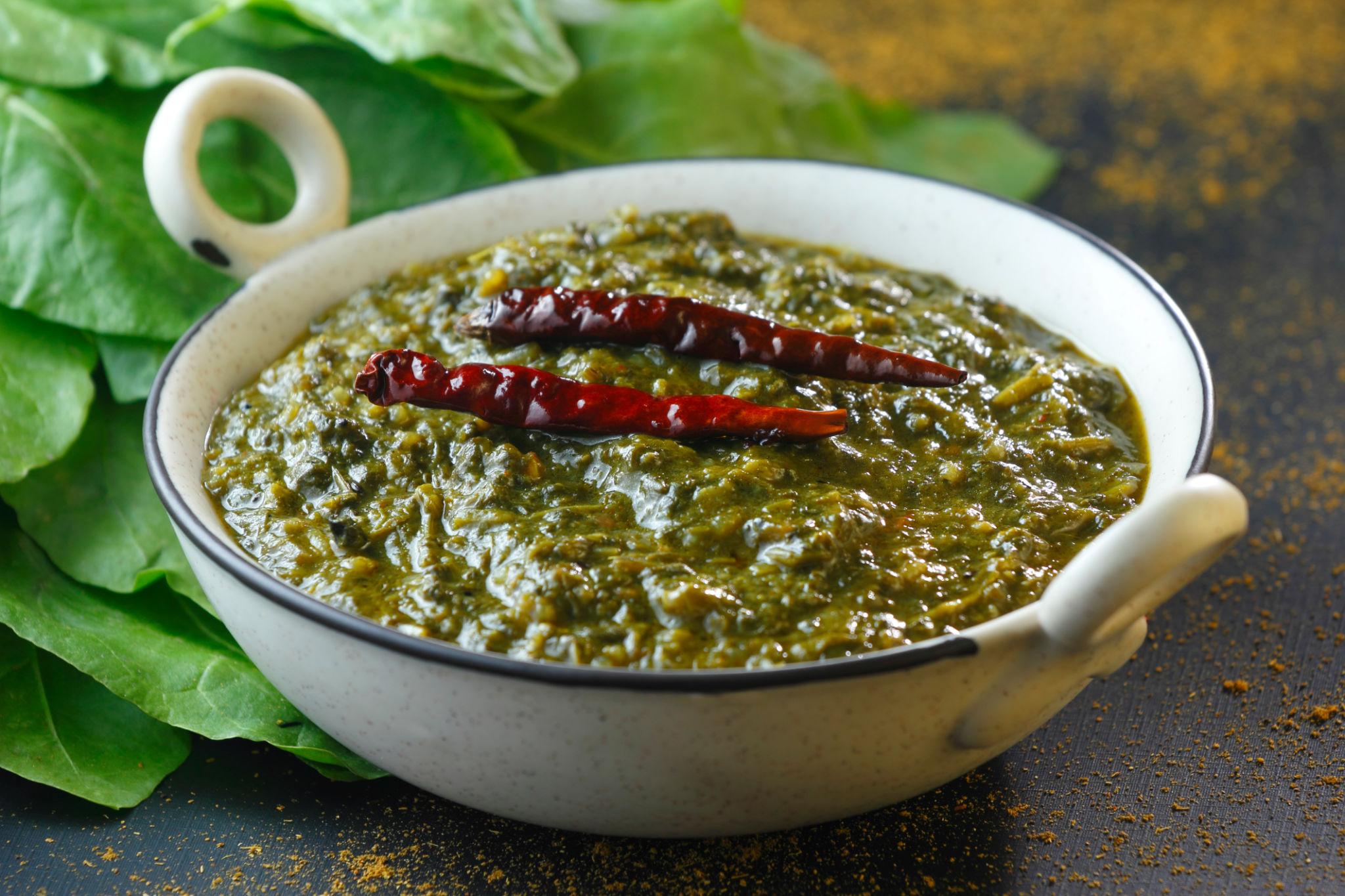
Indian Saag is a comforting and nutritious leafy-green curry that showcases one of the most beloved traditions of North Indian cooking. Depending on the region and recipe, saag can be prepared with mustard greens, spinach, fenugreek leaves, bathua, or a combination of seasonal greens. The greens are slowly cooked with aromatic spices, ginger, garlic, and chilies until tender and flavorful.
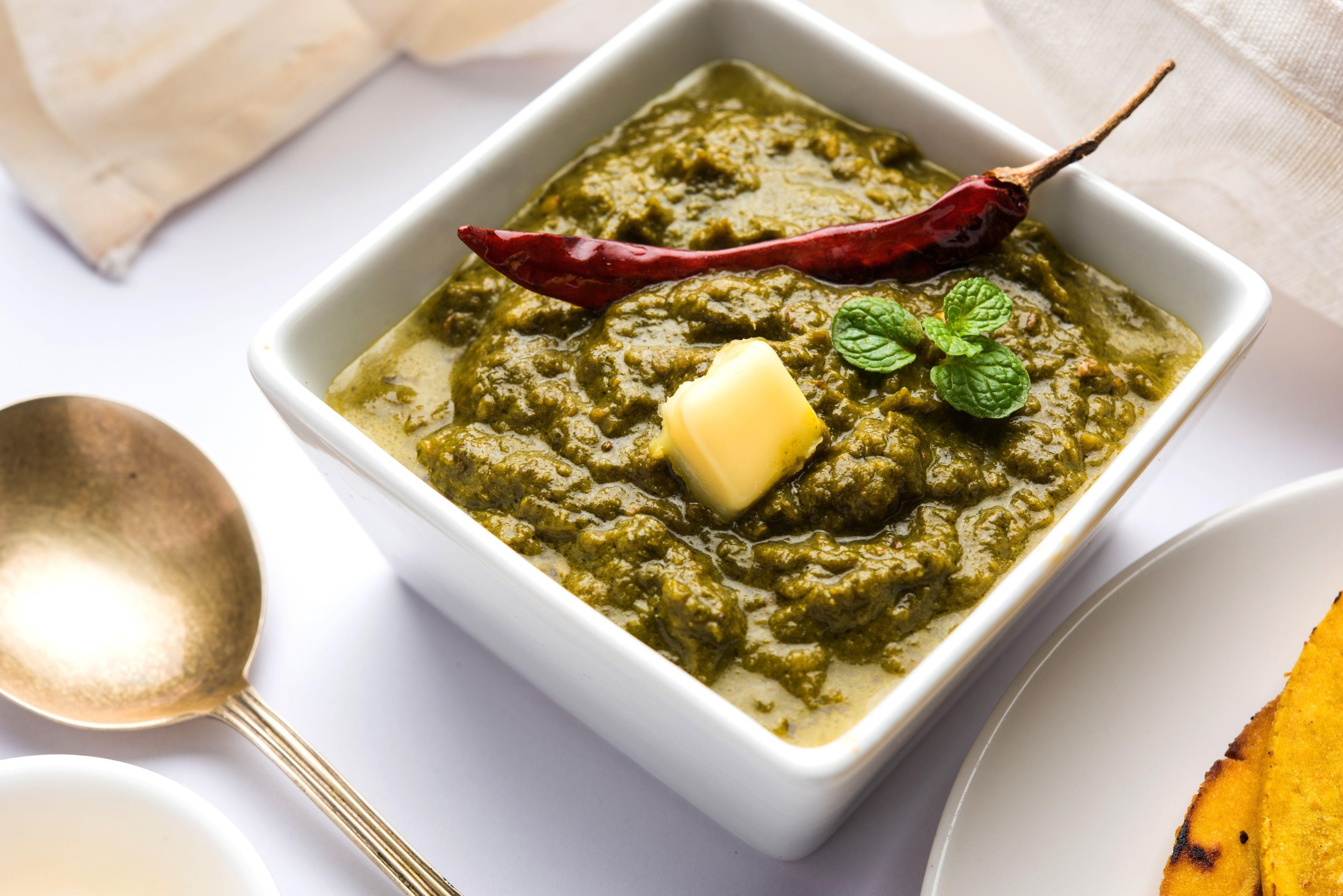
Indian Saag:
One of the most famous versions is Sarson ka Saag, a Punjabi preparation made primarily with mustard greens. Its earthy, slightly bitter flavor is balanced by spinach, bathua, butter, ghee, or cream, creating a rich and rustic dish that pairs beautifully with warm makki di roti.This homemade Indian Saag recipe is simple, hearty, and deeply satisfying. It makes an excellent vegetarian main course and can be served with roti, naan, makki di roti, basmati rice, or a spoonful of yogurt.
History:
Saag has deep roots in the agricultural and culinary traditions of the Indian subcontinent. Leafy greens have long been used in regional Indian cooking because they are seasonal, widely available, and adaptable to different cooking methods.In Punjab, Sarson ka Saag became particularly associated with winter cooking, when mustard greens are traditionally abundant. Families often combine mustard greens with spinach and other leafy vegetables to create a balanced flavor and creamy texture.Over time, saag preparations spread far beyond Punjab, with different regions using their own combinations of greens, spices, and finishing ingredients. Today, saag remains an important part of North Indian home cooking and restaurant menus.
Subscribe to our youtube channel Kitchenpedia for more delicious recipes and hit the like button if you enjoyed this youtubevideo. Share it with your friends and Family.
Indian Saag

Ingredients
For the Saag
- 500 g mustard greens
- 250 g fresh spinach
- 150 g bathua or additional spinach, optional
- 1 green chili
- 1-inch fresh ginger
- 1½ cups water
- ½ teaspoon salt
For the Masala
- 2 tablespoons mustard oil or vegetable oil
- 1 medium onion, finely chopped
- 1 tablespoon ginger-garlic paste
- 2 medium tomatoes, finely chopped
- 1–2 green chilies, finely chopped
- ½ teaspoon turmeric powder
- ½ teaspoon cumin powder
- ½ teaspoon Kashmiri chili powder
- ½ teaspoon garam masala
- ½ teaspoon red chili powder, optional
For Thickening
- 1–2 tablespoons maize flour (makki ka atta), optional
- ¼ cup warm water
For Garnishing
- 1 tablespoon butter or ghee
- 1 tablespoon fresh cream, optional
- Chopped cilantro
Instructions
- Separate the leaves from thick stems where necessary.
- Leafy greens can contain considerable soil, so rinse them several times until the water is clean.
- Roughly chop the mustard greens and spinach.
- Add green chili, ginger, garlic, water, and salt.
- Cover and cook over medium-low heat for approximately 20–25 minutes, stirring occasionally.
- Use an immersion blender to blend them into a thick, rustic puree.
- Avoid making the puree completely watery. Saag should have a thick, spoonable consistency.
- Stir the mixture into the blended greens.
- Allow the mustard oil to heat properly, then reduce the heat slightly.
- Add cumin seeds and let them sizzle.
- Cook for 1–2 minutes until fragrant.
- Add chopped tomatoes.
- Add turmeric, coriander powder, cumin powder, Kashmiri chili powder, garam masala, and salt.
- Stir occasionally to prevent the saag from sticking to the bottom.
- Stir gently and simmer for another 2 minutes.
- Transfer the saag to a serving bowl.
- Serve hot with makki di roti, roti, naan, paratha, or basmati rice.
Notes
- Wash leafy greens thoroughly to remove soil and grit.
- Mustard greens provide the characteristic earthy flavor of traditional Punjabi saag.
- Spinach balances the stronger flavor of mustard greens.
- Bathua can be replaced with additional spinach if unavailable.
- Saag should remain thick rather than watery.
- Makki ka atta is optional but adds traditional body.
- Mustard oil gives the dish a distinctive North Indian aroma.
- Saag often tastes even better after resting for a short time.
Tips for Indian Saag:
- Use a mixture of greens for more complex flavor and texture.
- Remove tough stems from mustard greens when necessary.
- Wash the greens several times to eliminate hidden dirt.
- Cook slowly until the greens are completely tender.
- Don’t add excessive water because the greens release moisture as they cook.
- Cook the onion-tomato masala thoroughly before combining it with the greens.
- Simmer the finished saag gently so the flavors develop.
- Finish with butter or ghee just before serving for authentic richness.
FAQs for Indian Saag:
Q: What is Indian Saag?
Saag is a broad term for dishes made with leafy greens. Depending on the region, it may contain mustard greens, spinach, bathua, fenugreek leaves, or other edible greens.
Q: Is Saag the same as Sarson Ka Saag?
Not exactly. Saag is a general term for leafy-green preparations, while Sarson ka Saag specifically refers to a preparation centered around mustard greens.
Q: Can I make saag with only spinach?
Yes. Spinach-only saag is delicious and cooks more quickly, although it will have a milder flavor than traditional mustard-green saag.
Q: What is bathua?
Bathua, also known as lamb’s quarters, is a leafy green commonly used in North Indian cooking. It adds a distinctive earthy flavor to saag.
Q: Why is my saag bitter?
Mustard greens naturally have a slightly bitter and peppery flavor. Adding spinach, bathua, butter, or ghee helps balance it. Cooking the greens thoroughly also mellows their flavor.
Q: Can I make saag without makki ka atta?
Yes. Makki ka atta is optional. You can simply cook the greens longer to achieve a thicker consistency.
Q: Can I freeze Indian Saag?
Yes. Allow the cooked saag to cool completely, portion it into airtight containers, and freeze. Thaw in the refrigerator and reheat gently.
Q: What is traditionally served with Saag?
The classic Punjabi pairing is sarson ka saag with makki di roti, often accompanied by butter, jaggery, onions, green chilies, and a refreshing yogurt-based side.
Conclusion:
Indian Saag is a beautiful example of how simple leafy greens can be transformed into a deeply flavorful and comforting dish. Mustard greens, spinach, ginger, garlic, chilies, tomatoes, and aromatic spices create a hearty curry that is earthy, savory, and satisfying.For the best flavor, use a combination of greens and cook them slowly until completely tender. A well-prepared onion-tomato tempering and a finishing spoonful of butter or ghee add richness and depth without overpowering the natural flavor of the greens.