

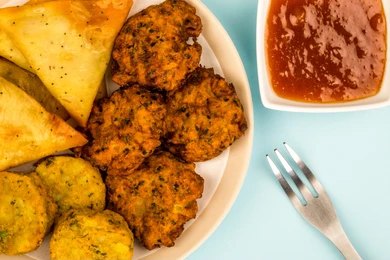
Authentic Indian Vegetarian Samosas are one of India’s most beloved savory snacks, featuring a crisp, flaky pastry shell filled with a delicious mixture of potatoes, green peas, aromatic spices, and fresh herbs. Each samosa is carefully shaped into a classic triangular parcel and fried until beautifully golden and crunchy.The secret to a truly flavorful samosa lies in the balance between the pastry and filling.
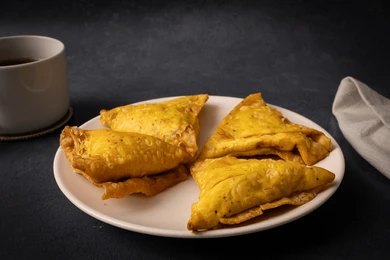
Indian Vegetarian Samosas:
The outer layer should be crisp and slightly flaky, while the potato and pea filling should be spicy, tangy, aromatic, and perfectly seasoned. Traditional spices such as cumin, coriander, garam masala, amchur, and green chili give the filling its characteristic Indian flavor.These homemade samosas are perfect for tea-time snacks, parties, festivals, family gatherings, or rainy-day treats. Serve them hot with mint-coriander chutney and sweet tamarind chutney for an irresistible combination of spicy, tangy, sweet, and crunchy flavors.
History:
Samosas have a long culinary history and are believed to have originated in regions of Central Asia and the Middle East before becoming deeply established in the Indian subcontinent. Over centuries, the dish evolved according to local ingredients and cooking traditions.
In India, samosas became especially popular and developed into numerous regional variations. The North Indian version, generally made with a crisp flour pastry and a spiced potato-and-pea filling, is among the most widely recognized.
Subscribe to our youtube channel Kitchenpedia for more delicious recipes and hit the like button if you enjoyed this youtubevideo. Share it with your friends and Family.
Authentic Indian Vegetarian Samosas

Ingredients
For the Dough
- 2 cups all-purpose flour
- 4 tablespoons vegetable oil or ghee
- ½ teaspoon carom seeds (ajwain)
- ½ teaspoon salt
- Approximately ½ cup water, as needed
For the Filling
- 4 medium potatoes, boiled and roughly mashed
- ½ cup green peas, cooked
- 1 tablespoon vegetable oil
- 1 teaspoon cumin seeds
- 1 teaspoon grated ginger
- 1–2 green chilies, finely chopped
- ½ teaspoon ground cumin
- ½ teaspoon garam masala
- ½ teaspoon fennel seeds, lightly crushed
- 2 tablespoons fresh coriander, chopped
For Frying
- Vegetable oil, as required
Instructions
Prepare the Samosa Dough
- Add flour, salt, and ajwain to a large bowl.Add the oil or ghee and rub it into the flour using your fingertips until the mixture resembles coarse crumbs.To test the dough, press a little mixture between your fingers. It should hold its shape.Gradually add water and knead into a firm dough. Avoid making the dough soft.Cover with a damp cloth and allow it to rest for 25–30 minutes.
Prepare the Potato Filling
- Heat oil in a pan over medium heat.Add cumin seeds and allow them to crackle. Add ginger and green chilies and sauté briefly.Add coriander powder, cumin powder, chili powder, turmeric, and crushed fennel seeds. Stir for a few seconds.Add the boiled potatoes and green peas. Mix gently.Add garam masala, amchur powder, salt, and fresh coriander.Cook for 2–3 minutes, stirring occasionally.Turn off the heat and allow the filling to cool completely.
Divide the Dough
- Divide the rested dough into approximately 12–14 equal portions.Roll each portion into a smooth ball.Keep the remaining dough covered so it does not dry out.
Roll the Dough
- Take one dough ball and roll it into an oval shape approximately 5–6 inches long.Cut the oval in half to create two semicircles.Take one semicircle and lightly moisten the straight edge with water.
Shape the Samosa
- Bring the two corners of the straight edge together to form a cone.Press the overlapping edges firmly to seal the cone.Fill it with approximately 1–1½ tablespoons of the potato mixture.Do not overfill.Moisten the remaining edge and press firmly to seal the samosa.Repeat with the remaining dough and filling.
Fry the Samosas
- Heat enough oil in a deep pan over medium-low heat.To check the oil temperature, drop a small piece of dough into the oil. It should rise slowly rather than immediately turning dark.Carefully add the samosas without overcrowding the pan.Fry slowly until they become crisp and golden brown.This may take approximately 10–12 minutes per batch.Remove the samosas and drain them on a paper towel or wire rack.
Serve
- Serve the samosas hot with:Mint-coriander chutneyTamarind-date chutneyTomato ketchupMasala chai
Notes
- Use a firm dough rather than a soft dough.
- The oil or ghee rubbed into the flour helps create a crisp, flaky crust.
- Allow the dough to rest before shaping.
- The filling should be completely cool before filling the samosas.
- Do not overfill the pastry.
- Seal the edges firmly to prevent the samosas from opening during frying.
- Fry over medium-low heat rather than very high heat.
- Drain the samosas on a wire rack for maximum crispness
Tips for Vegetarian Samosas:
- Don’t skip the dough resting time: It makes the dough easier to roll and shape.
- Use enough fat in the dough: Properly rubbed-in oil or ghee helps create a flaky texture.
- Keep the dough firm: Soft dough can produce oily or less-crispy samosas.
- Cool the filling: Hot filling can soften or damage the pastry.
- Don’t roll the pastry too thin: It may tear during filling.
- Don’t overcrowd the pan: Too many samosas can lower the oil temperature.
- Fry slowly: Gentle frying creates the characteristic crunchy exterior.
- Serve fresh: Samosas are at their best when hot and freshly fried.
FAQs for Vegetarian Samosas:
Q: What are traditional Indian samosas filled with?
The most popular North Indian vegetarian samosas are filled with potatoes, green peas, green chilies, and aromatic spices. Some versions also contain peanuts, raisins, or other vegetables.
Q: Why are my samosas not crispy?
The dough may have been too soft, the oil may have been too hot, or the samosas may have been fried too quickly. A firm dough and slow frying are important for crispness.
Q: Why did my samosa pastry develop bubbles?
Bubbles can occur when the dough is too soft, rolled unevenly, or fried at an unsuitable temperature. Kneading a firm dough and frying gently helps reduce this problem.
Q: Can I bake these samosas?
Yes. Brush the shaped samosas lightly with oil and bake at approximately 200°C / 400°F until crisp and golden, turning them once during cooking. The texture will be different from deep-fried samosas.
Q: Can I air-fry samosas?
Yes. Lightly brush them with oil and air-fry at approximately 180–190°C / 350–375°F until golden and crisp. Cooking times vary between air fryers.
Q: Can I prepare samosas ahead of time?
Yes. You can shape the samosas several hours ahead and refrigerate them covered until ready to fry.
Q: Can I freeze homemade samosas?
Yes. Freeze uncooked shaped samosas in a single layer first, then transfer them to an airtight freezer-safe container. Cook them from frozen, adjusting the cooking time as needed.
Q: What chutney goes best with samosas?
Mint-coriander chutney and sweet-tangy tamarind-date chutney are classic choices. Serving both together gives the best contrast of flavors.
Conclusion:
Authentic Indian Vegetarian Samosas are a classic snack that combines a beautifully crisp pastry with a fragrant, spicy, and satisfying potato-and-pea filling. Although making samosas from scratch takes a little time, the result is well worth the effort.The key to excellent samosas is a firm dough, flavorful but cool filling, careful shaping, and slow frying. Once you master these simple techniques, you can easily make restaurant-style samosas at home.Enjoy these golden treats with fresh mint chutney, sweet tamarind chutney, and a steaming cup of masala chai for a truly delicious Indian snack experience.