

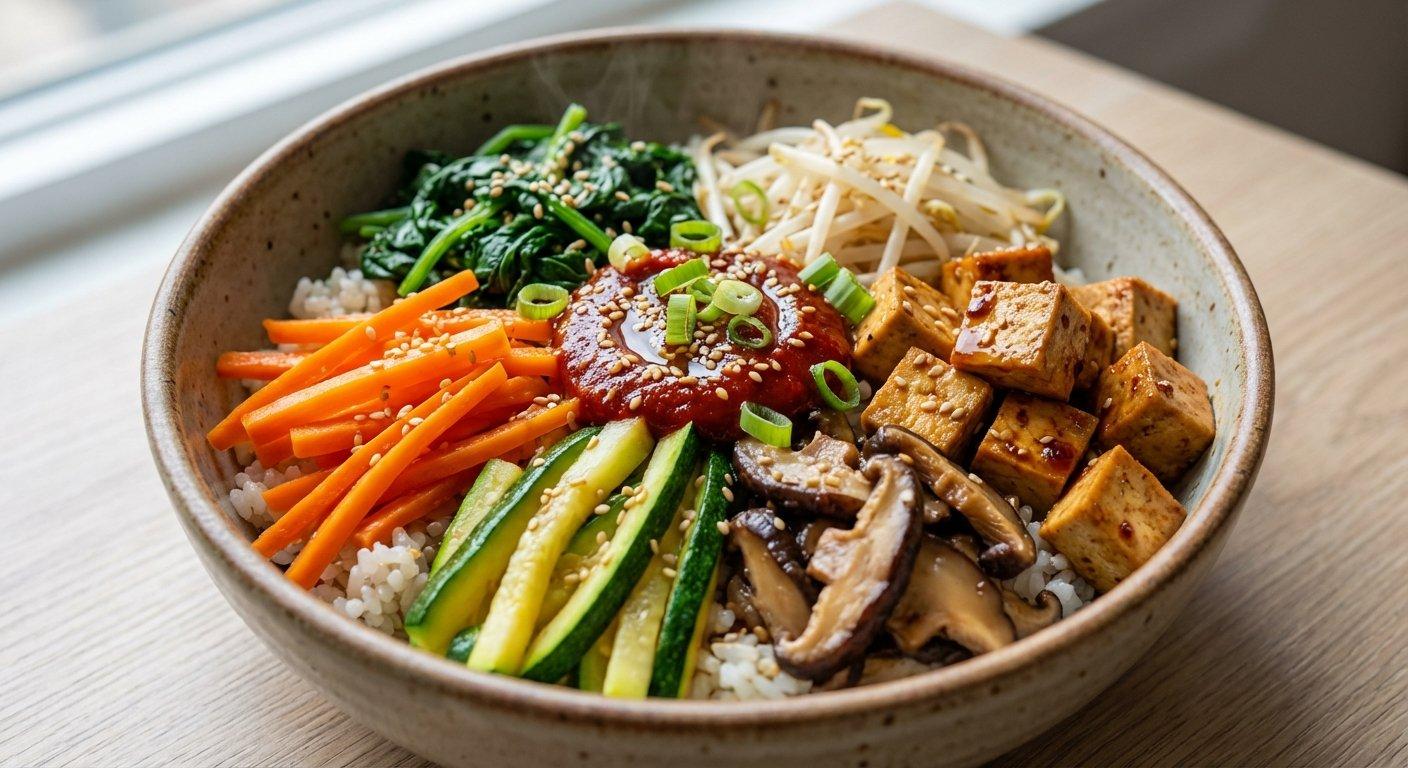
Vegetarian Bibimbap is a vibrant and delicious Korean rice bowl filled with colorful vegetables, warm rice, and a flavorful spicy sauce. The word bibimbap means “mixed rice,” perfectly describing the way the ingredients are combined together before eating. This beautiful dish offers an exciting variety of textures, colors, and flavors in every bite.Traditional bibimbap often contains meat, but this vegetarian version focuses on fresh vegetables, mushrooms, spinach, carrots, bean sprouts, and zucchini.
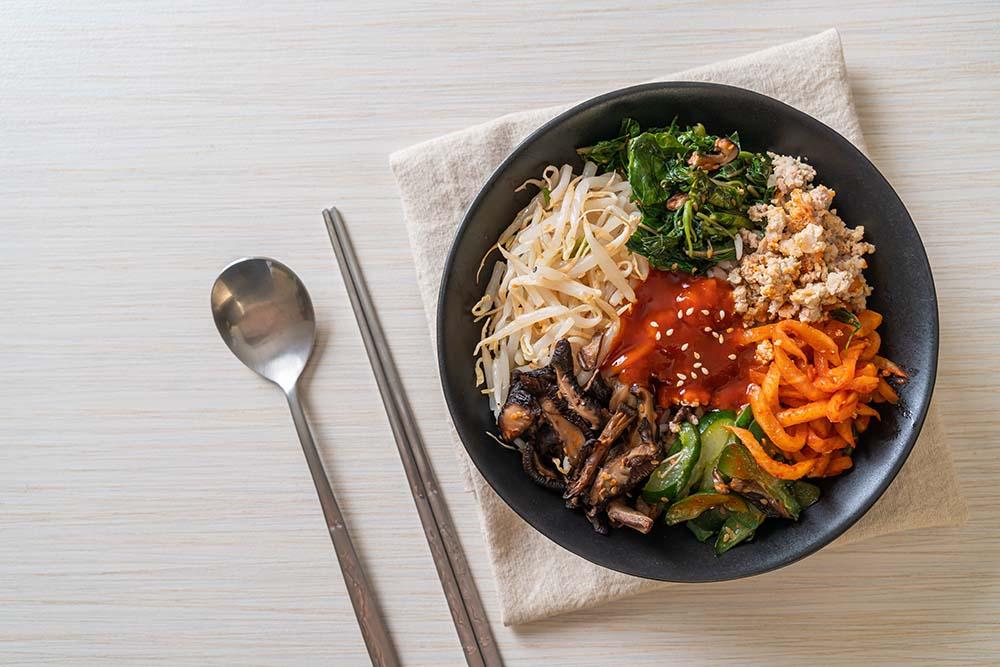
Vegetarian Bibimbap:
A perfectly cooked egg can also be added for extra richness and protein, while a spicy gochujang sauce brings all the ingredients together with its sweet, savory, and slightly spicy flavor.Perfect for lunch or dinner, Vegetarian Bibimbap is highly customizable and easy to prepare at home. It is a wonderful way to enjoy a nutritious and satisfying Korean-inspired meal using simple, fresh ingredients.
History of Bibimbap:
Bibimbap has a long history in Korean cuisine and is one of Korea’s most recognizable and beloved dishes. Traditionally, it consists of rice topped with an assortment of vegetables, meat, and seasonings.Over time, numerous variations of bibimbap developed, including vegetarian versions that highlight Korea’s wide variety of fresh and seasoned vegetables. Today, Vegetarian Bibimbap is enjoyed by people around the world because it is colorful, nutritious, versatile, and easy to customize.
Subscribe to our youtube channel Kitchenpedia for more delicious recipes and hit the like button if you enjoyed this youtubevideo. Share it with your friends and Family.
Vegetarian Bibimbap

Ingredients
For the Rice
- 3 cups cooked short-grain rice
- 1 teaspoon sesame oil
For the Vegetables
- 1 cup spinach
- 1 cup bean sprouts
- 1 medium carrot, julienned
- 1 small zucchini, thinly sliced
- 1 cup mushrooms, sliced
- 1 small cucumber, julienned
- 2 cloves garlic, minced
- 2 tablespoons sesame oil
- Salt, to taste
For the Gochujang Sauce
- 4 tablespoons gochujang
- 1 tablespoon sesame oil
- 1 tablespoon honey or sugar
- 1 tablespoon water
- 1 teaspoon sesame seeds
Instructions
Prepare the Rice
- Cook the short-grain rice according to the package instructions. Once cooked, fluff it gently and mix with a small amount of sesame oil.
Prepare the Spinach
- Blanch the spinach in boiling water for approximately one minute. Drain, squeeze out excess water, and season with a little garlic, sesame oil, and salt.
Prepare the Bean Sprouts
- Blanch or lightly steam the bean sprouts until tender but still slightly crisp. Season lightly with salt and sesame oil.
Cook the Remaining Vegetables
- Sauté the carrots, zucchini, and mushrooms separately in a small amount of sesame oil. Lightly season each vegetable with salt.
Prepare the Gochujang Sauce
- Combine the gochujang, sesame oil, honey or sugar, water, and sesame seeds in a small bowl. Mix until smooth.
Assemble the Bibimbap
- Divide the warm rice among four serving bowls. Arrange the prepared vegetables in separate sections on top of the rice.
Add the Toppings
- Place a fried egg in the center of each bowl if desired. Add cucumber, spring onions, sesame seeds, and roasted seaweed strips.
Serve and Mix
- Add the gochujang sauce according to your preferred spice level. Mix all the ingredients together thoroughly before eating.
Notes
- Use short-grain rice for the most authentic texture.
- Cook each vegetable separately to maintain its individual flavor.
- Arrange the ingredients in separate sections for a traditional presentation.
- Adjust the amount of gochujang according to your preferred spice level.
- Use fresh vegetables for the best flavor and color.
- Sesame oil adds a delicious nutty Korean-style flavor.
- Mix the bowl thoroughly before eating.
- Add a fried egg for a richer and more filling meal.
Tips for Vegetarian Bibimbap:
- Prepare all vegetables before beginning the cooking process.
- Avoid overcooking the vegetables to maintain their texture.
- Use a colorful variety of vegetables for an attractive presentation.
- Keep the rice warm when assembling the bowls.
- Add the sauce gradually and adjust it to your taste.
- Use a heavy bowl or stone bowl for a traditional experience.
- Add tofu or tempeh for extra vegetarian protein.
- Garnish with sesame seeds for additional texture and flavor.
FAQs for Vegetarian Bibimbap:
1. What is Bibimbap?
Vegetarian Bibimbap is a Korean mixed rice bowl prepared with rice, colorful vegetables, and a flavorful sauce, without meat.
2. Is Bibimbap always vegetarian?
No. Traditional bibimbap often includes beef or other meat, but it can easily be made vegetarian by using vegetables, tofu, or other plant-based ingredients.
3. Is gochujang vegetarian?
Many varieties are vegetarian, but ingredients can vary by brand. Always check the label if you follow a strict vegetarian or vegan diet.
4. Can I make Vegetarian vegan?
Yes. Omit the egg and use maple syrup or sugar instead of honey in the sauce.
5. What type of rice is best?
Short-grain Korean or Japanese-style rice works best because it has a slightly sticky texture.
6. Can I add tofu?
Absolutely. Pan-fried or marinated tofu makes an excellent protein-rich addition.
7. Can I prepare the vegetables in advance?
Yes. The vegetables can be prepared ahead of time and stored separately in the refrigerator.
8. What should I serve with Bibimbap?
Kimchi, Korean-style soup, pickled vegetables, and roasted seaweed are excellent side dishes.
Conclusion:
Vegetarian Bibimbap is a colorful, nutritious, and satisfying Korean-inspired meal that brings together fresh vegetables, warm rice, and bold, delicious flavors. Its beautiful presentation and endless customization options make it suitable for both everyday meals and special occasions. Whether topped with a fried egg, tofu, or simply a variety of seasoned vegetables, this wholesome rice bowl is sure to become a favorite in your kitchen.