
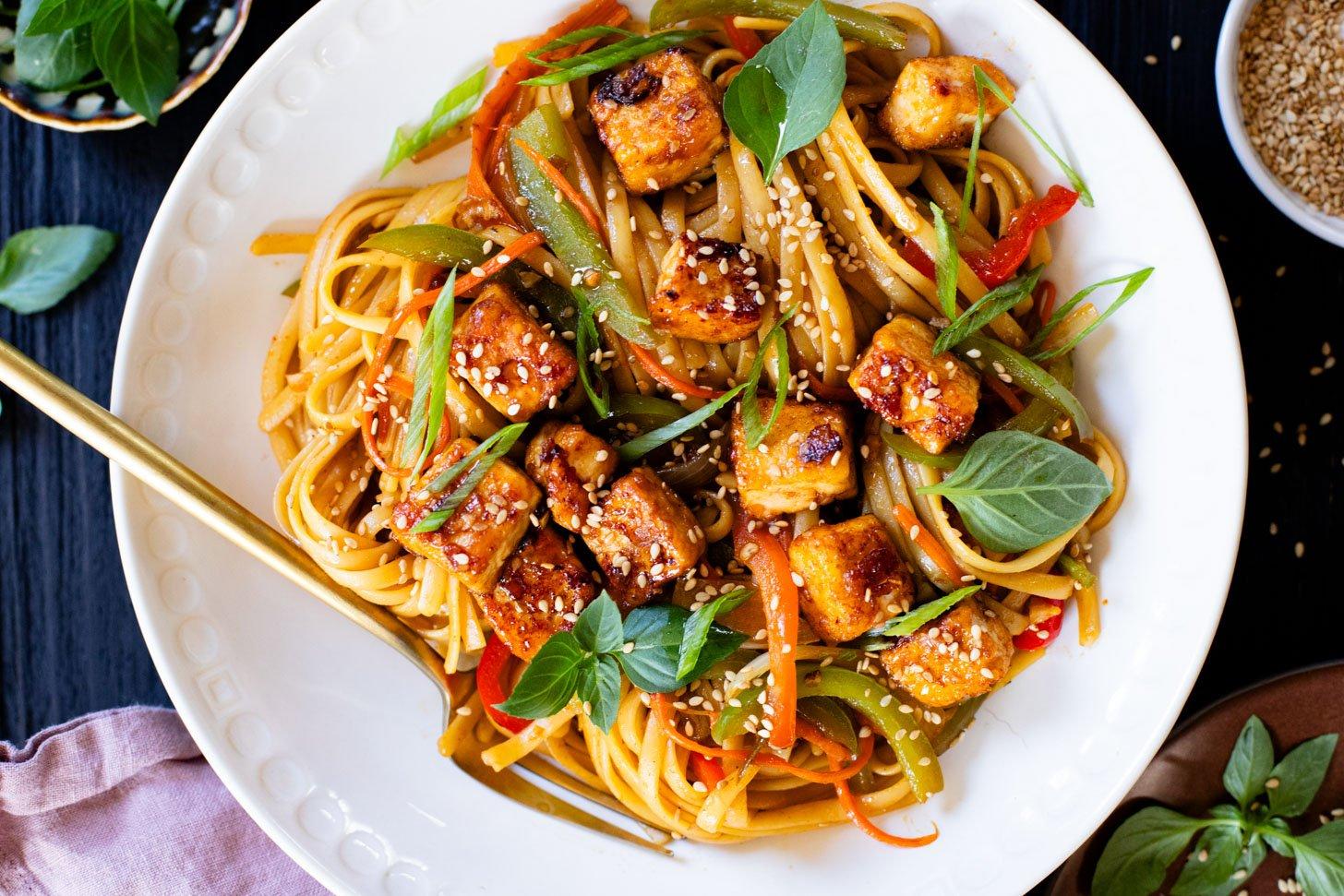
Vegan Lo Mein with Korean Tofu Bulgogi is a delicious fusion dish that brings together the comforting texture of Chinese-style lo mein noodles and the bold, sweet, savory flavors of Korean bulgogi. Chewy noodles are tossed with colorful vegetables and a flavorful sauce, then topped with golden tofu coated in a delicious Korean-inspired marinade.
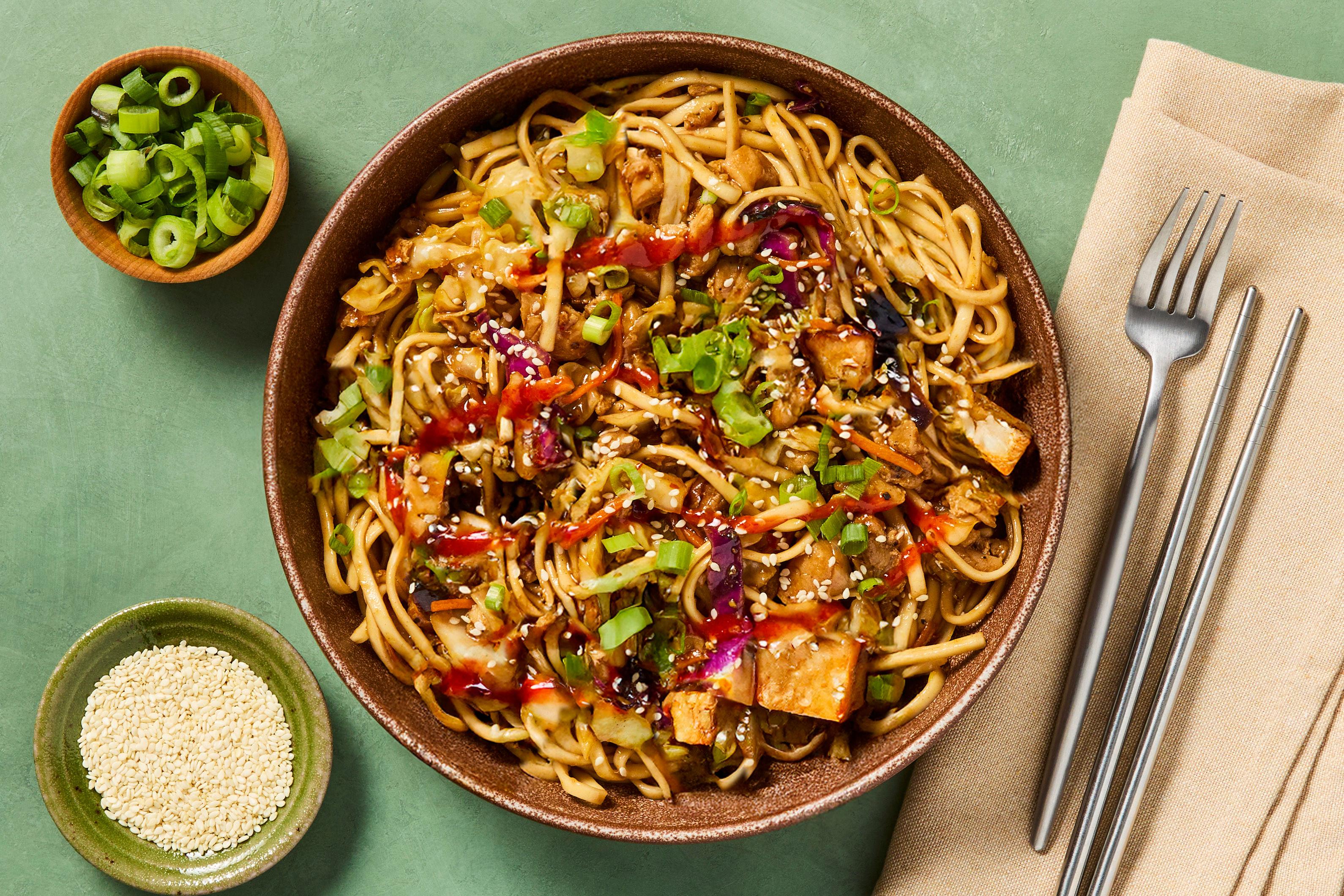
Vegan Lo Mein with Korean Tofu Bulgogi:
The tofu bulgogi is the star of this recipe. Firm tofu is pan-fried until golden and crisp, then coated in a rich sauce made with soy sauce, garlic, ginger, sesame oil, gochujang, and a touch of sweetness. The result is wonderfully savory tofu with caramelized edges and plenty of Korean-inspired flavor.This vegan noodle dish is perfect for lunch or dinner and is easy enough for a busy weeknight. It is filling, colorful, customizable, and packed with contrasting textures—from chewy noodles and crisp vegetables to tender, flavorful tofu.
History:
Lo mein is a popular Chinese noodle dish traditionally made by tossing cooked noodles with vegetables, sauce, and various proteins. Its name is associated with tossed or mixed noodles, making it a versatile dish that can be adapted with many ingredients.Bulgogi is one of Korea’s best-known dishes and traditionally features thinly sliced meat marinated in a sweet and savory combination of soy sauce, garlic, sesame oil, and other seasonings. Modern plant-based cooking has adapted these flavors to tofu and other meat alternatives.This recipe combines the two culinary traditions into a satisfying vegan fusion meal, using Korean bulgogi flavors to transform simple tofu and lo mein noodles into a bold and flavorful dish.
Subscribe to our youtube channel Kitchenpedia for more delicious recipes and hit the like button if you enjoyed this youtubevideo. Share it with your friends and Family.
Vegan Lo Mein with Korean Tofu Bulgogi

Ingredients
For the Tofu Bulgogi
- 450 g extra-firm tofu
- 2 tablespoons soy sauce
- 1 tablespoon sesame oil
- 1 tablespoon maple syrup or brown sugar
- 1 tablespoon gochujang
- 1 tablespoon grated Asian pear or apple
- 3 cloves garlic, minced
- 1 teaspoon fresh ginger, grated
- 1 teaspoon rice vinegar
- ½ teaspoon black pepper
- 1 tablespoon cornstarch
For the Lo Mein
- 350 g vegan lo mein noodles or wheat noodles
- 1 tablespoon cooking oil
- 1 small onion, sliced
- 1 medium carrot, julienned
- 1 red bell pepper, thinly sliced
- 1 cup shredded cabbage
- 1 cup mushrooms, sliced
- 2 spring onions, sliced
For the Noodle Sauce
- 3 tablespoons soy sauce
- 1 tablespoon hoisin sauce
- 1 tablespoon sesame oil
- 1 tablespoon rice vinegar
- 1 teaspoon maple syrup
- 1 teaspoon gochujang
- 1 clove garlic, minced
For Garnishing
- Sesame seeds
- Spring onions
- Korean chili flakes, optional
Instructions
Prepare the Tofu
- Drain the tofu and gently press it between clean kitchen towels to remove excess moisture. Cut it into bite-sized cubes or thin rectangular pieces.
Make the Bulgogi Marinade
- In a bowl, combine soy sauce, sesame oil, maple syrup, gochujang, grated pear or apple, garlic, ginger, rice vinegar, and black pepper.Add the tofu and gently toss until well coated. Allow it to marinate for approximately 20 minutes.
Coat the Tofu
- Sprinkle the cornstarch over the marinated tofu and gently toss. The cornstarch helps create a crisp exterior when the tofu is cooked.
Cook the Tofu Bulgogi
- Heat the cooking oil in a large skillet over medium-high heat. Add the tofu pieces in a single layer.Cook for approximately 3–4 minutes per side until golden and crisp. Set aside.
Prepare the Noodles
- Cook the lo mein noodles according to the package instructions. Drain well and set aside.Avoid overcooking the noodles because they will be tossed with the sauce later.
Prepare the Noodle Sauce
- Combine the soy sauce, hoisin sauce, sesame oil, rice vinegar, maple syrup, gochujang, garlic, and water in a small bowl.
Add the Noodles
- Add the cooked noodles to the wok. Pour the prepared sauce over them.Toss everything together until the noodles are evenly coated and heated through.
Add the Tofu
- Gently fold the Korean tofu bulgogi into the noodles or arrange the crispy tofu on top of each serving.
Garnish and Serve
- Top with spring onions and sesame seeds. Add Korean chili flakes if you prefer extra heat.Serve immediately while hot.
Notes
- Use extra-firm tofu for the best texture.
- Pressing the tofu helps it become crispier during cooking.
- Check that your lo mein noodles and sauces are vegan.
- Use well-drained tofu so the marinade can coat it properly.
- Do not overcrowd the pan when frying the tofu.
- Gochujang adds both spice and savory depth.
- Taste the sauce before adding it to the noodles because soy sauce can be salty.
- Serve immediately for the best combination of crispy tofu and chewy noodles.
Tips for Vegan Lo Mein with Korean:
- Freeze and thaw tofu before cooking for an even more textured, chewy result.
- Marinate the tofu for longer if you want a stronger bulgogi flavor.
- Cook the tofu separately so it stays crisp.
- Keep the vegetables slightly crunchy for better contrast.
- Prepare the sauce before starting the stir-fry.
- Use high heat when tossing the noodles to give them a lightly smoky flavor.
- Add a splash of water if the noodles become too dry.
- Garnish just before serving to preserve the freshness of the spring onions and sesame seeds.
FAQs for Vegan Lo Mein with Korean:
1. What is Korean Tofu Bulgogi?
Korean Tofu Bulgogi is a plant-based adaptation of bulgogi in which tofu is marinated in a sweet, savory, garlicky Korean-inspired sauce and cooked until golden.
2. Is this recipe completely vegan?
Yes, provided that all noodles, hoisin sauce, gochujang, and other packaged ingredients are certified or confirmed vegan.
3. Can I use another type of noodle?
Yes. You can use ramen noodles, yakisoba noodles, spaghetti, rice noodles, or other vegan noodles.
4. Can I make the tofu without gochujang?
Yes. Replace it with a small amount of Korean chili flakes or another chili paste, or simply omit it for a milder dish.
5. Can I add more vegetables?
Absolutely. Broccoli, snow peas, bok choy, bean sprouts, spinach, and zucchini all work well.
6. Can I make this recipe gluten-free?
Yes. Use gluten-free noodles and replace regular soy sauce and hoisin sauce with certified gluten-free alternatives.
7. Can I prepare the tofu ahead of time?
Yes. Cooked tofu can be refrigerated and reheated in a skillet or air fryer to help restore its crispness.
8. How long do leftovers last?
Store leftovers in an airtight container in the refrigerator for up to 3 days. Reheat thoroughly before serving.
Conclusion:
Vegan Lo Mein with Korean Tofu Bulgogi is a delicious fusion meal that combines the best of chewy noodles, crisp vegetables, and flavorful Korean-inspired tofu. The sweet, savory, spicy, and nutty flavors work beautifully together, while the crispy tofu provides a satisfying contrast to the tender noodles. Easy to customize and packed with plant-based goodness, this recipe is an excellent choice for a flavorful vegan lunch or dinner.