
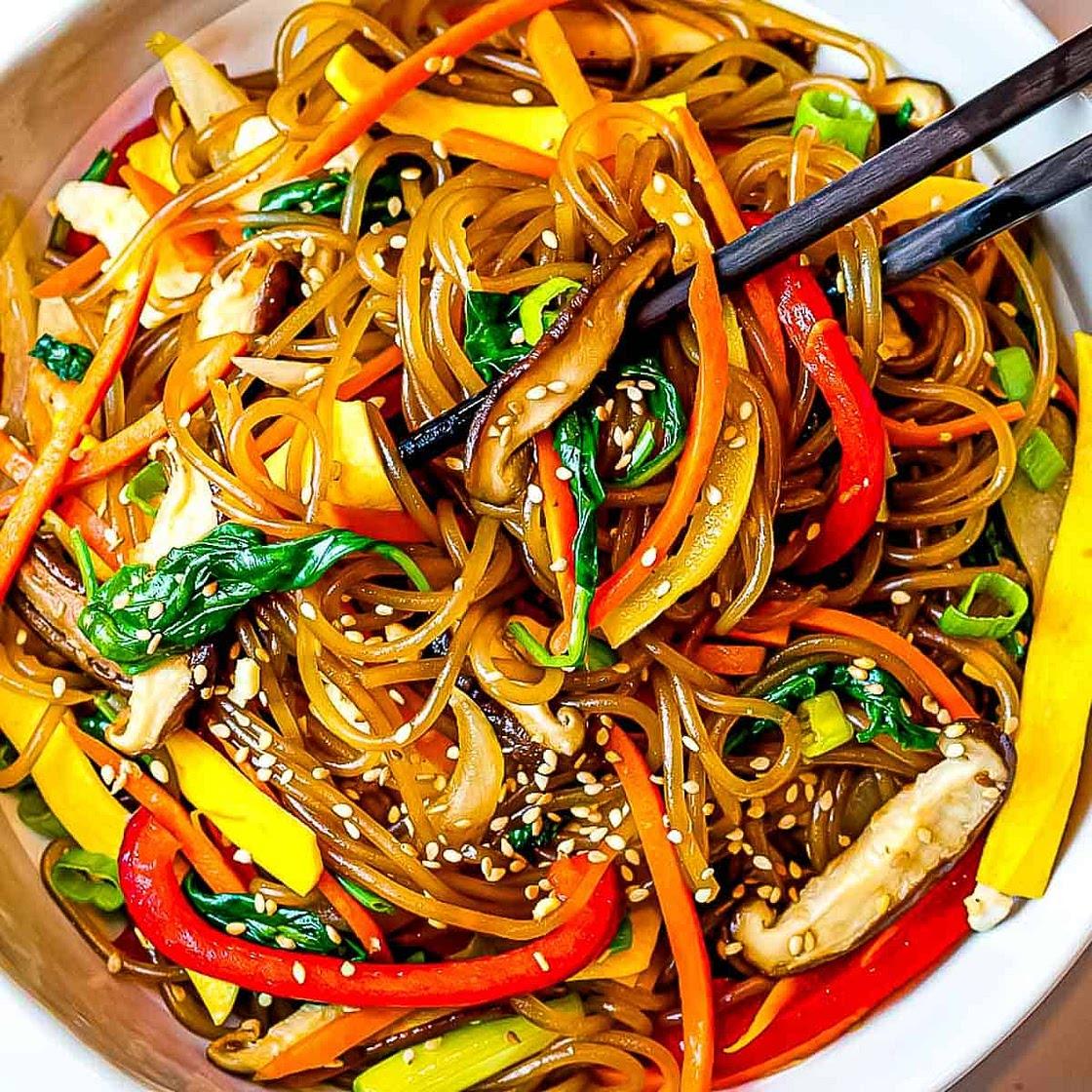
Jab Chae (Korean Noodles) also commonly written as Japchae, is one of Korea’s most beloved noodle dishes. Made with chewy sweet potato glass noodles, colorful vegetables, mushrooms, garlic, sesame oil, and a savory-sweet soy sauce seasoning, this dish is wonderfully flavorful while remaining light and satisfying. Its glossy noodles and vibrant vegetables make it as beautiful as it is delicious.Unlike many noodle dishes that are cooked entirely in one pan, traditional-style Japchae often involves preparing different ingredients separately before bringing everything together.
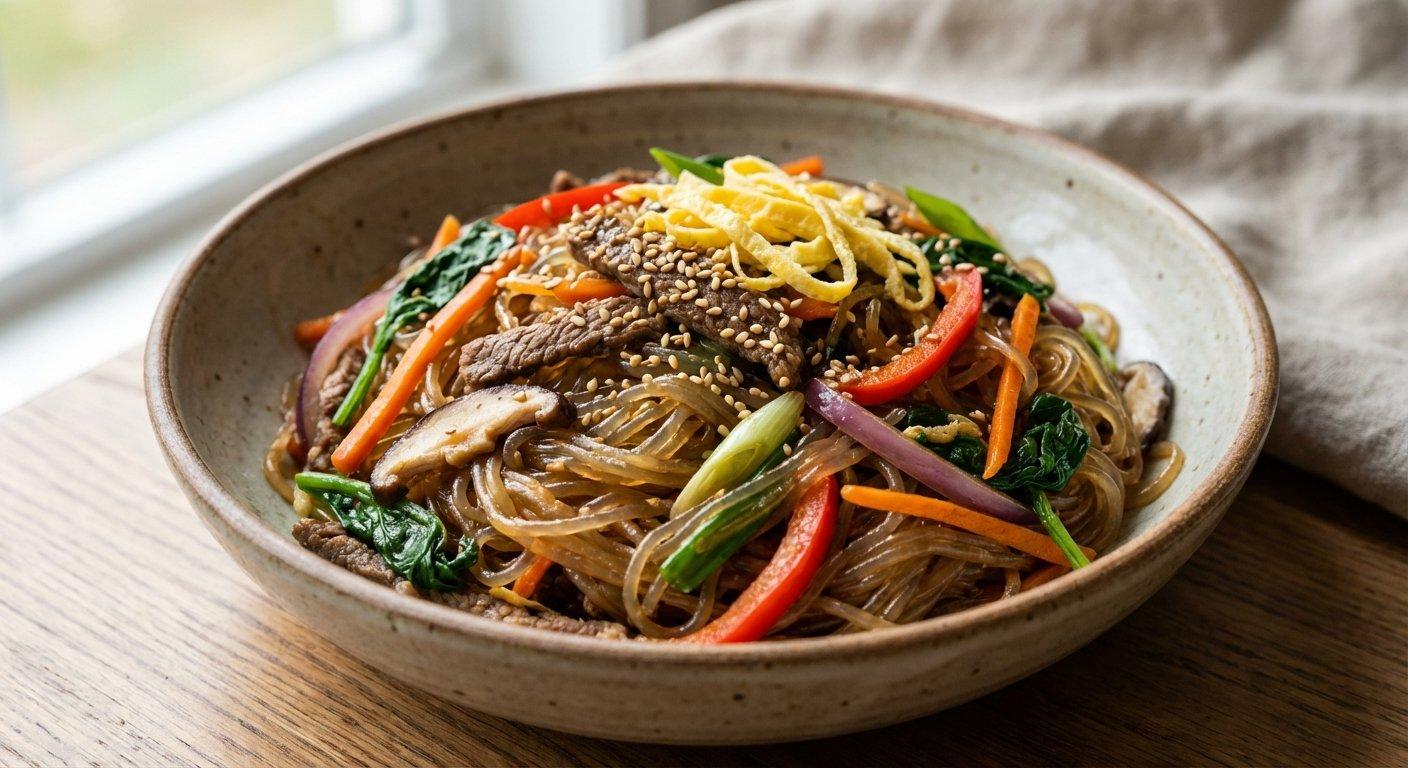
Korean Noodles:
This approach helps preserve the individual colors, textures, and flavors of the vegetables. Shiitake mushrooms add a rich umami taste, while carrots, spinach, bell peppers, and onions provide freshness and natural sweetness.Jab Chae is perfect for family dinners, celebrations, lunch boxes, potlucks, and Korean-inspired meals. It can be served warm, at room temperature, or even chilled. While traditionally prepared with meat in some versions, this vegetable-focused recipe is easy to enjoy as a vegetarian dish and can be made vegan by checking that the soy sauce and noodles contain no animal-derived ingredients.
History:
Jab Chae has a long history in Korean cuisine and is particularly associated with celebrations and special occasions. The name is often translated as a mixed or assorted dish, reflecting the way different ingredients are brought together.Early versions of Japchae were primarily vegetable-based and did not necessarily contain the glass noodles used today. Sweet potato starch noodles, known as dangmyeon, eventually became a defining ingredient of modern Japchae.Over generations, Japchae developed into a versatile Korean dish with many variations. Beef, pork, seafood, mushrooms, and different combinations of vegetables may be used depending on the recipe and occasion. Today, vegetable Japchae remains a popular choice for those who want the classic flavors and textures without meat.
Subscribe to our youtube channel Kitchenpedia for more delicious recipes and hit the like button if you enjoyed this youtubevideo. Share it with your friends and Family.
Jab Chae

Ingredients
For the Noodles
- 250 g Korean sweet potato glass noodles (dangmyeon)
- 1 tablespoon sesame oil
- 1 teaspoon vegetable oil
For the Vegetables
- 1 medium carrot, julienned
- 1 medium onion, thinly sliced
- 1 red bell pepper, thinly sliced
- 1 yellow bell pepper, thinly sliced
- 150 g shiitake mushrooms, thinly sliced
- 150 g fresh spinach
- 3 green onions, sliced
- 3 cloves garlic, minced
For the Sauce
- 4 tablespoons soy sauce
- 1½ tablespoons toasted sesame oil
- 1½ tablespoons brown sugar or maple syrup
- 1 tablespoon rice vinegar
- 1 teaspoon toasted sesame seeds
- ½ teaspoon freshly ground black pepper
- 1 teaspoon minced garlic
For Garnishing
- 1 tablespoon toasted sesame seeds
- 2 green onions, thinly sliced
- 1 teaspoon toasted sesame oil
Instructions
Prepare the Sauce
- In a small bowl, combine soy sauce, sesame oil, brown sugar or maple syrup, rice vinegar, sesame seeds, black pepper, and minced garlic.Whisk until the sugar is dissolved and the ingredients are well combined. Set aside.
Prepare the Vegetables
- Wash and prepare all the vegetables. Julienne the carrot, slice the onions and bell peppers, thinly slice the mushrooms, and mince the garlic.Keeping the vegetables similarly sized will help them cook evenly.
Cook the Glass Noodles
- Bring a large pot of water to a boil. Add the sweet potato glass noodles and cook according to the package directions, generally for about 5–7 minutes.Cook until the noodles are tender and chewy rather than mushy.
Drain and Season the Noodles
- Drain the noodles and rinse briefly under cold water. Allow them to drain thoroughly.Transfer them to a large bowl and toss with 1 tablespoon sesame oil. If the noodles are extremely long, use kitchen scissors to cut them into easier-to-eat lengths.
Cook the Mushrooms
- Heat vegetable oil in a large skillet or wok over medium-high heat.Add the shiitake mushrooms and cook for 3–4 minutes until tender and lightly browned. Add a little minced garlic and stir for another 30 seconds.Transfer the mushrooms to a large mixing bowl.
Stir-Fry the Vegetables
- Using the same skillet, add the sliced onions and carrots. Stir-fry for about 2–3 minutes.Add the red and yellow bell peppers and cook for another 2 minutes. The vegetables should remain slightly crisp.
Combine the Noodles and Vegetables
- Add the seasoned glass noodles to the bowl containing the cooked vegetables and mushrooms.Pour the prepared sauce over everything.
Toss Thoroughly
- Using tongs or clean hands, gently toss the noodles and vegetables until everything is evenly coated with the sauce.Taste and adjust the seasoning with additional soy sauce, sesame oil, or sugar if necessary.
Finish and Serve
- Transfer the Jab Chae to a large serving platter.Sprinkle generously with toasted sesame seeds and sliced green onions. Finish with a small drizzle of toasted sesame oil.Serve warm or at room temperature.
Notes
- Use Korean sweet potato noodles: Dangmyeon provides the distinctive chewy texture associated with Japchae.
- Follow the noodle package directions: Cooking times vary between brands.
- Do not overcook the vegetables: Slightly crisp vegetables create a better contrast with the soft noodles.
- Drain noodles well: Excess water can dilute the sauce.
- Use toasted sesame oil: It gives Japchae its characteristic nutty aroma.
- Adjust sweetness: Add more or less brown sugar depending on your preference.
- Check the soy sauce: Soy sauce brands vary in saltiness, so season gradually.
- Serve shortly after mixing: The noodles absorb sauce as they sit, so you may need a small splash of water when reheating.
Tips for Korean Noodles:
- Cook vegetables separately: This keeps each vegetable vibrant and prevents delicate ingredients from becoming overcooked.
- Julienne vegetables evenly: Uniform pieces create a more attractive dish and ensure even cooking.
- Use fresh shiitake mushrooms: They provide excellent texture and a deep savory flavor.
- Season the noodles lightly first: Tossing the noodles with sesame oil before combining prevents excessive sticking.
- Toast your sesame seeds: A quick dry-toast brings out their natural nutty flavor.
- Mix while the noodles are still slightly warm: Warm noodles absorb the sauce particularly well.
- Use kitchen scissors: Cutting the cooked noodles makes them much easier to serve and eat.
- Taste before serving: Balance the final dish with small amounts of soy sauce, sesame oil, sugar, or rice vinegar as needed.
FAQs for Korean Noodles:
1. What is Jab Chae?
Jab Chae, also spelled Japchae, is a popular Korean noodle dish made with sweet potato starch glass noodles, vegetables, mushrooms, and a savory-sweet sesame-soy seasoning.
2. What noodles are traditionally used in Japchae?
Japchae traditionally uses Korean sweet potato starch glass noodles called dangmyeon. They become translucent and chewy when cooked.
3. Is Jab Chae vegetarian?
This vegetable version is vegetarian. Traditional variations may contain beef or other ingredients, but they are not necessary for a delicious Japchae.
4. Can I make Jab Chae vegan?
Yes. Use vegan-certified noodles and soy sauce, and avoid any animal-based additions. The vegetable version is naturally easy to adapt for a vegan diet.
5. Can I add tofu to Japchae?
Absolutely. Crispy tofu is an excellent addition if you want extra protein and texture.
6. Can I prepare Japchae ahead of time?
Yes. Japchae can be prepared ahead and stored in the refrigerator for approximately 3–4 days. Reheat gently in a skillet with a small splash of water.
7. Can I eat Japchae cold?
Yes. Japchae can be served warm, at room temperature, or chilled. It is particularly convenient for packed lunches and gatherings.
8. What can I serve with Jab Chae?
Serve it with Korean cucumber salad, kimchi, vegetable dumplings, crispy tofu, Korean pancakes, or other Korean-inspired side dishes.
Conclusion:
Jab Chae is a wonderfully flavorful Korean noodle dish that combines chewy sweet potato glass noodles with colorful vegetables, earthy mushrooms, aromatic garlic, and nutty sesame oil. The lightly sweet and savory soy-based sauce brings all the ingredients together into a beautifully balanced dish.Its versatility makes it suitable for everything from an easy family dinner to a festive Korean-inspired feast. You can add tofu or other vegetables, adjust the sweetness and seasoning, or prepare it ahead for convenient meals throughout the week.For the best results, keep the vegetables colorful and slightly crisp, cook the noodles until perfectly chewy, and finish generously with toasted sesame seeds and fragrant sesame oil. This homemade Jab Chae is simple, satisfying, and packed with the delicious flavors that make Korean noodle dishes so irresistible.