

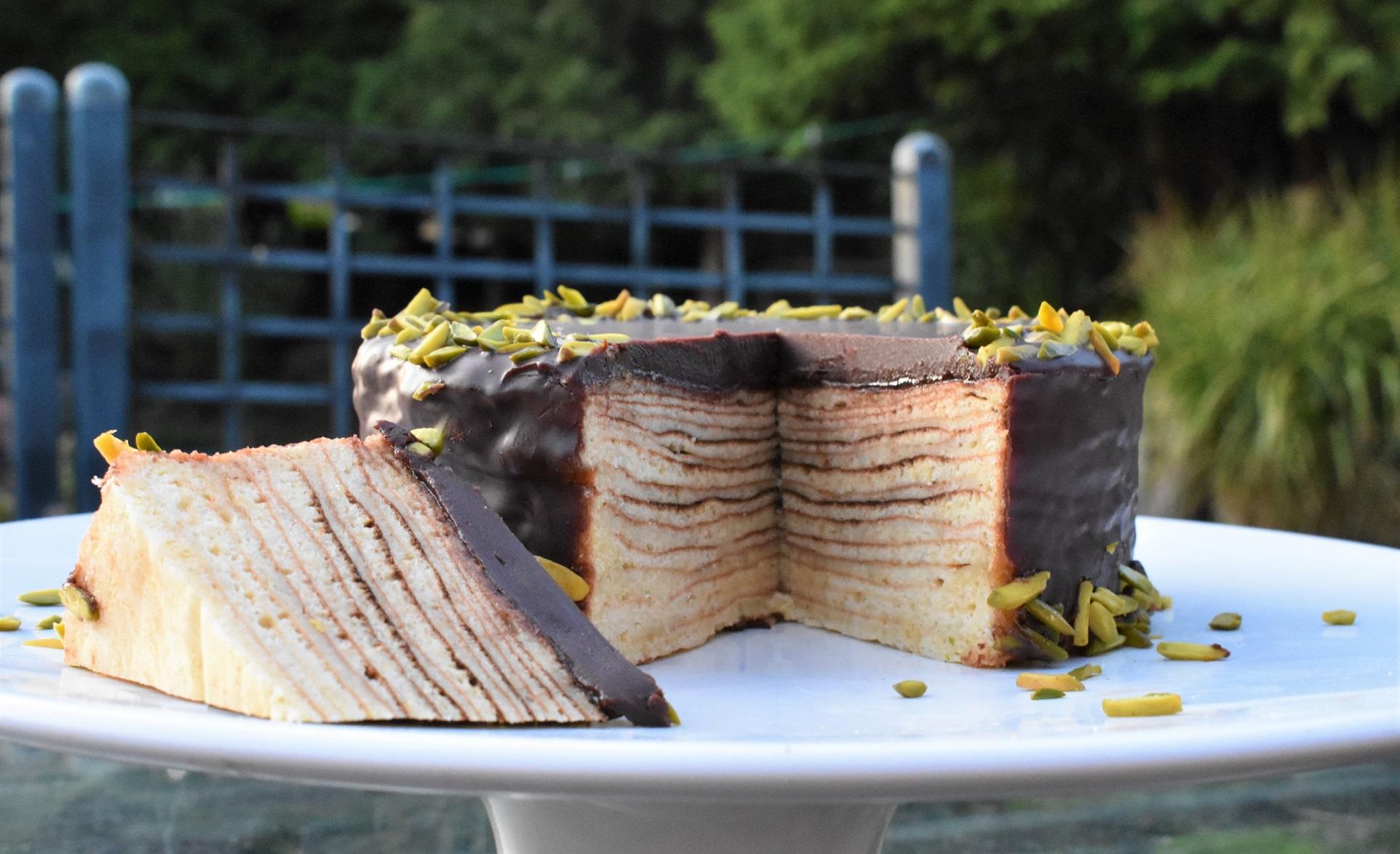
BaumKuchen is a beautiful traditional European layer cake famous for its distinctive rings that resemble the growth rings of a tree. The name literally translates to “tree cake,” and its unusual appearance comes from baking many thin layers of batter one at a time over direct heat.Each thin layer is lightly browned before another layer of batter is added, creating dozens of delicate golden rings throughout the finished cake.
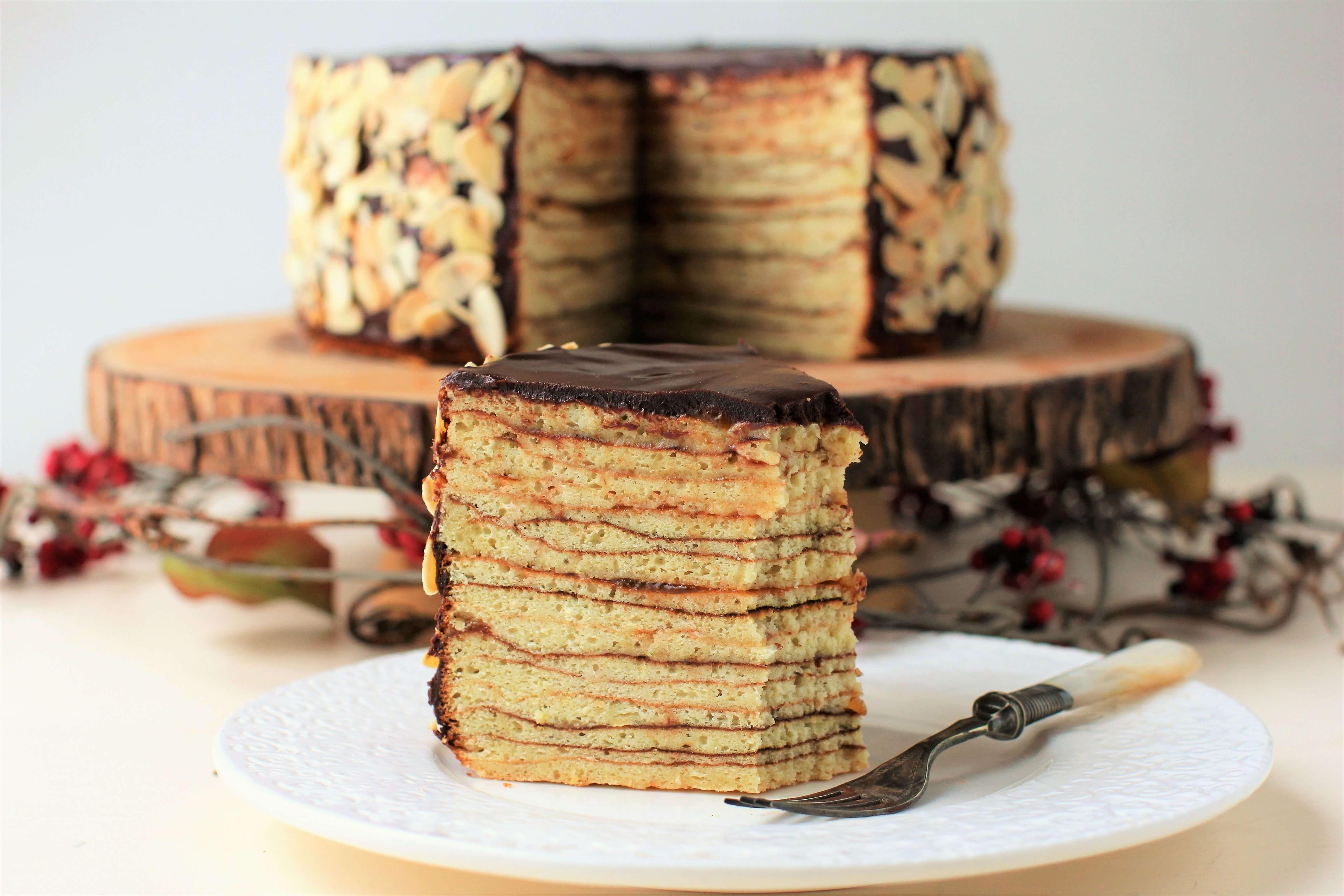
BaumKuchen:
The result is a tender, buttery cake with a subtle caramelized flavor and a wonderfully impressive appearance when sliced.Although traditional BaumKuchen requires patience, the ingredients themselves are simple. A buttery vanilla batter, eggs, sugar, flour, and a touch of rum or vanilla create the classic flavor, while a smooth chocolate coating provides an elegant finishing touch.
History:
BaumKuchen has a long history in European baking and is particularly associated with Germany. Its name comes from the German words Baum, meaning “tree,” and Kuchen, meaning “cake,” referring to the tree-ring pattern revealed when the cake is sliced.The cake is traditionally made by applying very thin layers of batter to a rotating spit or cylindrical baking surface. Each layer is browned before the next is added, gradually creating the characteristic ring structure.BaumKuchen later became especially popular in Japan, where it is known as Baumkuchen and has become a beloved confection. Japanese versions are often made in bakeries using specialized rotating ovens, while home recipes adapt the technique for a regular oven or broiler.
Subscribe to our youtube channel Kitchenpedia for more delicious recipes and hit the like button if you enjoyed this youtubevideo. Share it with your friends and Family.
BaumKuchen

Ingredients
For the Cake
- 1 cup unsalted butter, soften
- 1 cup granulated sugar
- 1 tablespoon vanilla sugar, optional
- 6 large eggs, separated
- 1 teaspoon vanilla extract
- 1 tablespoon dark rum or rum extract, optional
- 1 cup all-purpose flour
- ½ cup cornstarch
- ½ teaspoon baking powder
- ¼ teaspoon salt
- ½ cup heavy cream
For the Chocolate Coating
- 6 ounces semi-sweet or dark chocolate
- 1 tablespoon coconut oil or unsalted butter
Optional Garnish
- Powdered sugar
- Chopped pistachios
- Almond slices
- Chocolate curls
Instructions
Prepare the Pan
- Preheat the oven to 400°F (200°C).Grease an 8-inch round springform pan and line the bottom with parchment paper.For the traditional layered effect, you will use the oven's upper heating element or broiler to brown each individual layer.
Prepare the Dry Ingredients
- In a medium bowl, whisk together the flour, cornstarch, baking powder, and salt.Set aside.
Cream the Butter and Sugar
- In a large mixing bowl, beat the softened butter and sugar until light and fluffy.This should take approximately 3–4 minutes.
Add the Egg Yolks
- Add the egg yolks one at a time, mixing well after each addition.Stir in the vanilla extract and rum or rum extract if using.
Add the Dry Ingredients
- Gradually add the flour mixture, alternating with the heavy cream.Mix only until the batter is smooth.
Whip the Egg Whites
- In a clean bowl, beat the egg whites until soft peaks form.Gently fold the egg whites into the cake batter in several additions.The finished batter should be light and airy.
Begin the Layers
- Spread approximately 2 tablespoons of batter into a very thin, even layer across the bottom of the prepared pan.Place the pan under the upper heating element or broiler.Cook for approximately 1–2 minutes, watching carefully, until the surface is lightly golden brown.
Continue Layering
- Remove the pan carefully.Spread another thin layer of batter directly over the browned surface.Return it under the heat and cook until golden.Repeat this process until all the batter has been used.Depending on the thickness of the layers, you may create approximately 15–20 layers.
Cool the Cake
- Allow the finished cake to cool completely in the pan.Once cool, carefully remove it from the springform pan.
Prepare the Chocolate Coating
- Melt the chocolate with the coconut oil or butter over a double boiler or in short microwave intervals.Stir until smooth and glossy.
Coat the Cake
- Spread or pour the melted chocolate over the top and sides of the cooled cake.Allow the coating to set.
Slice and Serve
- Use a sharp serrated knife to cut the BaumKuchen into thin slices.The beautiful tree-ring pattern will become visible in each slice.Serve with coffee, tea, or a dusting of powdered sugar.
Notes
- Layer thickness: Very thin layers are essential for achieving the characteristic BaumKuchen appearance.
- Browning: Watch every layer carefully because the upper heating element can brown the batter quickly.
- Egg whites: Gently folding the whipped whites helps create a light batter.
- Flavor: Vanilla provides the classic flavor, while rum adds traditional European-style depth.
- Chocolate: Dark chocolate balances the sweetness particularly well.
- Pan: A springform pan makes removing the finished cake easier.
- Cooling: Allow the cake to cool completely before adding the chocolate coating.
- Slicing: A sharp serrated knife helps reveal the layers cleanly.
Tips for BaumKuchen:
- Bring the butter and eggs to room temperature before starting.
- Measure the batter for each layer carefully so the rings remain relatively even.
- Spread every layer as thinly and evenly as possible.
- Stay near the oven while browning layers because they cook quickly.
- Do not walk away while using the broiler.
- Allow each layer to develop a light golden color without burning.
- Chill the cake briefly before slicing if the chocolate coating is difficult to cut.
- Wipe the knife between slices for cleaner presentation.
FAQs for BaumKuchen:
Q: What does BaumKuchen mean?
BaumKuchen is German for “tree cake.” The name refers to the cake’s tree-ring-like layers visible when it is sliced.
Q: Why does BaumKuchen have so many layers?
Traditional BaumKuchen is created by repeatedly applying thin layers of batter and browning each one before adding the next. This produces the characteristic concentric rings.
Q: Is BaumKuchen difficult to make?
The batter itself is relatively simple, but the layering process requires patience and careful attention because each layer needs to be thin and evenly browned.
Q: Can I make BaumKuchen without a rotating spit?
Yes. A home oven and broiler can be used to create a layered version. The result may not have exactly the same shape as commercially produced BaumKuchen, but it can still have beautiful layers.
Q: Can I use milk instead of heavy cream?
Yes, although heavy cream provides a richer texture. If using milk, the cake may be slightly lighter.
Q: Can I skip the chocolate coating?
Absolutely. BaumKuchen can be served plain, dusted with powdered sugar, or finished with a simple glaze.
Q: How should BaumKuchen be stored?
Store it in an airtight container at room temperature for a short period or refrigerate it for longer storage. Allow refrigerated slices to come closer to room temperature before serving.
Q: Why are my layers uneven?
Uneven layers usually result from spreading different amounts of batter each time. Using a consistent measured amount and spreading it carefully helps create more uniform rings.
Conclusion:
BaumKuchen is one of the most fascinating traditional cakes because its beauty comes directly from its baking technique. Thin layers of buttery vanilla batter are repeatedly browned to create the distinctive tree-ring pattern that gives this cake its name.The process takes patience, but the ingredients are wonderfully simple and the finished cake is truly impressive. Its tender texture, delicate caramelized flavor, and rich chocolate coating make every thin slice feel special.Serve BaumKuchen alongside coffee or tea for an elegant afternoon treat, or present it as a centerpiece dessert for celebrations. Once sliced, the beautiful layers make this traditional “tree cake” as visually impressive as it is delicious.