

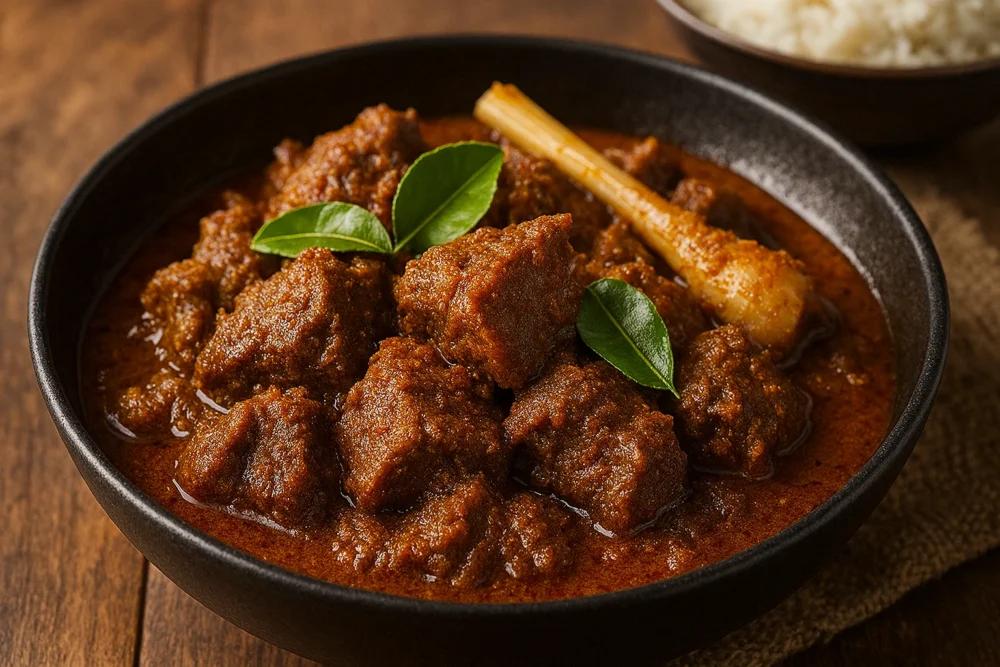
Malaysian Beef Rendang is a luxurious, deeply flavorful dish made by slowly cooking tender beef with coconut milk, chilies, lemongrass, galangal, ginger, garlic, shallots, and fragrant spices. As the beef cooks, the sauce gradually becomes thick, rich, and intensely aromatic, coating every piece of meat with layers of savory, spicy, and slightly sweet flavor.Rendang is one of Southeast Asia’s most celebrated dishes and is especially associated with Malay and Indonesian culinary traditions.
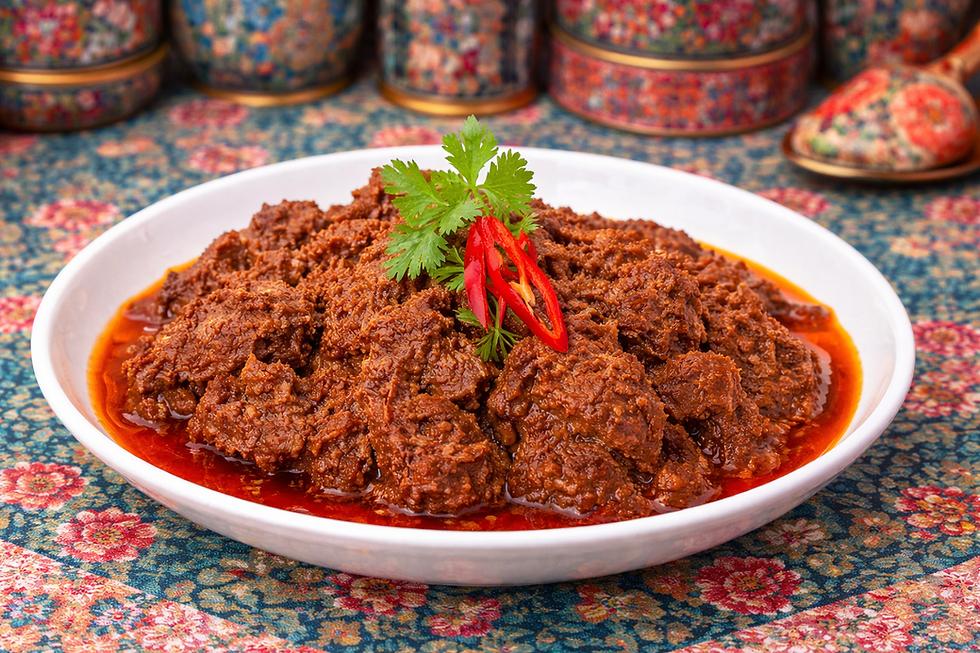
Malaysian Beef Rendang:
Malaysian versions vary from household to household, with different combinations of spices, chilies, coconut, and herbs. The slow cooking process is central to the dish, allowing the beef to absorb the aromatic paste while the coconut milk gradually reduces.Although Beef Rendang takes time, much of the cooking is hands-off. The result is exceptionally tender beef surrounded by a concentrated, almost paste-like sauce. Serve it with steamed jasmine rice, coconut rice, roti, or other Malaysian side dishes for an unforgettable meal.
History:
Rendang has deep roots in the culinary traditions of the Malay world, particularly among the Minangkabau people of West Sumatra. Over time, rendang traveled and developed into numerous regional and cultural variations throughout Indonesia, Malaysia, Singapore, and neighboring areas.Traditionally, rendang was prepared for important occasions, celebrations, gatherings, and feasts. The lengthy cooking process helped transform tougher cuts of meat into tender, intensely flavored food while reducing the moisture in the dish.Malaysian rendang can differ from Indonesian versions in its balance of spices, coconut, aromatics, and texture. Some Malaysian preparations use kerisik—toasted grated coconut—to give the finished dish a distinctive nutty flavor and thick consistency. Today, beef rendang remains a treasured dish for celebrations as well as everyday family meals.
Subscribe to our youtube channel Kitchenpedia for more delicious recipes and hit the like button if you enjoyed this youtubevideo. Share it with your friends and Family.
Malaysian Beef Rendang

Ingredients
For the Beef
- 2½ lb (1.1 kg) beef chuck, cut into large cubes
- 2 tablespoons cooking oil
- 1½ teaspoons salt
For the Spice Paste
- 8 shallots, peeled
- 5 garlic cloves
- 2-inch piece fresh ginger
- 2-inch piece galangal
- 2 stalks lemongrass, tender inner portion only
- 8–10 dried red chilies, soaked in warm water
- 1 teaspoon ground coriander
- ½ teaspoon ground turmeric
- ½ teaspoon ground fennel
- ½ teaspoon black pepper
For the Rendang
- 2 cans (13.5 oz / 400 ml each) coconut milk
- 4 kaffir lime leaves, torn
- 1 turmeric leaf, finely sliced, optional
- 1 cinnamon stick
- 2 star anise
- 2 tablespoons tamarind paste
- 2 tablespoons palm sugar or brown sugar
- 1½ teaspoons salt, or to taste
- 1 cup water, as needed
For Kerisik
- 1 cup unsweetened grated coconut
For Garnish
- Thinly sliced fresh chili, optional
- Fresh cilantro or coriander
- Extra toasted coconut
Instructions
Prepare the Beef
- Cut the beef into large, evenly sized chunks.Pat the beef dry with paper towels and season lightly with salt.Using a tougher, well-marbled cut such as beef chuck works particularly well because the long cooking time helps break down connective tissue.
Prepare the Chilies
- Place the dried chilies in warm water and soak them for approximately 15–20 minutes until softened.Drain well.Remove the stems and seeds if you prefer a milder rendang.
Make the Spice Paste
- Place the soaked dried chilies, fresh chilies, shallots, garlic, ginger, galangal, lemongrass, coriander, cumin, turmeric, fennel, and black pepper in a food processor or blender.Blend into a thick paste.Add a small amount of water if necessary, but avoid making the paste excessively watery.
Make the Kerisik
- Place the grated coconut in a dry skillet over low to medium-low heat.Toast slowly, stirring frequently, until deeply golden and fragrant.Be careful because coconut can burn quickly.Allow it to cool slightly, then grind or process it until it becomes a coarse, oily paste.Set aside.
Brown the Beef
- Heat the cooking oil in a large heavy-bottomed pot or Dutch oven over medium-high heat.Add the beef in batches and sear until lightly browned on several sides.Do not overcrowd the pan.Transfer the browned beef to a plate.
Cook the Spice Paste
- Reduce the heat to medium.Add the spice paste to the same pot.Cook for approximately 8–12 minutes, stirring regularly.The paste should become darker, fragrant, and slightly oily as the aromatics cook.
Add the Aromatics
- Add the cinnamon stick, star anise, kaffir lime leaves, and optional turmeric leaf.Stir well to combine.Cook for another minute or two.
Add the Coconut Milk
- Pour in the coconut milk.Stir thoroughly, scraping any flavorful browned bits from the bottom of the pot.
Return the Beef
- Return the browned beef to the pot.Stir until the beef is completely coated in the coconut-spice mixture.
Begin Slow Cooking
- Bring the mixture to a gentle simmer.Reduce the heat to low.Leave the pot partially uncovered and cook slowly for approximately 2–3 hours, stirring occasionally.The liquid will gradually reduce as the beef becomes tender.
Add Tamarind and Sugar
- When the beef is beginning to become tender, add the tamarind paste and palm sugar.Stir thoroughly.The tamarind provides acidity while the palm sugar balances the chili and spice flavors.
Add the Kerisik
- When the sauce has reduced considerably, add the prepared kerisik.Stir well.The toasted coconut will help thicken the sauce while contributing a rich nutty flavor.
Continue Reducing
- Continue cooking uncovered over low heat.Stir frequently as the sauce thickens to prevent it from sticking to the bottom.The rendang is ready when the sauce becomes very thick and clings closely to the beef.
Adjust the Seasoning
- Taste the rendang.Adjust the salt, tamarind, or sugar according to your preference.The finished dish should have a complex balance of spicy, savory, rich, slightly sweet, and tangy flavors.
Finish the Rendang
- Continue cooking for several more minutes until the beef is deeply coated with the dark, concentrated spice mixture.The coconut oil may begin to separate slightly from the thick sauce, which is a normal part of the final cooking stage.
Garnish and Serve
- Garnish with sliced fresh chili or coriander if desired.Serve hot with steamed jasmine rice, coconut rice, roti, or other Malaysian accompaniments.
Notes
- Beef cut: Beef chuck is excellent because its connective tissue becomes tender during slow cooking.
- Coconut milk: Full-fat coconut milk produces the richest and creamiest rendang.
- Chilies: Remove seeds to reduce the heat if desired.
- Galangal: It contributes a distinctive Southeast Asian aroma; ginger can be substituted if unavailable, although the flavor will differ.
- Kerisik: Toasted coconut gives the rendang extra depth, richness, and thickness.
- Slow cooking: Gentle cooking is essential for tender beef and concentrated flavor.
- Stirring: Stir more frequently as the sauce thickens to prevent sticking.
- Resting: Rendang often tastes even better after resting or the next day as the flavors continue to develop.
Tips for Malaysian Beef Rendang:
- Use a heavy-bottomed pot to distribute heat evenly.
- Brown the beef in batches instead of overcrowding the pan.
- Cook the spice paste thoroughly before adding the coconut milk.
- Keep the heat low once the coconut milk is added.
- Avoid adding too much water because the final dish should be thick and concentrated.
- Stir regularly during the final reduction stage.
- Taste near the end and balance salt, sweetness, and acidity.
- Make the rendang a day ahead when possible for even deeper flavor.
FAQs for Malaysian Beef Rendang:
1. What is Malaysian Beef Rendang?
Malaysian Beef Rendang is a slow-cooked beef dish made with coconut milk, chilies, aromatic herbs, spices, and often toasted coconut. The sauce is reduced until thick and intensely flavorful.
2. Is Beef Rendang a curry?
Rendang is often described as a dry or semi-dry curry because it begins with coconut milk and a spice paste. However, the cooking process reduces the liquid much further than a typical curry.
3. What cut of beef is best for rendang?
Beef chuck is an excellent choice because it becomes tender during prolonged cooking. Brisket and other suitable slow-cooking cuts can also work.
4. Is Malaysian Beef Rendang spicy?
Traditional rendang can be quite spicy, but the heat can be adjusted by reducing the number of chilies or removing their seeds.
5. What is kerisik?
Kerisik is grated coconut that is toasted until golden and then ground into a coarse paste. It contributes nuttiness, richness, and body to many rendang preparations.
6. Can I make rendang without coconut milk?
Coconut milk is an important component of this style of rendang, so omitting it will significantly change the dish. For the richest result, full-fat coconut milk is recommended.
7. Can Beef Rendang be frozen?
Yes. Allow the rendang to cool completely, portion it into airtight containers, and freeze. Thaw in the refrigerator before reheating gently.
8. Why does Beef Rendang taste better the next day?
The resting time allows the spices and aromatics to penetrate the beef more deeply. Reheating gently can also further concentrate the flavors.
Conclusion:
Malaysian Beef Rendang is a magnificent slow-cooked dish that rewards patience with extraordinary depth of flavor. Tender beef is transformed by coconut milk, chilies, lemongrass, galangal, ginger, spices, tamarind, and toasted coconut into a rich dish with a thick, aromatic coating.The key to excellent rendang is allowing the sauce to reduce slowly rather than rushing the process. As the moisture evaporates, the spices become concentrated and cling to the tender beef, creating the characteristic rich texture that makes rendang so special.Serve it with steamed rice, coconut rice, roti, or alongside a traditional Malaysian spread. Whether prepared for a family dinner, festive gathering, or special weekend meal, this Malaysian Beef Rendang is a flavorful centerpiece that is well worth the cooking time.