
Authentic Miso Soup is one of the most beloved staples of Japanese cuisine. Made with flavorful dashi, fermented miso paste, tender tofu, wakame seaweed, and fresh green onions, this simple soup delivers a deeply savory, comforting flavor with very few ingredients.The secret to excellent miso soup is the combination of dashi and miso. Dashi provides the delicate umami foundation, while miso adds a rich fermented flavor, gentle saltiness, and satisfying depth.
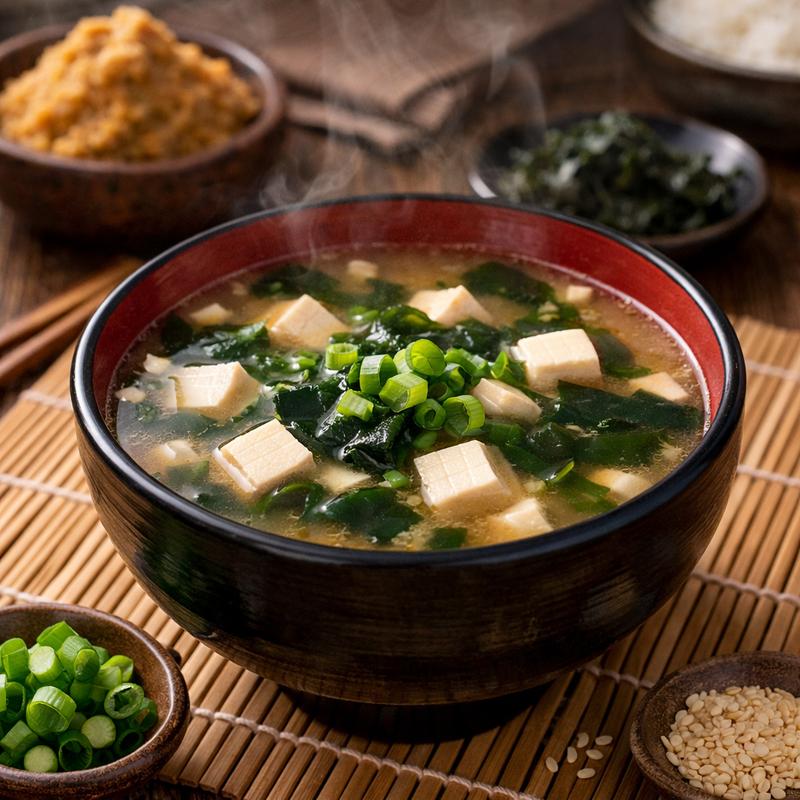
Authentic Miso Soup:
Silken tofu contributes a soft texture, while wakame adds a subtle oceanic character.Although miso soup is often served alongside rice and other dishes as part of a Japanese meal, it is equally enjoyable as a light breakfast, lunch, or comforting snack. The recipe is quick to prepare, but a few important techniques—especially avoiding a hard boil after adding miso—help preserve its delicate flavor.
History of Miso Soup:
Miso has been an important ingredient in Japanese cooking for centuries. Made by fermenting soybeans with koji and salt, miso became an essential source of savory flavor and nutrition in traditional Japanese cuisine.
Miso soup, or misoshiru, developed into an everyday Japanese staple and became especially associated with traditional set meals. It is commonly served alongside steamed rice, pickles, vegetables, fish, and other dishes.There are many regional and household variations of miso soup throughout Japan. Different types of miso, dashi, vegetables, mushrooms, tofu, seafood, and other ingredients can be used depending on the region and season.
Subscribe to our youtube channel Kitchenpedia for more delicious recipes and hit the like button if you enjoyed this youtubevideo. Share it with your friends and Family.
Authentic Miso Soup

Ingredients
- 4 cups dashi
- 3–4 tablespoons white or awase miso paste
- 150 g silken tofu, cut into small cubes
- 2 tablespoons dried wakame seaweed
- 2 green onions, thinly sliced
- 1 teaspoon dried bonito flakes, optional for garnish or additional dashi flavor
- ½ cup sliced mushrooms
- ½ cup thinly sliced daikon
- ½ cup spinach
- 1 teaspoon grated ginger
Instructions
Prepare the Wakame
- Place the dried wakame seaweed in a small bowl.Cover with cool or lukewarm water.Allow it to soak for approximately 5 minutes, or until rehydrated.Drain and gently squeeze out excess water.Cut large pieces into smaller bite-sized pieces.Remember that wakame expands considerably when rehydrated, so a small amount goes a long way.
Prepare the Tofu
- Drain the silken tofu carefully.Cut it into small cubes approximately ½ inch in size.Handle the tofu gently because silken tofu is delicate and can break easily.
Heat the Dashi
- Pour the dashi into a medium saucepan.Heat over medium heat until it reaches a gentle simmer.Do not allow it to boil aggressively.
Add the Wakame
- Add the prepared wakame to the simmering dashi.Cook for approximately 1–2 minutes.
Add the Tofu
- Gently slide the tofu cubes into the pot.Simmer for another 1–2 minutes.Avoid stirring aggressively so the tofu maintains its shape.
Prepare the Miso
- Place the miso paste in a small bowl.Ladle approximately ½ cup of the warm dashi into the bowl.Whisk or stir until the miso is completely dissolved and smooth.This prevents lumps from forming in the soup.
Lower the Heat
- Reduce the heat to low or turn it off temporarily.Slowly pour the dissolved miso into the soup while gently stirring.
Do Not Boil After Adding Miso
- This is one of the most important steps.Avoid bringing the soup to a rolling boil after adding the miso.Gentle heating helps preserve the delicate aroma and flavor of the fermented miso.
Add Green Onions
- Add most of the sliced green onions.Stir gently.Reserve a small amount for garnishing the bowls.
Taste and Adjust
- Taste the soup.If you want a stronger flavor, dissolve another small amount of miso in warm broth and add it gradually.If the soup is too strong, add a little more dashi.
Serve
- Ladle the hot soup into small bowls.Garnish with the remaining green onions.Serve immediately.
Tips for Miso Soup:
- Use homemade dashi when possible for the most traditional flavor.
- Never vigorously boil the dashi.
- Dissolve miso separately before adding it to the pot.
- Use a small whisk or spoon to eliminate miso lumps.
- Handle silken tofu gently.
- Rehydrate only a small amount of wakame.
- Taste the soup before adding additional miso because different brands vary in saltiness.
- Add fresh green onions immediately before serving for the best aroma.
FAQs for Miso Soup:
1. What is authentic miso soup made from?
Traditional miso soup is generally made with dashi and miso paste, with ingredients such as tofu, wakame seaweed, and green onions commonly added.
2. What is dashi?
Dashi is a Japanese stock traditionally made from ingredients such as kombu seaweed and bonito flakes. It provides the characteristic umami foundation of many Japanese dishes.
3. Can I use instant dashi?
Yes. Instant dashi is convenient and works well for everyday homemade miso soup. Choose a good-quality product and follow its preparation instructions.
4. Can I make miso soup vegetarian?
Yes. Prepare dashi using kombu and dried shiitake mushrooms instead of bonito flakes.
5. Can I use red miso?
Absolutely. Red miso produces a stronger, deeper-flavored soup. You may need slightly less miso depending on its saltiness.
6. Why shouldn’t I boil miso soup?
Prolonged boiling can diminish some of the delicate aromas and flavors associated with miso. Gentle heating is preferable after the miso has been added.
7. Can I add vegetables?
Yes. Mushrooms, spinach, daikon, carrots, napa cabbage, and other vegetables can be added according to preference.
8. How long does miso soup last?
For best quality, enjoy it fresh. If storing leftovers, refrigerate promptly in an airtight container and reheat gently without bringing it to a vigorous boil.
Conclusion:
Authentic Miso Soup is a beautiful example of Japanese cooking at its simplest: a flavorful dashi foundation combined with fermented miso and a few carefully selected ingredients. Silken tofu, wakame seaweed, and green onions create a classic combination that is light, nourishing, and deeply satisfying.
The most important technique is to add the miso after reducing the heat and avoid vigorously boiling the finished soup. This helps preserve its delicate aroma and rich umami character.
Whether served alongside steamed rice and Japanese dishes or enjoyed as a simple bowl on its own, homemade miso soup is an easy recipe worth mastering. Once you learn the basic method, you can customize it with seasonal vegetables, mushrooms, tofu, seafood, or different varieties of miso.