

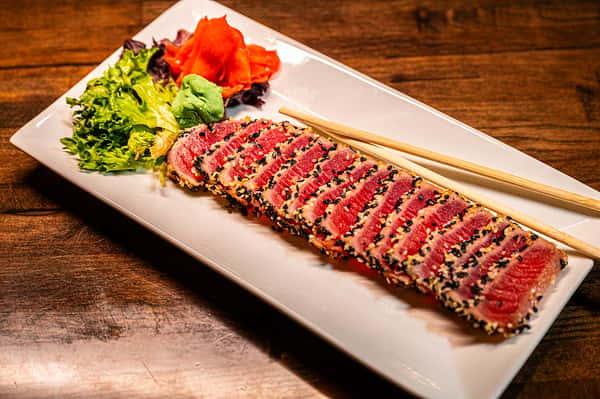
Sesame-Seared Tuna is an elegant Japanese-inspired dish featuring fresh tuna coated in a fragrant mixture of sesame seeds and lightly seasoned before being quickly seared in a very hot pan. The exterior develops a beautifully toasted sesame crust while the center remains tender and rare when prepared with appropriately handled tuna.
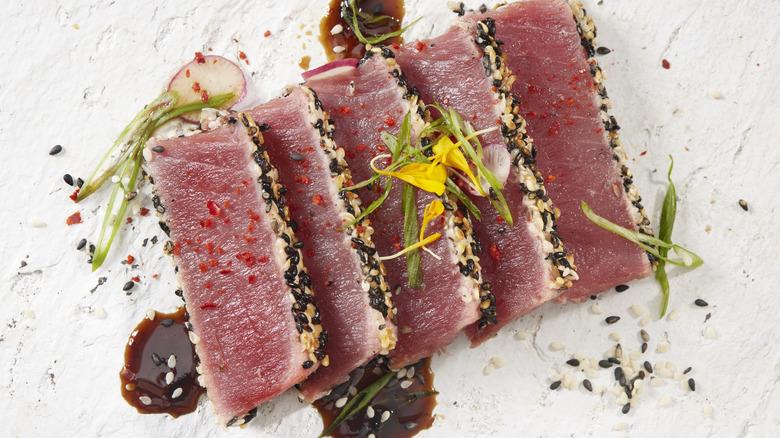
Sesame-Seared Tuna:
This simple recipe brings together the nutty flavor of toasted sesame seeds, the savory richness of soy sauce, and the fresh flavor of tuna. A quick sear creates a delicious contrast between the warm, lightly crisp crust and the cool, tender center. It makes an impressive appetizer, light lunch, or elegant dinner without requiring complicated preparation.
The quality and handling of the tuna are particularly important for this dish because the center is typically left rare. Use tuna specifically sold and handled for raw or rare consumption, keep it properly chilled, and follow local food-safety guidance. If you prefer tuna cooked more thoroughly, simply extend the searing time.
History:
Sesame-Seared Tuna is best understood as a Japanese-inspired preparation rather than one single traditional historical dish. It combines ingredients and techniques strongly associated with Japanese cuisine, including soy sauce, sesame seeds, and quick high-heat cooking.Sesame has been an important ingredient in Japanese cooking for centuries, valued for its rich aroma and nutty flavor. Sesame seeds are used in sauces, dressings, seasonings, and coatings throughout Japanese cuisine.The technique of quickly searing tuna became popular in contemporary restaurant cooking because it highlights the quality of fresh tuna while creating a flavorful cooked exterior. Today, sesame-crusted tuna can be found in Japanese restaurants and modern fusion cuisine around the world.
Subscribe to our youtube channel Kitchenpedia for more delicious recipes and hit the like button if you enjoyed this youtubevideo. Share it with your friends and Family.
Sesame-Seared Tuna

Ingredients
For the Tuna
- 12 oz (340 g) sushi-grade or appropriately handled tuna steak
- 2 tablespoons white sesame seeds
- 1 tablespoon black sesame seeds
- 1 teaspoon toasted sesame oil
- ½ teaspoon grated fresh ginger
- ¼ teaspoon garlic powder or 1 small grated garlic clove
- ¼ teaspoon black pepper
- 1 tablespoon neutral cooking oil
For Serving
- Ponzu sauce
- Wasabi
- Thinly sliced green onions
- Shredded daikon
- Lemon or lime wedges
- Steamed rice
- Cucumber salad
Instructions
Prepare the Tuna
- Pat the tuna steak thoroughly dry using paper towels.If the tuna is very thick, trim it into a neat rectangular piece so that it sears evenly on all sides.Keep the tuna chilled until you are ready to cook it.
Prepare the Marinade
- In a small bowl, combine soy sauce, sesame oil, ginger, garlic, and black pepper.Stir well.
Season the Tuna
- Brush the tuna lightly with the soy mixture.Allow it to rest for approximately 5–10 minutes.Avoid soaking the tuna for too long because excessive moisture can make the sesame coating difficult to adhere.
Prepare the Sesame Coating
- Combine the white and black sesame seeds on a plate.Roll the tuna gently in the sesame mixture, pressing lightly so the seeds adhere to all sides.
Heat the Pan
- Place a heavy skillet over high heat.Add the neutral cooking oil.The pan should be very hot before the tuna is added.
Sear the Tuna
- Place the sesame-coated tuna into the hot pan.Sear each major side for approximately 30–60 seconds, depending on thickness and your preferred level of doneness.For a rare center, the goal is to brown the exterior quickly without cooking deeply into the center.Sear the edges briefly as well.
Rest the Tuna
- Transfer the seared tuna to a clean cutting board.Allow it to rest for approximately 2–3 minutes.
Slice
- Using a very sharp knife, slice the tuna into thin pieces against the grain.Wipe the knife between cuts if necessary for clean slices.
Serve
- Arrange the slices on a serving plate.Garnish with green onions and shredded daikon.Serve immediately with ponzu, soy sauce, and wasabi.
Notes
- Choose suitable tuna: Use tuna from a reputable source and follow its handling instructions.
- Keep the tuna chilled: Refrigerate it until you are ready to prepare the dish.
- Dry the surface well: A dry tuna steak helps the sesame seeds adhere.
- Use a very hot pan: Quick searing develops the crust without overcooking the center.
- Don't overcrowd the pan: Cook the tuna individually if necessary.
- Use a sharp knife: A sharp blade creates clean, attractive slices.
- Serve immediately: Seared tuna is best shortly after cooking.
- Avoid cross-contamination: Keep raw tuna, utensils, and preparation surfaces separate from ready-to-eat foods.
Tips for Sesame-Seared Tuna:
1. Use a Thick Tuna Steak
A thicker piece gives you more control over the exterior sear while keeping the center tender.
2. Pat the Tuna Completely Dry
Excess moisture can interfere with browning and prevent the sesame seeds from sticking properly.
3. Mix Black and White Sesame Seeds
The combination creates a beautiful contrast and adds slightly different toasted flavors.
4. Get the Pan Very Hot
A hot pan allows you to develop a crust quickly rather than slowly cooking the entire tuna steak.
5. Sear the Edges
Briefly searing the edges gives the tuna a more complete toasted sesame crust.
6. Don’t Press Down on the Tuna
Pressing the tuna against the pan can squeeze out moisture and interfere with even cooking.
7. Slice Against the Grain
Cutting across the muscle fibers makes each bite more tender and easier to chew.
8. Add Sauce at the End
Serve ponzu or dipping sauce alongside the tuna rather than soaking the sesame crust, which helps preserve its texture.
FAQs for Sesame-Seared Tuna:
Q: What is Sesame-Seared Tuna?
Sesame-Seared Tuna is a Japanese-inspired dish in which a tuna steak is coated with sesame seeds and quickly seared in a hot pan, typically leaving the center rare or medium-rare.
Q: What type of tuna should I use?
Use fresh tuna from a reputable supplier that is specifically handled and sold for raw or rare consumption if you plan to leave the center undercooked.
Q: Can I use frozen tuna?
Yes, provided it has been properly frozen, thawed, stored, and labeled or supplied as suitable for raw or rare consumption. Thaw it safely under refrigeration.
Q: Can I cook the tuna well done?
Yes. Cook it longer until it reaches your preferred level of doneness. Keep in mind that tuna can become firmer and drier as it cooks more thoroughly.
Q: Why won’t my sesame seeds stick?
The tuna may be too wet. Pat the surface dry, apply a thin layer of seasoning, and press the sesame seeds gently onto the surface.
Q: What sauce goes best with sesame tuna?
Ponzu, soy sauce, wasabi, ginger-soy sauce, or a light sesame dipping sauce all pair well with sesame-seared tuna.
Q: Can I make sesame-seared tuna without sesame oil?
Yes. Sesame seeds provide the main sesame flavor. Use a neutral cooking oil if you prefer.
Q: What should I serve with sesame-seared tuna?
Serve it with steamed Japanese rice, cucumber salad, shredded daikon, edamame, miso soup, or a light green salad.
Conclusion:
Sesame-Seared Tuna is a quick and elegant Japanese-inspired recipe that combines tender tuna with a fragrant, crunchy sesame crust. The high-heat searing technique creates beautifully toasted edges while allowing the interior to remain tender when prepared rare.
The recipe is simple enough for a weeknight meal yet impressive enough for entertaining. Serve it with ponzu, wasabi, steamed rice, cucumber salad, or pickled ginger for a fresh and balanced Japanese-inspired dinner.