

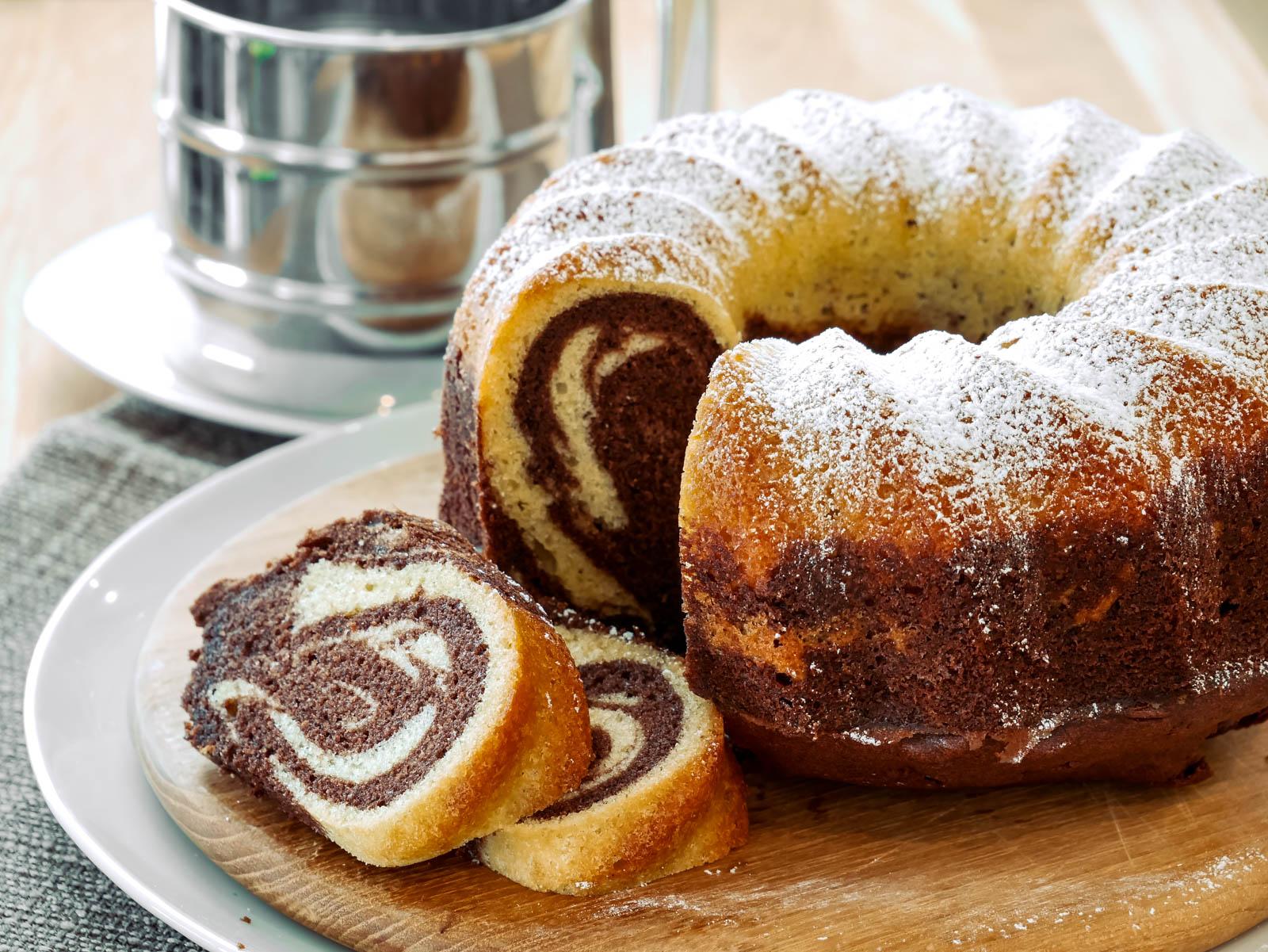
Marmorkuchen, or German Marble Cake, is a classic German Kaffee und Kuchen favorite made from a soft, buttery vanilla cake swirled with rich chocolate batter. The beautiful marbled pattern appears when the two batters are gently combined before baking, creating a cake that looks elegant while remaining wonderfully simple to prepare.
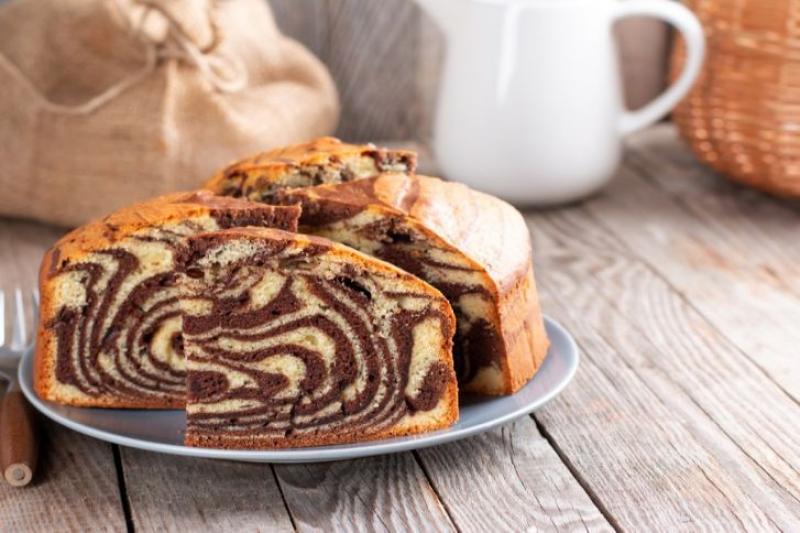
Marmorkuchen:
Unlike heavily frosted layer cakes, traditional German marble cake usually lets the flavor and texture of the cake speak for themselves. A generous amount of butter gives the crumb a rich, tender texture, while vanilla and cocoa create two complementary flavors in every slice. A light chocolate glaze is often added for an extra finishing touch.
This homemade Marmorkuchen is especially delicious with a cup of coffee or tea. It is perfect for weekend baking, family gatherings, birthdays, afternoon coffee, holidays, or whenever you want a classic European-style cake that looks impressive without requiring complicated decorating.
History:
Marmorkuchen has a long-standing place in German home baking and is closely associated with the tradition of Kaffee und Kuchen, where homemade cake is enjoyed with coffee or tea.
Marble cakes became popular because they offered an attractive way to combine two familiar cake flavors—light vanilla and darker chocolate—without requiring separate cakes or elaborate decoration. The contrasting batters are layered and swirled together to create the characteristic marble appearance.
German versions are commonly baked in a Gugelhupf or Bundt-style pan, although loaf and rectangular versions are also possible. Recipes vary between households, with some using butter, others oil, and some adding rum, lemon zest, sour cream, or a chocolate glaze. This recipe follows a classic buttery German-style approach
Subscribe to our youtube channel Kitchenpedia for more delicious recipes and hit the like button if you enjoyed this youtubevideo. Share it with your friends and Family.
Marmorkuchen (German Marble Cake)

Ingredients
For the Cake
- 2½ cups (315 g) all-purpose flour
- 2 teaspoons baking powder
- ¼ teaspoon salt
- 1 cup (225 g) unsalted butter, softened
- 1 cup (200 g) granulated sugar
- 4 large eggs, room temperature
- 2 teaspoons vanilla extract
- 1 tablespoon finely grated lemon zest, optional
- ¾ cup (180 ml) whole milk
- 3 tablespoons unsweetened cocoa powder
- 2 tablespoons milk, for the chocolate batter
- 1 tablespoon granulated sugar, for the chocolate batter
For the Chocolate Glaze
- 4 ounces (115 g) semisweet or dark chocolate
- 2 tablespoons unsalted butter
- 2 tablespoons heavy cream or milk
For Finishing
- Powdered sugar, optional
- Chocolate shavings, optional
Instructions
Prepare the Pan
- Preheat the oven to 350°F (175°C).Generously grease a 10-inch Bundt or Gugelhupf-style pan, making sure to reach all the grooves and corners.Lightly dust the pan with flour and shake out the excess.Proper preparation is important because the cake has a tender crumb and needs to release cleanly from the detailed pan
Mix the Dry Ingredients
- In a medium bowl, whisk together the flour, baking powder, and salt.Set the mixture aside.
Cream the Butter and Sugar
- Place the softened butter and sugar in a large mixing bowl.Beat for approximately 3–4 minutes, until pale, fluffy, and creamy.This step helps incorporate air into the batter and contributes to a light texture.
Add the Eggs
- Add the eggs one at a time, beating well after each addition.Add the vanilla extract and lemon zest if using.If the mixture appears slightly curdled, continue with the recipe; it will smooth out as the flour is incorporated.
Combine the Batter
- Add about one-third of the flour mixture to the butter mixture.Mix gently, then add half of the milk.Repeat, finishing with the remaining flour mixture.Mix only until the batter is smooth and combined.Do not overmix.
Create the Chocolate Batter
- Transfer approximately one-third of the vanilla batter to a separate bowl.Add the cocoa powder, 2 tablespoons of milk, and 1 tablespoon of sugar.Add the optional rum if desired.Mix gently until the chocolate batter is smooth.The extra milk helps keep the cocoa portion as soft as the vanilla batter.
Layer the Batters
- Spoon approximately half of the vanilla batter into the prepared Bundt pan.Add the chocolate batter over the vanilla layer.Finish with the remaining vanilla batter.Do not worry about perfectly even layers.
Create the Marble Pattern
- Insert a butter knife or wooden skewer into the batter.Gently swirl it through the cake in a few large circular or zigzag movements.Avoid excessive swirling because overmixing the two batters will remove the distinct marble pattern.
Bake the Cake
- Place the pan in the preheated oven.Bake for approximately 50–60 minutes.Check the cake around the 50-minute mark.A wooden skewer inserted into the thickest part should come out clean or with a few moist crumbs.
Cool the Cake
- Remove the cake from the oven and allow it to cool in the pan for approximately 10–15 minutes.Carefully invert it onto a wire rack.Allow it to cool completely before glazing.
Glaze and Serve
- Drizzle the chocolate glaze over the completely cooled Marmorkuchen.Allow the glaze to set for several minutes.Alternatively, dust the cake lightly with powdered sugar for a simpler traditional-style finish.Slice and serve with coffee, tea, whipped cream, or fresh berries.
Notes
- Use room-temperature ingredients: Room-temperature butter and eggs combine more easily and create a smoother batter.
- Grease the Bundt pan carefully: Make sure every groove is coated with butter or baking spray and flour.
- Do not overmix: Overmixing can develop too much gluten and make the cake dense.
- Keep the batters similar in texture: The chocolate batter should remain soft enough to swirl easily through the vanilla batter.
- Swirl gently: A few large swirls create a more attractive marble pattern than extensive mixing.
- Check before removing: Baking times vary depending on the pan and oven, so use a skewer to check for doneness.
- Cool before glazing: Warm cake can cause the glaze to melt and slide off.
- Slice with a sharp knife: A sharp serrated or chef's knife helps reveal the marble pattern cleanly.
Tips for Marmorkuchen:
- Beat the butter thoroughly: Proper creaming gives the cake a lighter and more delicate crumb.
- Add eggs gradually: Adding them one at a time reduces the chance of the batter separating.
- Sift the cocoa powder: This prevents cocoa lumps in the chocolate portion.
- Do not over-swirl: Stop as soon as you see a beautiful streaked pattern.
- Tap the pan gently: After adding the batter, lightly tap the pan on the counter to remove large air pockets.
- Use a light-colored Bundt pan when possible: Dark pans can brown the exterior more quickly.
- Let the cake rest: Allowing the cake to cool properly makes it easier to remove without breaking.
- Glaze after cooling: A fully cooled cake produces a cleaner, more attractive chocolate finish.
FAQs for Marmorkuchen:
1. What does Marmorkuchen mean?
Marmorkuchen literally means “marble cake” in German. The name refers to the distinctive marbled pattern created by combining light vanilla and dark chocolate batters.
2. What pan is traditionally used for Marmorkuchen?
A Bundt or Gugelhupf-style pan is commonly used for German marble cake. Its ring shape helps the cake bake evenly while giving it a traditional appearance.
3. Why did my marble pattern disappear?
The most common reason is excessive swirling. Use only a few gentle movements with a knife or skewer to keep the vanilla and chocolate sections distinct.
4. Can I make Marmorkuchen without a Bundt pan?
Yes. A loaf pan or suitable round cake pan can be used, although the baking time will change depending on the pan size and depth.
5. Can I use oil instead of butter?
Yes, but butter provides the rich flavor and texture associated with a classic German-style marble cake. If substituting oil, expect a somewhat different crumb.
6. Why is my cake dry?
Overbaking, excessive flour, or insufficient fat or liquid can result in a dry cake. Measure ingredients carefully and check the cake toward the end of the recommended baking time.
7. How should I store Marmorkuchen?
Store the cake covered at room temperature for a couple of days. For longer storage, refrigerate it in an airtight container, especially if it has a dairy-based topping.
8. Can I freeze German Marble Cake?
Yes. Wrap the completely cooled, unglazed cake tightly and freeze it. Thaw at room temperature and add the glaze after thawing if desired.
Conclusion:
Marmorkuchen is a timeless German cake that proves simple ingredients can create an exceptionally beautiful dessert. The combination of buttery vanilla cake and rich cocoa batter creates a distinctive marble pattern while delivering a delicious balance of flavors in every slice.
Whether you enjoy it with a traditional cup of coffee, serve it at an afternoon gathering, or prepare it for a family celebration, this German Marble Cake is both elegant and comforting. A chocolate glaze adds extra richness, while powdered sugar offers a simpler classic finish.
With its tender crumb, beautiful swirls, and unmistakable German baking character, homemade Marmorkuchen is a wonderful recipe to keep in your dessert collection.