

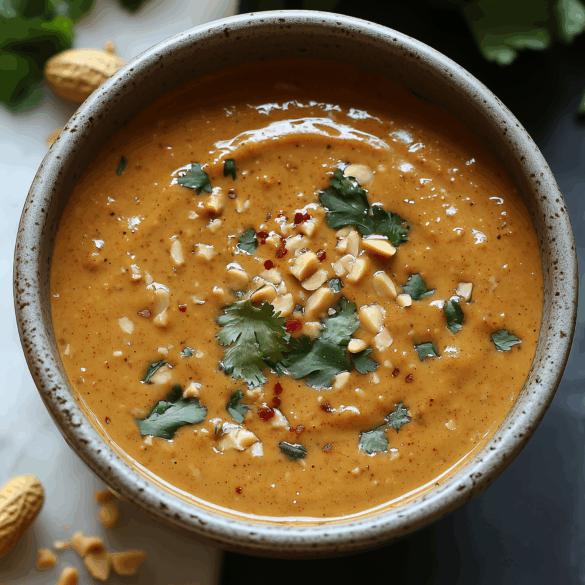
Satay Sauce is a rich, creamy, nutty, and wonderfully aromatic peanut sauce that is traditionally served with grilled satay. Popular throughout Indonesia and across Southeast Asia, this flavorful sauce combines roasted peanuts with coconut milk, sweet soy sauce, tamarind, chilies, garlic, shallots, and aromatic spices. The result is a beautifully balanced sauce that is savory, sweet, slightly tangy, mildly spicy, and irresistibly creamy.
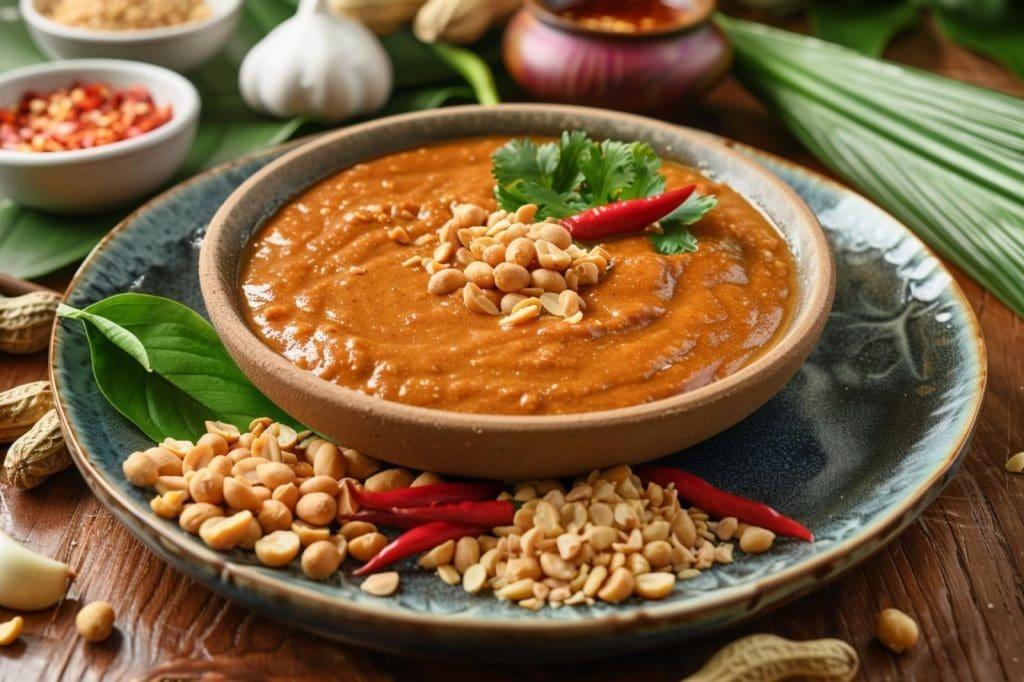
Satay Sauce:
The secret to excellent satay sauce is creating layers of flavor. Roasted peanuts provide richness and nuttiness, while coconut milk gives the sauce a smooth texture. Indonesian sweet soy sauce, or kecap manis, adds sweetness and depth, while tamarind contributes a gentle sour note that prevents the sauce from becoming too heavy. Aromatics such as garlic, shallots, ginger, coriander, and chilies give the sauce its distinctive Southeast Asian character.
Homemade satay sauce is incredibly versatile and easy to prepare. It can be served with chicken satay, beef satay, pork satay, tofu, vegetables, rice bowls, noodles, spring rolls, or grilled seafood. Once you learn how to make this creamy peanut sauce at home, you will have a flavorful condiment that can transform simple meals into something special.
History:
Satay is one of Indonesia’s best-known culinary traditions, consisting of small pieces of seasoned meat threaded onto skewers and grilled over heat. It is commonly served with a flavorful peanut-based sauce, although recipes and accompaniments vary considerably between regions.Peanut sauces became deeply associated with Indonesian cuisine because peanuts are widely used in the country’s cooking. Different regional satay traditions may use different combinations of peanuts, chilies, coconut, spices, sweet soy sauce, tamarind, and other local ingredients.
Subscribe to our youtube channel Kitchenpedia for more delicious recipes and hit the like button if you enjoyed this youtubevideo. Share it with your friends and Family.
Satay Sauce

Ingredients
For the Peanut Base
- 1½ cups roasted unsalted peanuts
- ¾ cup coconut milk
- ½ cup warm water
- 2 tablespoons Indonesian sweet soy sauce (kecap manis)
- 1 tablespoon tamarind paste
- 1–2 tablespoons brown sugar or palm sugar
- 1 tablespoon vegetable oil
For the Spice Paste
- 4 shallots, roughly chopped
- 3 garlic cloves
- 1-inch piece fresh ginger
- 2–4 red chilies, according to desired heat
- 1 teaspoon ground coriander
- ½ teaspoon ground cumin
- ¼ teaspoon ground turmeric
For Finishing
- 1–2 tablespoons lime juice
- 1 teaspoon toasted sesame oil, optional
- 2–4 tablespoons warm water, as needed for consistency
- Chopped roasted peanuts, for garnish
- Sliced red chilies, optional
Instructions
Prepare the Peanuts
- If using raw peanuts, roast them in a dry skillet over medium-low heat until golden and fragrant.Allow them to cool completely.If using roasted unsalted peanuts, you can proceed directly to the next step.Avoid heavily salted peanuts because they can make the finished sauce too salty.
Make the Spice Paste
- Add the shallots, garlic, ginger, red chilies, coriander, cumin, turmeric, and salt to a food processor or blender.Add a tablespoon or two of water if necessary.Blend until a smooth or slightly coarse aromatic paste forms.For a more traditional texture, the ingredients can also be ground using a mortar and pestle.
Crush the Peanuts
- Place the roasted peanuts in a food processor.Pulse several times until they become finely crushed.Do not process them continuously for too long, or they may turn into peanut butter.A slightly coarse peanut texture gives homemade satay sauce wonderful character
Sauté the Spice Paste
- Heat the vegetable oil in a medium saucepan over medium heat.Add the spice paste.Cook for approximately 3–5 minutes, stirring frequently.The mixture should become highly fragrant and slightly darker.If using lemongrass or kaffir lime leaves, add them during this stage.
Add the Peanuts
- Add the crushed roasted peanuts to the saucepan.Stir thoroughly so the peanuts become coated with the aromatic spice mixture.Cook for approximately 1–2 minutes.This allows the roasted peanut flavor to blend with the spices.
Add Sweet Soy Sauce and Tamarind
- Add the kecap manis, tamarind paste, and brown sugar or palm sugar.Stir well.Allow the sauce to come to a very gentle simmer.Do not boil it aggressively because coconut milk can separate at high temperatures.
Simmer the Sauce
- Simmer the satay sauce gently for approximately 8–10 minutes.Stir frequently to prevent the peanuts from sticking to the bottom of the pan.As the sauce cooks, it will become thicker, darker, and more aromatic.If the sauce becomes too thick, gradually add warm water.
Adjust the Flavor
- Taste the sauce carefully.Add more kecap manis if you want additional sweetness.Add more tamarind or lime juice for extra tanginess.Add chilies or chili paste for more heat.Add a small amount of salt if necessary.The ideal satay sauce should have a balance of sweet, savory, nutty, tangy, creamy, and mildly spicy flavors.
Add Lime Juice
- Turn off the heat.Stir in the fresh lime juice.Adding lime juice at the end keeps the flavor bright and fresh.If desired, add a small amount of toasted sesame oil for additional nuttiness.
Serve Warm
- Transfer the satay sauce to a serving bowl.Garnish with chopped roasted peanuts, sliced red chilies, or fresh cilantro.Serve warm alongside freshly grilled satay.
Notes
- Use roasted peanuts: Roasted peanuts provide a deeper and more intense nutty flavor than raw peanuts.
- Choose unsalted peanuts: This gives you better control over the final salt level.
- Use kecap manis: Indonesian sweet soy sauce gives the sauce its characteristic sweetness, color, and depth.
- Do not boil aggressively: Gentle simmering helps maintain a smooth texture when using coconut milk.
- Adjust the thickness: Add warm water gradually because the sauce thickens as it cools.
- Balance the flavors: Satay sauce should not taste overwhelmingly sweet, spicy, or sour. Balance all three.
- Add lime at the end: Fresh lime juice gives the finished sauce a brighter flavor.
- Taste before adding salt: Soy sauce, peanuts, and other ingredients can already contain salt.
Tips for Satay Sauce:
- Roast peanuts yourself: Freshly roasted peanuts give the sauce an especially rich aroma and flavor.
- Do not over-blend the peanuts: Leaving some small pieces creates a more authentic homemade texture.
- Cook the spice paste properly: Sautéing until fragrant removes the raw taste of the aromatics.
- Use low heat after adding coconut milk: This reduces the chance of the sauce separating.
- Add water gradually: It is much easier to thin a thick sauce than to correct a sauce that has become too watery.
- Make it ahead: Satay sauce often tastes even better after resting because the flavors have time to blend.
- Keep a clean portion for serving: If using the sauce for marinating raw meat, never return that portion to the serving bowl unless it is thoroughly cooked.
- Serve warm: Gentle reheating makes the peanut sauce creamy and easy to dip or drizzle.
FAQs for Satay Sauce:
1. What is satay sauce made of?
Satay sauce is commonly made from roasted peanuts, coconut milk or water, chilies, garlic, shallots, sweet soy sauce, sugar, and acidic ingredients such as tamarind or lime. Recipes vary across regions.
2. Is sauce the same as peanut sauce?
Satay sauce is a type of peanut sauce traditionally associated with satay. However, peanut sauces can vary widely in ingredients, texture, sweetness, and regional style.
3. Can I make satay without coconut milk?
Yes. Replace the coconut milk with warm water or a light stock. The sauce will be less creamy but will still have excellent peanut flavor.
4. Can I use peanut butter?
Yes. Natural smooth or crunchy peanut butter can be used as a shortcut. However, freshly roasted and crushed peanuts provide a more traditional homemade texture and flavor.
5. How spicy should sauce be?
The spice level is completely adjustable. Use fewer chilies for a mild sauce and increase the chilies or add chili paste for a hotter version.
6. Can I make sauce ahead of time?
Yes. Satay sauce can be prepared ahead and refrigerated in an airtight container. Reheat gently and add a little warm water if it becomes too thick.
7. How long does homemade sauce last?
When refrigerated promptly in a clean, airtight container, homemade satay sauce is best used within approximately 3–4 days.
8. Can sauce be frozen?
Yes. Allow the sauce to cool completely, place it in a freezer-safe container, and freeze. Thaw in the refrigerator and reheat gently, adding warm water to restore the desired consistency.
Conclusion:
Satay Sauce is one of the most delicious and versatile sauces to keep in your homemade recipe collection. Its combination of roasted peanuts, creamy coconut milk, aromatic spices, sweet kecap manis, tangy tamarind, garlic, shallots, and chilies creates a rich flavor that pairs beautifully with grilled foods.Although it is traditionally served with satay, this homemade peanut sauce can be used in countless ways. Drizzle it over vegetables, noodles, rice bowls, tofu, or seafood, or simply use it as a dipping sauce for your favorite appetizers.The best part is that you can easily customize the sauce to suit your taste. Make it spicy, sweet, tangy, chunky, smooth, thick, or pourable. Once prepared, this flavorful Indonesian-style sauce can turn simple grilled foods into a restaurant-quality meal.