

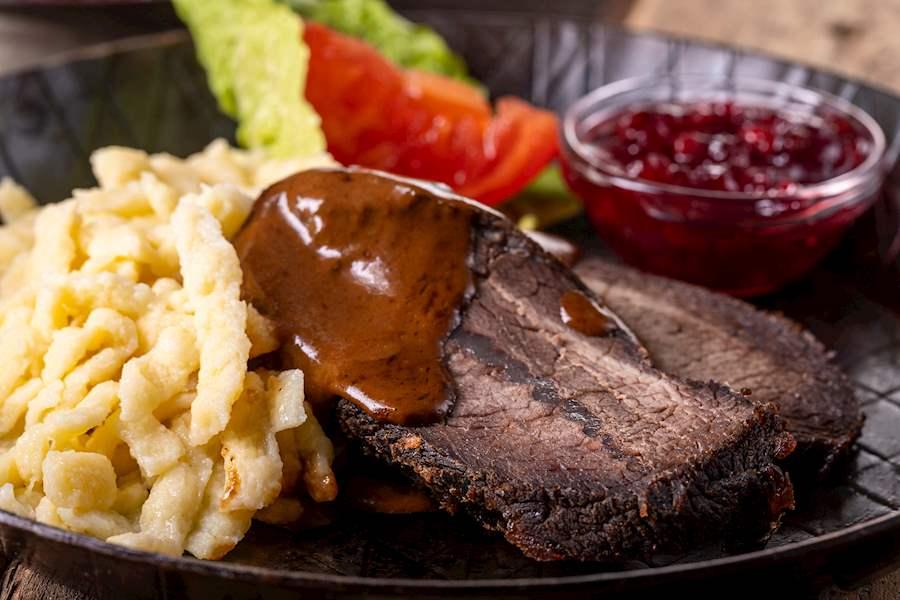
Traditional Sauerbraten is one of Germany’s most beloved classic pot roasts, known for its tender texture, deep savory flavor, and distinctive sweet-and-sour gravy. Beef is slowly marinated for several days in a flavorful mixture of vinegar, red wine, onions, and aromatic spices before being seared and gently braised until exceptionally tender. The long marinating process gives the meat its characteristic tangy flavor while slow cooking creates a rich and comforting roast.The word Sauerbraten translates roughly to sour roast referring to the vinegar-based marinade traditionally used to flavor and tenderize the meat.
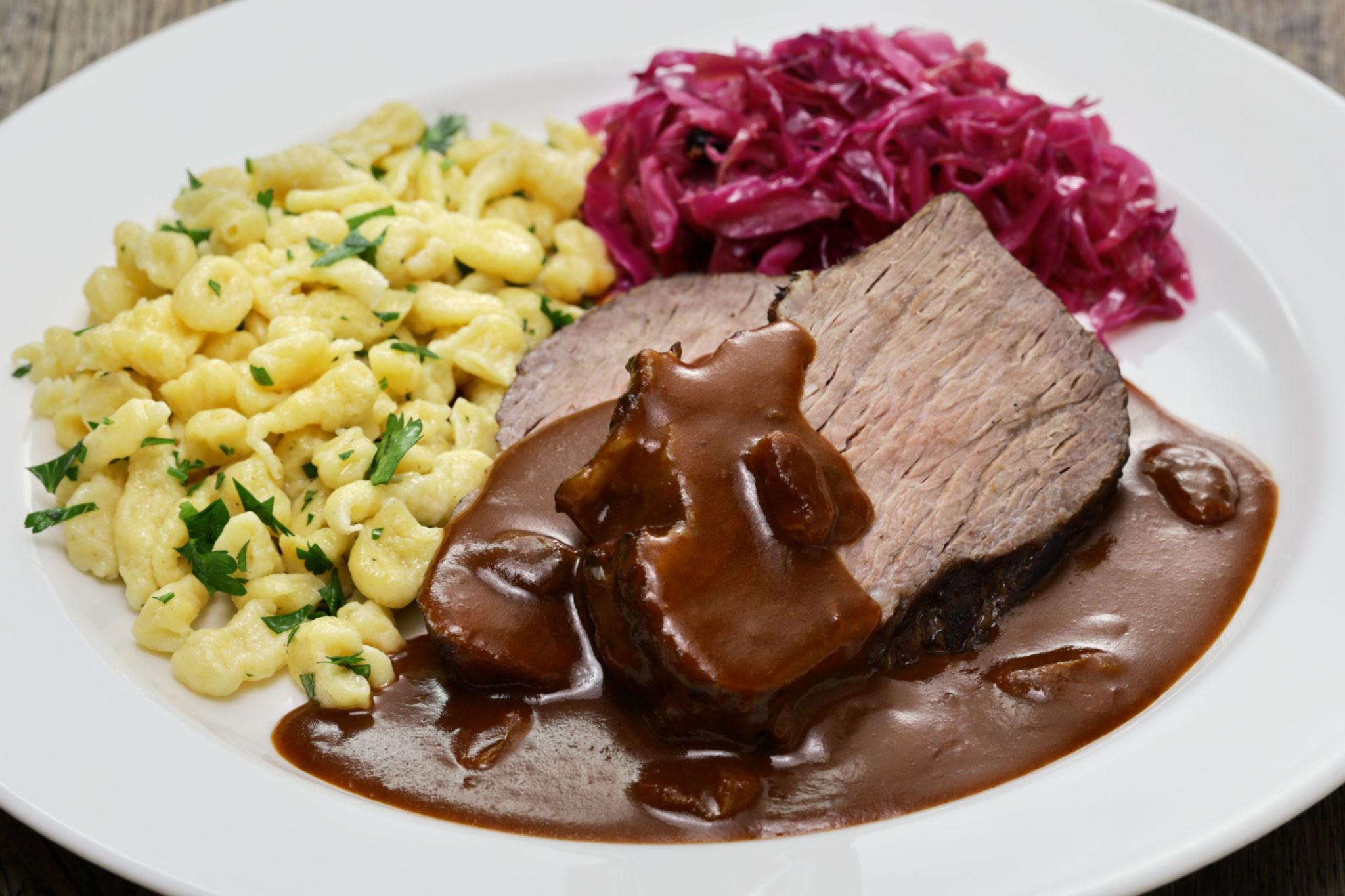
Traditional Sauerbraten:
Although recipes vary throughout Germany, many versions include ingredients such as bay leaves, cloves, peppercorns, juniper berries, onions, and red wine. The finished gravy is often balanced with a touch of sweetness and may be thickened with crushed gingerbread, cookies, or a flour-based roux.This traditional German roast is perfect for Sunday dinners, holidays, Christmas gatherings, and special family meals. Served with potato dumplings, spaetzle, red cabbage, or mashed potatoes, Sauerbraten creates a hearty German feast filled with comforting aromas and old-world flavor.
History of Traditional Sauerbraten:
Sauerbraten has a long history in German cuisine, although its exact origins are difficult to trace to a single region. The dish developed as a practical way of preserving, tenderizing, and flavoring tougher cuts of meat before refrigeration was widely available.The long acidic marinade was particularly useful for transforming less tender beef into a flavorful roast. Vinegar, wine, onions, and spices not only contributed flavor but also helped preserve the meat for a period of time.Different regions of Germany developed their own Sauerbraten traditions. Rhineland Sauerbraten is especially famous and may include sweeteners such as raisins or beet syrup, while other regional preparations use different combinations of vinegar, wine, spices, and gravy ingredients.
Subscribe to our youtube channel Kitchenpedia for more delicious recipes and hit the like button if you enjoyed this youtubevideo. Share it with your friends and Family.
Traditional Sauerbraten

Ingredients
For the Beef
- 3½–4 pounds beef chuck roast or bottom round roast
- 2 tablespoons vegetable oil
- 1½ teaspoons salt
- 1 teaspoon freshly ground black pepper
For the Marinade
- 2 cups red wine
- 1½ cups red wine vinegar or apple cider vinegar
- 1½ cups water
- 1 large onion, sliced
- 2 garlic cloves, smashed
- 2 bay leaves
- 6 whole cloves
- 8–10 black peppercorns
- 4 juniper berries, lightly crushed, optional
- 1 teaspoon mustard seeds
- 1 teaspoon salt
- 1 teaspoon brown sugar
For the Braising Liquid
- Reserved strained marinade
- 1½ cups beef broth
- 1 tablespoon tomato paste
- 1 tablespoon brown sugar
- 1 tablespoon butter
For Thickening the Gravy
- 2–3 tablespoons all-purpose flour
- ¼ cup cold water
- 2–3 tablespoons crushed gingerbread cookies or gingersnaps, optional
For Garnishing
- Fresh parsley
- Thinly sliced red cabbage
- Freshly ground black pepper
Instructions
Prepare the Marinade
- Place the red wine, vinegar, water, sliced onion, carrots, garlic, bay leaves, cloves, peppercorns, juniper berries, mustard seeds, salt, and brown sugar in a large saucepan.Bring the mixture to a gentle simmer.Cook for approximately 5 minutes to allow the spices and vegetables to release their aromas.Remove from the heat and allow the marinade to cool completely.Do not place raw beef into hot marinade.
Marinate the Beef
- Place the beef roast in a large nonreactive container or food-safe resealable bag.Pour the completely cooled marinade over the beef.Make sure the meat is well covered.Cover and refrigerate for 3–4 days, turning the roast once or twice each day so the marinade flavors the meat evenly.
Remove and Dry the Beef
- Remove the beef from the marinade and pat it thoroughly dry with paper towels.Reserve the marinade.Strain the marinade through a fine-mesh sieve, separating the liquid from the vegetables and spices.Keep the strained liquid for the braising process.
Sear the Beef
- reheat a large Dutch oven or heavy oven-safe pot over medium-high heat.Add the vegetable oil.Season the beef lightly with salt and black pepper.Place the roast in the pot and sear it on all sides until deeply browned.This may take approximately 10–15 minutes.Do not rush this step because the browned surface adds considerable depth to the finished gravy.
Cook the Aromatic Vegetables
- Add the reserved marinade vegetables to the same pot.Cook for approximately 5 minutes, stirring occasionally.Add the tomato paste and cook for another minute.
Slowly Braise the Beef
- Preheat the oven to 325°F (165°C).Bring the liquid to a gentle simmer on the stovetop.Cover the Dutch oven tightly with its lid.Transfer it to the oven.Braise for approximately 3–4 hours, turning the roast once or twice during cooking.The beef is ready when it is exceptionally tender and can be easily pierced with a fork.
Rest the Beef
- Remove the roast from the Dutch oven and transfer it to a cutting board.Cover loosely with foil.Allow it to rest for approximately 15–20 minutes.This helps the meat retain its juices and makes it easier to slice.
Strain the Gravy
- Pour the braising liquid through a fine-mesh sieve into a saucepan.Press gently on the vegetables to extract their flavorful liquid.Discard the strained solids.Skim excess fat from the surface if necessary.
Slice the Sauerbraten
- Using a sharp knife, slice the rested beef across the grain.Aim for moderately thin slices that remain sturdy enough to hold together.
Serve
- Arrange the Sauerbraten on a large serving platter.Spoon plenty of rich gravy over the sliced beef.Garnish with fresh parsley.Serve immediately with potato dumplings, spaetzle, red cabbage, or mashed potatoes.
Notes
- Use a suitable beef roast: Chuck roast provides excellent tenderness and flavor after long braising.
- Cool the marinade completely: Never place raw beef into hot marinade.
- Marinate for several days: The extended marinade is an important characteristic of traditional Sauerbraten.
- Turn the beef: Rotating the roast during marination helps distribute the flavor.
- Dry the beef before searing: Excess moisture prevents proper browning.
- Do not boil aggressively: Sauerbraten becomes more tender when braised gently.
- Taste the gravy: The balance between sour, sweet, salty, and savory flavors is essential.
- Slice across the grain: This produces more tender bites.
Tips for Traditional Sauerbraten:
- Choose a nonreactive container: Glass, stainless steel, or food-safe plastic is best for an acidic marinade.
- Prepare the marinade ahead: Making it the day before marinating allows the flavors to develop.
- Brown the beef thoroughly: A dark sear creates a much richer finished sauce.
- Use a Dutch oven: Its heavy construction maintains steady heat during long braising.
- Do not discard the marinade: Strain it carefully and use the liquid for the braising sauce.
- Use gingerbread sparingly: It can add authentic sweetness and spice while thickening the gravy.
- Rest before slicing: A short resting period helps retain the roast’s juices.
- Make it one day ahead: Sauerbraten often tastes even better after resting overnight because the flavors have additional time to meld.
FAQs for Traditional Sauerbraten:
1. What is Sauerbraten?
Sauerbraten is a traditional German pot roast in which beef is marinated for several days in an acidic mixture containing vinegar, wine, vegetables, and spices before being slowly braised until tender.
2. Why is Sauerbraten marinated for so long?
The extended acidic marinade gives the beef its characteristic tangy flavor and helps tenderize the meat. It also allows the aromatic spices and vegetables to penetrate deeply into the roast.
3. What cut of beef is best for Sauerbraten?
Beef chuck roast is an excellent choice because its connective tissue breaks down during slow cooking, producing exceptionally tender meat. Bottom round can also be used for a more traditional lean roast.
4. Can I marinate Sauerbraten for only one day?
A shorter marinade can work, but traditional Sauerbraten benefits from several days of marination. Three to four days provides a deeper and more characteristic flavor.
5. Does Sauerbraten taste very sour?
It has a noticeable tangy flavor, but a well-balanced Sauerbraten should not taste harshly sour. Sweeteners, wine, stock, and the rich gravy help balance the acidity.
6. Why are gingerbread cookies used in Sauerbraten gravy?
In some German regional preparations, crushed gingerbread or gingersnaps add sweetness, warm spice, body, and thickness to the gravy.
7. Can I make Sauerbraten in a slow cooker?
Yes. After marinating and searing the beef, transfer it to a slow cooker with the braising liquid and cook on LOW until very tender, generally around 7–9 hours depending on the size and cut.
8. Can I make Sauerbraten ahead of time?
Yes. Sauerbraten is an excellent make-ahead dish. The cooked roast and gravy can be refrigerated and gently reheated, and many cooks find the flavor improves after resting overnight.
Conclusion:
Traditional Sauerbraten is a wonderful example of classic German comfort food, combining a long vinegar-and-wine marinade with slow braising to create exceptionally tender and flavorful beef. The combination of aromatic spices, onions, red wine, vinegar, and a rich sweet-tangy gravy gives this traditional roast its unmistakable character.Although the recipe takes several days because of the marinating time, most of that time requires very little hands-on work. Once the beef is marinated, the cooking process is straightforward: sear it well, slowly braise it until tender, and transform the flavorful cooking liquid into a luxurious gravy.Serve the finished Sauerbraten with potato dumplings, spaetzle, braised red cabbage, and plenty of gravy for a memorable German-style feast. It is especially suited to Sunday dinners, Christmas, holidays, and special gatherings where slow-cooked traditional food can truly shine.