

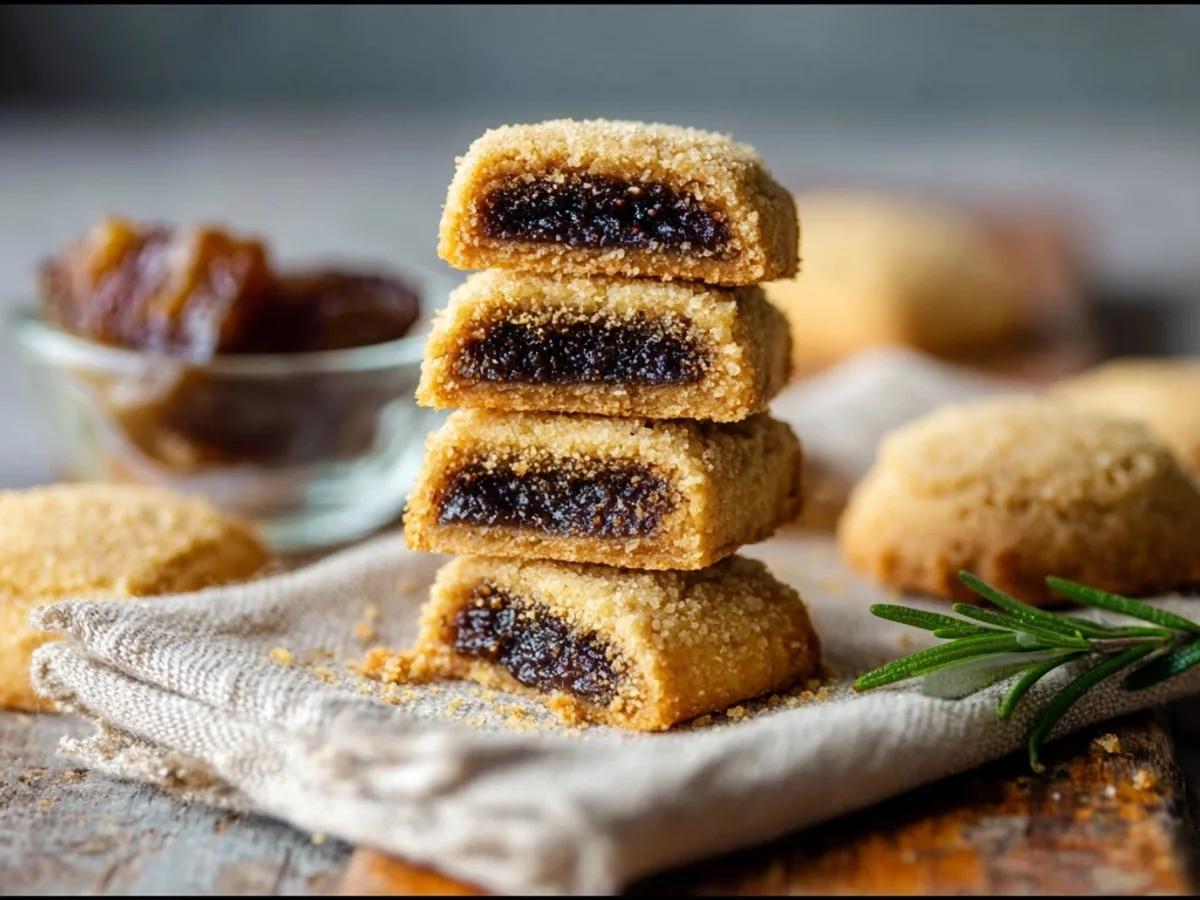
Homemade Fig Newtons are delicious, soft-baked cookies filled with a sweet, rich fig mixture and wrapped in a tender, lightly golden pastry. These classic fruit-filled treats combine the natural sweetness of figs with a delicate cookie exterior, creating a comforting dessert that is perfect for afternoon snacks, lunchboxes, tea-time treats, or a quick sweet bite. Making them at home allows you to enjoy their wonderful flavor with fresh ingredients and a filling tailored to your taste.One of the best things about homemade Fig Newtons is their delightful balance of textures. The outside is soft and cake-like, while the center contains a thick, jammy fig filling with a naturally fruity flavor. A little cinnamon, vanilla, and citrus zest can make the filling even more aromatic.

Homemade Fig Newtons:
Unlike ordinary cookies, these treats have a generous fruit center in every bite, making them especially appealing to anyone who enjoys traditional baked goods.This homemade recipe uses simple pantry ingredients and dried figs, which are available throughout the year. Although shaping the filled cookies takes a little patience, the process is straightforward once the dough and filling are prepared. You can bake a batch for your family, prepare them ahead for busy mornings, or serve them with tea or coffee. After trying these fresh, homemade fruit-filled cookies, you may find yourself returning to this recipe whenever you crave a nostalgic bakery-style treat.
History:
Fig-filled pastries have a long history in Mediterranean and Middle Eastern food traditions, where figs have been enjoyed for thousands of years. Bakers have traditionally combined dried figs with dough to create sweet pastries that preserve the fruit’s rich flavor and provide a convenient snack.The commercially famous Fig Newton cookie is associated with the F. A. Kennedy Steam Bakery in Cambridge, Massachusetts, which developed the product in the late nineteenth century. The cookies were named after Newton, Massachusetts. The Kennedy Biscuit Company later became part of the National Biscuit Company, now known as Nabisco. Over time, the familiar fruit-filled cookie became a popular American snack.Homemade Fig Newtons are inspired by this classic treat but allow bakers to prepare their own dough and fruit filling. With dried figs, warm spices, and a soft cookie crust, this version brings a traditional favorite into the home kitchen.
Subscribe to our youtube channel Kitchenpedia for more delicious recipes and hit the like button if you enjoyed this youtubevideo. Share it with your friends and Family.
Homemade Fig Newtons

Ingredients
For the Fig Filling
- 2 cups dried figs, stems removed and chopped
- 1/2 cup water
- 1/4 cup orange juice
- 2 tablespoons honey or brown sugar
- 1 teaspoon lemon juice
- 1/2 teaspoon ground cinnamon
- 1/2 teaspoon vanilla extract
For the Cookie Dough
- 2 cups all-purpose flour
- 1/2 cup unsalted butter, softened
- 1/2 cup brown sugar
- 1 large egg
- 1/4 cup honey or maple syrup
- 1 teaspoon vanilla extract
- 1/2 teaspoon baking powder
- 1/4 teaspoon baking soda
- 1/4 teaspoon salt
- 1–2 tablespoons milk, if needed
Instructions
- Remove the stems from the dried figs and chop them into small pieces. Place the figs in a saucepan with the water and orange juice.Bring the mixture to a gentle simmer over medium-low heat. Cook for approximately 8–12 minutes, stirring occasionally, until the figs soften and absorb much of the liquid.If the figs are particularly dry, add a little extra water as needed.
- Add the honey or brown sugar, lemon juice, cinnamon, vanilla extract, and optional orange zest to the softened figs.Stir well and cook for another 2–4 minutes until the mixture becomes thick and jam-like. Use a fork, potato masher, or food processor to create a smooth or slightly textured filling.Allow the filling to cool completely before assembling the cookies. A thick filling is important because a watery mixture can leak during baking.
- In a large mixing bowl, beat the softened butter and brown sugar until creamy.Add the egg, honey, and vanilla extract. Mix until everything is well combined.In a separate bowl, whisk together the flour, baking powder, baking soda, and salt. Gradually add the dry ingredients to the butter mixture, stirring until a soft dough forms.If the dough feels too dry, add milk one teaspoon at a time. Avoid adding too much liquid, as the dough should be soft enough to roll without becoming sticky.
- Divide the dough into two equal portions and flatten each portion into a rectangular disc. Wrap them and refrigerate for approximately 30 minutes.Chilling makes the dough easier to handle and helps the cookies retain their shape during baking.
- Preheat the oven to 175°C (350°F). Line a baking tray with parchment paper.Place one portion of dough between two sheets of parchment paper and roll it into a long rectangle approximately 3–4 mm thick. Repeat with the second portion.Trim the edges if necessary to create neat rectangular strips.
- Spoon the cooled fig filling lengthwise down the center of each dough strip. Spread it evenly, leaving enough space along the edges to fold the dough over the filling.Carefully fold one side of the dough over the filling, followed by the other side, so the filling is enclosed. Gently press the seam to seal it.Turn the filled strips seam-side down. Handle them carefully to prevent the dough from tearing.
- Use a sharp knife or pastry cutter to divide each filled strip into individual cookies approximately 5–6 cm long.Place the cookies seam-side down on the prepared baking tray, leaving a little space between each piece.For a more traditional appearance, gently flatten the tops without squeezing out the filling.
- Bake for 15–18 minutes, or until the cookies are set and their edges are lightly golden.Avoid overbaking because these cookies are meant to remain soft rather than crisp. The centers may feel slightly tender when they first come out of the oven.Let the cookies rest on the baking tray for five minutes before transferring them to a wire rack.
- Allow the cookies to cool completely before serving. The fig filling will become thicker as it cools, and the cookie exterior will develop its characteristic soft texture.Serve Homemade Fig Newtons with tea, coffee, milk, or your favorite warm beverage. For the best texture, store them in an airtight container after they have cooled completely.
Notes
- Use soft dried figs: Softer figs cook more quickly and produce a smoother filling.
- Cool the filling completely: Warm filling can soften the dough and make shaping difficult.
- Keep the filling thick: Excess moisture may cause the cookies to split during baking.
- Chill the dough: Refrigeration makes rolling and shaping easier.
- Avoid excessive flour: Too much flour can make the cookies dry and firm.
- Seal the seams carefully: Properly enclosed filling helps prevent leakage.
- Do not overbake: Remove the cookies when set and lightly golden around the edges.
- Allow the cookies to cool: Cooling improves the texture and makes the filling easier to handle.
Tips for Homemade Fig Newtons:
- Soak very dry figs: If your figs are hard, soak them in warm water for 10–15 minutes before cooking.
- Use a food processor: Blend the cooked filling for a smoother, jam-like consistency.
- Add citrus zest: Orange zest adds a refreshing aroma that complements the figs.
- Roll the dough evenly: Uniform thickness helps the cookies bake at the same rate.
- Use parchment paper: Rolling the dough between parchment sheets reduces sticking and tearing.
- Avoid overfilling: A moderate layer of fig mixture makes the cookies easier to seal.
- Keep the dough cool: If it becomes sticky while shaping, refrigerate it briefly.
- Rest before serving: Allow the baked cookies to cool fully so the filling and crust develop their best texture.
FAQs for Homemade Fig Newtons:
1. What are Homemade Fig Newtons made of?
Homemade Fig Newtons are made with a soft cookie dough filled with cooked dried figs, sweetener, citrus juice, and optional spices. They are baked until lightly golden and tender.
2. Can I use fresh figs instead of dried figs?
Yes, but fresh figs contain more moisture and may require longer cooking to create a thick filling. Cook them until most of the excess liquid evaporates.
3. Do I need a food processor to make the fig filling?
No. You can mash the softened figs with a fork or potato masher for a rustic filling. A food processor creates a smoother consistency.
4. Why did my Fig Newtons crack during baking?
The dough may have been too dry, the filling may have been too thick to spread, or the cookies may have been overfilled. Keep the dough soft and seal the edges gently.
5. How do I keep Homemade Fig Newtons soft?
Avoid overbaking and store the cooled cookies in an airtight container. Keeping them away from dry air helps preserve their soft texture.
6. Can I make the dough ahead of time?
Yes. Prepare the dough and refrigerate it, well wrapped, for up to two days. Let it soften slightly if it becomes too firm to roll.
7. Can I freeze Homemade Fig Newtons?
Yes. Freeze completely cooled cookies in a freezer-safe airtight container, separating the layers with parchment paper. They are best used within two months for quality. Thaw at room temperature before serving.
8. Are Homemade Fig Newtons healthy?
Figs provide fiber and naturally occurring nutrients, but the cookies also contain flour, butter, and added sweeteners. They can be enjoyed as part of a balanced diet, with portion size in mind.
9. Can I make these cookies without refined sugar?
You can use honey or maple syrup in the filling and dough, as in this recipe. However, these are still sources of sugar, and changes in sweeteners may slightly affect the texture.
10. What can I serve with Fig Newtons?
These cookies pair well with tea, coffee, milk, or a bowl of fresh fruit. They also make a convenient snack for picnics and lunchboxes.
Conclusion:
Homemade Fig Newtons are a delicious way to enjoy the natural sweetness of figs wrapped in a soft, tender cookie crust. With their rich fruit filling, gentle cinnamon notes, and delicate golden exterior, these homemade treats offer a comforting alternative to store-bought fruit-filled cookies.The secret to achieving the best results is to prepare a thick fig filling, chill the dough before shaping, seal the cookies carefully, and avoid overbaking. These simple techniques help create soft cookies that hold together beautifully while keeping the fruit center moist and flavorful.Whether you are baking for your family, preparing snacks for the week, or looking for a traditional homemade dessert, this Fig Newtons recipe is worth adding to your collection. Make a batch, enjoy them with your favorite beverage, and share these delightful fruit-filled cookies with the people you love.