

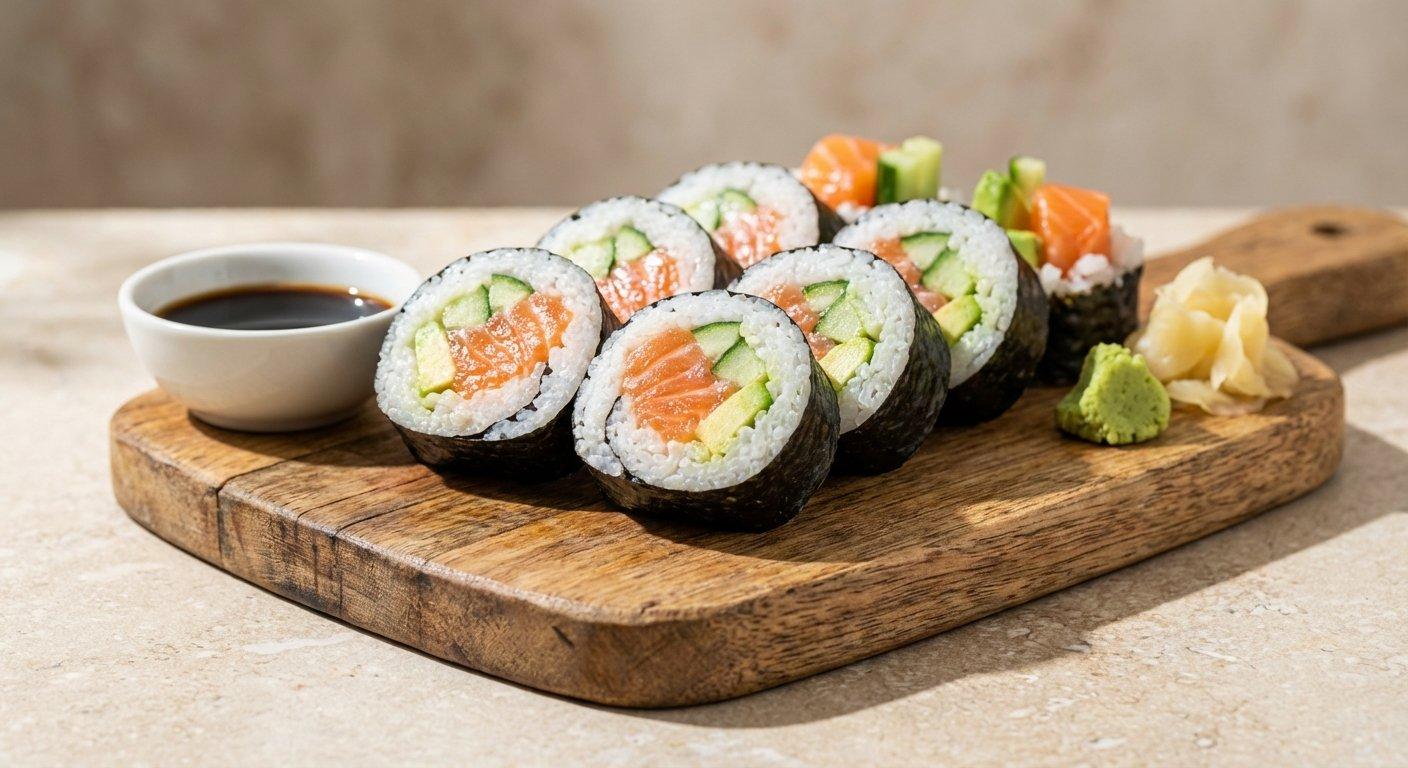
Homemade Sushi Rolls are a delicious way to bring the flavors of Japanese cuisine into your own kitchen. Made with perfectly seasoned sushi rice, crisp nori seaweed, and fresh fillings, these colorful rolls are both satisfying and beautiful to serve. Whether you are preparing a special dinner, hosting friends, or simply exploring a new cooking skill, homemade sushi offers a fun and rewarding culinary experience.
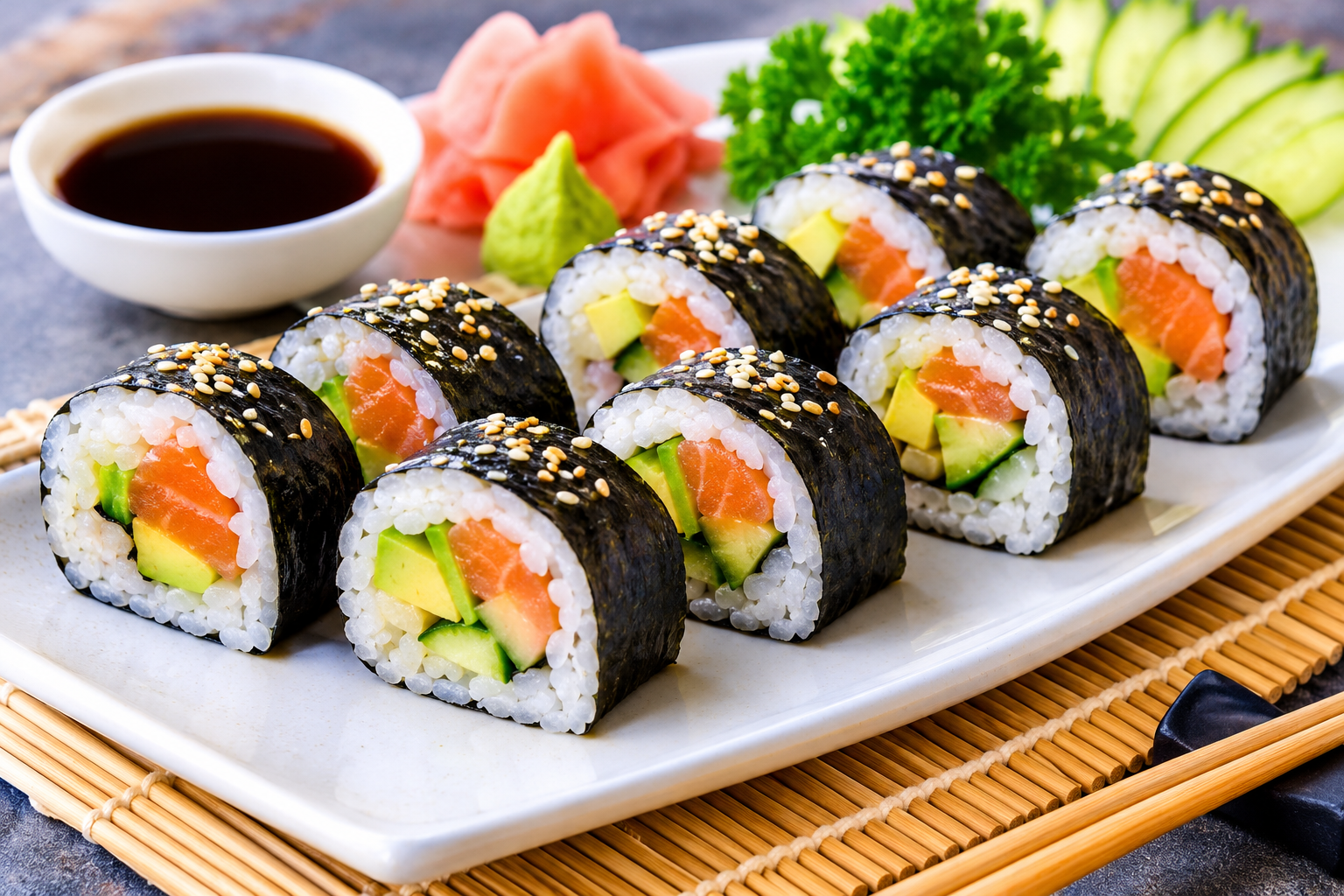
Homemade Sushi Rolls:
One of the best things about making sushi at home is the freedom to customize every roll. You can combine creamy avocado, crunchy cucumber, fresh salmon, cooked shrimp, imitation crab, or your favorite vegetables to create different flavors and textures. With a bamboo sushi mat and a few simple techniques, even beginners can learn to make attractive sushi rolls without expensive equipment.
This homemade sushi recipe focuses on approachable ingredients, easy-to-follow instructions, and practical tips for achieving neat, flavorful rolls. Serve your sushi with soy sauce, pickled ginger, and wasabi for a classic presentation. Once you learn the basic method, you can experiment with vegetarian combinations, cooked seafood, and other creative fillings to suit your taste.
History:
Sushi has a long history rooted in traditional methods of preserving fish with fermented rice in parts of Asia. Over time, the practice evolved in Japan into a variety of dishes featuring seasoned rice and seafood. Modern sushi developed through changes in preparation techniques, ingredients, and serving styles, with nigiri and rolled sushi becoming especially popular.Maki sushi, the style commonly used for homemade sushi rolls, combines sushi rice and fillings wrapped in nori seaweed. Different regional styles and contemporary variations have since introduced ingredients such as avocado, cucumber, cooked seafood, and cream cheese. Today, sushi rolls are enjoyed around the world, and making them at home allows cooks to appreciate this versatile dish while adding their own personal touch.
Subscribe to our youtube channel Kitchenpedia for more delicious recipes and hit the like button if you enjoyed this youtubevideo. Share it with your friends and Family.
Homemade Sushi Rolls

Ingredients
For the Sushi Rice
- 2 cups uncooked Japanese short-grain sushi rice
- 2¼ cups water, or according to the rice package instructions
- ¼ cup rice vinegar
- 2 tablespoons granulated sugar
- 1 teaspoon salt
For the Sushi Rolls
- 4 sheets nori seaweed
- 8 ounces sushi-grade salmon, or cooked shrimp or imitation crab
- 1 ripe avocado, thinly sliced
- 1 medium cucumber, cut into thin strips
- 1 tablespoon toasted sesame seeds, optional
For Serving
- Soy sauce, as needed
- Pickled ginger
- Wasabi paste
- Extra sesame seeds, optional
Instructions
- Place the sushi rice in a large bowl and rinse it several times with cold water until the water becomes mostly clear. Drain thoroughly. This removes excess surface starch and helps produce rice with a pleasant texture.
- Add the rinsed rice and measured water to a rice cooker or saucepan. Cook according to the manufacturer's instructions. Once cooked, let the rice rest, covered, for approximately 10 minutes.
- Combine the rice vinegar, sugar, and salt in a small bowl, stirring until dissolved. Transfer the warm rice to a wide bowl and gently fold in the vinegar mixture using a rice paddle or spatula. Avoid crushing the grains. Allow the rice to cool until it is close to room temperature.
- Cut the salmon or your chosen cooked seafood into long, narrow strips. Slice the avocado and cucumber into similarly sized pieces. Keep the fillings ready beside your sushi mat so you can assemble the rolls efficiently.
- Place a bamboo sushi mat on a clean work surface. Cover it with plastic wrap if desired to make cleanup easier. Position one sheet of nori on the mat with its shiny side facing down and its shorter edge closest to you.
- With slightly damp hands, spread approximately one-quarter of the seasoned rice over the nori. Leave a strip of about 1 inch uncovered along the far edge. Spread the rice evenly without pressing too hard.
- Arrange a small amount of salmon, avocado, and cucumber in a horizontal line across the rice, approximately one-third of the way from the edge nearest you. Avoid overfilling, as too many ingredients can make the roll difficult to close.
- Lift the edge of the bamboo mat closest to you and roll the nori over the filling. Use your fingers to keep the ingredients in place while gently tightening the roll with the mat. Continue rolling forward until the uncovered edge seals the roll.
- Gently press the roll through the bamboo mat to create an even shape. Use a sharp knife moistened with water to slice the roll into 6–8 pieces. Wipe the blade between cuts for clean edges.
- Arrange the sushi pieces on a serving platter. Sprinkle with sesame seeds if desired, and serve immediately with soy sauce, pickled ginger, and wasabi. Enjoy your homemade sushi while the rice and fillings are fresh.
Notes
- Use short-grain rice: Japanese short-grain rice has the sticky texture needed to hold sushi rolls together.
- Rinse thoroughly: Removing excess starch from the surface helps prevent the cooked rice from becoming overly gummy.
- Cool the rice properly: Let it cool before assembling the rolls, but avoid refrigerating it until it becomes hard.
- Keep your hands damp: Slightly wet hands make seasoned rice easier to handle.
- Choose fresh fillings: Fresh vegetables and properly handled seafood improve both flavor and texture.
- Avoid overfilling: A modest amount of filling makes rolling and slicing much easier.
- Use a sharp knife: A sharp, damp blade helps prevent the nori from tearing and the rice from sticking.
- Serve promptly: Sushi rolls taste best when freshly prepared. Refrigerate perishable leftovers promptly and follow safe food-storage guidance.
Tips for Homemade Sushi Rolls:
- Prepare everything before rolling: Slice all your ingredients in advance so assembly is quick and easy.
- Spread rice evenly: An even layer helps the roll hold its shape and gives every piece a balanced rice-to-filling ratio.
- Leave a sealing edge: Keeping the far edge of the nori free of rice helps close the roll securely.
- Roll with gentle pressure: Apply enough pressure to keep the roll compact without squeezing out the filling.
- Try a plastic-covered mat: This can help prevent rice from sticking to the bamboo and makes cleanup easier.
- Experiment with fillings: Try cooked shrimp, smoked salmon, carrots, bell peppers, or asparagus for different flavors.
- Make vegetarian sushi: Replace the seafood with avocado, cucumber, carrots, and other vegetables.
- Practice with simple rolls first: Cucumber or avocado rolls are excellent choices for learning the technique before attempting more elaborate combinations.
FAQs for
1. What type of rice is best for homemade sushi rolls?
Japanese short-grain sushi rice is the best choice because it becomes sticky enough to hold the roll together while maintaining a tender texture.
2. Can I make sushi rolls without a bamboo mat?
Yes. You can use a clean kitchen towel covered with plastic wrap. Roll slowly and apply gentle, even pressure to help the sushi hold its shape.
3. Can I use regular rice instead of sushi rice?
Long-grain rice is generally less sticky and may not hold together well. If possible, choose Japanese short-grain rice for the best results.
4. How do I prevent sushi rice from sticking to my hands?
Keep a small bowl of water nearby and lightly dampen your hands before handling the rice. Avoid making your hands excessively wet.
5. Can I make homemade sushi without raw fish?
Absolutely. Use cooked shrimp, cooked salmon, imitation crab, egg, or vegetables. These options are suitable for people who prefer to avoid raw seafood.
6. How long can homemade sushi rolls be stored?
Sushi containing seafood or other perishable fillings should be refrigerated promptly, generally within two hours of preparation, or within one hour when temperatures exceed 90°F (32°C). For best quality, eat it the same day. Follow local food-safety guidance and discard sushi left at room temperature beyond safe limits.
7. Why do my sushi rolls fall apart when sliced?
The rice may not be sticky enough, the roll may be too loose, or the knife may be dull. Use properly prepared short-grain rice, tighten the roll gently, and slice with a sharp, damp knife.
8. Are homemade sushi rolls healthy?
They can be part of a balanced diet. Sushi provides carbohydrates from rice, vegetables for fiber and nutrients, and protein when made with seafood or other protein-rich fillings. Portion size and sauces influence the overall nutritional value.
9. Can I prepare sushi rice in advance?
You can cook and season the rice ahead of assembly, but it is best to use it while it is still at room temperature and pleasantly soft. Do not leave cooked rice sitting at room temperature for extended periods; follow safe rice-storage guidelines.
10. What can I serve with homemade sushi rolls?
Serve sushi with soy sauce, pickled ginger, wasabi, miso soup, edamame, or a light cucumber salad for a complete Japanese-inspired meal.
Conclusion:
Homemade Sushi Rolls are a delicious, colorful, and customizable dish that you can prepare in your own kitchen with a few basic ingredients. From perfectly seasoned sushi rice to crisp cucumber, creamy avocado, and your favorite seafood or vegetables, every roll offers an opportunity to experiment with fresh flavors and textures.Although rolling sushi may take a little practice, following the right techniques will help you create neat, attractive pieces that look wonderful on a serving platter. Start with simple fillings, use a bamboo mat if available, and gradually explore new combinations as your confidence grows.Whether you are planning a family meal, preparing an appetizer for guests, or enjoying a fun homemade sushi night, this easy sushi roll recipe is a wonderful place to begin. Serve your freshly made rolls with your favorite accompaniments and enjoy restaurant-inspired sushi at home.