

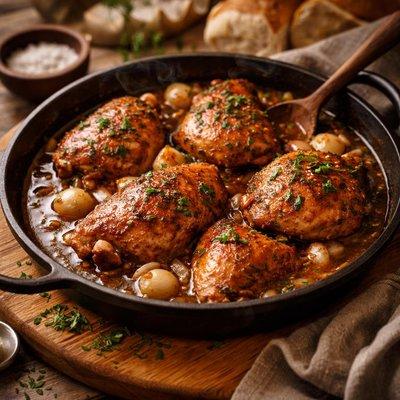
Poulet au Vinaigre, also known as French Chicken with Vinegar, is a traditional French dish celebrated for its beautifully browned chicken and rich, tangy sauce. Prepared with chicken thighs or drumsticks, vinegar, shallots, garlic, chicken stock, and butter, this comforting recipe transforms simple ingredients into an elegant meal. The vinegar adds a bright, distinctive flavor that balances the richness of the chicken and creates a delicious sauce perfect for spooning over rice, potatoes, or crusty bread.
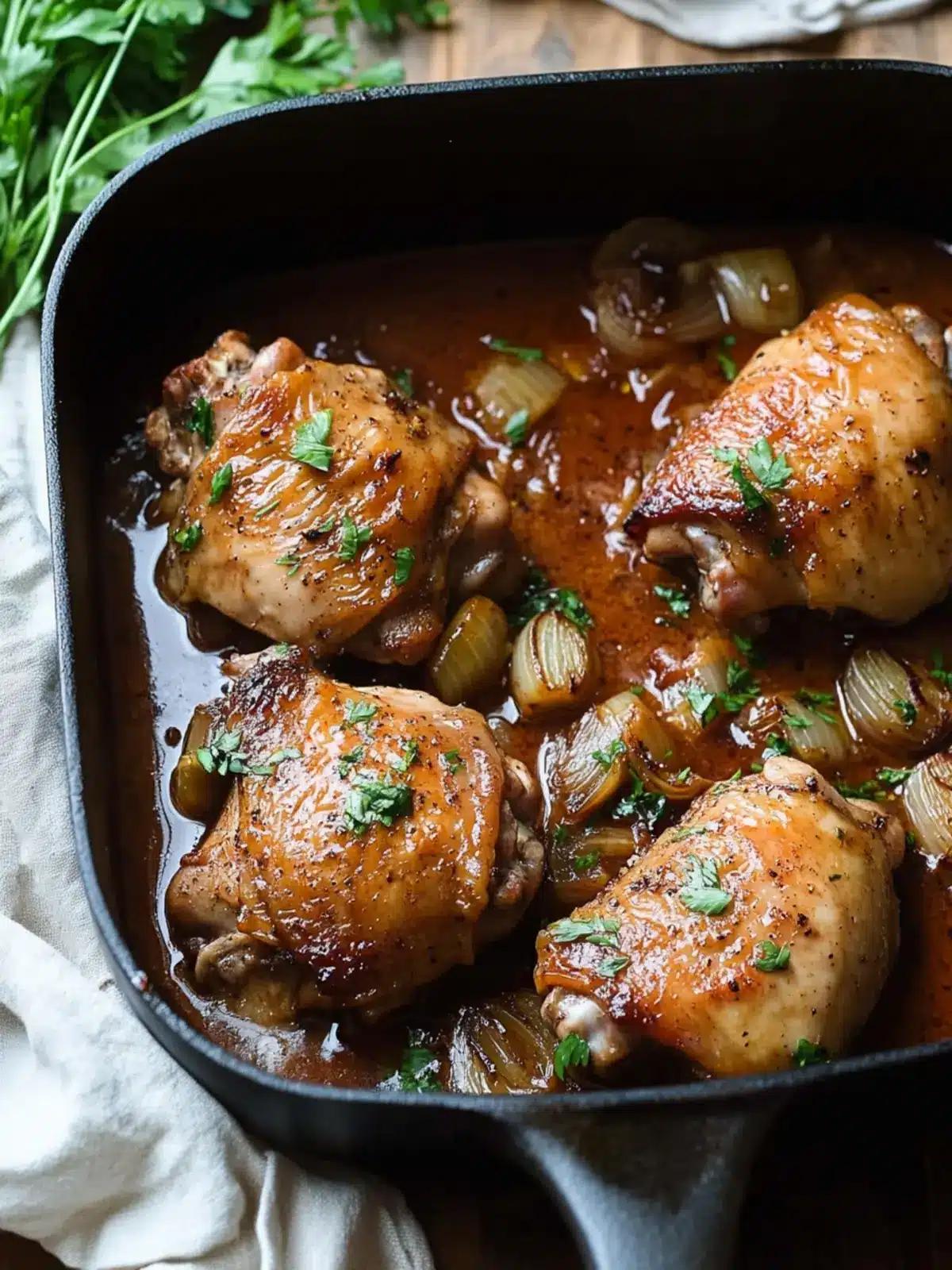
Poulet au Vinaigre:
This classic French recipe is especially appealing because it combines rustic home cooking with restaurant-quality flavor. The chicken is first seared until the skin becomes golden and crisp, then gently simmered in a flavorful sauce until tender and juicy. Depending on the regional variation, the sauce may include tomatoes, cream, mustard, or fresh herbs. The result is a wonderful balance of savory, tangy, slightly sweet, and creamy notes that makes every bite satisfying.
Whether you are preparing a cozy family dinner, planning a special weekend meal, or exploring traditional French cuisine, Poulet au Vinaigre is an excellent recipe to try. It uses accessible ingredients and straightforward cooking techniques, yet delivers impressive results. Serve it with mashed potatoes, roasted vegetables, steamed rice, or a fresh green salad for a delicious meal inspired by the French countryside.
History:
Poulet au has its roots in traditional French home cooking, particularly the rustic culinary traditions associated with Lyon and the surrounding region. French cooks have long used vinegar to brighten sauces, balance rich meats, and make the most of everyday pantry ingredients. Chicken, shallots, butter, and wine vinegar are a natural combination in this style of cooking.The dish is closely associated with Lyonnaise cuisine, known for its hearty, flavorful meals and skillful use of simple ingredients. Vinegar-based chicken recipes have appeared in different forms across French kitchens, with cooks adapting the sauce according to local preferences. Some versions include tomato paste or fresh tomatoes, while others use cream, mustard, or additional herbs.Today, Poulet au Vinaigre remains a beloved example of French comfort food. Its combination of tender chicken and a bright, deeply flavored sauce demonstrates how classic French techniques can turn an everyday ingredient into a memorable meal.
Subscribe to our youtube channel Kitchenpedia for more delicious recipes and hit the like button if you enjoyed this youtubevideo. Share it with your friends and Family.
Poulet au Vinaigre

Ingredients
For the Chicken
- 8 bone-in, skin-on chicken thighs or a mixture of chicken thighs and drumsticks, approximately 1.5–1.8 kg
- 1 teaspoon salt, or to taste
- ½ teaspoon freshly ground black pepper
- 1 tablespoon olive oil
- 1 tablespoon unsalted butter
For the Vinegar Sauce
- 2 medium shallots, finely chopped
- 3 garlic cloves, minced
- ½ cup red wine vinegar or white wine vinegar
- 1 cup chicken stock
- 1 tablespoon tomato paste
- 1 teaspoon Dijon mustard
- 1 teaspoon fresh thyme leaves, or ½ teaspoon dried thyme
- 1 bay leaf
- 1 teaspoon honey or sugar, optional, to balance the acidity
- 2 tablespoons cold unsalted butter
- 2 tablespoons chopped fresh parsley
Instructions
- Pat the chicken pieces dry with paper towels. This step helps the skin brown properly during cooking. Season both sides with salt and black pepper.Allow the chicken to sit at room temperature for about 10–15 minutes while you prepare the shallots, garlic, stock, and other ingredients.
- Heat the olive oil and 1 tablespoon of butter in a large, heavy skillet or Dutch oven over medium-high heat.Place the chicken pieces skin-side down in the pan, working in batches if necessary. Sear for 6–8 minutes until the skin is deeply golden brown. Turn the chicken and cook for another 3–4 minutes.Transfer the chicken to a plate. It does not need to be fully cooked at this stage because it will finish cooking in the sauce.
- Reduce the heat to medium. Carefully remove excess fat from the pan if necessary, leaving approximately 1 tablespoon behind.Add the chopped shallots and cook for 2–3 minutes until softened. Stir in the minced garlic and cook for another 30 seconds, taking care not to burn it.Add the tomato paste and stir for about 1 minute to deepen its flavor.
- Pour the vinegar into the skillet. Use a wooden spoon to scrape up the browned bits from the bottom of the pan, as they contribute a rich savory flavor to the sauce.Allow the vinegar to simmer for 2–4 minutes, reducing slightly and mellowing its sharp aroma.
- Pour in the chicken stock and stir in the Dijon mustard, thyme, and bay leaf. Add the optional honey or sugar if you prefer a slightly milder, more balanced sauce.Bring the mixture to a gentle simmer. Taste a small amount of the sauce and adjust the seasoning if needed.
- Return the browned chicken pieces to the skillet, arranging them in a single layer. Spoon some of the sauce over the chicken.Cover partially and simmer over low to medium-low heat for approximately 25–35 minutes, depending on the size of the chicken pieces. Turn the pieces once during cooking if necessary.The chicken should become tender and reach an internal temperature of at least 165°F (74°C), measured with a food thermometer at the thickest part without touching the bone. For especially tender dark meat, a slightly higher temperature is often desirable.
- Transfer the cooked chicken to a serving plate and remove the bay leaf.If the sauce is too thin, simmer it uncovered for a few minutes until it reaches your preferred consistency. Remove the pan from the heat and whisk in the 2 tablespoons of cold butter, a little at a time, until the sauce looks glossy.For the creamy variation, stir in the heavy cream and warm gently without bringing the sauce to a vigorous boil.
- Return the chicken to the skillet or arrange it on a warm serving platter. Spoon the sauce over the chicken and sprinkle with freshly chopped parsley.Serve immediately with mashed potatoes, roasted vegetables, buttered noodles, rice, or slices of crusty bread to soak up the delicious sauce.
Notes
- Choose the right chicken: Bone-in, skin-on thighs provide excellent flavor and remain juicy during simmering.
- Dry the chicken well: Removing surface moisture helps create crisp, golden skin.
- Use good-quality vinegar: Red wine vinegar gives the sauce a robust flavor, while white wine vinegar creates a lighter, sharper taste.
- Do not skip the browning: The browned bits at the bottom of the pan add depth to the final sauce.
- Balance the acidity: If the sauce tastes too sharp, add a small amount of honey, sugar, or butter.
- Avoid excessive boiling: A gentle simmer helps keep the chicken tender and prevents the sauce from reducing too quickly.
- Adjust the consistency: Reduce the sauce uncovered if it is watery, or add a little stock if it becomes too thick.
- Keep the sauce flexible: The recipe works with or without cream, depending on whether you prefer a traditional tangy sauce or a richer finish.
Tips for Poulet au Vinaigre:
- Use a heavy pan: A cast-iron skillet or Dutch oven distributes heat evenly and helps brown the chicken beautifully.
- Avoid overcrowding: Sear the chicken in batches if needed so the pieces brown instead of steam.
- Measure the vinegar: Start with the recommended amount and adjust the acidity to suit your taste.
- Use fresh aromatics: Fresh shallots, garlic, and thyme create a more fragrant sauce.
- Deglaze thoroughly: Scrape the bottom of the skillet after adding vinegar to capture the flavorful browned bits.
- Check the chicken temperature: Use a food thermometer to ensure the chicken reaches at least 165°F (74°C).
- Finish with cold butter: Whisking cold butter into the sauce off the heat gives it a smooth, glossy texture.
- Prepare sides in advance: Have mashed potatoes, rice, or roasted vegetables ready so the chicken can be served immediately while hot.
FAQs for Poulet au Vinaigre:
1. What is au Vinaigre?
Poulet au Vinaigre is a classic French chicken dish cooked with vinegar and aromatics. The vinegar creates a tangy sauce that balances the richness of the chicken.
2. What type of vinegar is best for this recipe?
Red wine vinegar and white wine vinegar both work well. Red wine vinegar gives the sauce a deeper flavor, while white wine vinegar produces a lighter, brighter taste. Apple cider vinegar can also be used for a slightly fruitier variation.
3. Can I make Poulet Vinaigre with boneless chicken?
Yes. Boneless chicken thighs are a convenient alternative. Because they cook faster than bone-in pieces, begin checking them after approximately 15–20 minutes of simmering.
4. Does the finished dish taste strongly of vinegar?
The dish should taste pleasantly tangy rather than harsh. Simmering the vinegar helps mellow its sharpness, while stock, butter, and optional honey balance the flavor.
5. Can I make this recipe without cream?
Absolutely. Cream is optional. The classic-style sauce can be finished with cold butter for a smooth texture without adding cream.
6. What should I serve with Poulet Vinaigre?
Mashed potatoes, roasted potatoes, steamed rice, buttered noodles, crusty bread, green beans, and roasted carrots are excellent accompaniments.
7. Can I prepare this dish ahead of time?
Yes. You can cook it a day ahead and refrigerate it after cooling promptly. Reheat gently on the stovetop until the chicken is thoroughly heated. Add a splash of stock if the sauce has thickened too much.
8. How should I store leftovers?
Store leftovers in an airtight container in the refrigerator for up to 3–4 days. Reheat until steaming hot throughout. For longer storage, freeze in a suitable container for up to about 3 months for best quality.
9. Can I use chicken breasts instead of thighs?
Yes, but chicken breasts are leaner and can dry out if overcooked. Use similarly sized pieces and monitor their temperature carefully.
10. Is Poulet Vinaigre a traditional French dish?
Yes. It belongs to the tradition of French country cooking, where vinegar is used to create balanced, flavorful sauces for meat and poultry.
Conclusion:
Poulet Vinaigre is a wonderful way to bring the flavors of traditional French cooking into your kitchen. With golden-brown chicken, aromatic shallots, garlic, herbs, and a tangy vinegar sauce, this comforting dish offers an appealing combination of richness and freshness. Its ingredients are simple, but careful browning and gentle simmering create an impressive result.Serve this French chicken recipe for a family dinner, a weekend gathering, or a special homemade meal. Pair it with creamy mashed potatoes, roasted vegetables, or crusty bread to enjoy every drop of the delicious sauce. Once you try this classic Poulet au Vinaigre, it may become a favorite addition to your collection of easy yet elegant chicken recipes.