

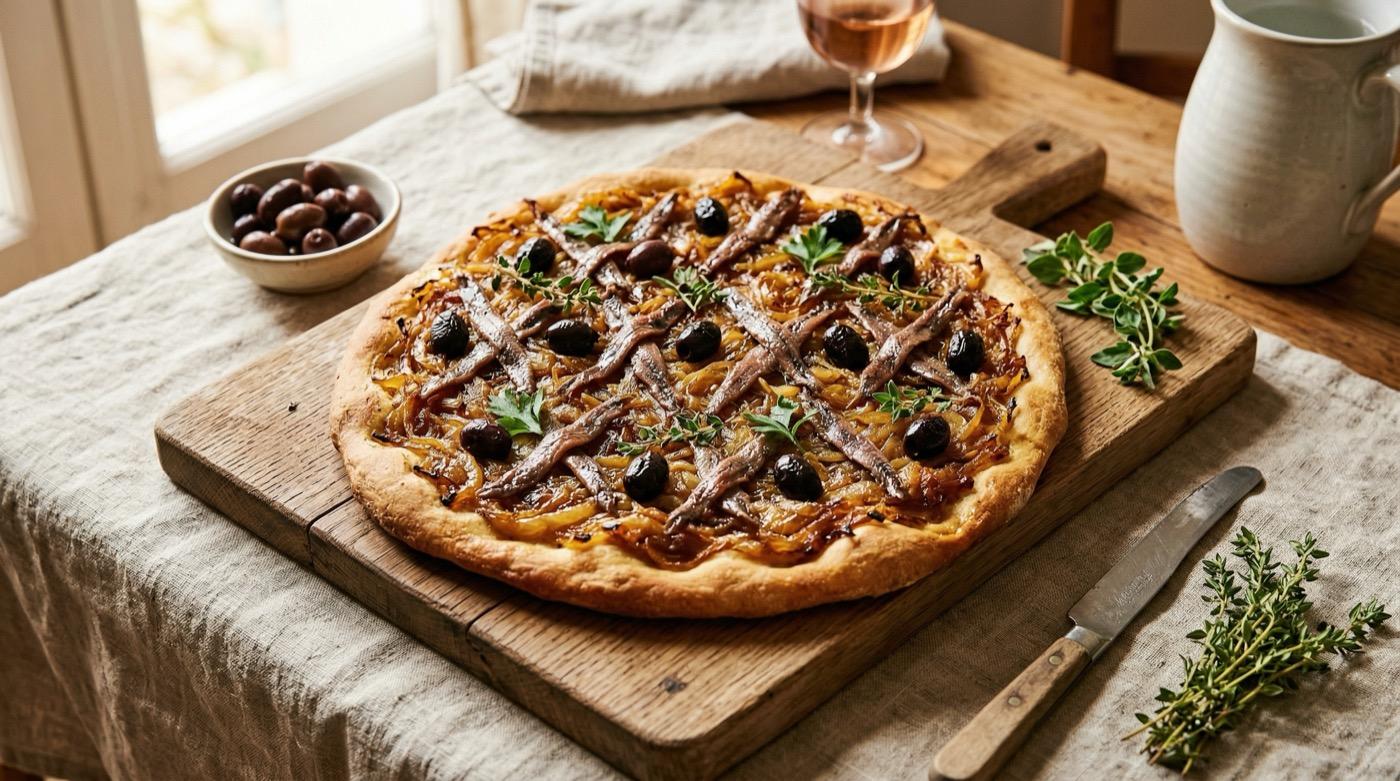
Pissaladière is a beloved specialty from Nice, in the sun-drenched French region of Provence-Alpes-Côte d’Azur. Often described as a Provençal onion tart, this rustic dish features a crisp, bread-like crust topped with slowly softened onions, salty anchovies, and shiny black olives. Its combination of sweet, savory, and briny flavors makes it a distinctive Mediterranean treat that can be served as an appetizer, a light lunch, or a delicious addition to a gathering with friends and family.
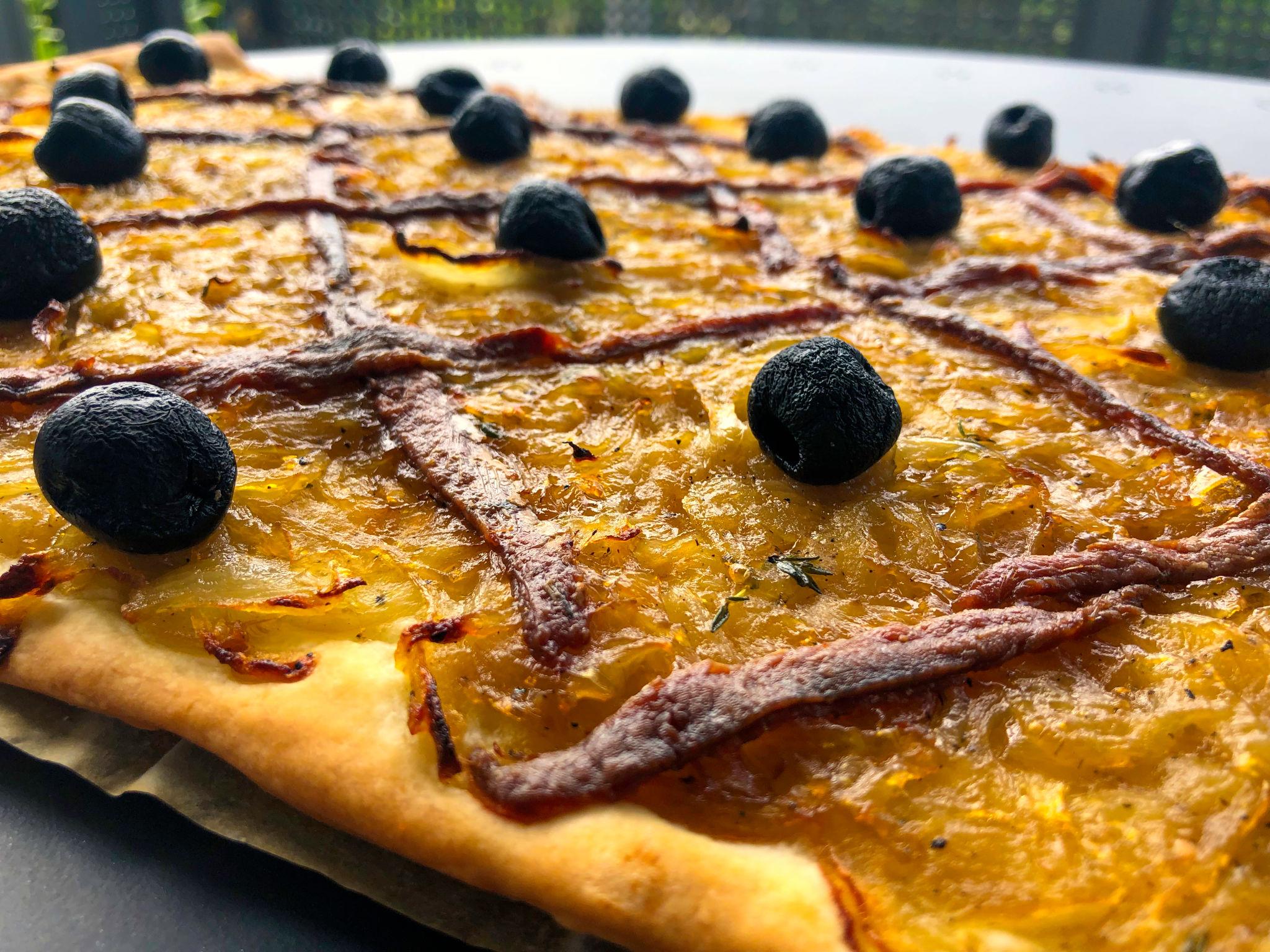
Pissaladière:
What makes traditional Pissaladière so special is its simple preparation and carefully balanced ingredients. Onions are cooked slowly in olive oil until soft, sweet, and deeply aromatic, creating a flavorful base for the salty anchovies and olives. Unlike many French tarts, the traditional version generally does not rely on a rich egg-and-cream filling. Instead, it uses a dough similar to bread or pizza dough, allowing the toppings to shine while the crust becomes golden and crisp in the oven.
Whether you are exploring French cuisine or looking for something different to serve at your next dinner party, homemade Pissaladière is a wonderful recipe to try. Although the onions take time to soften properly, the ingredients are straightforward and the results are impressive. Serve it warm or at room temperature, cut into small squares for sharing, or enjoy a generous slice with a fresh green salad for a simple Mediterranean-inspired meal.
History of Pissaladière:
Pissaladière originated in Nice, a coastal city in southeastern France with strong culinary connections to Ligurian Italy. Its history reflects the shared food traditions of the Mediterranean, where bread, olive oil, onions, olives, and preserved fish have long played important roles in everyday cooking.The name is commonly associated with pissalat, a traditional salted fish condiment once used in the region. Over time, the dish developed into the onion-topped tart known today, with anchovies and black olives providing its characteristic salty flavor. Recipes vary between households and bakeries, and some modern versions omit anchovies or use prepared pastry for convenience.Today, Pissaladière remains a recognizable specialty of Nice and the surrounding Provençal region. It is enjoyed in bakeries, markets, cafés, and homes, reflecting the area’s love of simple ingredients transformed through careful cooking. Its rustic appearance and bold Mediterranean flavors have also made it popular with French food lovers around the world.
Subscribe to our youtube channel Kitchenpedia for more delicious recipes and hit the like button if you enjoyed this youtubevideo. Share it with your friends and Family.
Pissaladière

Ingredients
- 2¼ cups (280 g) all-purpose flour
- 1 teaspoon instant yeast
- ¾ teaspoon salt, divided
- 2 tablespoons olive oil for the dough
- 2 tablespoons extra-virgin olive oil for the onions, plus extra as needed
- 2 lb (900 g) yellow or white onions, thinly sliced
- 1 teaspoon fresh thyme leaves or ½ teaspoon dried thyme
- 1 small bay leaf
- 12–16 anchovy fillets, drained
- 16–20 small black Niçoise-style olives or other pitted black olives
- Freshly ground black pepper, to taste
- 1 teaspoon olive oil for brushing, if needed
Instructions
- Combine the flour, instant yeast, and ½ teaspoon of salt in a large bowl. Add the lukewarm water and 2 tablespoons of olive oil. Mix until a rough dough forms, then knead for 8–10 minutes until smooth and elastic. Add a little flour if excessively sticky, but keep the dough soft.
- Place the dough in a lightly oiled bowl and cover it with a clean kitchen towel or reusable cover. Leave it in a warm place for about 45–60 minutes, or until roughly doubled in size. Rising time varies with room temperature.
- While the dough rises, heat 2 tablespoons of olive oil in a wide skillet over medium-low heat. Add the sliced onions and remaining salt. Cook for 30–40 minutes, stirring regularly, until the onions become very soft, sweet, and lightly golden. Lower the heat if they start browning too quickly.
- Add the optional garlic, thyme, bay leaf, and a little black pepper to the onions. Cook for another 2–3 minutes. Remove the bay leaf and allow the onion mixture to cool slightly. The topping should be soft and flavorful, not watery.
- Preheat the oven to 220°C (425°F). Line a baking tray with parchment paper. Gently deflate the risen dough and roll or stretch it into a rectangle approximately 9 × 13 inches. Transfer it to the tray and press it evenly into shape. If the dough springs back, let it rest for 5 minutes before continuing.
- Spread the cooked onions evenly over the dough, leaving a small border around the edges. Arrange the anchovy fillets in a simple crisscross or diagonal pattern and place the black olives between them. Drizzle lightly with olive oil if desired.
- Bake for 20–25 minutes, or until the crust is cooked through and golden around the edges. The onions should look slightly caramelized, and the anchovies and olives should be settled into the topping. If the base needs extra color, bake for a few additional minutes while watching carefully.
- Remove the tart from the oven and let it rest for 5–10 minutes. Cut into squares or long slices with a sharp knife. Serve warm or at room temperature, accompanied by a green salad or other Mediterranean-inspired dishes.
Notes
-
Cook the onions patiently: Slowly softened onions provide the characteristic sweetness and rich flavor of Pissaladière.
-
Use good olive oil: Extra-virgin olive oil contributes the distinctive Mediterranean aroma.
-
Avoid watery toppings: Let excess liquid evaporate from the onions before spreading them on the dough.
-
Choose flavorful olives: Small black olives offer a traditional appearance and a pleasant salty bite.
-
Watch the salt: Anchovies and olives are already salty, so season the onions moderately.
-
Keep the dough evenly thick: An even base helps the tart bake consistently.
-
Customize the anchovies: Use fewer fillets for a milder fish flavor, or omit them for a vegetarian variation.
-
Serve at the right temperature: Pissaladière tastes delicious warm or at room temperature, making it ideal for entertaining.
Tips for Pissaladière:
- Slice the onions thinly so they soften evenly and spread easily over the crust.
- Use a wide skillet to help moisture evaporate while the onions cook.
- Resist the temptation to rush the onions over high heat; gentle cooking develops their sweetness.
- Let the dough rise until puffy to create a light, bread-like crust.
- Preheat the oven thoroughly before baking to help the bottom become crisp.
- Arrange the anchovies and olives decoratively for a classic French bakery-style appearance.
- Brush the exposed crust lightly with olive oil for a beautiful golden finish.
- Allow the tart to rest briefly before slicing to keep the topping in place.
FAQs for Pissaladière:
1. What is Pissaladière?
Pissaladière is a traditional onion tart from Nice, France, typically made with bread-style dough, slow-cooked onions, anchovies, and black olives.
2. Is Pissaladière similar to pizza?
Yes, it resembles a rustic flatbread or pizza because it uses a yeast dough. However, its defining feature is the generous layer of cooked onions rather than a tomato sauce and cheese topping.
3. Can I make Pissaladière without anchovies?
Yes. Simply omit the anchovies and add a few extra olives or capers for a savory, vegetarian-friendly version. Check that your dough ingredients are also vegetarian.
4. Which onions are best for Pissaladière?
Yellow or white onions work particularly well because they become soft and sweet when cooked slowly. Sweet onions are another good option.
5. Can I use store-bought pizza dough?
Absolutely. Prepared pizza dough is a convenient shortcut. Allow it to reach a workable temperature, shape it on a baking tray, and follow the topping and baking instructions.
6. Can I prepare Pissaladière in advance?
Yes. Cook the onions a day ahead and refrigerate them in a sealed container. You can also prepare the dough in advance and refrigerate it according to your dough recipe. Assemble and bake the tart closer to serving time for the crispest crust.
7. How should I store leftovers?
Refrigerate leftover Pissaladière in an airtight container within two hours of cooking. For the best quality, consume it within 3–4 days and reheat in an oven until hot.
8. Can I freeze Pissaladière?
Yes. Cool the baked tart completely, slice it into portions, and freeze in airtight packaging for up to 2 months for best quality. Thaw in the refrigerator and reheat in the oven to restore some crispness.
9. What can I serve with Pissaladière?
Serve it with a fresh green salad, marinated vegetables, roasted peppers, or a bowl of vegetable soup. It also works beautifully as an appetizer for a French-inspired meal.
10. Why is my Pissaladière crust soggy?
Excess moisture in the onion topping, underbaking, or a poorly preheated oven can cause a soggy crust. Cook the onions until most of their moisture evaporates and bake the tart until the base is fully cooked and golden.
Conclusion:
Pissaladière is a wonderful example of how simple ingredients can create an unforgettable dish. Its crisp, golden crust, sweet slow-cooked onions, salty anchovies, and briny black olives bring together the flavors of the French Mediterranean in every bite.Whether you serve it as a party appetizer, a light lunch, or part of a relaxed family dinner, this traditional Provençal onion tart is both rustic and elegant. Take your time with the onions, use quality olive oil, and let the crust bake until golden for the best results. Try this homemade Pissaladière recipe and enjoy a delicious taste of Nice in your own kitchen.