

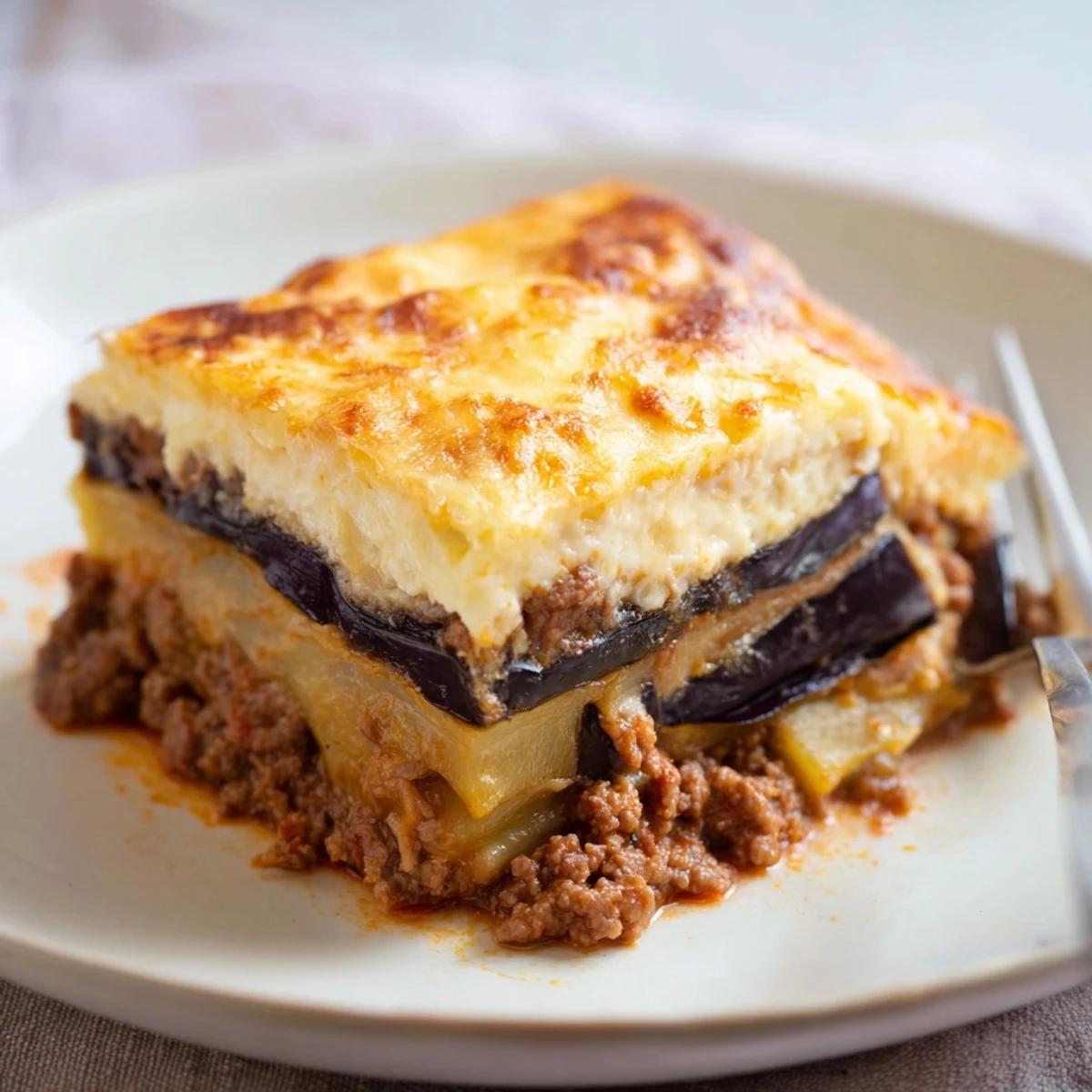
Moussaka is a classic Mediterranean comfort food loved for its delicious layers of tender eggplant, savory minced meat sauce, and rich, creamy béchamel topping. Baked until beautifully golden, this traditional Greek casserole combines simple ingredients to create an elegant, hearty meal that is perfect for family dinners, weekend gatherings, and special occasions. Every slice offers a wonderful balance of textures and flavors, making it a favorite among lovers of Mediterranean cuisine.
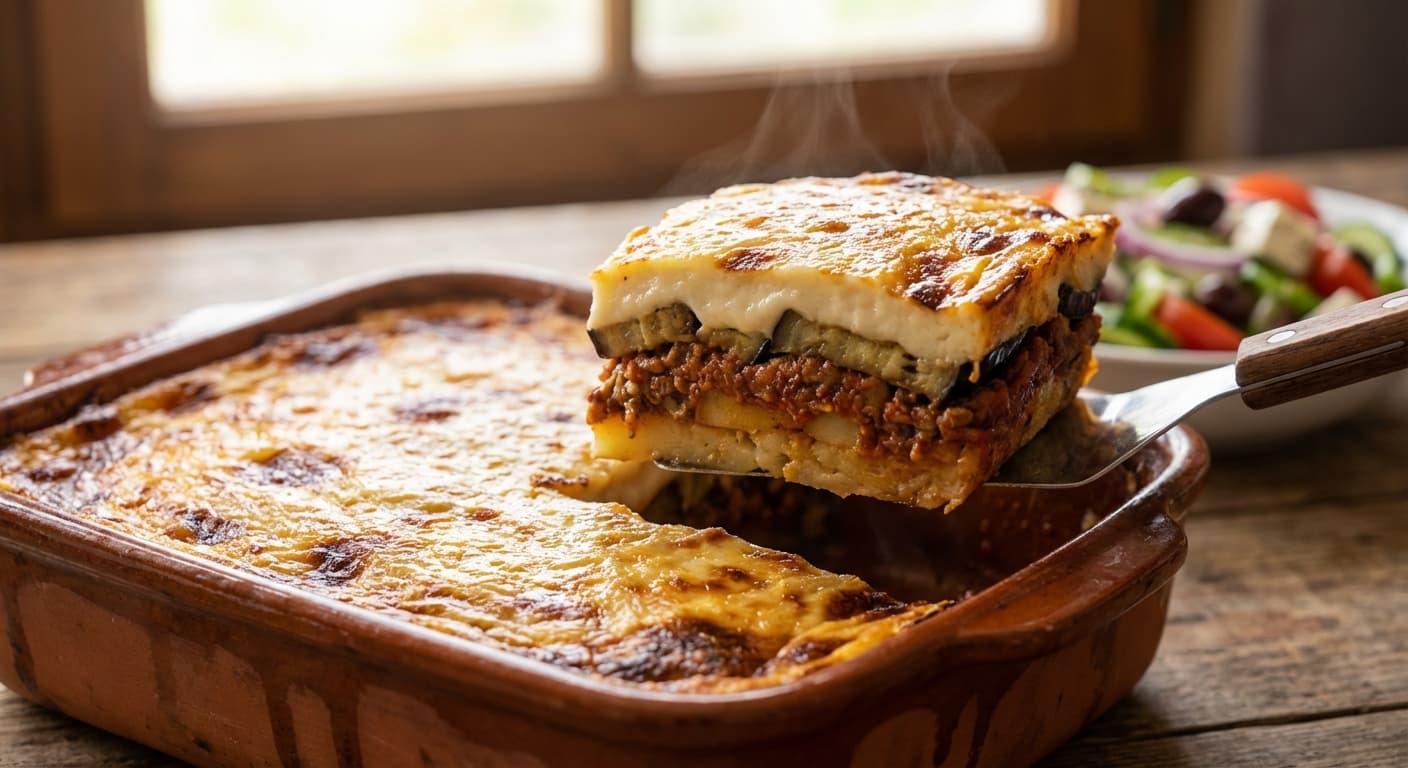
Moussaka:
One of the best things about homemade moussaka is the way its ingredients come together. Soft eggplant absorbs the flavors of a tomato-based meat sauce seasoned with garlic, onion, cinnamon, and aromatic herbs. A smooth béchamel sauce adds a luxurious creamy layer, while the oven transforms the top into a lightly browned, delicious crust. Although the recipe takes some preparation, the result is a satisfying dish that looks impressive and tastes even better.
This easy Greek moussaka recipe guides you through each step, from preparing the vegetables to making the meat sauce and creamy topping. You can prepare it ahead of time, refrigerate it, and bake it when needed, making it a convenient option for entertaining. Serve it with a fresh Greek salad, crusty bread, or roasted vegetables for a complete Mediterranean meal that your family and guests will love.
History:
Moussaka is a well-known dish throughout the eastern Mediterranean, the Balkans, and the Middle East, with different countries preparing their own versions. The name is associated with regional dishes made using vegetables, meat, and flavorful sauces. Some versions use potatoes, zucchini, or other vegetables instead of eggplant.The layered Greek version familiar today became especially popular in the early twentieth century. Greek chef Nikolaos Tselementes helped popularize a version featuring eggplant, minced meat sauce, and French-inspired béchamel sauce. This combination created the rich, baked casserole now widely recognized as Greek moussaka.Today, moussaka is enjoyed in homes and restaurants around the world. Although traditional recipes vary, its signature layers, aromatic seasoning, and golden creamy topping continue to make it one of Greece’s most beloved dishes.
Subscribe to our youtube channel Kitchenpedia for more delicious recipes and hit the like button if you enjoyed this youtubevideo. Share it with your friends and Family.
Moussaka

Ingredients
For the vegetable layers
- 2 large eggplants, sliced into rounds
- 2 medium potatoes, peeled and sliced
- 3 tablespoons olive oil
- 1 teaspoon salt, or to taste
- ½ teaspoon black pepper
For the meat sauce
- 500 g ground beef or lamb
- 1 medium onion, finely chopped
- 400 g canned crushed tomatoes
- 2 tablespoons tomato paste
- ½ cup dry red wine (optional)
- 2 tablespoons olive oil
- 1 teaspoon ground cinnamon1 teaspoon dried oregano
- ½ teaspoon ground black pepper
- 1 teaspoon salt, or to taste
- 2 tablespoons chopped fresh parsley
For the béchamel sauce
- 4 tablespoons butter
- 4 tablespoons all-purpose flour
- 3 cups milk, preferably warm
- ½ cup grated Parmesan or Kefalotyri cheese
- 1 large egg, lightly beaten
- ¼ teaspoon ground nutmeg
- ¼ teaspoon black pepper
For the topping
- ¼ cup grated Parmesan or Kefalotyri cheese
- A little chopped parsley, optional
Instructions
- Wash the eggplants and cut them into slices approximately ½ inch thick. Arrange them on a tray and sprinkle lightly with salt. Leave them for about 20–30 minutes if desired, then pat dry with paper towels.Brush both sides with olive oil and arrange the slices on a baking sheet. Roast at 200°C (400°F) for approximately 20–25 minutes, turning halfway through, until tender and lightly browned.
- Peel the potatoes and cut them into thin, even slices. Toss them with a little olive oil, salt, and black pepper.Roast them at 200°C (400°F) for about 15–20 minutes until they begin to soften. They do not need to be completely cooked because they will finish cooking in the casserole.
- Heat olive oil in a large skillet over medium heat. Add the chopped onion and cook for 4–5 minutes until soft and translucent.Add the minced garlic and cook for another 30 seconds. Stir in the ground beef or lamb and cook until browned, breaking it into small pieces with a wooden spoon.Add the tomato paste, crushed tomatoes, cinnamon, oregano, salt, black pepper, and bay leaf. If using red wine, pour it in and allow it to simmer briefly before adding the tomatoes.Reduce the heat and simmer for 20–25 minutes, stirring occasionally, until the sauce thickens. Remove the bay leaf and stir in the chopped parsley.
- Melt the butter in a saucepan over medium-low heat. Add the flour and whisk continuously for 1–2 minutes to create a smooth roux.Gradually pour in the warm milk while whisking to prevent lumps. Continue cooking for 5–8 minutes until the sauce becomes thick and creamy.Remove the pan from the heat. Stir in the grated cheese, nutmeg, salt, and black pepper. Allow the sauce to cool slightly before whisking in the beaten egg. This helps prevent the egg from scrambling.
- Lightly grease a deep baking dish.Arrange the roasted potato slices in an even layer across the bottom. Add a layer of roasted eggplant, followed by the prepared meat sauce. Spread the remaining eggplant over the meat mixture if you have enough for another layer.Pour the béchamel sauce over the top and spread it evenly with a spatula. Sprinkle with grated cheese for an extra flavorful crust.
- Preheat the oven to 180°C (350°F).Place the assembled casserole in the oven and bake for 40–45 minutes, or until the top is golden brown and the filling is bubbling around the edges.If the top begins to brown too quickly, loosely cover it with foil for the remaining baking time.
- Remove the moussaka from the oven and allow it to rest for at least 20 minutes before slicing. This resting period helps the layers set and makes serving easier.Cut into generous squares and serve warm with Greek salad, crusty bread, or roasted vegetables.
Notes
- Choose firm eggplants: Fresh eggplants with smooth, glossy skin work best because they hold their shape during roasting and baking.
- Control excess moisture: Roast the eggplant before assembling the casserole to avoid a watery filling.
- Use evenly sliced vegetables: Consistent slices cook more evenly and make the finished layers easier to cut.
- Simmer the meat sauce thoroughly: A thick sauce gives the moussaka a richer flavor and prevents excess liquid from collecting at the bottom.
- Whisk the béchamel continuously: Gradually adding warm milk helps create a smooth, lump-free sauce.
- Cool the sauce slightly before adding egg: This reduces the risk of the egg cooking too quickly and forming lumps.
- Allow sufficient resting time: Cutting immediately after baking may cause the layers to slide apart.
- Adjust the seasoning carefully: Taste the meat sauce before assembling and remember that the cheese will contribute additional saltiness.
Tips for Moussaka:
- Roast instead of deep-frying: Roasting the vegetables gives them a delicious flavor while reducing the amount of oil needed.
- Use ground lamb for a traditional flavor: Beef is an excellent alternative if you prefer a milder taste or easier availability.
- Add cinnamon sparingly: A small amount gives the meat sauce its characteristic warm Mediterranean aroma without making it taste sweet.
- Use freshly grated cheese: Freshly grated cheese melts well and adds a deeper savory flavor.
- Make it ahead: Prepare the meat sauce and roast the vegetables a day in advance to simplify cooking.
- Avoid a thin béchamel: The sauce should be thick enough to stay on top of the casserole instead of running between the layers.
- Bake until deeply golden: A golden-brown top adds a delicious contrast to the tender vegetables and soft filling.
- Serve with something fresh: A cucumber and tomato salad with lemon juice balances the richness of the casserole.
FAQs for Moussaka:
1. What is traditional Greek moussaka made of?
Traditional Greek moussaka usually consists of eggplant, a minced meat sauce made with tomatoes and seasonings, and a creamy béchamel topping. Many home recipes also include a layer of potatoes.
2. Can I make moussaka without eggplant?
Yes. You can replace the eggplant with zucchini, additional potatoes, or a mixture of roasted vegetables. The flavor and texture will differ from the traditional recipe.
3. Can I make vegetarian moussaka?
Absolutely. Replace the ground meat with cooked lentils, mushrooms, or a mixture of lentils and finely chopped vegetables. Prepare the tomato sauce as directed and assemble the remaining layers in the same way.
4. Can I prepare moussaka ahead of time?
Yes. You can roast the vegetables and prepare the meat sauce and béchamel in advance. Assemble the casserole, refrigerate it, and bake when needed. If baking directly from the refrigerator, allow additional cooking time and ensure the center is thoroughly heated.
5. How do I store leftover moussaka?
Allow the leftovers to cool, then transfer them to an airtight container and refrigerate within two hours. They are generally best consumed within 3–4 days when kept at 4°C (40°F) or below.
6. Can moussaka be frozen?
Yes. Cool the casserole completely, divide it into portions, and freeze in airtight, freezer-safe containers. For best quality, use within 2–3 months. Thaw in the refrigerator before reheating.
7. Why is my moussaka watery?
Excess moisture usually comes from eggplant that has not been roasted sufficiently, a thin meat sauce, or vegetables releasing liquid during baking. Roast the vegetables and simmer the meat sauce until thick before assembling.
8. How do I know when moussaka is ready?
The béchamel should be golden brown, the edges should bubble, and the center should be thoroughly hot. Allow the casserole to rest before slicing to help the layers hold together.
9. What can I serve with moussaka?
Greek salad, roasted vegetables, crusty bread, steamed green beans, or a simple cucumber salad are excellent accompaniments.
10. Can I make moussaka without wine?
Yes. Simply leave out the wine and continue cooking the meat sauce with the tomatoes and seasonings. You can add a little beef stock or water if needed.
Conclusion:
Moussaka is a delicious Greek comfort food that combines tender eggplant, flavorful minced meat sauce, and a rich, creamy béchamel topping in one satisfying casserole. Although preparing each layer takes a little time, the process is straightforward, and the finished dish is well worth the effort.Whether you are cooking a traditional family dinner, preparing a Mediterranean-inspired meal for guests, or exploring Greek cuisine for the first time, this homemade moussaka recipe is a wonderful choice. Prepare it ahead, let it rest after baking, and enjoy every flavorful layer with a fresh salad and warm bread.