

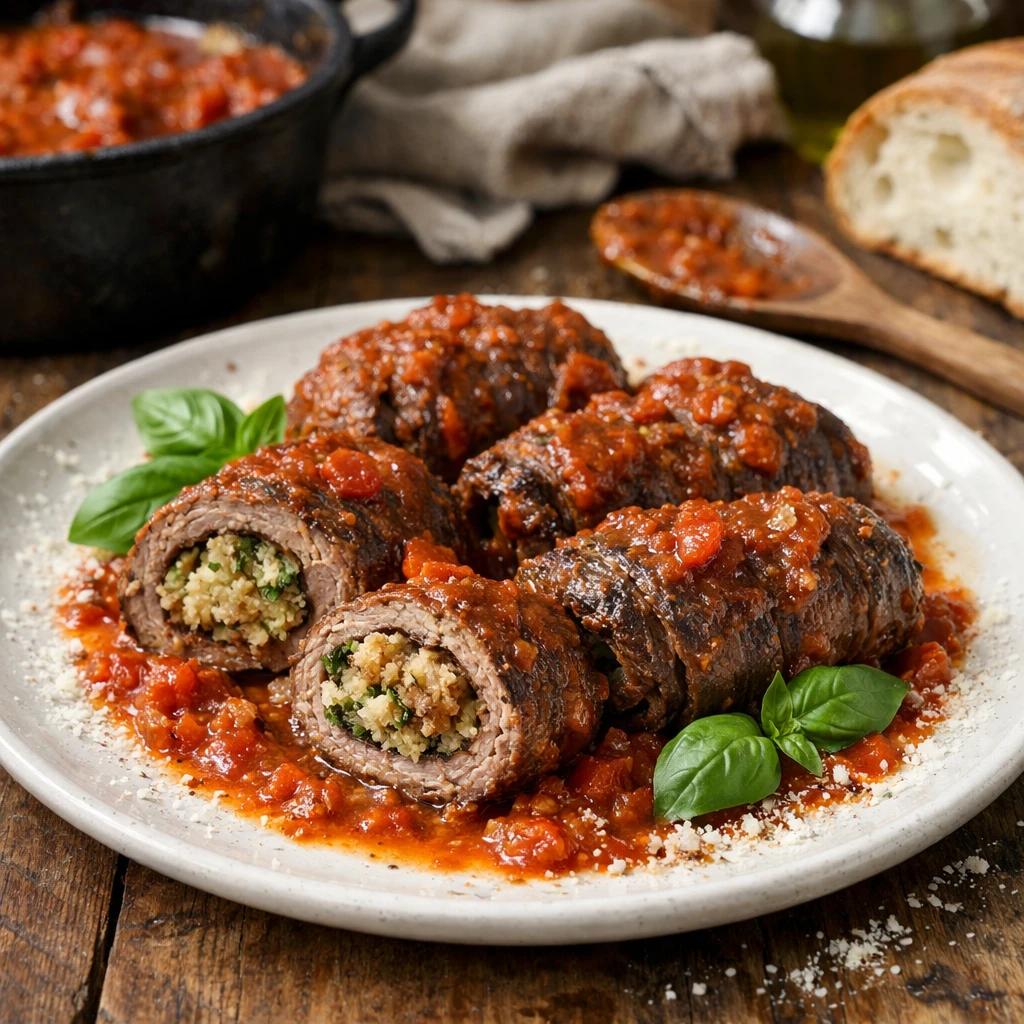
Chef John’s Beef Braciole is an Italian-inspired comfort food featuring thin slices of beef rolled around a flavorful filling, browned to develop a rich, savory crust, and slowly cooked in tomato sauce until tender. Filled with ingredients such as garlic, parsley, cheese, and breadcrumbs, these beef rolls bring together traditional Italian flavors in a hearty and satisfying dish.
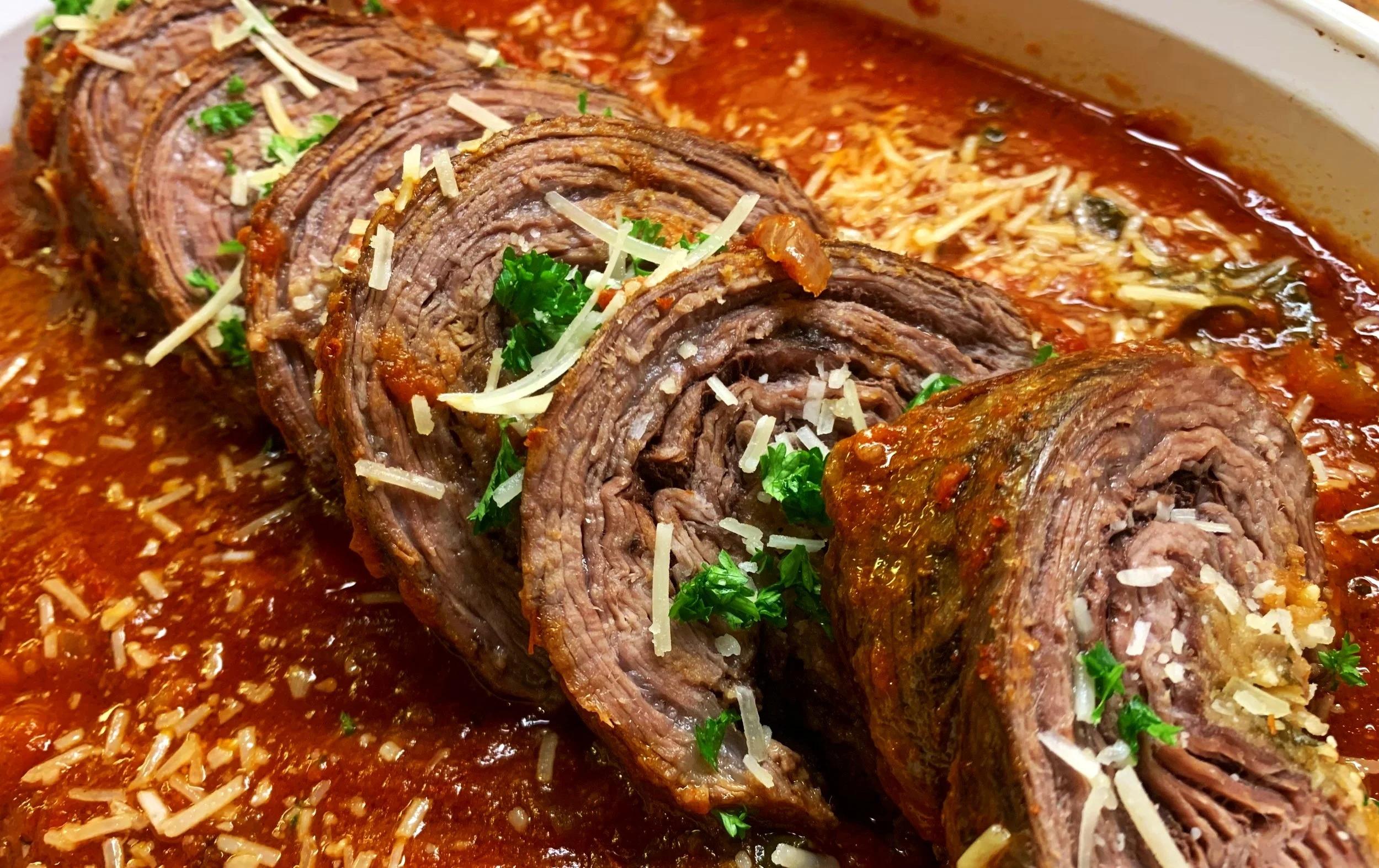
Chef John’s Beef Braciole:
Beef braciole is especially popular in Italian-American home cooking, where it is often served as part of a Sunday family dinner. The slow simmer allows the beef to absorb the flavors of the tomato sauce while the filling adds texture and richness to every bite. Although the preparation takes a little time, the ingredients are straightforward, and the result is well worth the effort.
This recipe is ideal for family gatherings, weekend meals, or anyone who enjoys homemade Italian food. Serve the tender beef rolls with pasta, creamy polenta, crusty bread, or roasted vegetables. The flavorful sauce can also be spooned over pasta, making this a versatile meal that brings warmth and traditional comfort to the dinner table.
History:
Beef braciole has roots in Italian regional cooking, where thin cuts of meat are filled, rolled, and cooked with herbs, cheese, and other flavorful ingredients. The exact preparation varies across Italy, with different regions and families using their own combinations of fillings and cooking techniques.Italian immigrants brought variations of braciole to the United States, where the dish became a favorite in Italian-American households. In many families, the beef rolls are simmered in tomato sauce for hours, allowing the meat to become tender and enriching the sauce with deep, savory flavor. Today, beef braciole remains a beloved dish for special occasions and traditional Sunday dinners.
Subscribe to our youtube channel Kitchenpedia for more delicious recipes and hit the like button if you enjoyed this youtubevideo. Share it with your friends and Family.
Chef John's Beef Braciole

Ingredients
For the Beef Rolls
- 1½ pounds (680 g) thinly sliced beef round or flank steak
- ½ cup Italian-style breadcrumbs
- ½ cup freshly grated Parmesan cheese
- 3 tablespoons finely chopped fresh parsley
- 3 garlic cloves, minced
- 2 tablespoons olive oil, divided
- ½ teaspoon dried oregano
- ¼ teaspoon freshly ground black pepper
- Salt, to taste
- Kitchen twine or toothpicks, for securing the rolls
For the Tomato Sauce
- 1 medium onion, finely chopped
- 3 garlic cloves, minced
- 2 tablespoons olive oil
- 2 tablespoons tomato paste
- 1 can (28 ounces/794 g) crushed tomatoes
- 1 cup beef broth or water
- ½ teaspoon dried oregano
- 1 bay leaf, optional
- Salt and black pepper, to taste
- 1 teaspoon sugar, optional, if the tomatoes taste too acidic
Instructions
- Lay the beef slices flat on a clean cutting board. If they are thick or uneven, place them between sheets of parchment paper and gently pound them with a meat mallet until they are approximately ¼ inch thick.Season lightly with salt and black pepper. Thin, evenly sized slices are easier to roll and cook more evenly.
- In a small bowl, combine the breadcrumbs, grated Parmesan cheese, chopped parsley, minced garlic, dried oregano, black pepper, and 1 tablespoon of olive oil.Mix until the ingredients are evenly distributed. The filling should be moist enough to hold together loosely without becoming wet or pasty.
- Spread a thin layer of the breadcrumb mixture over each beef slice, leaving a small border around the edges.Starting from one short end, roll each slice tightly around the filling. Secure the rolls with kitchen twine or toothpicks so they remain closed during cooking.Avoid overfilling the beef, as too much stuffing can escape while the rolls simmer.
- Heat the remaining olive oil in a large, heavy-bottomed pot or Dutch oven over medium-high heat.Add the beef rolls in batches, making sure not to overcrowd the pot. Brown them on several sides for approximately 6–10 minutes in total, depending on their size.Transfer the browned rolls to a plate. Browning creates flavorful bits in the pot that will enrich the tomato sauce.
- Reduce the heat to medium and add the chopped onion to the same pot. Cook for 4–5 minutes, stirring occasionally, until softened.Add the minced garlic and cook for another 30 seconds. Stir in the tomato paste and cook for 1–2 minutes to deepen its flavor.
- Pour in the crushed tomatoes and beef broth. Add the dried oregano, basil, bay leaf if using, and a little salt and black pepper.Stir thoroughly, scraping up the browned bits from the bottom of the pot. Bring the sauce to a gentle simmer.Taste the sauce and add a small amount of sugar only if needed to balance excessive acidity.
- Return the beef rolls to the pot, nestling them into the tomato sauce. The sauce should mostly surround the rolls; add a little extra broth or water if necessary.Cover partially and simmer gently over low heat for approximately 1½–2 hours, turning the rolls occasionally. Avoid a vigorous boil, which can toughen the meat or cause the rolls to fall apart.Check tenderness as the cooking progresses. Depending on the cut and thickness, the beef may need additional time.
- Once the beef is tender, carefully remove the rolls and transfer them to a serving platter. Remove the bay leaf and any toothpicks or kitchen twine.If the sauce is too thin, let it simmer uncovered for several minutes until it reaches your preferred consistency. Taste and adjust the seasoning.Return the beef rolls to the sauce briefly to warm them through, or spoon the sauce over the rolls just before serving.
- Slice the rolls crosswise to reveal the savory filling, or serve them whole for a traditional presentation. Spoon plenty of tomato sauce over the beef and finish with freshly grated Parmesan and chopped parsley.Serve with spaghetti, fettuccine, creamy polenta, mashed potatoes, or crusty bread. The rich tomato sauce makes an excellent accompaniment to almost any simple side dish.
Notes
- Choose the right beef: Thinly sliced flank steak or beef round works well for rolling and slow cooking.
- Pound the slices evenly: Uniform thickness helps the rolls cook consistently.
- Use freshly grated Parmesan: It adds a savory, nutty flavor to the filling.
- Do not overfill: A moderate amount of stuffing makes the rolls easier to secure.
- Brown before simmering: This creates deeper flavor in the meat and sauce.
- Keep the sauce at a gentle simmer: Excessive heat can make the meat tough or cause the rolls to unravel.
- Allow enough cooking time: The beef should be tender when pierced with a fork.
- Remove the fasteners: Always remove kitchen twine and toothpicks before serving.
Tips for Beef Braciole:
- Ask your butcher for thin slices: This saves preparation time and makes rolling easier.
- Season the filling evenly: Distribute the garlic, parsley, and cheese throughout the breadcrumbs.
- Roll tightly: A snug roll helps keep the filling inside during cooking.
- Use a heavy pot: A Dutch oven distributes heat evenly and works well for slow simmering.
- Deglaze thoroughly: Scrape up the browned bits after adding the tomatoes and broth.
- Prepare it ahead: The flavor often improves after the dish rests overnight in the refrigerator.
- Slice with a sharp knife: Let the rolls rest briefly before cutting for cleaner slices.
- Save the extra sauce: Toss leftover sauce with pasta or use it as a base for another Italian-inspired meal.
FAQ for Beef Braciole:
1. What is Beef Braciole?
Beef Braciole is an Italian dish made by filling thin slices of beef with ingredients such as breadcrumbs, cheese, garlic, and herbs. The beef is rolled, secured, browned, and slowly cooked in sauce until tender.
2. What cut of beef is best for braciole?
Flank steak and top round are popular choices. Ask your butcher to slice the beef thinly, or pound it to an even thickness at home.
3. Can I make Beef Braciole without breadcrumbs?
Yes. You can use finely ground almond flour or a suitable gluten-free breadcrumb alternative. The filling’s texture and flavor will differ slightly.
4. Why is my Beef Braciole tough?
The beef may need more time to become tender, particularly when using lean or tougher cuts. Maintain a gentle simmer and continue cooking until the meat is fork-tender.
5. Can I prepare Beef Braciole the day before?
Yes. Prepare and cook the dish a day ahead, then refrigerate it in an airtight container with the sauce. Reheat gently on the stovetop until the center reaches 165°F (74°C).
6. What should I serve with Beef Braciole?
Spaghetti, rigatoni, polenta, mashed potatoes, roasted vegetables, and crusty Italian bread are excellent choices.
7. Can Beef Braciole be cooked in a slow cooker?
Yes. Brown the rolls and prepare the sauce first for better flavor. Transfer everything to a slow cooker and cook until the beef is tender, following your appliance’s instructions and checking for doneness.
8. Can I freeze Beef Braciole?
Yes. Allow the dish to cool, then store the beef rolls with the sauce in freezer-safe containers for approximately 2–3 months for best quality. Thaw in the refrigerator before reheating thoroughly.
9. Is Beef Braciole spicy?
Traditional versions are generally savory rather than spicy. You can add red pepper flakes to the tomato sauce if you prefer a little heat.
10. What is the difference between Beef Braciole and beef roulade?
Both dishes involve rolling meat around a filling. Braciole is particularly associated with Italian cooking and is often slowly simmered in tomato sauce, whereas roulade is a broader culinary term used for rolled meat or other foods prepared in various ways.
Conclusion:
Chef John’s Beef Braciole is a comforting Italian-inspired dish that combines tender beef, a savory herb-and-cheese filling, and rich homemade tomato sauce. Although rolling the beef takes a little preparation, the cooking process is straightforward, and the delicious result makes the effort worthwhile.Serve these flavorful beef rolls for Sunday dinner, family celebrations, or a cozy weekend meal. Pair them with pasta or polenta, add freshly grated Parmesan, and enjoy a hearty dish inspired by the warmth and tradition of Italian-American home cooking.