
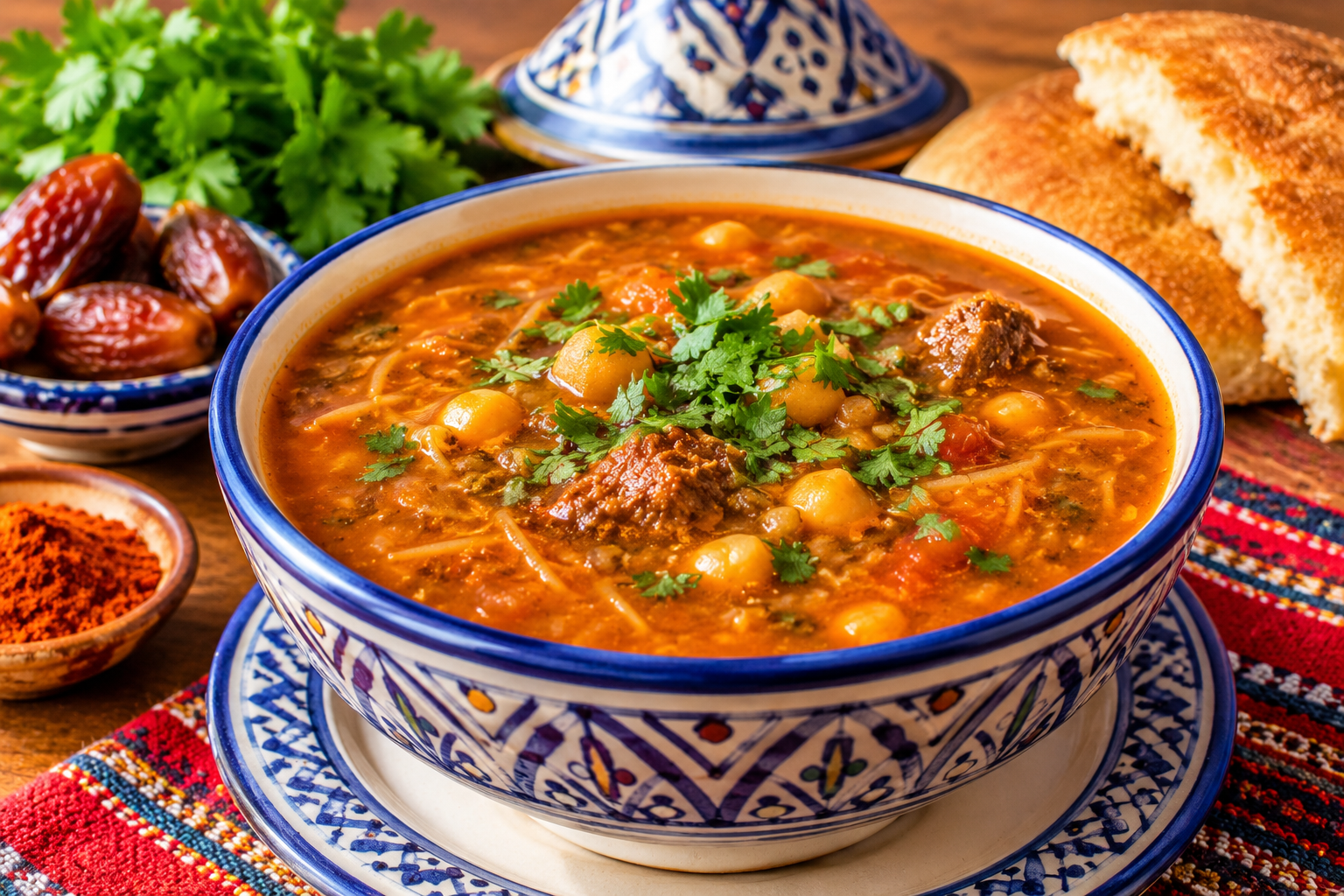
Moroccan Harira Soup is a rich, comforting, and aromatic traditional soup celebrated for its hearty ingredients, fragrant spices, and delicious tomato-based broth. Originating in Morocco, this beloved dish combines lentils, chickpeas, tomatoes, fresh herbs, and warming spices to create a satisfying meal that is both nourishing and flavorful. Some traditional versions also include tender lamb or beef, while others are prepared without meat for a wholesome vegetarian option. Its thick texture and vibrant flavor make harira a favorite throughout the year.
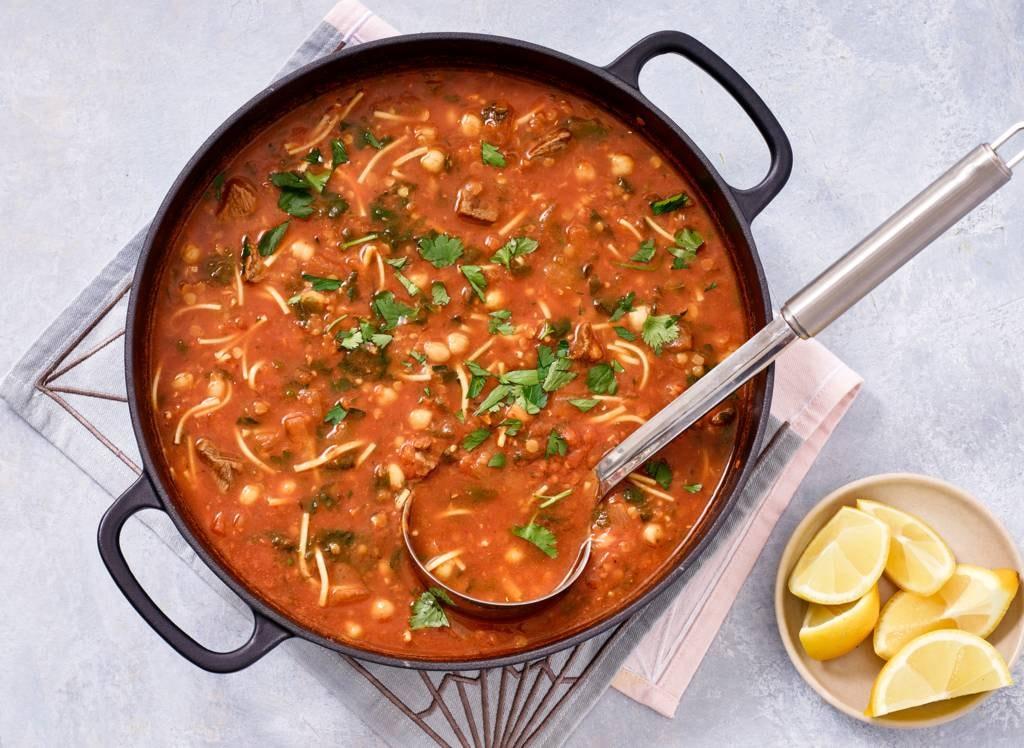
Moroccan Harira Soup:
One of the most distinctive features of Moroccan harira is its beautiful balance of ingredients. Tomatoes provide a tangy foundation, lentils and chickpeas add substance, and fresh cilantro, parsley, ginger, turmeric, cinnamon, and black pepper contribute layers of fragrance. Small pieces of vermicelli or rice are often added near the end of cooking, while a flour-and-water mixture may be used to give the soup its characteristic silky consistency. Every spoonful offers a comforting combination of tender legumes, aromatic herbs, and gently spiced broth.
Harira holds a special place in Moroccan food culture, particularly during Ramadan, when families traditionally enjoy it to break their daily fast alongside dates, bread, and other small dishes. However, this delicious soup is equally suitable for ordinary weeknight dinners, family gatherings, and chilly evenings. Whether you prepare the classic meat-based version or a vegetarian adaptation, homemade Moroccan harira offers an authentic taste of North African cooking in a warm and satisfying bowl.
History:
Harira has a long-standing place in Moroccan culinary traditions, reflecting the country’s rich blend of Amazigh, Arab, Andalusian, and other regional influences. Its ingredients showcase the agricultural abundance and trading traditions of North Africa, where tomatoes, pulses, herbs, grains, and aromatic spices have shaped everyday cooking.
Over generations, Moroccan households developed their own versions of harira using locally available ingredients and family-preferred seasonings. Some recipes feature lamb or beef for extra richness, while others rely on chickpeas, lentils, and tomatoes to create a filling vegetarian meal. Vermicelli, rice, and a flour-based thickener are also common additions, although recipes differ between regions and households.
Today, harira is especially associated with Ramadan, when it is frequently served at sunset to break the fast. Dates, bread, and Moroccan sweets often accompany the soup. Beyond religious occasions, harira remains a popular comfort food enjoyed in homes and restaurants throughout Morocco and among Moroccan communities around the world.
Subscribe to our youtube channel Kitchenpedia for more delicious recipes and hit the like button if you enjoyed this youtubevideo. Share it with your friends and Family.
Moroccan Harira Soup

Ingredients
- 2 tablespoons olive oil
- 1 medium onion, finely chopped
- 2 celery stalks, finely chopped
- 3 garlic cloves, minced
- 400 g fresh ripe tomatoes, chopped, or one 400 g can of crushed tomatoes
- 1 cup cooked chickpeas, drained and rinsed
- ¾ cup brown or green lentils, rinsed
- 150–200 g beef or lamb, cut into small cubes (optional)
- 8 cups (approximately 1.9 litres) vegetable or beef broth
- ½ cup vermicelli noodles or broken thin pasta
- ¼ cup all-purpose flour
- ½ cup water, for the flour mixture
- ¼ cup fresh cilantro, finely chopped
- ¼ cup fresh parsley, finely chopped
- 1 tablespoon lemon juice, or to taste
- 1 teaspoon ground ginger
Instructions
- Finely chop the onion, celery, garlic, cilantro, and parsley. Rinse the lentils thoroughly under running water and drain the chickpeas if using canned ones.Measure the spices, broth, tomato paste, and vermicelli before you begin. Preparing everything in advance makes the cooking process easier and helps the ingredients cook evenly.
- Heat the olive oil in a large, heavy-bottomed pot over medium heat. Add the chopped onion and celery and cook for approximately 5 minutes, stirring occasionally, until softened.Add the minced garlic, ginger, turmeric, cinnamon, cumin, and black pepper. Stir for about 30–60 seconds until fragrant. Avoid burning the garlic, as it can make the soup taste bitter.
- If you are making a meat-based version, add the small beef or lamb cubes to the pot. Cook for approximately 4–6 minutes, stirring occasionally, until the outside is lightly browned.For a vegetarian version, skip this step and continue directly to the tomatoes. The chickpeas and lentils provide plenty of substance.
- Stir in the chopped tomatoes and tomato paste. Cook for 5–7 minutes, allowing the tomatoes to soften and the mixture to develop a deeper flavor.Use the back of a spoon to break down larger tomato pieces. The tomato mixture forms the rich, tangy base that gives Moroccan harira its characteristic color and taste.
- Reduce the heat, partially cover the pot, and simmer for approximately 25–35 minutes, or until the lentils are tender. If you have added meat, make sure it is also fully cooked and tender before proceeding.Check the liquid level occasionally and add a little hot water or broth if the soup becomes too thick.
- Stir in the cooked chickpeas, chopped cilantro, and parsley. Continue simmering for another 10 minutes to allow the flavors to blend.Taste the broth and adjust the salt and spices if necessary. At this stage, the soup should be fragrant, savory, and rich with a balance of tomato, herbs, and warm spices.
- In a small bowl, whisk the flour with ½ cup of cold water until completely smooth. Make sure there are no lumps.Slowly pour the mixture into the simmering soup while stirring continuously. Cook for approximately 5–8 minutes, allowing the flour to thicken the broth.For a smoother result, you can strain the flour mixture before adding it. If you prefer a lighter soup, reduce the amount of flour or omit it altogether.
- Add the vermicelli or broken thin pasta and stir well. Simmer according to the package instructions, usually about 5–8 minutes, until the noodles are tender.If the soup becomes too thick, add a little hot broth or water. Remember that vermicelli continues to absorb liquid as the soup stands, so it is best to keep the consistency slightly looser than your desired final texture.
- Remove the pot from the heat and stir in the lemon juice. Taste the soup one final time and adjust the seasoning.The lemon adds brightness that balances the rich tomatoes, legumes, and spices. Add it gradually so that the acidity complements rather than overwhelms the soup.
- Ladle the hot harira into individual bowls and garnish with fresh cilantro or parsley. Serve immediately with warm Moroccan bread, crusty bread, lemon wedges, or dates.For a traditional Ramadan-inspired meal, offer dates alongside the soup. For an everyday dinner, pair it with a simple salad or additional bread for a comforting and satisfying meal.
Notes
Tips for Moroccan Harira:
- Build flavor in layers: Sauté the onions and celery before adding the spices and tomatoes.
- Toast the spices briefly: A short cooking time in olive oil releases their aroma without burning them.
- Simmer gently: A steady, gentle simmer helps the lentils soften and allows the flavors to blend.
- Cut ingredients evenly: Small, uniform pieces of vegetables and meat cook more consistently.
- Stir after adding the thickener: Continuous stirring prevents flour from settling at the bottom of the pot.
- Add noodles near the end: This helps prevent overcooked pasta and an excessively thick soup.
- Balance the flavors: Taste before serving and adjust the salt, pepper, and lemon juice gradually.
- Make it ahead strategically: Prepare the soup base in advance, then add the vermicelli when reheating for a better texture.
FAQs for Moroccan Harira Soup:
1. What is Moroccan harira soup made of?
Moroccan harira is typically made with tomatoes, lentils, chickpeas, onions, celery, fresh cilantro, parsley, and spices such as ginger, turmeric, cinnamon, and pepper. Some versions include meat, vermicelli, rice, or a flour-based thickener.\
2. Is harira traditionally eaten during Ramadan?
Yes. Harira is strongly associated with Ramadan in Morocco and is commonly served to break the daily fast. It is often accompanied by dates, bread, and traditional sweets.
3. Can I make Moroccan harira vegetarian?
Absolutely. Use vegetable broth and omit the beef or lamb. Lentils and chickpeas provide protein, fiber, and a hearty texture, making the vegetarian version a satisfying meal.
4. Can I use canned chickpeas?
Yes. Canned chickpeas work very well and save time. Drain and rinse them before adding them to the soup, preferably after the lentils have begun to soften.
5. Why is my harira soup too thick?
Harira may become thick because of the flour thickener, lentils, and noodles. Stir in hot broth or water a little at a time until the soup reaches your preferred consistency.
6. Can I make harira without flour?
Yes. You can omit the flour for a lighter soup. The lentils, chickpeas, and tomatoes will still provide body, although the texture will be less silky than in versions thickened traditionally.
7. What can I serve with Moroccan harira?
Serve it with Moroccan khobz, crusty bread, lemon wedges, or dates. A fresh salad or small savory pastries can also complement the soup.
8. Can I prepare harira in advance?
Yes. You can prepare the soup a day ahead and refrigerate it once cooled. For the best texture, consider cooking and adding the vermicelli shortly before serving.
9. How do I store leftover harira?
Transfer the cooled soup to an airtight container and refrigerate it within two hours of cooking. Consume within three to four days. Reheat thoroughly, adding broth or water if necessary.
10. Can Moroccan harira be frozen?
Yes, although the texture may change slightly after thawing, particularly if the soup contains vermicelli or flour. For the best results, freeze the soup base before adding noodles, then add freshly cooked vermicelli when reheating.
11. What makes harira different from ordinary tomato soup?
Harira is more substantial than a typical tomato soup because it combines legumes, herbs, spices, and often pasta or meat. Its distinctive blend of ginger, turmeric, cinnamon, cilantro, and parsley gives it a characteristic North African flavor.
12. Is Moroccan harira healthy?
Harira can be a nutritious meal because lentils and chickpeas provide protein and fiber, while tomatoes and herbs contribute vitamins and other beneficial plant compounds. The nutritional profile depends on the recipe, portion size, salt, oil, and optional meat.
Conclusion:
Moroccan Harira Soup is a wonderful example of how simple ingredients can create a deeply satisfying and flavorful meal. With tender lentils, creamy chickpeas, juicy tomatoes, fresh herbs, and warming spices, this traditional North African soup brings comfort and authentic Moroccan character to the table.Whether you prepare it with beef, lamb, or entirely plant-based ingredients, the secret to delicious harira is building flavor gradually and allowing the soup to simmer until the ingredients come together. Finish with fresh lemon juice, serve with warm bread, and enjoy a dish cherished by Moroccan families for generations.Perfect for Ramadan, family dinners, meal preparation, or a cozy evening at home, this homemade harira recipe deserves a place in your collection of comforting international dishes.