

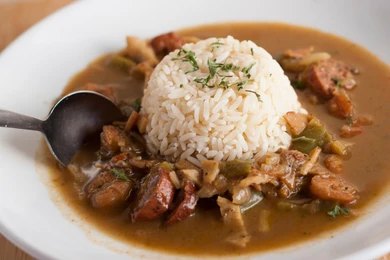
New Orleans Creole Gumbo is more than just a dish—it’s a celebration of culture, community, and comfort. Rich, deeply flavored, and layered with history, this iconic stew brings together seafood, meat, vegetables, and spices in a way that’s uniquely Louisiana.

Orleans Creole Gumbo:
Served steaming hot over rice, Creole gumbo is known for its complex taste built slowly through patience and technique. From the dark roux to the “holy trinity” of vegetables, every step adds soul to this legendary Southern classic.
History:
Gumbo traces its roots to 18th-century Louisiana, shaped by African, French, Spanish, and Native American influences. The word “gumbo” is believed to come from the West African word ki ngombo, meaning okra, one of the dish’s traditional thickeners. Over time, Creole gumbo evolved in New Orleans kitchens, often featuring tomatoes and a mix of seafood and meats, distinguishing it from Cajun gumbo.
Subscribe to our youtube channel Kitchenpedia for more delicious recipes and hit the like button if you enjoyed this youtubevideo. Share it with your friends and Family.
New Orleans Creole Gumbo

Ingredients
- ½ cup vegetable oil
- ½ cup all-purpose flour
- 1 large onion, finely chopped
- 1 green bell pepper, chopped
- 2 celery stalks, chopped
- 4 cloves garlic, minced
- 1 cup sliced okra (fresh or frozen)
- 1 can (14.5 oz) diced tomatoes
- 6 cups chicken or seafood stock
- 1 lb smoked andouille sausage, sliced
- 1 lb shrimp, peeled and deveined
- 1 cup cooked crab meat (optional)
- 2 bay leaves
- 1 tsp paprika
- 2 tbsp chopped fresh parsley
Instructions
- In a heavy-bottomed pot, heat oil over medium heat and slowly whisk in flour to make a roux. Stir constantly until it turns deep brown.
- Add onion, bell pepper, and celery to the roux; cook until softened.
- Stir in garlic and okra, cooking for another 2 minutes.
- Add tomatoes, stock, sausage, bay leaves, thyme, paprika, cayenne, salt, and pepper.
- Bring to a simmer and cook uncovered for 45–60 minutes, stirring occasionally.
- Add shrimp and crab meat; cook for 5–7 minutes until shrimp are done.
- Adjust seasoning and garnish with parsley and green onions.
Notes
- A dark roux is essential for authentic flavour.
- Tomatoes are typical in Creole gumbo, not Cajun.
- Seafood should be added at the end to avoid overcooking.
- Gumbo tastes even better the next day.
- Adjust spice levels to suit your preference.
Tips for Orleans Creole Gumbo:
- Stir the roux constantly to prevent burning.
- Use homemade stock for deeper flavor.
- Andouille sausage adds authentic smokiness.
- Skim excess oil from the surface if needed.
- Serve with crusty bread for a complete meal.
FAQs for Orleans Creole Gumbo:
Q1: What is the difference between Creole and Cajun gumbo?
Creole gumbo usually includes tomatoes and seafood, while Cajun gumbo does not use tomatoes and focuses more on meats.
Q2: Can I make gumbo without okra?
Yes, filé powder can be used as an alternative thickener.
Q3: Can gumbo be frozen?
Yes, gumbo freezes well for up to 3 months.
Q4: Is gumbo spicy?
It can be mild or spicy depending on the amount of cayenne used.
Q5: What rice is best for gumbo?
Plain long-grain white rice is traditional.
Conclusion:
New Orleans Creole Gumbo is a timeless dish that brings warmth, history, and bold flavor to the table. Whether served for family dinners or special gatherings, this rich and comforting stew is a true expression of Louisiana’s culinary heritage. One spoonful is enough to understand why gumbo is so deeply loved.