

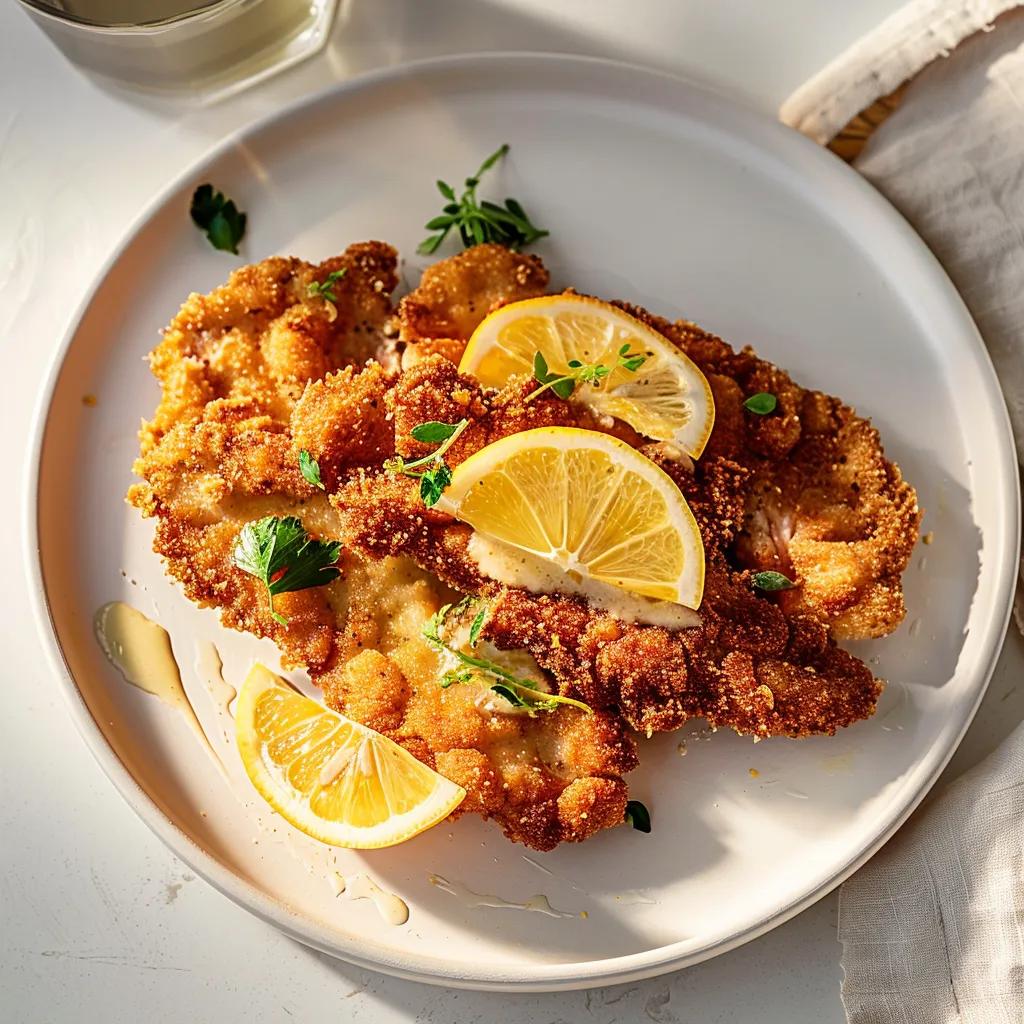
German Wiener Schnitzel is a beautifully simple dish that turns a few everyday ingredients into something exceptionally delicious. Traditionally made with thinly pounded veal, the meat is coated in flour, beaten egg, and fine breadcrumbs before being fried until the exterior becomes wonderfully golden and crisp. The result is a delicate, tender cutlet with a light, airy crust rather than a heavy, greasy coating.
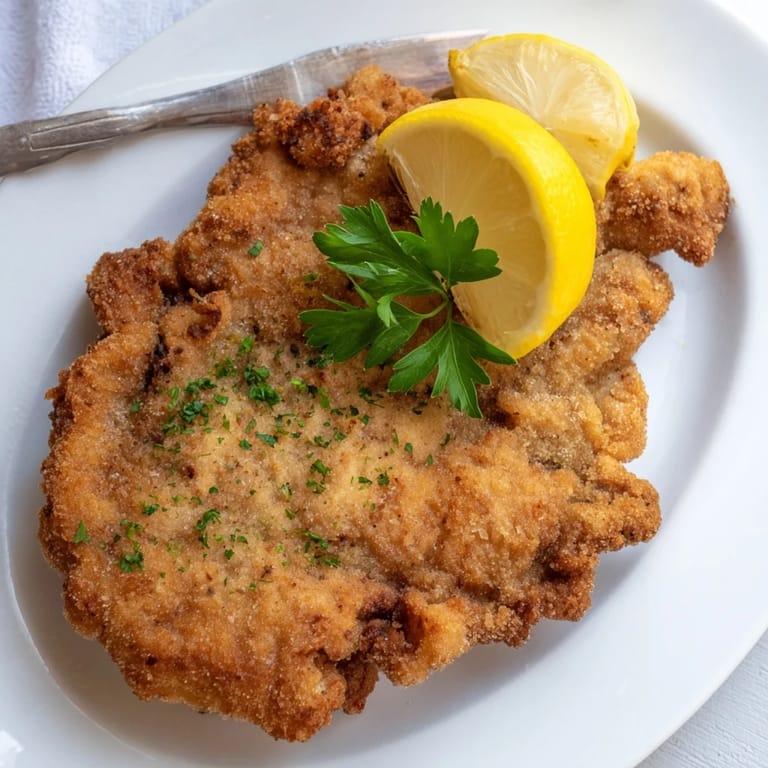
German Wiener Schnitzel:
Although the name Wiener Schnitzel specifically refers to the famous Viennese preparation, the dish has become enormously popular throughout Germany and is now a familiar part of German restaurant cuisine. It is often served with lemon wedges, potato salad, cucumber salad, or simple parsley potatoes, creating a satisfying meal that balances richness with freshness.The secret to excellent Wiener Schnitzel is technique. The meat should be pounded very thin, the breadcrumbs should remain loose rather than compressed, and the schnitzel should be fried in enough hot fat to allow the coating to puff and turn golden. Serve it immediately while the crust is at its crispiest for the best experience.
History:
Schnitzel has a long history in Central European cuisine, while Wiener Schnitzel is particularly associated with Vienna, Austria. The dish became an iconic part of Viennese cooking during the 19th century.The traditional version is made with veal, although pork, chicken, and turkey versions are now widely prepared. Strictly speaking, a schnitzel made with pork is not a traditional Wiener Schnitzel, but it is commonly enjoyed as a schnitzel-style variation.The dish eventually spread across German-speaking Europe and beyond. Today, German restaurants frequently serve schnitzel in many forms, accompanied by potatoes, salads, sauces, or vegetables.
Subscribe to our youtube channel Kitchenpedia for more delicious recipes and hit the like button if you enjoyed this youtubevideo. Share it with your friends and Family.
German Wiener Schnitzel

Ingredients
- 4 thin veal cutlets, approximately 150–170 g each
- ½ cup all-purpose flour
- 1 cup fine, dry breadcrumbs
- ½ teaspoon salt
- ¼ teaspoon freshly ground black pepper
- Vegetable oil, clarified butter, or a combination, for frying
- 1–2 tablespoons butter, optional
- Lemon wedges, for serving
- Fresh parsley, for garnish
Instructions
- Place each veal cutlet between two sheets of plastic wrap or parchment paper. Gently pound the meat with a meat mallet until it is very thin, approximately 3–5 mm thick.
- Lightly season both sides of the veal with salt and freshly ground black pepper.
- Place the flour in one shallow bowl.
- Place the breadcrumbs in a third bowl.
- Lightly coat each cutlet in flour, shaking off the excess.
- Finally, coat the cutlet with breadcrumbs.
- Heat enough oil or clarified butter in a large skillet to generously surround the schnitzel.
- The fat should be hot before the meat goes into the pan. A breadcrumb dropped into the oil should begin sizzling immediately.
- Gently shake or tilt the pan occasionally so the hot fat moves around the surface of the schnitzel.
- Serve immediately with fresh lemon wedges. Squeeze lemon over the schnitzel just before eating.
Notes
- Traditional meat: Authentic Wiener Schnitzel is traditionally made with veal.
- Thin meat matters: A thin, evenly pounded cutlet cooks quickly and remains tender.
- Use fresh breadcrumbs: Fresh or good-quality fine breadcrumbs provide a better crust.
- Don't compress: Pressing breadcrumbs firmly onto the meat can make the coating dense.
- Hot fat is essential: Insufficiently hot oil can produce a greasy schnitzel.
- Avoid overcrowding: Cook in batches if necessary.
- Serve immediately: Schnitzel tastes best when freshly fried.
- Lemon is important: Its acidity cuts through the richness and brightens the dish.
Tips for Wiener Schnitzel:
- Pound evenly: Aim for consistent thickness across the entire cutlet.
- Keep the breading dry: Shake off excess flour and egg before adding breadcrumbs.
- Don’t press the crumbs: Let the breadcrumbs sit loosely on the surface.
- Use enough frying fat: The schnitzel should be surrounded by hot fat rather than simply sitting in a thin film.
- Maintain the temperature: If the oil becomes too hot, the breadcrumbs can burn before the meat cooks.
- Don’t overcrowd the skillet: Too many cutlets can dramatically reduce the frying temperature.
- Use a large skillet: This gives the schnitzel enough room to cook evenly.
- Eat it fresh: The golden crust is at its best immediately after frying.
FAQs for German Wiener Schnitzel:
1. What meat is traditionally used for Wiener Schnitzel?
Traditional Wiener Schnitzel is made with veal. Pork, chicken, and turkey are commonly used for other schnitzel variations.
2. Is Wiener Schnitzel German or Austrian?
Wiener Schnitzel is traditionally associated with Vienna, Austria. It is also extremely popular throughout Germany and other Central European countries.
3. Can I use pork instead of veal?
Yes. Pork is widely used for German-style schnitzel, although it should technically be described as pork schnitzel rather than traditional Wiener Schnitzel.
4. Why does my schnitzel become greasy?
The frying fat may not be hot enough, or the pan may be overcrowded. Maintaining an appropriate frying temperature helps the coating crisp quickly rather than absorbing excessive oil.
5. Why is my breadcrumb coating falling off?
Make sure the meat is not excessively wet and follow the correct sequence: flour, egg, then breadcrumbs. Also, avoid handling the breaded cutlet too much before frying.
6. Should I press breadcrumbs onto the schnitzel?
No. For a light, delicate crust, coat the meat gently and avoid firmly pressing the breadcrumbs onto the surface.
7. What should I serve with Wiener Schnitzel?
Potato salad, parsley potatoes, cucumber salad, green salad, lemon wedges, and lingonberry or cranberry preserves are excellent accompaniments.
8. Can I make Wiener Schnitzel in an air fryer?
Yes, although the result will differ from traditional pan-fried schnitzel. Lightly spray the breaded cutlet with oil and air-fry until crisp and cooked through, turning halfway through cooking.
Conclusion:
German Wiener Schnitzel is a wonderful example of how simple ingredients can create an impressive meal. Tender, thinly pounded veal is transformed by a delicate flour, egg, and breadcrumb coating into a beautifully golden and crispy centerpiece.For the most traditional experience, keep the breading light, fry the schnitzel in properly heated fat, and serve it immediately with plenty of fresh lemon. Whether enjoyed with German potato salad, cucumber salad, or simple parsley potatoes, this classic Central European dish is sure to become a favorite at the dinner table.