

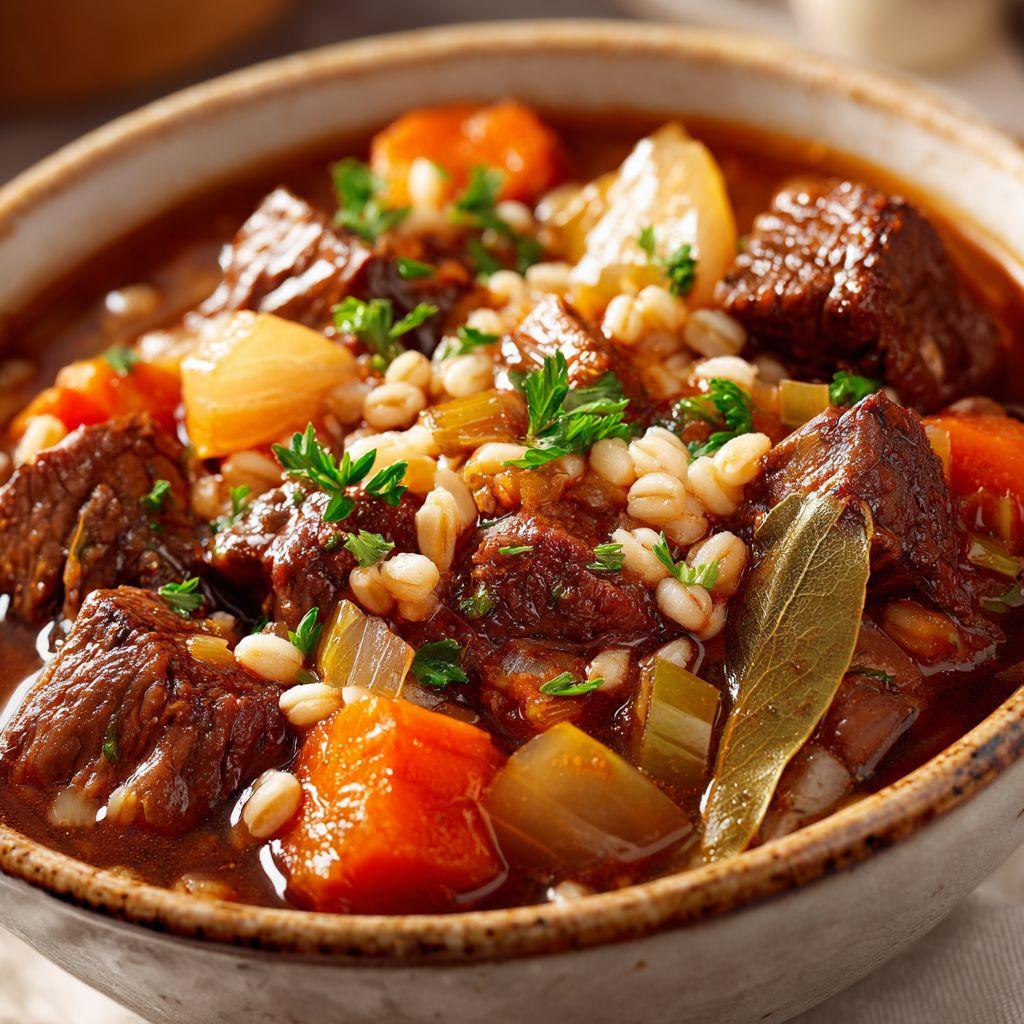
Chef John’s Beef and Barley Stew is a comforting, old-fashioned meal filled with tender pieces of beef, wholesome barley, and flavorful vegetables simmered together in a rich, savory broth. This satisfying stew is perfect for chilly evenings, family dinners, or any time you crave a warm, homemade meal. Every spoonful combines delicious beef flavor with the hearty texture of barley and the natural sweetness of slowly cooked vegetables.One of the best things about beef and barley stew is its simple preparation and wonderful depth of flavor.
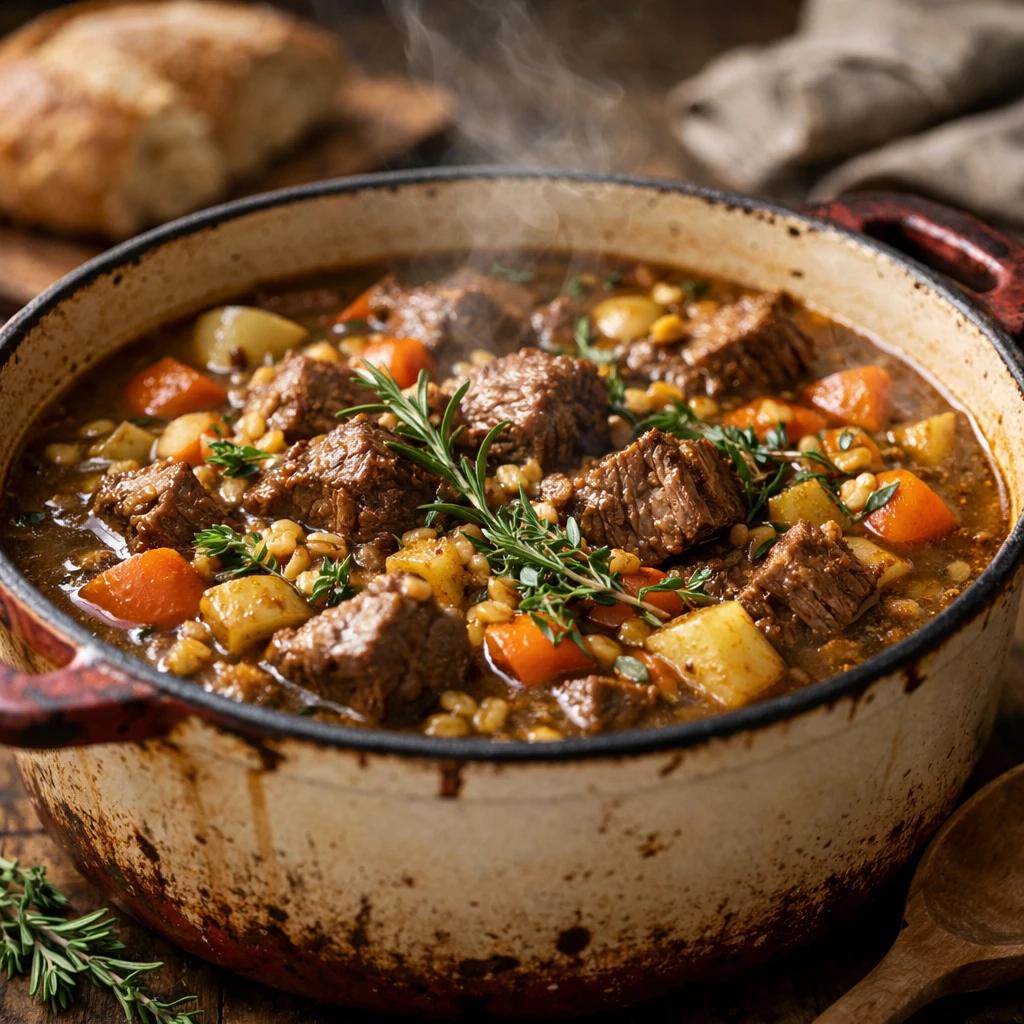
Chef John’s Beef and Barley Stew:
Browning the beef before simmering helps develop a rich, savory base, while onions, carrots, celery, garlic, and herbs contribute layers of delicious aroma. As the stew cooks, the beef becomes tender, the vegetables soften, and the barley absorbs the flavorful broth, creating a thick and satisfying consistency.Whether served with crusty bread, warm dinner rolls, or a fresh green salad, this beef and barley stew makes an excellent family meal. It is also a practical make-ahead dish because its flavors continue to develop as it rests. Although this recipe is inspired by the classic beef and barley stew style, it is a general homemade adaptation rather than a verified transcription of Chef John’s original recipe.
History of Beef and Barley Stew:
Beef and barley stew is rooted in the long tradition of preparing nourishing meals from affordable grains, seasonal vegetables, and available cuts of meat. Barley has been cultivated for thousands of years and has played an important role in soups, porridges, and stews across Europe and the Middle East.In traditional European cooking, tougher cuts of beef were slowly simmered until tender, allowing cooks to transform inexpensive ingredients into hearty family meals. Barley was a natural addition because it thickened the broth, provided a pleasantly chewy texture, and made the dish more filling.
Today, beef and barley stew remains popular in home kitchens because it is economical, flavorful, and easy to customize. Modern versions often include beef broth, tomato paste, garlic, thyme, and Worcestershire sauce to create a deeper, richer flavor.
Subscribe to our youtube channel Kitchenpedia for more delicious recipes and hit the like button if you enjoyed this youtubevideo. Share it with your friends and Family.
Chef John’s Beef and Barley Stew

Ingredients
- 2 pounds beef chuck, cut into 1-inch cubes
- 3/4 cup pearled barley, rinsed
- 2 tablespoons olive oil
- 1 large onion, finely chopped
- 2 medium carrots, peeled and sliced
- 3 cloves garlic, minced
- 2 tablespoons tomato paste
- 8 cups beef broth
- 1 tablespoon Worcestershire sauce
- 1 teaspoon dried thyme
- 1 bay leaf
- 1/2 teaspoon freshly ground black pepper
- 1 teaspoon salt, or to taste
- 1 tablespoon chopped fresh parsley
Instructions
- Pat the beef cubes dry using paper towels. Season them with salt and black pepper. Drying the meat helps it brown properly instead of steaming in the pot.If desired, lightly coat the beef with flour for a slightly thicker stew.
- Heat the olive oil in a large Dutch oven or heavy-bottomed pot over medium-high heat. Add the beef in batches, making sure not to overcrowd the pot.Brown the pieces on several sides for approximately 5–7 minutes per batch. Transfer the browned beef to a plate and set aside.Do not skip this step, as browning creates the deep, savory flavor that makes the stew especially delicious.
- Reduce the heat to medium. Add the chopped onion, carrots, and celery to the same pot.Cook for 5–7 minutes, stirring occasionally, until the onion softens and the vegetables begin to release their aroma. Add the minced garlic and cook for another 30 seconds.
- Stir in the tomato paste and cook for 1–2 minutes. This helps deepen its flavor and adds richness to the broth.Pour in a small amount of beef broth and scrape the bottom of the pot with a wooden spoon to release the browned bits.
- Return the browned beef to the pot. Add the remaining beef broth, Worcestershire sauce, dried thyme, and bay leaf.Stir well and bring the mixture to a gentle boil. Reduce the heat to low, cover partially, and simmer for approximately 60–90 minutes, or until the beef begins to become tender.Maintain a gentle simmer rather than a rapid boil to help the beef cook evenly.
- Stir in the rinsed pearled barley. Continue simmering for approximately 30–40 minutes, stirring occasionally.The barley will absorb some of the broth and gradually become tender. If the stew becomes too thick before the barley is cooked, add extra hot beef broth or water.
- Remove the bay leaf. Taste the stew and add more salt and black pepper as needed.Check that the beef is fork-tender and the barley is soft but still pleasantly chewy. If the beef needs more time, continue simmering gently until it reaches the desired tenderness.
- Remove the pot from the heat and allow the stew to rest for 5 minutes. Sprinkle chopped fresh parsley over the top.Ladle the hot stew into bowls and serve with crusty bread, biscuits, or a fresh salad.
Notes
- Choose the right beef: Beef chuck is an excellent choice because its connective tissue softens during slow cooking.
- Brown in batches: Too much beef in the pot at once prevents proper browning.
- Rinse the barley: Rinsing removes dust and loose starch from the grains.
- Monitor the liquid: Barley absorbs liquid as it cooks, so keep extra broth available.
- Maintain a gentle simmer: Boiling too vigorously can make the meat tough and break down the vegetables excessively.
- Adjust the thickness: Add broth for a thinner stew or simmer uncovered briefly for a thicker consistency.
- Remove the bay leaf: It is used for flavor and should not be eaten.
- Allow resting time: Letting the stew stand briefly before serving helps the flavors settle.
Tips for Beef and Barley Stew:
- Use a heavy-bottomed pot or Dutch oven to distribute heat evenly.
- Cut the beef into similarly sized cubes for more consistent cooking.
- Add mushrooms for an earthy flavor that complements the beef and barley.
- Use low-sodium beef broth if you want greater control over the salt level.
- Add a splash of red wine after cooking the vegetables for a deeper, more complex flavor, if desired.
- Stir occasionally after adding the barley to prevent it from sticking to the bottom.
- Add frozen peas during the final 5 minutes of cooking for extra color and sweetness.
- Prepare the stew a day ahead if convenient; refrigerate promptly and reheat thoroughly before serving.
FAQs for Beef and Barley Stew:
1. What is the best cut of beef for beef and barley stew?
Beef chuck is one of the best choices because it becomes tender and flavorful during slow cooking. Beef stew meat can also work well.
2. Can I use quick-cooking barley instead of pearled barley?
Yes, but quick-cooking barley requires less time. Add it according to the package directions near the end of cooking to avoid making it mushy.
3. Do I need to soak barley before cooking?
No. Pearled barley generally does not require soaking. Rinse it under cool running water before adding it to the stew.
4. How can I make my beef and barley stew thicker?
Allow the stew to simmer uncovered for a few minutes. Alternatively, mix one tablespoon of cornstarch with cold water and stir the mixture into the simmering stew until it thickens.
5. Can I make this recipe in a slow cooker?
Yes. Brown the beef and sauté the vegetables first for better flavor. Transfer them to the slow cooker with the broth and seasonings, then cook on low until the beef is tender. Add the barley during the final portion of cooking, following its package directions, and add broth as necessary.
6. Can I freeze beef and barley stew?
Yes. Cool the stew promptly and freeze it in airtight, freezer-safe containers. The barley may soften after thawing, but the stew will still be flavorful.
7. What can I serve with beef and barley stew?
Crusty bread, garlic bread, dinner rolls, biscuits, steamed green beans, or a fresh garden salad are excellent accompaniments.
8. How long does beef and barley stew last in the refrigerator?
Store leftovers in a covered container in the refrigerator for up to 3–4 days. Reheat until steaming hot throughout, adding a little broth or water if the stew has thickened.
9. Can I make the stew gluten-free?
Yes. Replace the pearled barley with rinsed rice or certified gluten-free grains, use gluten-free beef broth, and check that the Worcestershire sauce and other seasonings are gluten-free. Barley itself contains gluten, so it cannot remain in a strictly gluten-free version.
10. Why is my beef still tough?
The beef may need more cooking time. Continue simmering gently and check it periodically. Tough cuts often become tender only after their connective tissue has had enough time to soften.
Conclusion:
Chef John’s Beef and Barley Stew is a wonderful example of how simple ingredients can create a deeply satisfying homemade meal. Tender beef, wholesome barley, aromatic vegetables, and a rich broth come together to create a comforting dish that is perfect for sharing with family and friends.
With its hearty texture, nourishing ingredients, and flexible preparation, this classic stew deserves a place in your regular dinner rotation. Serve it fresh from the pot with warm bread, or save leftovers for another satisfying meal. Once you try this homemade version, it may become one of your favorite cold-weather comfort foods.