

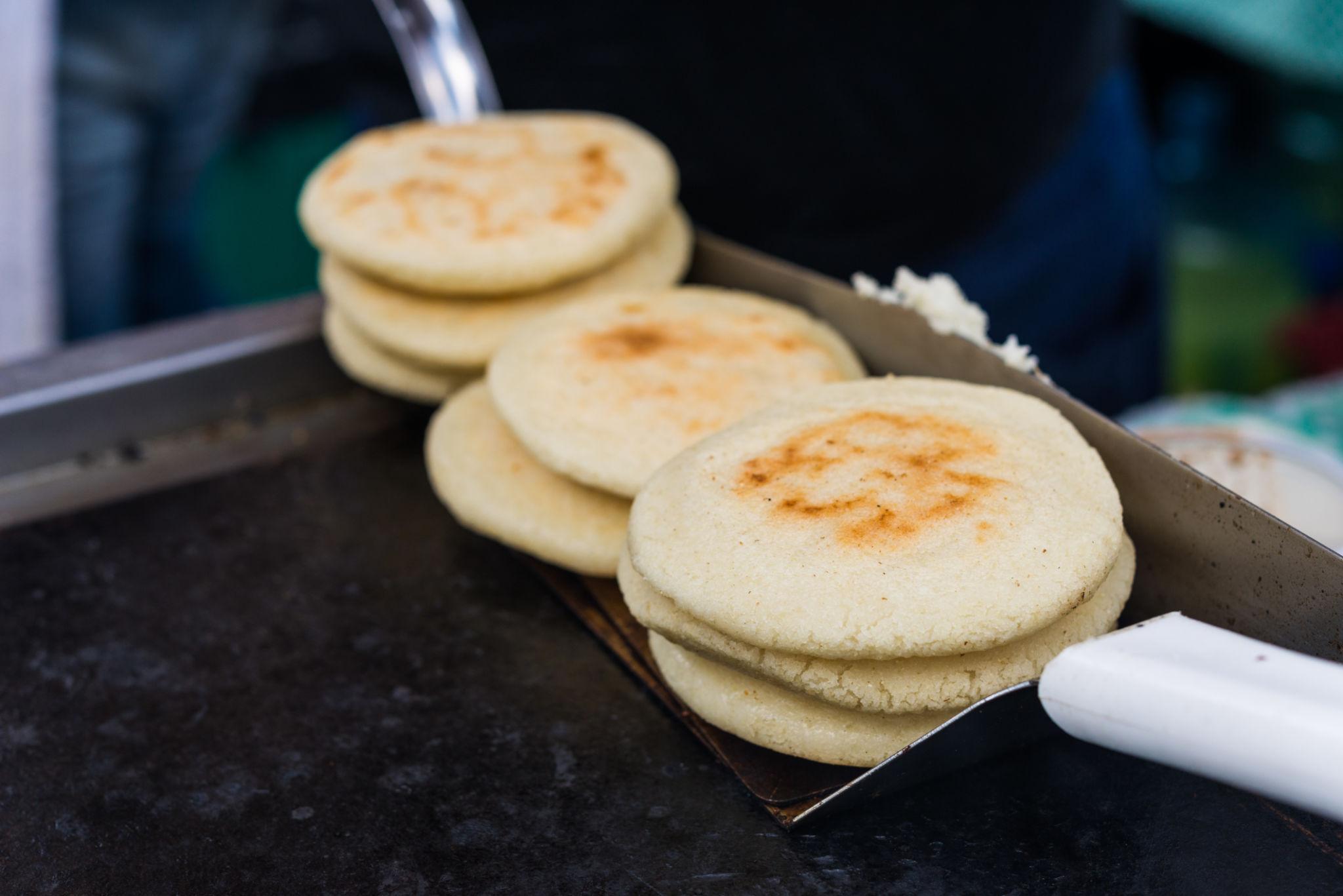
Colombian Arepas are one of the most beloved staples of Colombian cuisine. Made primarily from pre-cooked cornmeal, warm water, and salt, these simple corn cakes are shaped by hand and cooked until lightly crisp and golden on the outside while remaining soft and tender inside.Unlike many filled or heavily seasoned versions, traditional Colombian arepas can be wonderfully simple.
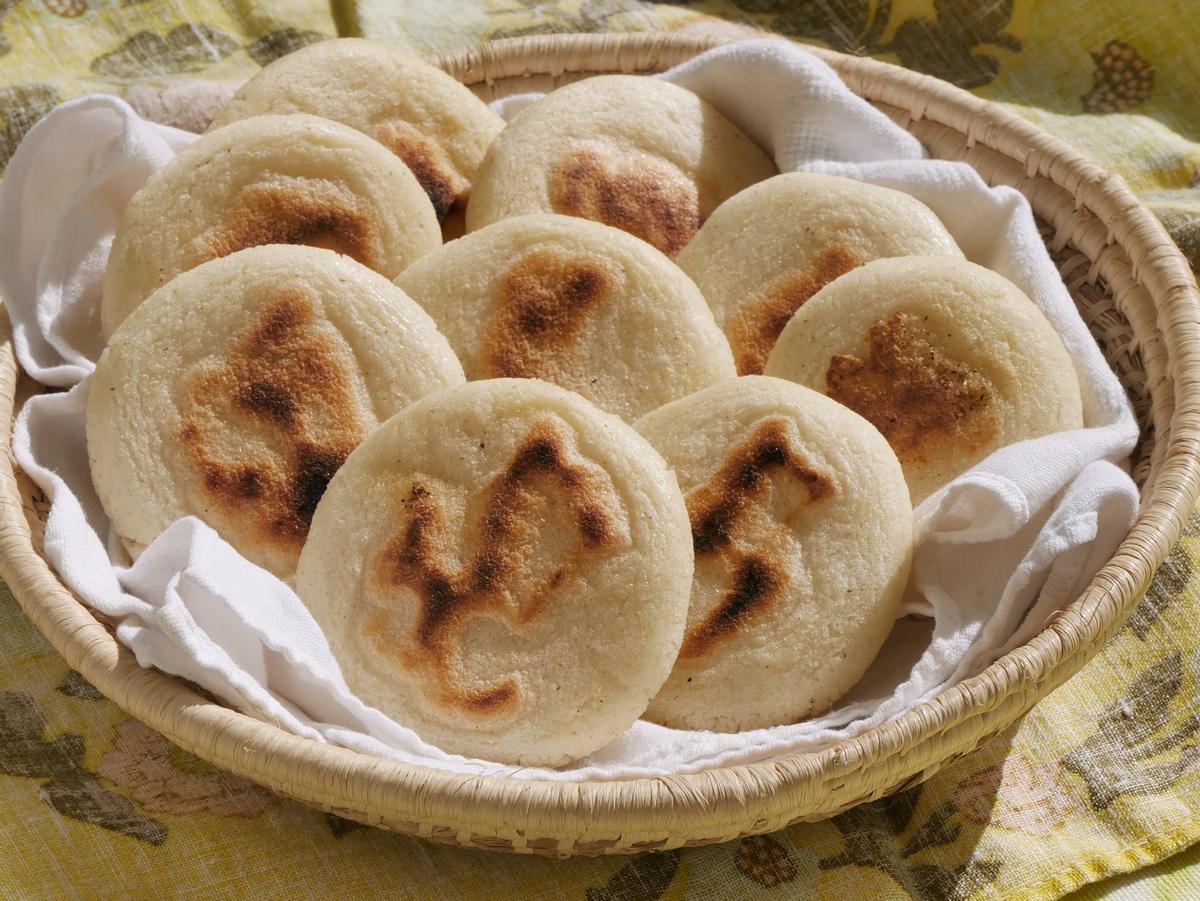
Colombian Arepas:
Their mild corn flavor makes them incredibly versatile, allowing them to accompany scrambled eggs, avocado, cheese, meats, beans, soups, or stews. They can also be enjoyed on their own with a little butter or cheese.Arepas vary considerably across Colombia, with different regions offering their own ingredients, shapes, thicknesses, and cooking methods. Some are thin and crisp, some are thick and fluffy, and others are filled with cheese or topped with savory ingredients. This recipe provides a simple, dependable Colombian-style base that you can customize at home.
History:
Arepas have ancient roots in the culinary traditions of Indigenous peoples of northern South America. Corn was an important staple long before European arrival, and Indigenous communities developed methods for grinding and cooking corn into flat cakes.
In Colombia, arepas became deeply integrated into regional food traditions. As the dish spread throughout the country, communities developed their own distinctive versions based on locally available corn, cheeses, meats, and other ingredients
Subscribe to our youtube channel Kitchenpedia for more delicious recipes and hit the like button if you enjoyed this youtubevideo. Share it with your friends and Family.
Colombian Arepas

Ingredients
- 2 cups pre-cooked white cornmeal (masarepa)
- 2½ cups warm water
- 1 teaspoon salt
- 1 tablespoon butter, melted
- 1 tablespoon vegetable oil or butter, for cooking
- ½ cup grated mozzarella or queso blanco
- Extra butter for serving
- Fresh cheese for topping
Instructions
Prepare the Water
- Pour the warm water into a large mixing bowl.Add the salt and melted butter.Stir until the salt is well dissolved.
Add the Cornmeal
- Gradually add the pre-cooked cornmeal while stirring continuously.Mix with your hands or a wooden spoon until the ingredients begin forming a soft dough.
Knead the Dough
- Gently knead the dough for approximately 2–3 minutes.The dough should be smooth, soft, and easy to shape.It should not feel dry or excessively sticky.
Check the Consistency
- After resting, gently knead the dough again.If cracks appear when you shape it, add a little warm water.If the dough is too wet, add a small amount of cornmeal.
Divide the Dough
- Divide the dough into 8 equal portions.Roll each portion into a smooth ball.
Preheat the Pan
- Heat a large non-stick or cast-iron skillet over medium heat.Lightly grease the surface with oil or butter.
Cook the Arepas
- Place the arepas onto the hot skillet.Cook for approximately 5–7 minutes per side.They should develop a lightly golden crust.
Add Cheese
- For cheese arepas, sprinkle or place cheese on top during the final few minutes of cooking.Alternatively, carefully slice the cooked arepa and add cheese inside.
Serve Warm
- Transfer the cooked arepas to a serving plate.Brush with a little butter if desired.Serve immediately.
Notes
- Masarepa: Pre-cooked cornmeal is essential for traditional arepas.
- Water: Warm water hydrates the cornmeal more evenly.
- Dough: It should be soft and pliable without sticking excessively.
- Thickness: Medium-thick arepas are easier to cook evenly.
- Heat: Moderate heat prevents the outside from burning before the center cooks.
- Cheese: Cheese is optional for a basic Colombian arepa.
- Texture: Freshly cooked arepas are best when warm.
- Variations: Colombian regions have many different styles of arepas.
Tips for Colombian Arepas:
- Add the cornmeal gradually rather than dumping it into the water.
- Let the dough rest before shaping.
- Keep your hands slightly damp when forming the disks.
- Smooth any cracks around the edges before cooking.
- Avoid making the arepas too thick unless you plan to cook them slowly.
- Don’t overcrowd the skillet.
- Cook over moderate heat for an evenly golden exterior.
- Serve immediately with your favorite Colombian toppings.
FAQs for Colombian Arepas:
Q: What are Colombian Arepas?
Colombian Arepas are round corn cakes made from pre-cooked cornmeal, water, and salt. They are traditionally cooked on a griddle, skillet, or grill and eaten throughout Colombia.
Q: What is masarepa?
Masarepa is pre-cooked cornmeal specifically designed for making arepas. It is different from regular cornmeal and from masa harina used for many Mexican dishes.
Q: Are Colombian Arepas gluten-free?
Traditional arepas made only with cornmeal, water, salt, and butter are naturally gluten-free. Always check the packaging of your cornmeal and other ingredients if gluten contamination is a concern.
Q: Are Colombian Arepas the same as Venezuelan Arepas?
They are closely related, but Colombian and Venezuelan arepas have many regional differences. Colombian varieties can range from thin and simple to thick, cheesy, sweet, or filled, while Venezuelan arepas are often thicker and commonly split and stuffed with fillings.
Q: Can I add cheese to the dough?
Yes. Adding grated cheese creates a delicious cheesy variation. You can also stuff the arepas with cheese before cooking.
Q: Why are my arepas cracking?
Cracking usually means the dough is too dry. Add a little warm water, knead gently, and try shaping them again.
Q: Can I bake Colombian Arepas?
Yes. They can be finished in an oven after pan-cooking, particularly if you want a firmer crust. However, skillet cooking is a simple and traditional method.
Q: What can I serve with Colombian Arepas?
Serve them with butter, cheese, scrambled eggs, avocado, beans, shredded meat, chicken, or soups. They are also delicious alongside Colombian hot chocolate.
Conclusion:
Colombian Arepas are a beautiful example of how a few humble ingredients can create an incredibly versatile food. Their gentle corn flavor, golden exterior, and tender center make them suitable for almost any meal of the day.
Once you master the basic dough, you can experiment with cheese, herbs, meats, or different regional preparations. Enjoy them fresh from the skillet with butter and cheese, or serve them alongside eggs and Colombian hot chocolate for a comforting traditional breakfast.