

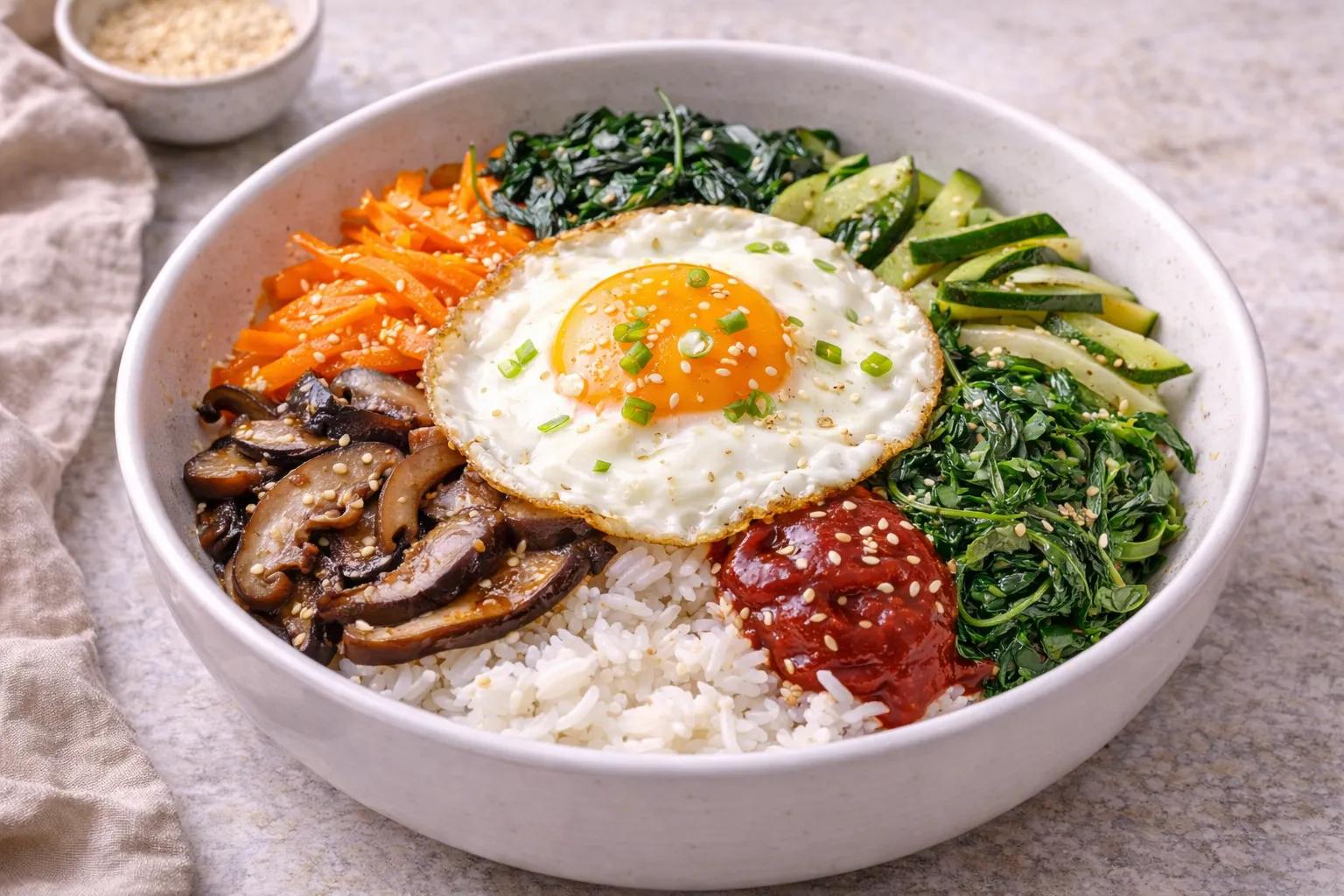
Bibimbap is one of the most popular and visually appealing dishes in Korean cuisine. The name is commonly associated with mixed rice, and the dish traditionally combines warm rice with a colorful variety of vegetables, protein, sauces, and often a perfectly cooked egg.Each ingredient contributes its own flavour, texture, and colour.
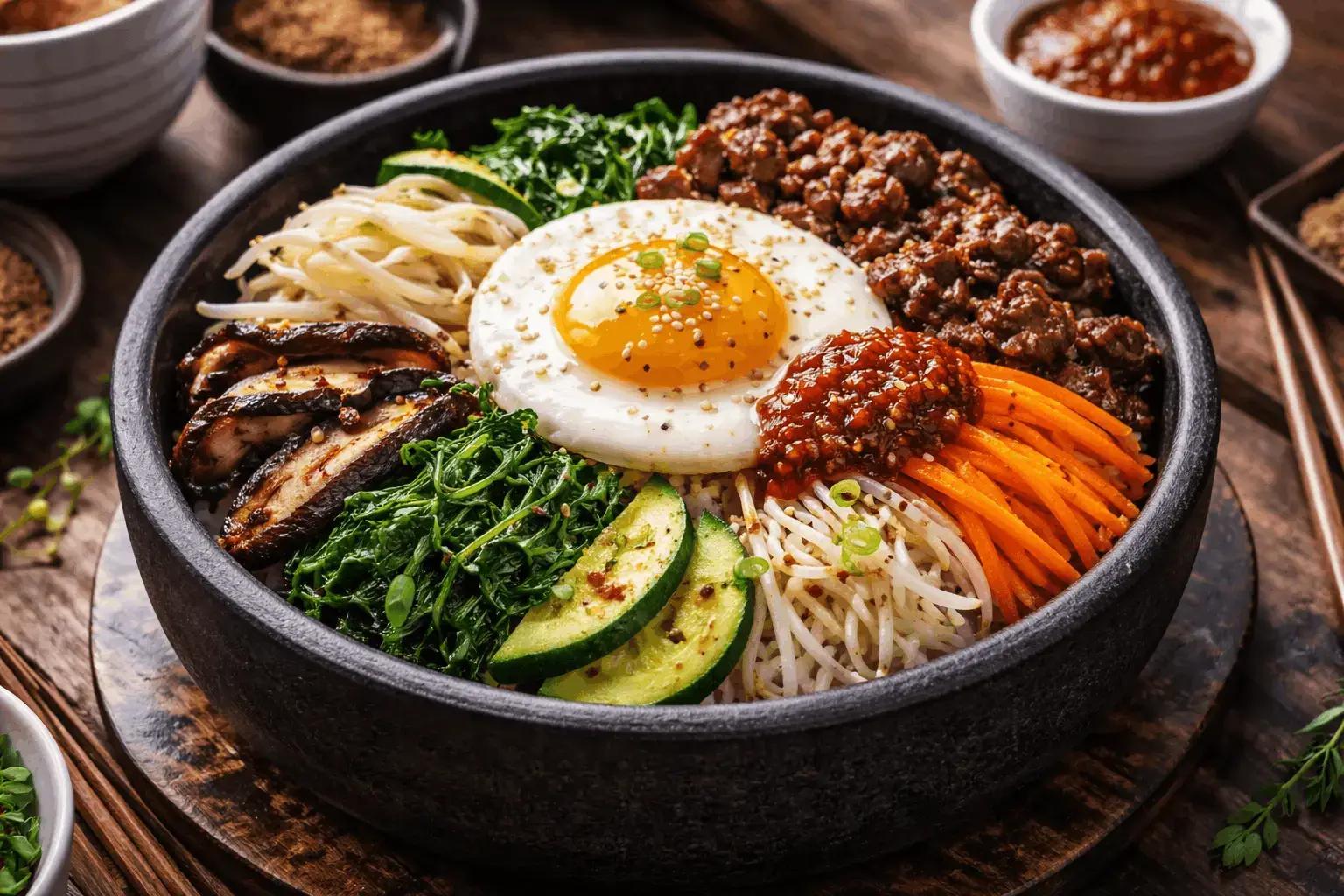
Bibimbap:
Tender vegetables, savory meat or tofu, fluffy rice, and spicy gochujang come together to create a satisfying and balanced meal. Before eating, everything is mixed together so that every bite contains a delicious combination of ingredients.Bibimbap is wonderfully versatile and can easily be customized according to your preferences. You can prepare it with beef, chicken, tofu, mushrooms, or additional vegetables, making it suitable for a variety of diets and occasions.
History:
Bibimbap has a long and important place in Korean food culture. Over time, different regions and households developed their own variations using locally available vegetables, rice, and seasonings.The dish is especially appreciated for its beautiful presentation. Ingredients are traditionally arranged separately over a bowl of rice, creating a colorful and inviting meal before being mixed together.Today, Bibimbap is enjoyed both in Korea and around the world. It can be served in a regular bowl or in a hot stone bowl, known as dolsot which creates a delicious crispy layer of rice at the bottom.
Subscribe to our youtube channel Kitchenpedia for more delicious recipes and hit the like button if you enjoyed this youtubevideo. Share it with your friends and Family.
Bibimbap

Ingredients
For the Rice
- 4 cups cooked short-grain rice
- 1 teaspoon sesame oil, optional
For the Beef
- 250 g thinly sliced beef
- 1 tablespoon soy sauce
- 1 teaspoon sesame oil
- 1 teaspoon sugar or honey
- 1 clove garlic, minced
For the Vegetables
- 1 medium carrot, julienned
- 2 cups spinach
- 1 small zucchini, thinly sliced
- 1 cup bean sprouts
- 1 cup mushrooms, sliced
- 2 tablespoons neutral cooking oil
- Salt, to taste
For the Gochujang Sauce
- 4 tablespoons gochujang
- 1 tablespoon sesame oil
- 1 tablespoon honey or sugar
- 1 tablespoon water
- 1 teaspoon rice vinegar
- 1 teaspoon toasted sesame seeds
For Serving
- 4 eggs
- Toasted sesame seeds
- Sliced scallions
- Kimchi, optional
Instructions
Prepare the Rice
- Cook the rice according to the package instructions.Keep it warm until you are ready to assemble the Bibimbap bowls.For extra flavor, gently mix a small amount of sesame oil into the cooked rice.
Prepare the Beef Marinade
- In a bowl, combine the soy sauce, sesame oil, sugar or honey, and minced garlic.Add the thinly sliced beef and mix well.Allow it to marinate for approximately 10–15 minutes.
Prepare the Gochujang Sauce
- Combine the gochujang, sesame oil, honey or sugar, water, rice vinegar, and sesame seeds in a small bowl.Mix until smooth.Adjust the consistency with a small amount of water if necessary.
Cook the Spinach
- Blanch the spinach briefly in boiling water.Drain and gently squeeze out excess water.Season lightly with salt and a small amount of sesame oil.
Prepare the Bean Sprouts
- Cook or blanch the bean sprouts briefly until tender but still slightly crisp.Drain well and season lightly with salt and sesame oil.
Cook the Carrots
- Heat a small amount of oil in a skillet.Stir-fry the julienned carrots for approximately 2–3 minutes until slightly tender.Season lightly with salt.
Cook the Mushrooms
- Stir-fry the mushrooms until tender and lightly browned.Set them aside.
Cook the Eggs
- Fry the eggs according to your preference.A sunny-side-up egg is a popular choice for Bibimbap.
Add the Egg
- Place a fried egg in the center of each bowl.
Garnish
- Sprinkle toasted sesame seeds and sliced scallions over the bowls.
Mix and Enjoy
- Before eating, mix all the ingredients together thoroughly.Enjoy your colorful and flavorful homemade Bibimbap while warm.
Notes
- Rice: Short-grain rice provides a slightly sticky texture that works well for Bibimbap.
- Vegetables: Each vegetable can be cooked separately to preserve its individual flavor and texture.
- Protein: Beef can be replaced with chicken, tofu, mushrooms, or another preferred protein.
- Gochujang: Different brands vary in heat and sweetness, so adjust the amount to your taste.
- Egg: A fried egg with a soft yolk adds richness to the dish.
- Presentation: Arrange ingredients separately for the traditional colorful appearance.
- Dolsot version: A hot stone bowl can create a crispy rice layer at the bottom.
- Customization: Use seasonal vegetables to create your own variation.
Tips for Bibimbap:
- Prepare all vegetables before assembling the bowls.
- Cut the ingredients into similar-sized pieces.
- Keep the rice warm while preparing the toppings.
- Season each vegetable lightly rather than adding too much salt.
- Arrange colorful ingredients beside one another for an attractive presentation.
- Add gochujang gradually if you prefer a milder dish.
- Use a hot stone bowl for crispy-bottom Bibimbap.
- Mix thoroughly before eating to combine all the flavors.
FAQs for Bibimbap:
Q: What is Bibimbap?
Bibimbap is a popular Korean rice dish made by combining rice with vegetables, protein, an egg, and a flavorful sauce such as gochujang.
Q: Is Bibimbap spicy?
It can be mildly or very spicy depending on the amount of gochujang used. You can easily adjust the sauce to suit your taste.
Q: Can I make vegetarian?
Yes. Replace the beef with tofu, mushrooms, or additional vegetables.
Q: What type of rice should I use?
Short-grain rice is traditionally a good choice because of its slightly sticky texture.
Q: Can I use leftover rice?
Yes. Leftover rice can be reheated and used as the base for Bibimbap.
Q: What is Dolsot?
Dolsot Bibimbap is served in a heated stone bowl, which helps create a crispy layer of rice at the bottom.
Q: Can I prepare the ingredients in advance?
Yes. The vegetables, sauce, and protein can be prepared ahead of time and assembled when ready to serve.
Q: What can I serve with Bibimbap?
Kimchi, Korean soups, cucumber salads, and other Korean side dishes pair beautifully with Bibimbap.
Conclusion:
Bibimbap is a vibrant and satisfying Korean rice bowl that brings together fresh vegetables, savory protein, warm rice, a rich egg, and bold gochujang sauce. Its colorful presentation and combination of textures make it as enjoyable to look at as it is to eat.This versatile dish can be customized with your favorite vegetables and proteins, making it perfect for family meals and special occasions. Mix everything together and enjoy a delicious bowl filled with bold Korean-inspired flavors.