

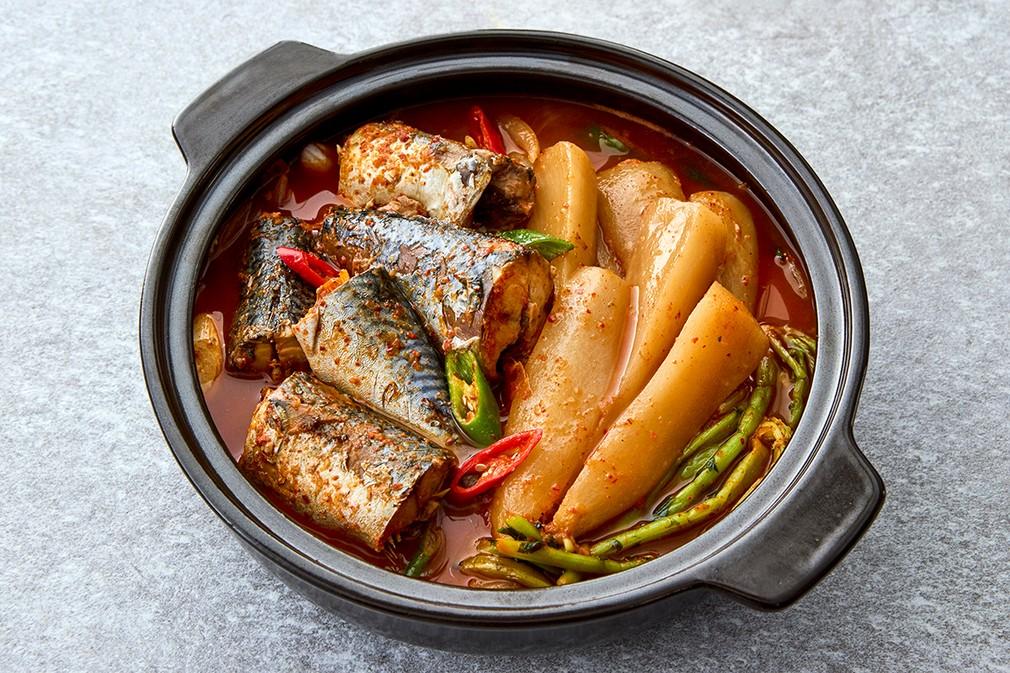
Godeungeo Jorim is a comforting Korean seafood dish made by gently braising fresh mackerel with thick slices of Korean radish in a deeply savory, spicy, and slightly sweet sauce. As the dish simmers, the radish absorbs the flavorful broth while the mackerel becomes tender and wonderfully seasoned.The sauce combines soy sauce, gochujang, Korean red pepper flakes, garlic, ginger, and a touch of sweetness.
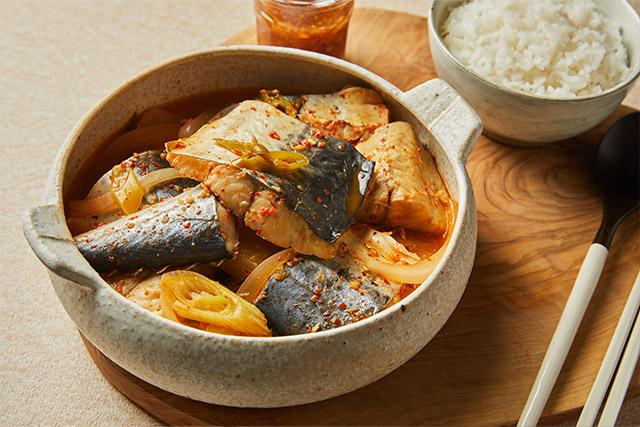
Godeungeo Jorim:
The result is a rich and aromatic braising liquid that coats the fish and radish with layers of umami and gentle heat. It is traditionally enjoyed with freshly cooked steamed rice, which is perfect for soaking up the sauce.This homemade Godeungeo Jorim is surprisingly easy to prepare and makes a satisfying Korean-style meal for lunch or dinner. It is especially delicious on a cool day when you want something warm, hearty, and packed with bold flavors.
History:
Godeungeo Jorim is part of Korea’s traditional family-style cuisine, where fish and vegetables are simmered together in a seasoned sauce. The Korean word “jorim” refers to a cooking method in which ingredients are slowly braised in a flavorful liquid until the sauce becomes concentrated and the ingredients absorb its seasoning.Mackerel has long been an important fish in Korean cuisine because it is flavorful, nutritious, and relatively affordable. Radish is commonly paired with fish because it becomes tender during braising and absorbs the savory sauce beautifully.Like many Korean home-cooked dishes, Godeungeo Jorim can vary from household to household. Some versions are particularly spicy, while others are sweeter or use additional vegetables such as onions and green chilies.
Subscribe to our youtube channel Kitchenpedia for more delicious recipes and hit the like button if you enjoyed this youtubevideo. Share it with your friends and Family.
Godeungeo Jorim

Ingredients
For the Fish and Radish
- 2 whole mackerel, cleaned and cut into serving pieces
- 400–500 g Korean radish or daikon, peeled and cut into thick slices
- 1 medium onion, sliced
- 2–3 green onions, cut into pieces
- 1–2 green Korean chili peppers, sliced, optional
- 2 cups water or light fish stock
For the Braising Sauce
- 4 tablespoons soy sauce
- 1½ tablespoons gochujang
- 1½ tablespoons Korean red pepper flakes (gochugaru)
- 1 teaspoon freshly grated ginger
- 1½ tablespoons honey, sugar, or rice syrup
- 1 tablespoon rice wine or mirin
- 1 teaspoon sesame oil
- 1 teaspoon toasted sesame seeds, for garnish
Instructions
Prepare the Mackerel
- Rinse the cleaned mackerel pieces briefly under cold water and pat them dry with paper towels. If desired, sprinkle lightly with salt and let them sit for about 10 minutes before rinsing again. This can help reduce strong fishy aromas.
Prepare the Radish
- Peel the Korean radish or daikon and cut it into thick, roughly 1-inch slices. Thick slices work best because they need enough time to become tender without falling apart.
Make the Sauce
- In a small bowl, combine the soy sauce, gochujang, gochugaru, minced garlic, ginger, honey or sugar, rice wine, sesame oil, and black pepper.Mix until the ingredients are evenly combined and the sauce becomes smooth.
Start Cooking the Radish
- Arrange the radish slices in a wide, heavy-bottomed pan. Pour in the water or fish stock.Bring the liquid to a boil, then reduce the heat and simmer the radish for about 10–12 minutes. This gives the radish a head start and allows it to absorb some of the broth.
Add the Mackerel
- Place the mackerel pieces carefully on top of the partially cooked radish. Spread the sliced onion around the fish.Pour the prepared braising sauce over the mackerel and radish.
Braise the Fish
- Bring everything to a gentle boil over medium-high heat. Once bubbling, reduce the heat to medium-low.Simmer uncovered for approximately 20–25 minutes. Occasionally spoon the sauce from the bottom of the pan over the top of the fish.Avoid stirring the fish too much because mackerel can break apart easily.
Add the Green Onions and Chilies
- During the final 5 minutes of cooking, add the green onions and sliced Korean chili peppers if using.Continue simmering until the sauce becomes slightly thickened and the radish is completely tender.
Serve
- Transfer the mackerel and radish to a serving dish. Spoon plenty of the concentrated sauce over the top.Sprinkle with toasted sesame seeds and additional green onion if desired.Serve immediately with hot steamed white rice.
Notes
- Mackerel: Fresh mackerel gives the best flavor, but properly thawed frozen mackerel can also be used.
- Radish: Korean radish is ideal because it stays firm while becoming tender and juicy during braising.
- Spice level: Reduce the gochugaru and gochujang if you prefer a milder dish.
- Fishy aroma: Fresh fish, ginger, garlic, and rice wine help create a cleaner flavor.
- Sauce consistency: The sauce should become richer and slightly thicker toward the end of cooking.
- Pan choice: A wide pan makes it easier to arrange the fish without stacking the pieces.
- Fish texture: Avoid frequent stirring because the mackerel can easily break apart.
- Serving: Godeungeo Jorim tastes best served hot with freshly steamed rice.
Tips for Godeungeo Jorim:
- Use thick radish slices so they remain intact throughout the braising process.
- Pre-cook the radish before adding the fish to ensure that both ingredients finish cooking at the same time.
- Use fresh ginger for a brighter aroma and to balance the richness of the mackerel.
- Adjust the sweetness according to your preference. Korean rice syrup can provide a beautiful glossy finish.
- Baste instead of stirring by spooning the sauce over the fish several times while it simmers.
- Keep the heat moderate once the sauce begins boiling to prevent the bottom from burning.
- Let the dish rest for 5 minutes before serving so the sauce can settle into the fish and radish.
- Serve with rice and simple side dishes such as kimchi, seasoned vegetables, or Korean cucumber salad.
FAQs for Godeungeo Jorim:
Q: What does Godeungeo Jorim mean?
Godeungeo Jorim translates roughly to braised mackerel. “Godeungeo” means mackerel, while “jorim” refers to a Korean cooking method in which ingredients are simmered or braised in a seasoned liquid.
Q: Can I use frozen mackerel?
Yes. Frozen mackerel works well. Thaw it completely in the refrigerator, rinse briefly, and pat it dry before cooking.
Q: What type of radish should I use?
Korean radish, also called mu, is traditionally preferred. Daikon is a good substitute if Korean radish is unavailable.
Q: Is Godeungeo Jorim very spicy?
It can be moderately spicy, but the heat is easy to adjust. Reduce the gochugaru and gochujang for a milder version.
Q: Can I make this dish without gochujang?
Yes. You can increase the gochugaru slightly and adjust the soy sauce and sweetener, although the flavor will be different from the traditional version.
Q: Why is radish added to Korean braised fish?
Radish absorbs the savory braising sauce and becomes tender and flavorful. It also provides a pleasant contrast to the rich mackerel.
Q: Can I add other vegetables?
Yes. Onion, green onions, Korean chili peppers, and occasionally potatoes or other vegetables can be added according to personal preference.
Q: How should I store leftovers?
Allow the dish to cool and refrigerate it in an airtight container for up to 2 days. Reheat gently on the stovetop until thoroughly hot.
Conclusion:
Godeungeo Jorim is a wonderful example of Korean home cooking: simple ingredients transformed into a deeply flavorful and satisfying meal. The rich mackerel pairs beautifully with tender radish, while the spicy, savory sauce brings everything together.Serve this comforting braised fish over steamed rice and spoon the extra sauce generously over the top. With its bold flavors, tender texture, and warming spice, Godeungeo Jorim is an excellent choice whenever you want an authentic Korean-inspired seafood dinner at home.