
 at home with tender thinly sliced beef marinated in a delicious combination of soy sauce, sesame oil, garlic, ginger, Asian pear, and sweetener. This classic Korean BBQ beef recipe delivers juicy, flavorful meat with beautifully caramelized edges and irresistible savory-sweet flavor. Perfect for grilling, skillet cooking, or barbecue gatherings, homemade Bulgogi is delicious served with steamed rice, lettuce wraps, kimchi, sesame seeds, and traditional Korean side dishes. Discover the easy step-by-step recipe, marinating tips, cooking secrets, ingredient notes, serving ideas, and FAQs for making authentic-style Korean Bulgogi at home.)
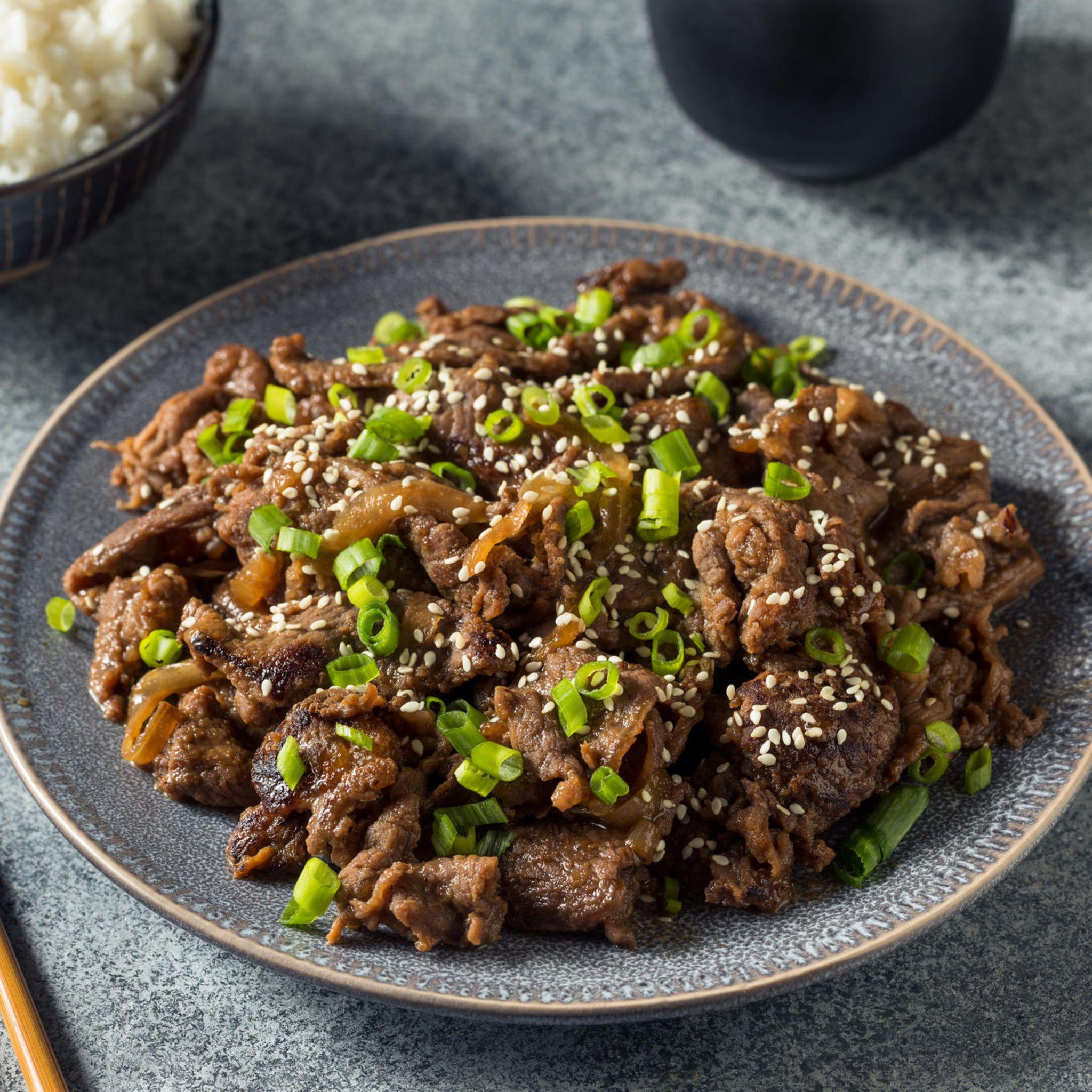
Korean Barbecued Beef Bulgogi is one of the most beloved dishes in Korean cuisine, famous for its thinly sliced beef, irresistible marinade, and beautifully caramelized edges. The name “bulgogi” translates to “fire meat,” referring to the traditional method of grilling or cooking marinated beef over a fire. Every bite combines tender beef with sweet, savory, garlicky, and slightly smoky flavors.The secret to delicious Bulgogi lies in its marinade. Soy sauce provides a rich savory base, while sugar or honey adds sweetness and encourages caramelization.
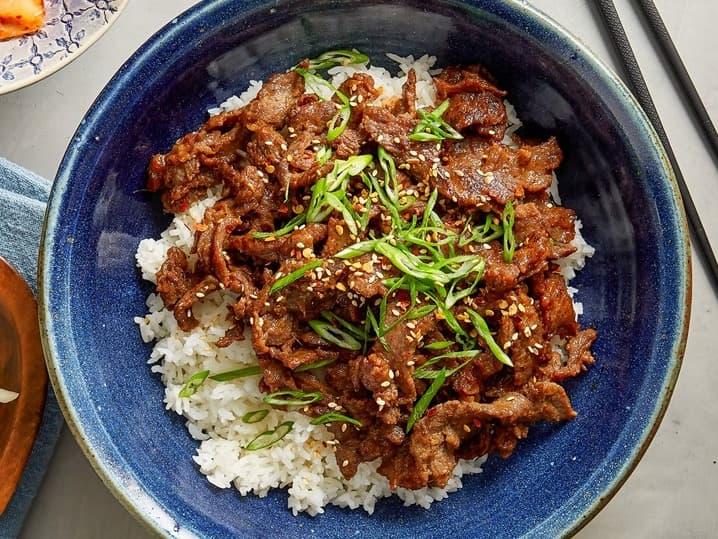
Korean Barbecued Beef:
Garlic, ginger, sesame oil, green onions, and black pepper create an aromatic Korean flavor profile, while grated Asian pear or apple can help tenderize the beef naturally.Bulgogi is incredibly versatile and can be grilled over high heat, cooked in a skillet, or prepared on a barbecue. Serve it with steamed rice, lettuce leaves, kimchi, and Korean side dishes for a satisfying meal that brings the flavors of Korean barbecue straight to your kitchen.
History:
Bulgogi has a long history in Korea and is believed to have developed from ancient grilled meat dishes. One historical predecessor is maekjeok, a style of skewered and seasoned meat associated with earlier Korean cuisine.Over time, the preparation evolved, and marinated beef became an important part of Korean celebratory and family meals. Bulgogi was traditionally prepared for special occasions, although it is now enjoyed regularly in homes and Korean restaurants around the world.The dish has also developed many regional and household variations. Some versions are grilled over charcoal for a smoky flavor, while others are cooked in a pan with onions, mushrooms, and a small amount of broth.
Subscribe to our youtube channel Kitchenpedia for more delicious recipes and hit the like button if you enjoyed this youtubevideo. Share it with your friends and Family.
Bulgogi

Ingredients
For the Beef
- 700 g thinly sliced beef
- 1 small onion, thinly sliced
- 3–4 green onions, chopped
- 150 g mushrooms, sliced, optional
- 1 tablespoon vegetable oil, for cooking
- 1 tablespoon toasted sesame seeds, for garnish
For the Bulgogi Marinade
- 5 tablespoons soy sauce
- 2 tablespoons brown sugar
- 2 tablespoons sesame oil
- 1 tablespoon rice wine or mirin
- 1 small Asian pear, grated
- 4 cloves garlic, minced
- 1 teaspoon fresh ginger, grated
- ½ teaspoon freshly ground black pepper
- 1 tablespoon finely grated onion
- 1 teaspoon toasted sesame seeds
Instructions
Prepare the Beef
- Choose a tender cut such as ribeye, sirloin, or another well-marbled beef cut. For the best texture, slice the beef very thinly against the grain.If slicing at home is difficult, partially freeze the beef for about 30–45 minutes. This firms the meat and makes thin slicing much easier.
Make the Marinade
- In a large bowl, combine soy sauce, brown sugar, honey or rice syrup, sesame oil, rice wine, grated Asian pear, garlic, ginger, black pepper, grated onion, and sesame seeds.Mix thoroughly until the sugar is mostly dissolved.
Marinate the Beef
- Add the thinly sliced beef to the marinade. Gently mix until every piece is evenly coated.Cover and refrigerate for at least 30 minutes. For deeper flavor, marinate for 2–4 hours.Avoid excessively long marination because the fruit enzymes can make the texture too soft.
Prepare the Vegetables
- Slice the onion and mushrooms and chop the green onions.Keep the vegetables ready so they can be added quickly during cooking.
Heat the Pan or Grill
- Heat a large skillet, cast-iron pan, grill pan, or barbecue over medium-high to high heat.Add a small amount of vegetable oil if needed.
Cook the Bulgogi
- Cook the beef in batches rather than overcrowding the pan. Spread the slices into a single layer and cook quickly over high heat.Cook for approximately 2–4 minutes per batch, turning occasionally, until the beef is cooked through and the edges are caramelized.Add some onion and mushrooms during cooking if desired.
Add the Green Onions
- During the final minute, add the chopped green onions and toss everything together.Allow some pieces of beef to develop browned, caramelized edges for the best flavor.
Garnish and Serve
- Transfer the cooked Bulgogi to a serving dish and sprinkle with toasted sesame seeds and additional green onions.Serve immediately with steamed rice, lettuce leaves, kimchi, and your favorite Korean side dishes.
Notes
- Best beef cuts: Ribeye and sirloin are excellent choices because they become tender and flavorful when cooked quickly.
- Thin slices: Thinly sliced beef cooks rapidly and allows the marinade to penetrate effectively.
- Asian pear: Pear adds subtle sweetness and helps tenderize the beef.
- Marinating time: At least 30 minutes works, while 2–4 hours gives a deeper flavor.
- High heat: Bulgogi develops better caramelization when cooked over high heat.
- Cook in batches: Overcrowding causes the beef to steam instead of brown.
- Vegetables: Mushrooms and onions are optional but add excellent texture and flavor.
- Serving: Bulgogi is best served immediately while the beef is juicy and warm.
Tips for Korean Barbecued Beef:
- Partially freeze the beef before slicing to make paper-thin slices easier to achieve.
- Slice against the grain for a more tender bite.
- Use well-marbled beef for rich and juicy Bulgogi.
- Drain excess marinade slightly before adding the beef to a very hot pan to encourage browning.
- Do not overcrowd the skillet; cook in several batches if necessary.
- Use a hot cooking surface to quickly caramelize the sugars in the marinade.
- Do not overcook the beef because thin slices can become dry quickly.
- Serve family-style with rice, lettuce, kimchi, sesame seeds, and Korean dipping sauces.
FAQs for Korean Barbecued Beef:
Q: What does Bulgogi mean?
Bulgogi literally refers to “fire meat” and describes Korean meat that is traditionally grilled or cooked over a fire.
Q: What cut of beef is best for Bulgogi?
Ribeye and sirloin are excellent choices. The important thing is to use tender beef and slice it very thinly against the grain.
Q: Can I make Bulgogi without an Asian pear?
Yes. You can substitute grated apple or use a small amount of kiwi or pineapple. However, kiwi and pineapple contain powerful enzymes, so use them sparingly and avoid very long marination.
Q: How long should I marinate Bulgogi?
A minimum of 30 minutes works well. For deeper flavor, marinate for 2–4 hours in the refrigerator.
Q: Can I cook Bulgogi without a grill?
Absolutely. A large skillet, cast-iron pan, or grill pan works very well.
Q: Why does my Bulgogi release so much liquid?
This usually happens when the pan is overcrowded or not hot enough. Cooking the beef in small batches over high heat helps achieve better browning.
Q: Can I add vegetables to Bulgogi?
Yes. Onion, mushrooms, green onions, carrots, and other vegetables can be added according to your preference.
Q: Can Bulgogi be prepared ahead of time?
Yes. You can marinate the beef several hours ahead and refrigerate it until ready to cook. Cooked leftovers should be refrigerated promptly and reheated thoroughly.
Conclusion:
Bulgogi is a delicious introduction to Korean barbecue, combining tender beef with a wonderfully balanced sweet, savory, garlicky, and nutty marinade. The combination of soy sauce, sesame oil, garlic, ginger, and fruit creates an incredibly flavorful dish with irresistible caramelized edges.Whether you grill it over charcoal or quickly cook it in a skillet, homemade Bulgogi is easy enough for a weeknight dinner and impressive enough for entertaining. Serve it with steamed rice, crisp lettuce, kimchi, and Korean side dishes for a complete and satisfying Korean feast.