

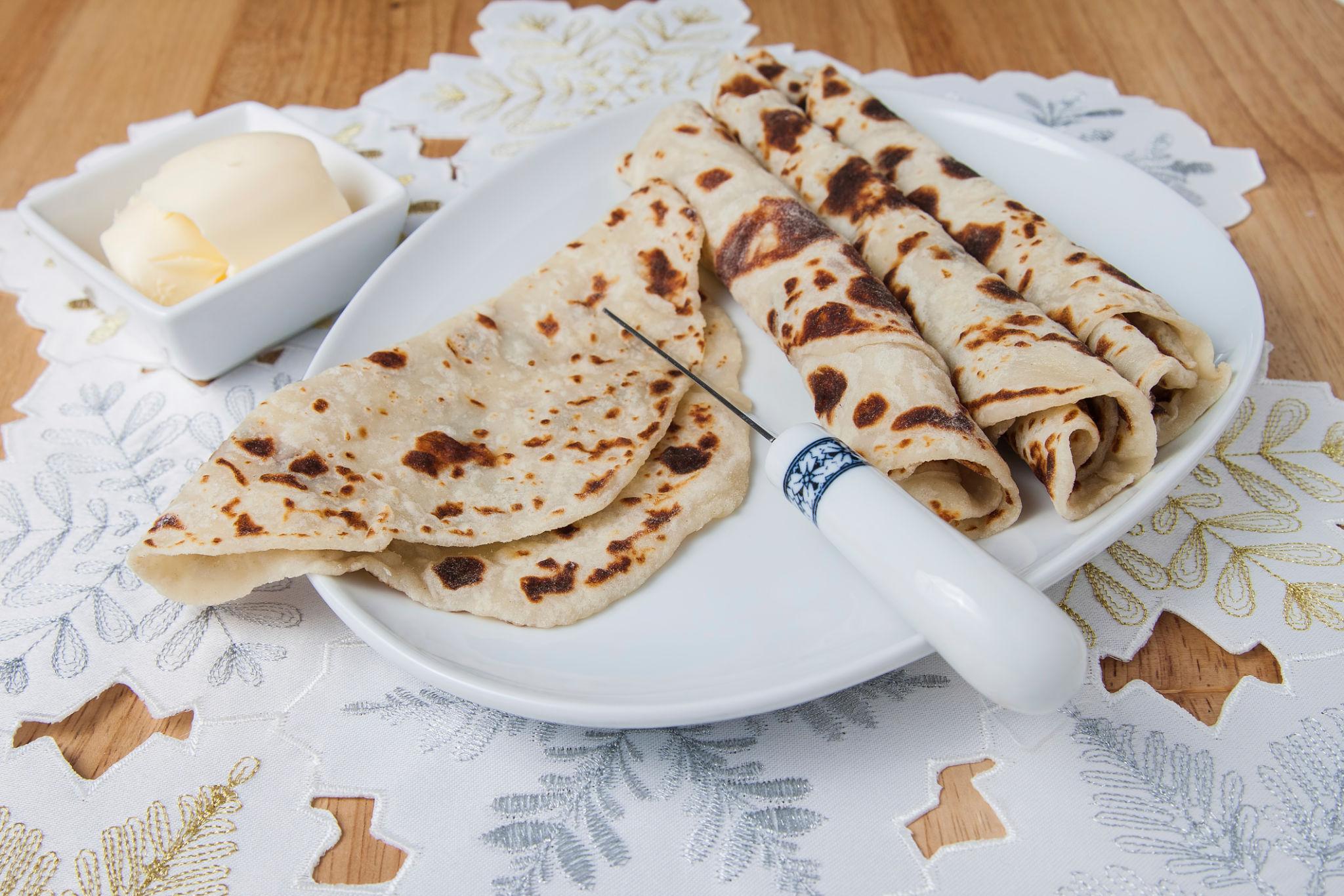
Norwegian Potato Lefsa is a beloved Scandinavian flatbread made from potatoes, flour, butter, and a little salt. Soft, tender, and wonderfully delicate, this traditional Norwegian food has been enjoyed for generations, particularly around Christmas and other family celebrations.The secret to good potato lefse is creating a smooth, dry potato mixture and adding just enough flour to make a workable dough.

Norwegian Potato Lefsa:
The dough is rolled into very thin rounds and cooked quickly on a hot, dry griddle. When finished, the lefse should remain flexible and soft rather than becoming crisp.One of the most traditional ways to enjoy potato lefse is to spread it with butter and sprinkle it with sugar and cinnamon before folding or rolling it. It can also be served with savory fillings, making it a versatile flatbread for breakfast, snacks, lunches, and festive meals.
History:
Lefse has deep roots in Norwegian food culture and is one of the country’s best-known traditional flatbreads. Before modern bread became commonplace, flatbreads were an important part of Norwegian cooking because they could be prepared from simple ingredients and stored for later use.Potato lefse became especially popular after potatoes became an important crop in Norway. Potatoes provided moisture and softness to the flatbread while helping families make satisfying food from inexpensive ingredients.Norwegian immigrants carried their lefse-making traditions to North America, where potato lefse became particularly popular among Scandinavian-American families. Today, families continue to make it during Christmas and pass down recipes and rolling techniques from one generation to the next.
Subscribe to our youtube channel Kitchenpedia for more delicious recipes and hit the like button if you enjoyed this youtubevideo. Share it with your friends and Family.
Norwegian Potato Lefsa

Ingredients
For the Potato Lefse
- 2 pounds russet potatoes
- 4 tablespoons unsalted butter
- ¼ cup heavy cream or whole milk
- 1 teaspoon salt
- 1½–2 cups all-purpose flour, plus extra for rolling
For the Traditional Sweet Topping
- 4 tablespoons softened butter
- ¼ cup granulated sugar
- 1 teaspoon ground cinnamon
Instructions
Cook the Potatoes
- Peel the potatoes and cut them into evenly sized chunks.Place them in a large pot and cover with cold water.Add a little salt and bring the water to a boil.Cook until the potatoes are completely tender and easily pierced with a fork.Drain extremely well. Excess water in the potatoes can make the lefse dough difficult to handle.
Mash the Potatoes
- While the potatoes are still hot, mash them until completely smooth.A potato ricer or food mill works especially well for this step.Add the butter, cream or milk, and salt.Mix until smooth.Avoid using a food processor because it can overwork the potatoes and create a gluey texture.
Chill the Potatoes
- Spread the mashed potatoes into a shallow container so they cool quickly.Cover and refrigerate for at least 1–2 hours, preferably overnight.Cold, dry potatoes make much easier lefse dough.
Make the Dough
- Transfer the chilled mashed potatoes to a large bowl.Gradually add the flour, mixing gently after each addition.Use only enough flour to create a soft dough that can be rolled without sticking excessively.Divide the dough into 12–16 equal portions.Shape each portion into a ball.
Roll the Lefse
- Generously flour a lefse board or clean work surface.Place one potato ball on the floured surface.Dust lightly with flour and roll it into a very thin circle, approximately 10–12 inches in diameter.Lift and rotate the dough occasionally while rolling to prevent sticking.A traditional lefse rolling pin with grooves can be particularly helpful.
Cook the Lefse
- Preheat a lefse griddle or large flat skillet over medium-high heat.Carefully transfer the thin dough to the dry, hot surface.Cook for approximately 30–60 seconds on the first side.When small brown spots appear, flip the lefse.Cook the second side for another 30–60 seconds.The lefse should remain soft and flexible.
Keep the Lefse Soft
- Transfer each cooked piece immediately to a clean kitchen towel.Cover it with another towel.Stack the cooked lefse as you continue cooking.Keeping the stack covered allows the pieces to remain soft and pliable.
Add the Classic Topping
- For traditional sweet lefse, spread softened butter over the surface.Mix the sugar and cinnamon together and sprinkle evenly over the butter.Fold the lefse into quarters or roll it tightly.Cut into smaller portions and serve.
Notes
- Russet potatoes work particularly well because they are naturally starchy.
- Drain the potatoes very thoroughly after boiling.
- Allow the potatoes to cool completely before adding flour.
- Cold potatoes make the dough easier to handle.
- Add flour gradually rather than all at once.
- Too much flour can make the lefse tough.
- Cook the lefse quickly on a dry griddle.
- Keep cooked lefse covered with towels so it remains soft.
Tips for Norwegian Potato Lefsa:
- Use a potato ricer: Smooth potatoes make a much better lefse dough.
- Dry the potatoes: Let drained potatoes sit briefly in the warm pot so excess moisture evaporates.
- Chill overnight: This makes the dough easier to roll and gives you a convenient make-ahead option.
- Flour carefully: Use enough flour to prevent sticking without turning the dough dry.
- Roll thin: Traditional potato lefse should be remarkably thin and flexible.
- Use a lefse stick: It makes transferring delicate dough to the griddle much easier.
- Don’t overcook: Dark, crisp lefse is usually a sign that it has cooked too long.
- Freeze leftovers: Properly wrapped lefse freezes very well for future meals and holidays.
FAQs for Norwegian Potato Lefsa:
Q: What is Norwegian Potato Lefse?
Norwegian Potato Lefse is a traditional flatbread made primarily from mashed potatoes and flour. It is rolled thin and cooked on a dry griddle.
Q: What is the difference between lefse and potato lefse?
“Lefse” is a broad term for Norwegian flatbreads, while potato lefse specifically contains mashed potatoes. Norwegian families and regions have many different styles of lefse.
Q: Why is my lefse dough sticky?
The potatoes may contain too much moisture. Drain them thoroughly and allow them to cool completely. You can add a little more flour, but avoid adding too much.
Q: Why did my lefse become hard?
It may have been overcooked or rolled too thick. Lefse should cook quickly and remain soft and flexible.
Q: Can I prepare potato lefse ahead of time?
Yes. Lefse is excellent for making ahead, particularly for holidays. Cool it completely, stack it with parchment between layers, and store it tightly wrapped.
Q: Can Norwegian Potato Lefse be frozen?
Yes. Place parchment or wax paper between the pieces, wrap the stack tightly, and freeze in an airtight freezer-safe bag or container.
Q: Can I make lefse without a lefse griddle?
Yes. A large flat cast-iron skillet or nonstick skillet can work, although a traditional lefse griddle provides a larger, more even cooking surface.
Q: What is the traditional sweet topping?
A classic sweet topping consists of softened butter, sugar, and cinnamon. Some families also add brown sugar or a small amount of maple syrup.
Conclusion:
Norwegian Potato Lefsa is a wonderful example of simple ingredients transformed into a treasured traditional food. The combination of fluffy potatoes, just enough flour, and quick cooking produces a soft and flexible flatbread that can be enjoyed in countless ways.For a classic Norwegian experience, spread warm lefse with butter, sugar, and cinnamon, then fold or roll it before serving. Whether you’re preparing it for Christmas, a family gathering, or an everyday Scandinavian-inspired meal, homemade potato lefse is a delicious tradition worth sharing.