

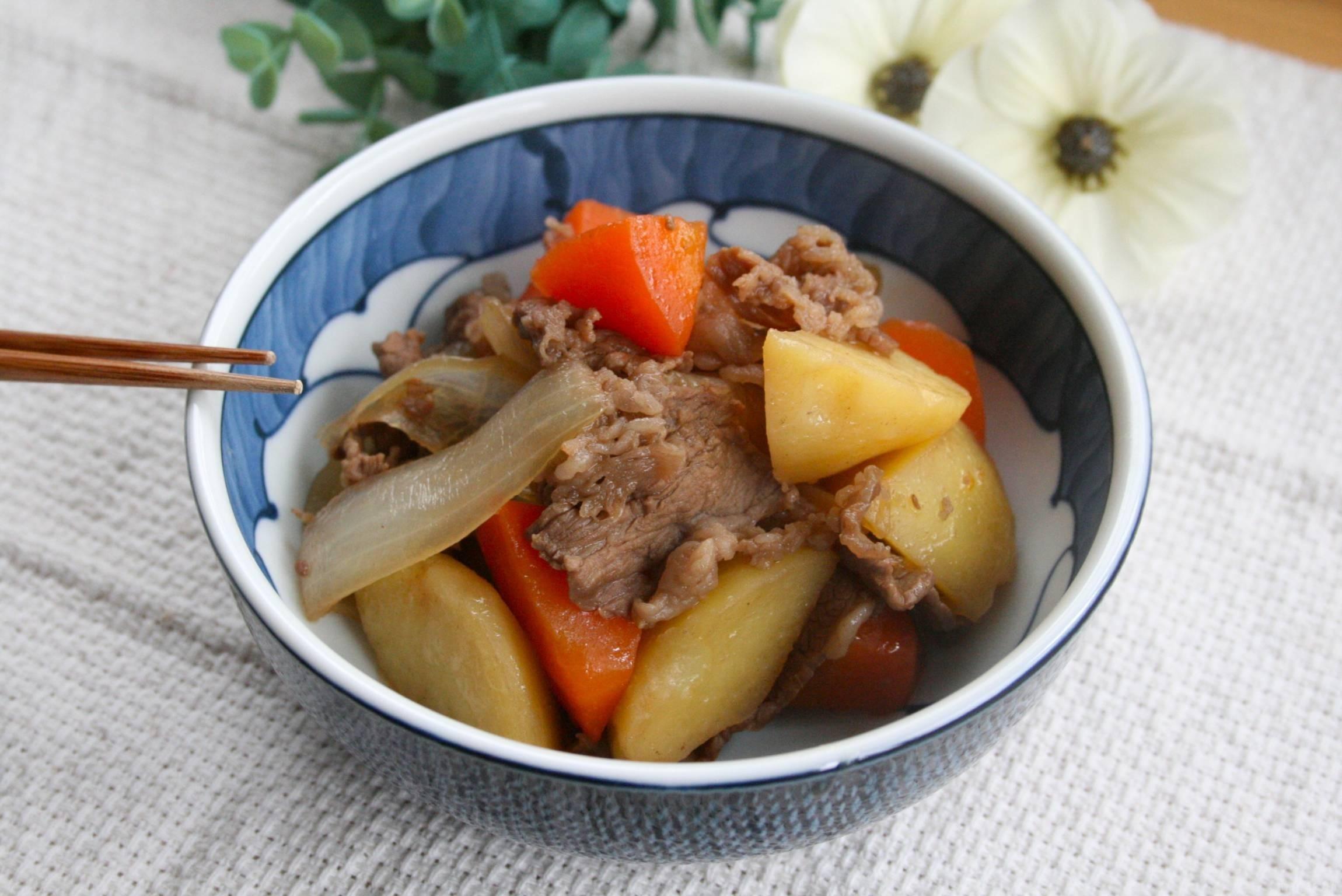
Nikujaga is one of Japan’s most beloved homestyle dishes, combining thinly sliced beef, tender potatoes, sweet onions, carrots, and shirataki noodles in a delicate savory-sweet broth. The name comes from niku, meaning meat and jaga, a shortened form of jagaimo, meaning potato. It is a comforting dish that feels simple, nourishing, and deeply satisfying.The flavor of Nikujaga comes from classic Japanese seasonings such as soy sauce, sake, mirin, and sugar.
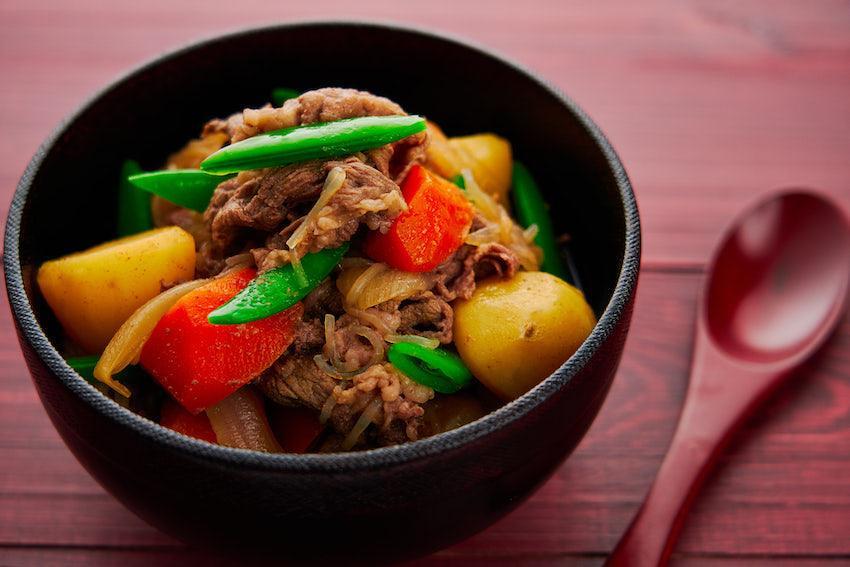
Nikujaga:
Rather than being a thick gravy-based stew, the ingredients gently simmer in a flavorful broth, allowing the potatoes and vegetables to absorb the seasoning while remaining tender.Nikujaga is traditionally associated with everyday Japanese home cooking and is especially comforting during colder months. It is wonderful served with steamed Japanese rice, miso soup, and simple pickles for a complete family meal.
History of Nikujaga:
Nikujaga is a relatively modern Japanese dish that developed during the late 19th century as Western-style beef consumption became more common in Japan. A popular story connects its development with Admiral Heihachiro Togo, although the exact historical origins are debated.
The dish is often described as a Japanese adaptation of a Western-style beef stew. Japanese cooks incorporated familiar local ingredients and seasonings, transforming the concept into a distinctly Japanese home-style meal.
Subscribe to our youtube channel Kitchenpedia for more delicious recipes and hit the like button if you enjoyed this youtubevideo. Share it with your friends and Family.
Nikujaga

Ingredients
For the Nikujaga
- 450 g thinly sliced beef
- 4 medium potatoes, peeled and cut into large chunks
- 1 large onion, cut into wedges
- 2 medium carrots, peeled and cut into chunks
- 1 package shirataki noodles, about 180–200 g
- 1 tablespoon vegetable oil
- 2 cups dashi stock
- 3 tablespoons soy sauce
- 2 tablespoons mirin
- 2 tablespoons sake
- 1 tablespoon sugar
Optional Garnish
- 2 green onions, thinly sliced
- Toasted sesame seeds
- Shichimi togarashi, optional
Instructions
Prepare the Vegetables
- Peel the potatoes and cut them into large, even pieces. Cut the carrots into chunks and slice the onion into wedges.Try to keep the vegetables relatively similar in size so they cook evenly.
Prepare the Shirataki
- Drain the shirataki noodles and rinse them thoroughly.For a milder aroma and better texture, place them in boiling water for about 1–2 minutes, then drain well.Cut the noodles into shorter pieces if desired.
Brown the Beef
- Heat a large heavy-bottomed pot or Dutch oven over medium heat.Add the vegetable oil and then add the thinly sliced beef.Cook briefly until the beef begins to brown. It does not need to be fully cooked at this stage.
Add the Vegetables
- Gently stir everything together for 2–3 minutes, allowing the vegetables to absorb some of the beef's flavor.
Add the Dashi
- Pour in the dashi stock.Bring the mixture to a gentle simmer.
Season the Broth
- Add the sugar, sake, mirin, and soy sauce.Stir gently to distribute the seasonings.If foam rises to the surface, skim it away with a spoon.
Simmer
- Reduce the heat to medium-low.Add the shirataki noodles and simmer for approximately 20–25 minutes, or until the potatoes and carrots are tender.Avoid vigorously stirring the pot because the potatoes can break apart.
Rest Before Serving
- Turn off the heat and allow the Nikujaga to rest for approximately 5–10 minutes.This short resting period allows the vegetables to absorb more of the flavorful broth.
Garnish and Serve
- Transfer the Nikujaga to individual bowls.Garnish with sliced green onions and a small sprinkle of sesame seeds or shichimi togarashi if desired.Serve warm with steamed Japanese rice.
Notes
- Use thinly sliced beef: Japanese-style thinly sliced beef cooks quickly and works particularly well in Nikujaga.
- Choose waxy or all-purpose potatoes: They hold their shape better during simmering.
- Don't over-stir: Excessive stirring can cause the potatoes to break apart.
- Use dashi for authentic flavor: Dashi provides the characteristic Japanese savory foundation.
- Adjust sweetness: Different households make Nikujaga sweeter or more savory, so adjust the sugar according to your preference.
- Shirataki is optional: You can omit it if you cannot find it.
- Resting improves flavor: The potatoes and vegetables continue absorbing the seasoned broth as the dish rests.
- Store leftovers properly: Refrigerate leftovers promptly in a covered container and reheat thoroughly before serving.