

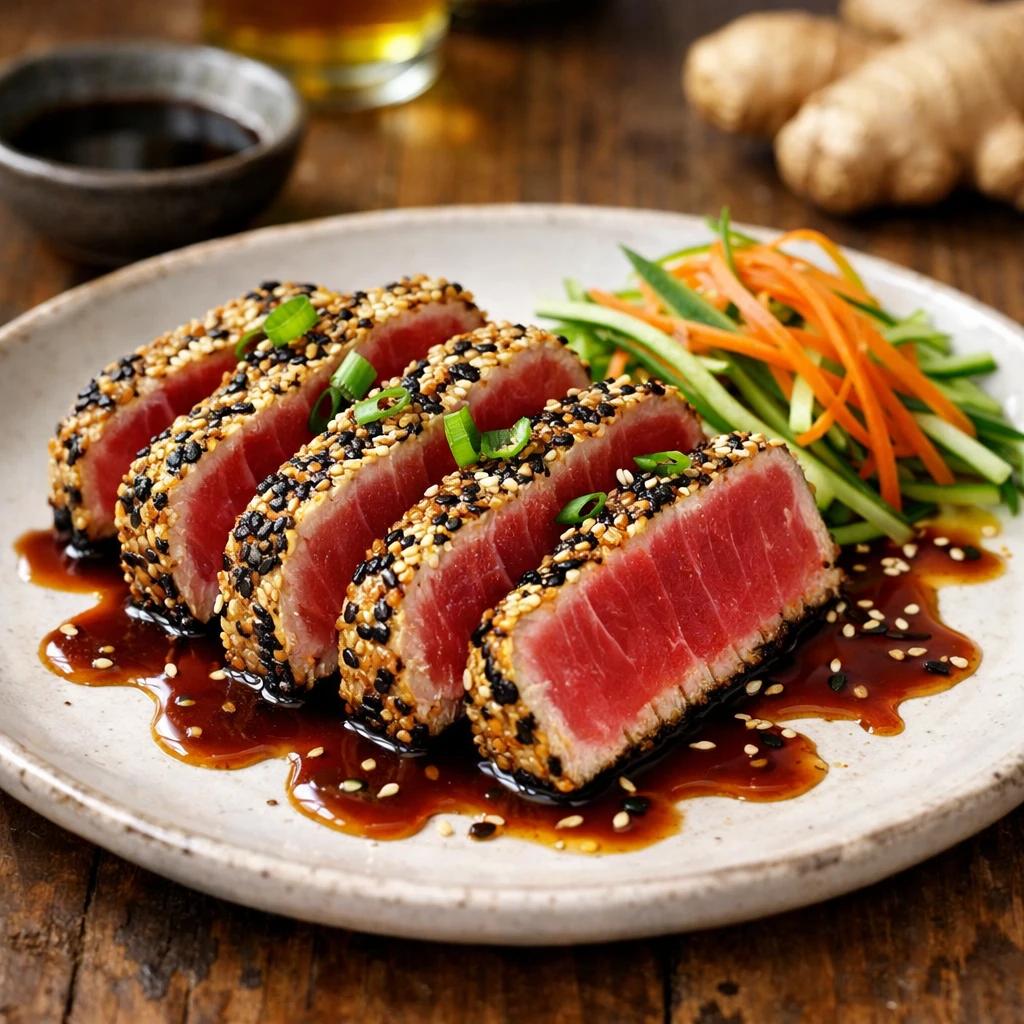
Sesame Seared Tuna is a beautifully simple dish that transforms high-quality tuna steaks into an elegant restaurant-style meal. The tuna is coated with a combination of nutty black and white sesame seeds, then quickly seared in a very hot pan. The result is a crisp, aromatic sesame crust surrounding tender, flavorful tuna.
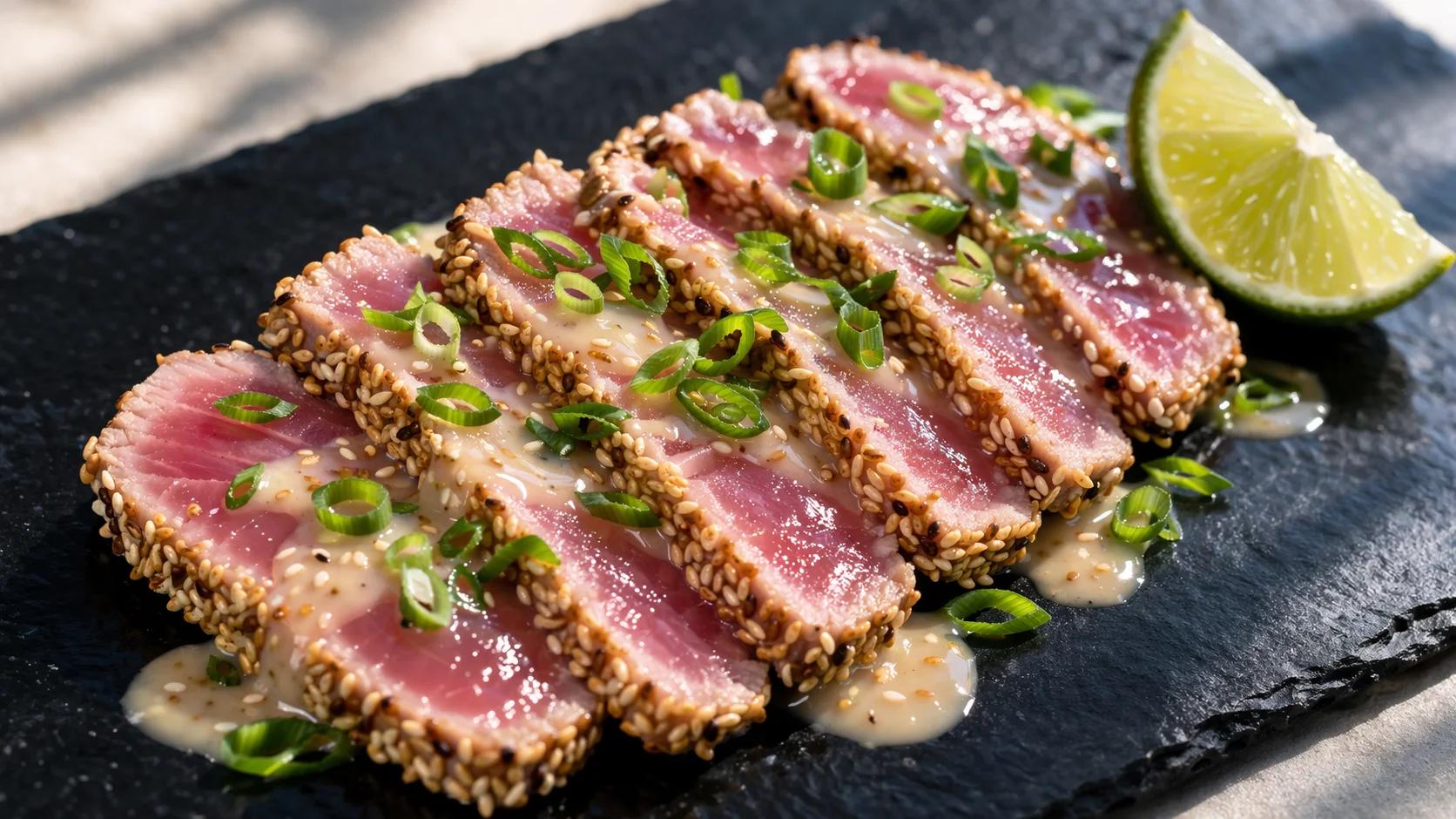
Sesame Seared Tuna:
The beauty of this recipe comes from its contrast of textures and flavors. The toasted sesame seeds add a delicate crunch, while soy sauce, ginger, garlic, lime, and sesame oil create a savory and slightly tangy accompaniment. Thinly sliced green onions and fresh lime add brightness to every bite.
This Sesame Seared Tuna is perfect for a quick weeknight dinner, a special occasion, or an impressive seafood course. It comes together quickly and pairs wonderfully with steamed rice, soba noodles, cucumber salad, edamame, or lightly dressed greens.
History:
Sesame Seared Tuna is best understood as a modern Japanese-inspired seafood preparation rather than a single traditional Japanese dish with one established origin. Sesame seeds, soy sauce, ginger, rice vinegar, and tuna are all strongly associated with Japanese and broader East Asian culinary traditions, while the technique of quickly searing tuna has become particularly popular in contemporary restaurant cooking.
The combination of black and white sesame seeds became a popular way to give seared tuna an attractive crust while adding toasted, nutty flavor. Today, sesame-crusted tuna appears in many Japanese-inspired and modern seafood menus around the world, often served with soy-based sauces, wasabi, ginger, citrus, or Asian-style salads.
Subscribe to our youtube channel Kitchenpedia for more delicious recipes and hit the like button if you enjoyed this youtubevideo. Share it with your friends and Family.
Sesame Seared Tuna

Ingredients
For the Tuna
- 2 large sushi-quality or sashimi-grade tuna steaks, about 180–225 g each
- ¼ cup white sesame seeds
- ¼ cup black sesame seeds
- ½ teaspoon salt
- ¼ teaspoon freshly ground black pepper
- 1 tablespoon neutral cooking oil, such as avocado, canola, or grapeseed oil
For the Soy-Ginger Sauce
- 3 tablespoons low-sodium soy sauce
- 1 tablespoon rice vinegar
- 1 teaspoon toasted sesame oil
- 1 teaspoon freshly grated ginger
- 1 small garlic clove, finely minced
- 1 teaspoon fresh lime juice
- 1 teaspoon finely sliced green onion
- ¼ teaspoon red pepper flakes, optional
For Garnishing
- 1 green onion, thinly sliced
- Lime wedges
- Extra sesame seeds
Instructions
Prepare the Tuna
- Pat the tuna steaks thoroughly dry with paper towels. Removing excess moisture helps the sesame seeds adhere properly and encourages a good sear.Season both sides lightly with salt and freshly ground black pepper.
Make the Sesame Coating
- Combine the white sesame seeds and black sesame seeds on a shallow plate.Press each tuna steak firmly into the sesame mixture, coating all sides. Gently press the seeds into the tuna so they remain attached during cooking.
Prepare the Sauce
- In a small bowl, whisk together soy sauce, rice vinegar, sesame oil, honey, grated ginger, garlic, lime juice, green onion, and optional red pepper flakes.Taste and adjust the balance according to your preference. Add a little more lime for acidity or honey for sweetness.
Heat the Pan
- Place a heavy skillet or cast-iron pan over medium-high to high heat.Add the neutral cooking oil and allow it to become hot but not smoking excessively.
Sear the Tuna
- Carefully place the sesame-coated tuna steaks into the hot pan.For a rare center, sear for approximately 45–60 seconds per side, including the edges. For a more cooked center, extend the cooking time according to the thickness of the steaks.The sesame crust should become golden and fragrant while the center remains tender.
Rest and Slice
- Transfer the tuna to a clean cutting board and let it rest for about 2 minutes.Using a sharp knife, slice the tuna against the grain into attractive pieces.
Serve
- Arrange the sliced tuna on a serving plate. Drizzle lightly with the soy-ginger sauce or serve the sauce separately.Garnish with sliced green onions, lime wedges, and a sprinkle of sesame seeds.
Notes
- Choose appropriate tuna: If serving the tuna rare or partially cooked, use tuna specifically sold by a reputable supplier for raw or rare preparation.
- Keep the tuna cold: Refrigerate tuna until you are ready to prepare it.
- Dry the surface well: Excess moisture can prevent the sesame crust from sticking properly.
- Use a very hot pan: High heat quickly browns the sesame coating without requiring a long cooking time.
- Do not overcrowd the pan: Cook the tuna steaks separately if your pan is too small.
- Watch the sesame seeds: Sesame can burn quickly, so keep the searing time short.
- Slice with a sharp knife: A sharp knife creates clean, attractive slices instead of tearing the tuna.
- Food safety matters: Rare or partially cooked fish carries greater food-safety risks than thoroughly cooked fish. The FDA advises that the safest approach is to cook seafood thoroughly, particularly for pregnant people, young children, older adults, and people with weakened immune systems
Tips for Sesame Seared Tuna:
- Chill the tuna before searing for a cleaner contrast between the crust and center.
- Use both black and white sesame seeds for better color and texture.
- Don’t marinate the tuna for too long because excess liquid can make the sesame coating difficult to maintain.
- Press the sesame seeds firmly onto every surface before cooking.
- Use a neutral oil so the toasted sesame flavor remains prominent.
- Avoid repeatedly turning the tuna because this can loosen the crust.
- Let the tuna rest briefly before slicing to make cutting easier.
- Serve immediately while the sesame crust is crisp and aromatic.
FAQs for Sesame Seared Tuna:
1. What type of tuna is best for Sesame Seared Tuna?
Yellowfin or ahi tuna steaks are commonly used. For rare or partially cooked preparation, purchase tuna from a reputable source specifically intended for raw or rare consumption.
2. Can I use frozen tuna?
Yes. High-quality frozen tuna can work very well. Thaw it safely in the refrigerator and pat it completely dry before coating and searing.
3. Can I use only white sesame seeds?
Absolutely. White sesame seeds give the dish a classic golden appearance. Combining black and white seeds simply creates more visual contrast.
4. How long should I sear tuna?
For a rare center, a very quick sear—roughly 45–60 seconds per side for a typical steak—is often sufficient. Thicker steaks may require adjustment.
5. Can I cook the tuna completely through?
Yes. If you prefer fully cooked tuna, continue cooking until it reaches a safe internal temperature. The texture will be firmer and less similar to restaurant-style rare seared tuna.
6. What can I serve with Sesame Seared Tuna?
Try steamed jasmine rice, sushi rice, soba noodles, edamame, cucumber salad, seaweed salad, steamed vegetables, or a simple green salad.
7. Can I make this recipe without soy sauce?
Yes. Use tamari for a gluten-free option if appropriate for your dietary needs, or create a simple citrus-ginger dipping sauce without soy.
8. Why did my sesame seeds burn?
The pan may have been too hot or the tuna may have been seared for too long. Sesame seeds brown quickly, so use high heat but keep the cooking time short and watch the crust carefully.
Conclusion:
Sesame Seared Tuna is a quick and elegant seafood recipe that delivers impressive flavor with very little effort. The combination of tender tuna, crispy toasted sesame seeds, savory soy sauce, fresh ginger, garlic, and bright lime creates a satisfying balance of texture and flavor.
Whether served as an elegant dinner entrée or sliced over rice and vegetables, this sesame-crusted tuna brings restaurant-style presentation to the home kitchen. For the best results, use high-quality tuna, keep the preparation simple, and sear quickly so the sesame crust becomes beautifully toasted.