

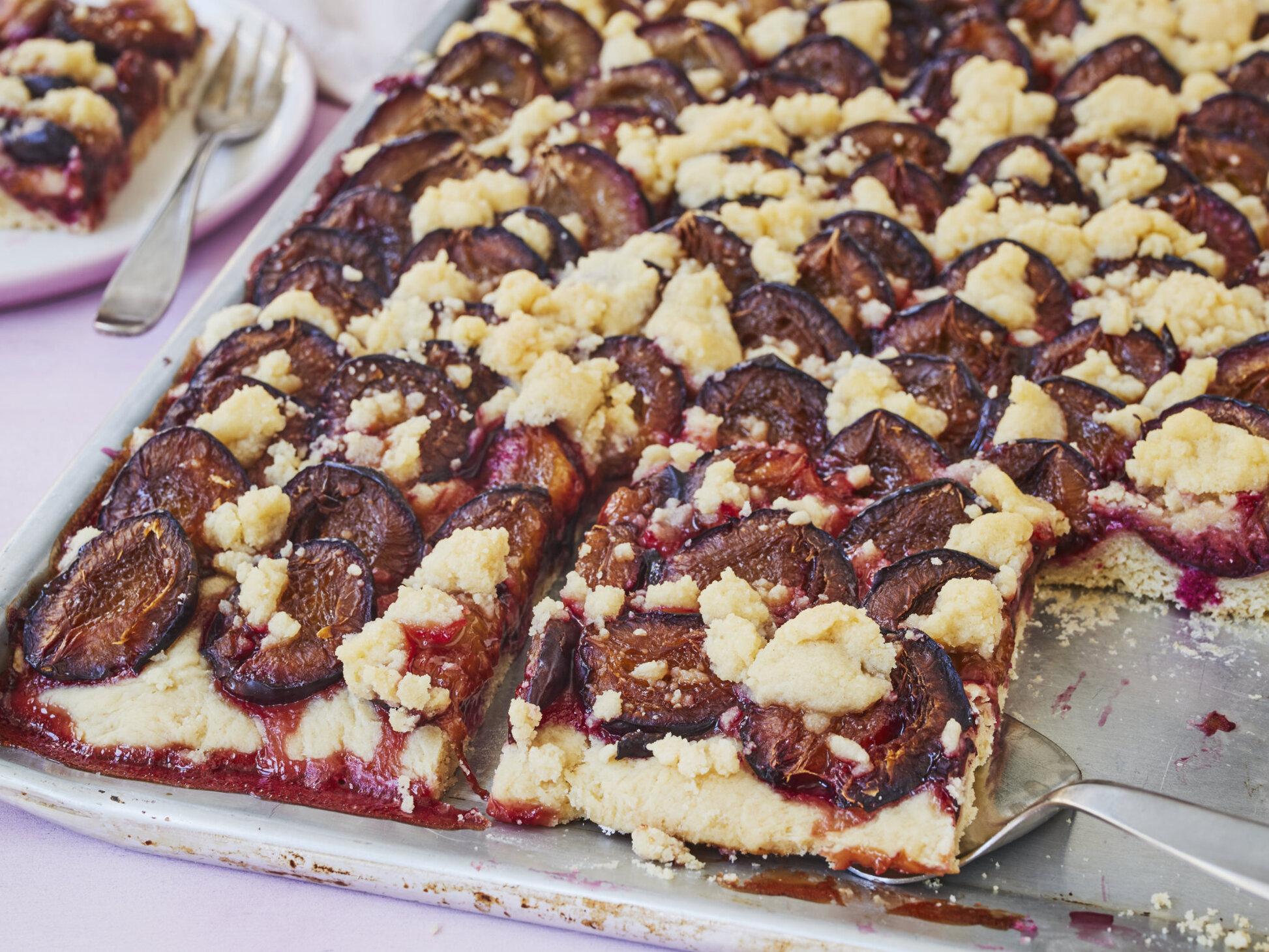
Zwetschgendatschi is a beloved German plum sheet cake traditionally made with sweet-tart plums arranged over a thin layer of soft yeast dough. As the cake bakes, the juicy plums release their natural sweetness into the dough, creating a wonderfully tender base topped with beautifully roasted fruit and a golden, fragrant finish.
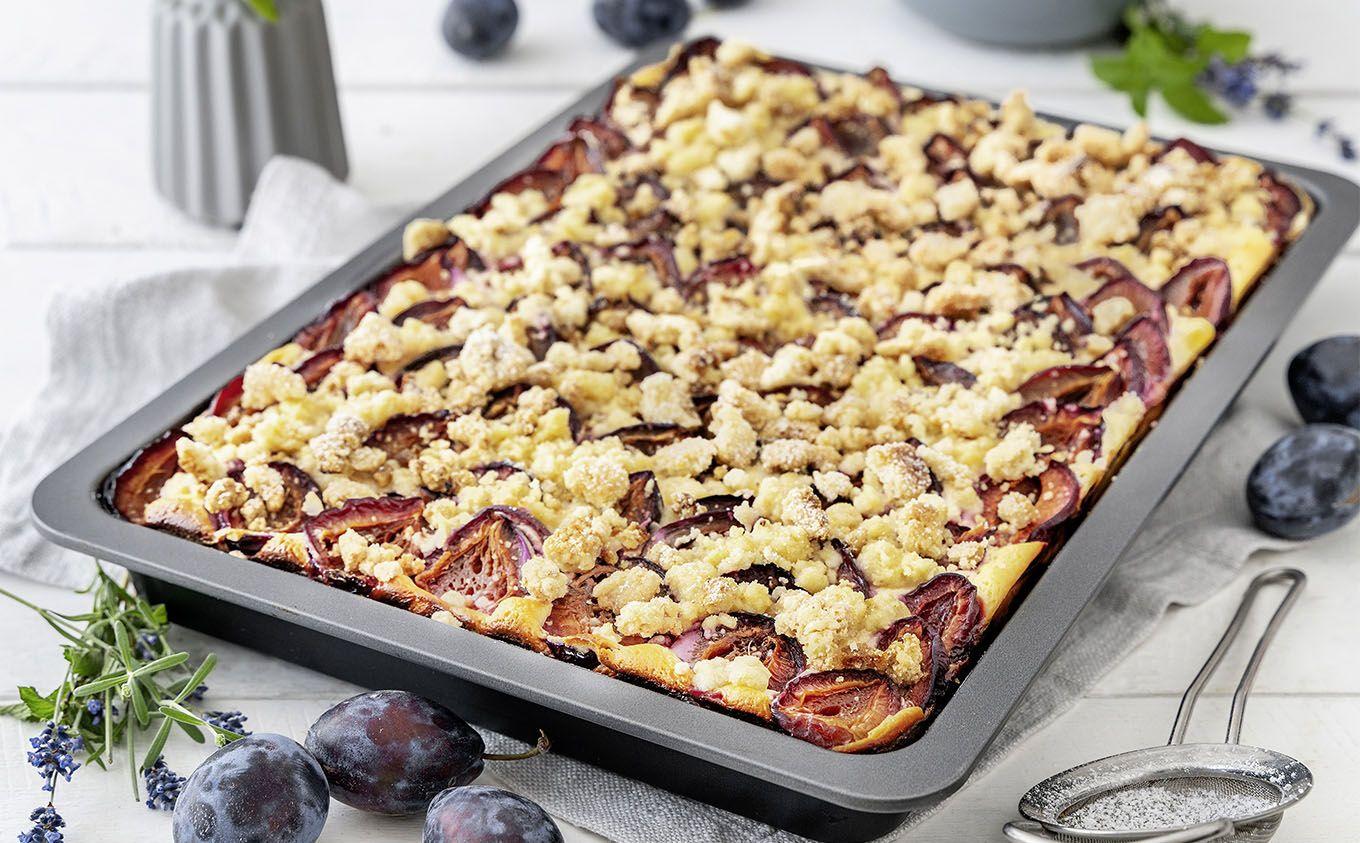
Zwetschgendatschi:
Particularly associated with Bavaria and southern Germany, this rustic fruit cake is a classic companion to afternoon coffee. The name may look unfamiliar, but its appearance is wonderfully simple: rows of halved or quartered plums cover a rectangular sheet of dough, creating a colorful, inviting cake that is both rustic and elegant.
Depending on the family or region, Zwetschgendatschi can be prepared with or without streusel. This version adds buttery cinnamon streusel for extra texture while keeping the juicy plum topping and soft yeast-dough foundation at the heart of the recipe.
History:
Zwetschgendatschi is a traditional German plum cake strongly associated with southern Germany, especially Bavaria and the Swabian region. The word Zwetschge refers to a type of European plum, while Datschi is a regional term associated with pressing or spreading something onto a dough base.
The cake developed as a practical seasonal bake when ripe plums were abundant. Rather than turning the fruit into preserves, home bakers could arrange fresh plums over a simple yeast dough and bake everything together in a large sheet pan.Different German households have their own versions. Some use yeast dough, while others use shortcrust or a simple cake batter. Some versions are finished with streusel, almonds, cinnamon sugar, or no topping at all. This recipe represents a traditional-style yeast-dough version with buttery streusel.
Subscribe to our youtube channel Kitchenpedia for more delicious recipes and hit the like button if you enjoyed this youtubevideo. Share it with your friends and Family.
Zwetschgendatschi

Ingredients
For the Yeast Dough
- 3 cups (375 g) all-purpose flour
- 2¼ teaspoons (1 packet) active dry yeast
- ¼ cup (50 g) granulated sugar
- ½ teaspoon salt
- ¾ cup (180 ml) warm whole milk
- 1 large egg
- 5 tablespoons (70 g) unsalted butter, melted and slightly cooled
- 1 teaspoon vanilla extract
- ½ teaspoon finely grated lemon zest
For the Plum Topping
- 2½–3 pounds (1.1–1.4 kg) ripe Italian plums or European plums
- 2 tablespoons granulated sugar
- 1 teaspoon ground cinnamon
- 1 tablespoon lemon juice
For the Streusel
- ¾ cup (95 g) all-purpose flour
- ⅓ cup (65 g) granulated sugar
- ½ teaspoon ground cinnamon
- Pinch of salt
- 5 tablespoons (70 g) cold unsalted butter, cubed
For Finishing
- powdered sugar, optional
- Fresh whipped cream, optional
Instructions
Activate the Yeast
- Warm the milk until it is comfortably warm but not hot.Combine the warm milk, yeast, and a teaspoon of the sugar in a small bowl. Let it stand for about 5–10 minutes until slightly foamy.If using instant yeast, you can mix it directly with the flour instead.
Prepare the Dough
- In a large mixing bowl, combine the flour, remaining sugar, and salt.Add the yeast mixture, egg, melted butter, vanilla, and lemon zest.Mix until a soft dough forms.
Knead the Dough
- Transfer the dough to a lightly floured surface and knead for approximately 7–10 minutes until smooth and elastic.You can also use a stand mixer fitted with a dough hook and knead on low to medium speed for about 5–7 minutes.The dough should be soft and slightly tacky but not excessively sticky.
Let the Dough Rise
- Place the dough in a lightly greased bowl and cover it with a clean kitchen towel or plastic wrap.Let it rise in a warm, draft-free place for about 1 hour, or until approximately doubled in size.
Prepare the Plums
- Wash the plums thoroughly and dry them.Cut each plum in half and remove the pit.Depending on their size, cut the halves into quarters or leave them as halves. Traditional-style arrangements often place the plum pieces closely together in overlapping rows.Toss the prepared plums gently with lemon juice, flour, cinnamon, and sugar.
Make the Streusel
- In a medium bowl, combine flour, sugar, cinnamon, and salt.Add the cold cubed butter.Use your fingertips or a pastry cutter to rub the butter into the dry ingredients until coarse crumbs form.Stir in the sliced almonds if using.Keep the streusel chilled while preparing the cake.
Prepare the Baking Sheet
- Preheat the oven to 375°F (190°C).Grease a rimmed baking sheet or approximately 10×15-inch sheet pan.Line the bottom with parchment paper if desired.
Roll Out the Dough
- Once the dough has risen, gently punch it down.Roll or press it into an even rectangle that fits the prepared baking sheet.The dough should form a relatively thin layer because it will rise further during baking.
Add the Streusel
- Sprinkle the prepared streusel evenly over the plums.Avoid pressing the streusel deeply into the fruit because keeping it on the surface helps it become crisp and golden.
Bake
- Place the cake in the preheated oven.Bake for approximately 35–45 minutes, or until the dough is golden brown, the plums are tender, and the streusel is lightly browned.The exact baking time may vary depending on the thickness of the dough and the juiciness of the plums.
Cool and Serve
- Remove the cake from the oven and allow it to cool for at least 20 minutes.Dust lightly with powdered sugar if desired.Cut into squares or rectangles and serve warm or at room temperature with whipped cream.
Notes
- Use European Plums: Italian plums or other firm European-style plums are particularly suitable because they hold their shape during baking.
- Plum Ripeness: Choose ripe but reasonably firm plums. Very soft fruit can release excessive moisture.
- Yeast: Active dry yeast can be activated in warm milk, while instant yeast can generally be mixed directly with the dry ingredients.
- Dough Thickness: Keep the dough relatively thin because it rises during baking.
- Plum Arrangement: Packing the plums closely together gives the finished cake its characteristic fruit-covered appearance.
- Streusel: Streusel is common in many versions, but traditional Zwetschgendatschi can also be made without it.
- Juicy Fruit: Some liquid from the plums is normal and contributes to the flavor of the cake.
- Serving: The cake is especially enjoyable slightly warm or at room temperature with coffee or whipped cream.
Tips for Zwetschgendatschi:
- Do Not Overheat the Milk: Very hot milk can damage the yeast. It should feel warm rather than hot.
- Knead Thoroughly: Proper kneading develops gluten and helps create a soft, elastic yeast dough.
- Give the Dough Enough Time: Rising time can vary depending on room temperature, so focus on the dough approximately doubling in volume.
- Dry the Plums: Pat the plums dry after washing to avoid introducing unnecessary surface moisture.
- Keep Fruit Close Together: Arrange the plums tightly to achieve an authentic fruit-forward cake with fewer exposed areas of dough.
- Keep Streusel Cold: Chilled butter helps the streusel maintain a crumbly texture during baking.
- Avoid Overbaking: Once the dough is golden and the fruit is tender, remove the cake so the base remains soft.
- Cool Before Cutting: Letting the cake cool slightly allows the plum juices to settle and makes cleaner slices possible.
FAQs for Zwetschgendatschi:
1. What does Zwetschgendatschi mean?
Zwetschgendatschi is the German name for a traditional plum sheet cake, especially associated with southern Germany. Zwetschge refers to a European plum, while Datschi is a regional term connected with placing or pressing fruit onto dough.
2. What type of plums are best for Zwetschgendatschi?
Italian plums, also called European plums or prune plums, are excellent because they are relatively firm and have a pleasant sweet-tart flavor.
3. Can I use regular purple plums?
Yes. Regular plums can be used if European plums are unavailable. Choose firm, ripe fruit and avoid varieties that become excessively watery when baked.
4. Does traditional Zwetschgendatschi always have streusel?
No. Recipes vary by region and household. Some versions have a simple plum topping, while others include streusel, cinnamon sugar, almonds, or other toppings.
5. Can I make the dough ahead of time?
Yes. The yeast dough can be prepared and refrigerated for several hours or overnight. Let it warm slightly before rolling and assembling the cake.
6. Why is my cake base soggy?
Very juicy plums, excessive fruit moisture, or underbaking can contribute to a soft base. Use firm plums, avoid adding excess liquid, and bake until the dough is fully golden.
7. How should I store Zwetschgendatschi?
Store leftover cake covered at room temperature for short-term storage or refrigerate it for longer storage. Warm individual portions gently before serving if desired.
8. Can I freeze German Plum Sheet Cake?
Yes. Cool the cake completely, cut it into portions, wrap them well, and freeze. Thaw in the refrigerator or at room temperature and gently warm before serving for the best texture.
Conclusion:
Zwetschgendatschi is a wonderful example of traditional German baking at its most comforting. A soft yeast dough provides the perfect foundation for rows of juicy seasonal plums, while buttery cinnamon streusel adds a delightful contrast of texture and sweetness.
Whether enjoyed warm from the oven or served at room temperature with a generous spoonful of whipped cream, this German Plum Sheet Cake is ideal for afternoon coffee, family gatherings, weekend baking, and seasonal celebrations. Its rustic appearance and simple ingredients make it an inviting homemade dessert that lets ripe plums take center stage.