

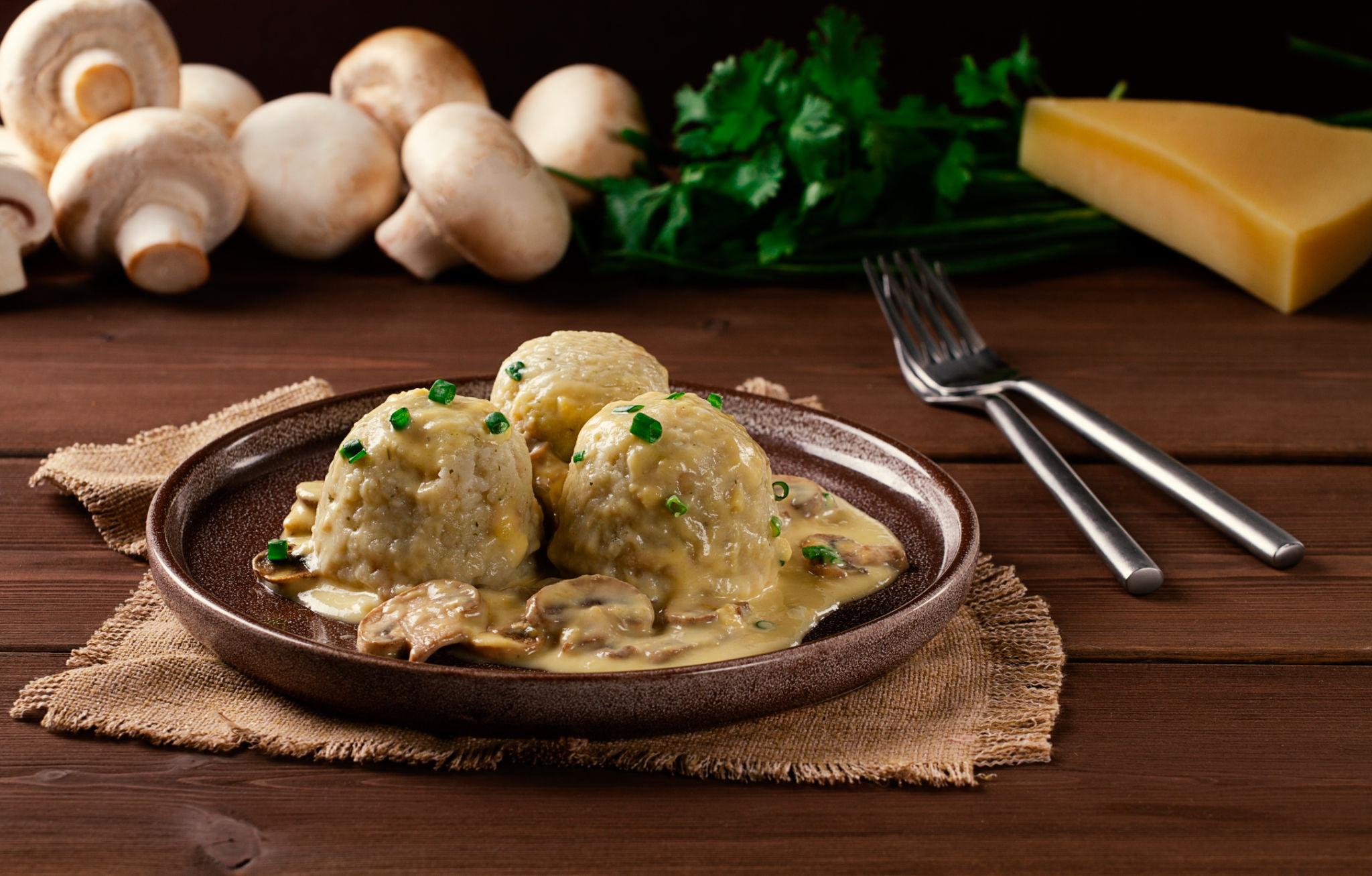
Semmelknödel (German Bread Dumplings) also known as are a beloved traditional dish from Bavaria and other parts of Central Europe. Made with stale bread rolls, warm milk, eggs, sautéed onions, and fresh parsley, these soft and satisfying dumplings transform simple ingredients into a comforting meal. Their tender texture and mild, savory flavor make them a perfect accompaniment to rich gravies, roasted meats, and hearty mushroom sauces.One of the most appealing features of its practical, traditional approach to cooking. Instead of throwing away leftover bread, German home cooks turn it into a delicious side dish that absorbs sauces beautifully.
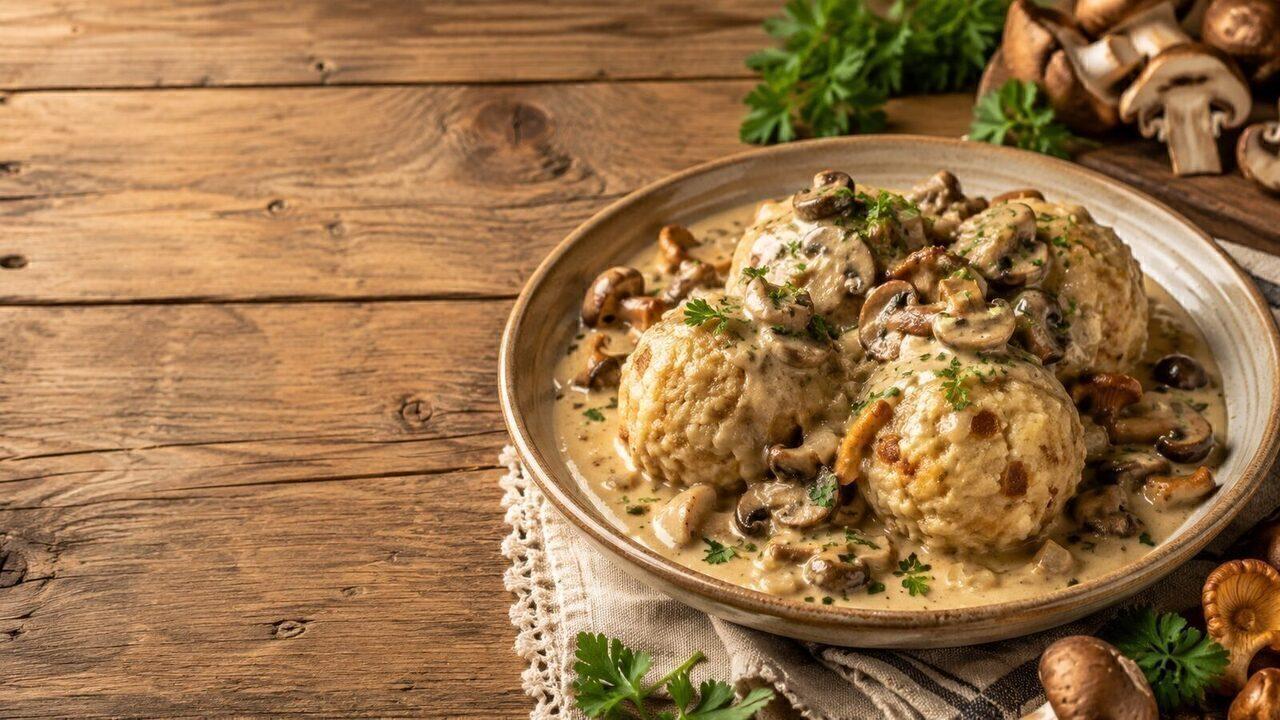
Semmelknödel:
The bread is soaked in warm milk, combined with eggs and seasonings, shaped into round dumplings, and gently simmered until cooked through. The result is a dish that feels rustic, filling, and wonderfully homemade.Whether you’re preparing a traditional Bavarian Sunday dinner, exploring German cuisine, or looking for a creative way to use stale bread, this Semmelknödel recipe is an excellent choice. Serve the dumplings with mushroom cream sauce, beef goulash, roast pork, or vegetarian gravy for a satisfying meal. With a few simple techniques, you can prepare authentic German bread dumplings in your own kitchen.
History of Semmelknödel:
Semmelknödel has deep roots in the traditional cooking of Bavaria, Austria, and neighboring Central European regions. The word Semmel refers to a bread roll, while Knödel means dumpling. The dish developed as a resourceful way to use leftover bread, reflecting the practical approach to food preparation in traditional European households.Bread dumplings became especially popular in Alpine regions, where hearty meals were needed to accompany roasted meats, stews, and rich gravies. Each region and family developed its own version, with variations in the types of bread, herbs, dairy, and seasonings used.Today, Semmelknödel remains a classic feature of Bavarian and Austrian cooking. It is commonly served in traditional restaurants, family kitchens, and festive meals, particularly alongside roast pork, mushroom sauce, and other comforting dishes. Although modern variations exist, the traditional recipe continues to celebrate simple ingredients and the value of reducing food waste.
Subscribe to our youtube channel Kitchenpedia for more delicious recipes and hit the like button if you enjoyed this youtubevideo. Share it with your friends and Family.
Semmelknoedel (Bread Dumplings) Recipe

Ingredients
- 6 stale white bread rolls (approximately 300 g), cut into small cubes
- 1 cup (240 ml) warm milk
- 2 large eggs
- 1 medium onion, finely chopped
- 2 tablespoons butter
- 2 tablespoons fresh parsley, finely chopped
- ½ teaspoon salt, or to taste
- ¼ teaspoon black pepper
- A pinch of freshly grated nutmeg (optional)
- 2–4 tablespoons breadcrumbs, if needed to adjust the mixture
- Water, for simmering
Instructions
Prepare the bread
- Cut the stale bread rolls into small, evenly sized cubes and place them in a large mixing bowl. If your bread is fresh, cut it into cubes and leave it uncovered for a few hours to dry slightly, or dry it briefly in a low-temperature oven. Slightly dry bread absorbs the milk without immediately turning mushy.
Warm the milk
- Heat the milk in a small saucepan until warm but not boiling. Pour it evenly over the bread cubes and gently toss. Let the bread soak for approximately 10–15 minutes, allowing the cubes to soften.
Sauté the onions
- Melt the butter in a skillet over medium-low heat. Add the finely chopped onion and cook for 4–5 minutes until soft and translucent. Avoid browning the onions too much. Stir in the chopped parsley and remove the pan from the heat.
Combine the ingredients
- Add the sautéed onion mixture to the soaked bread. Beat the eggs separately, then add them to the bowl along with the salt, black pepper, and optional nutmeg. Mix gently using clean hands or a wooden spoon until the ingredients are evenly distributed.
Check the consistency
- Allow the mixture to rest for another 5 minutes. It should hold together when pressed without being overly wet or sticky. If it is too loose, add breadcrumbs one tablespoon at a time. If it feels too dry, add a small splash of milk.
Shape the dumplings
- Wet your hands slightly to prevent sticking. Take a portion of the mixture and gently shape it into a ball approximately 6–7 cm in diameter. Repeat with the remaining mixture to make about eight medium-sized dumplings.
Drain and serve
- Remove the cooked dumplings with a slotted spoon and allow excess water to drain. Arrange them on a serving plate, sprinkle with additional parsley if desired, and serve immediately with your favorite German gravy or sauce.
Notes
-
Use stale bread: Slightly dry bread gives the dumplings structure and helps prevent them from becoming mushy.
-
Cut evenly: Uniform bread cubes soak more consistently.
-
Warm the milk: Warm milk softens the bread effectively without making the mixture excessively wet.
-
Avoid overmixing: Mix until combined to maintain a pleasant, tender texture.
-
Adjust the mixture carefully: Add breadcrumbs gradually if the mixture feels too loose.
-
Shape with damp hands: Slightly wet hands make forming the dumplings easier.
-
Maintain gentle heat: Simmer rather than boil vigorously to help the dumplings retain their shape.
-
Serve immediately: Semmelknödel tastes especially good when warm and freshly cooked.
Tips for Semmelknödel:
- Choose the right bread: Plain white bread rolls are traditional. Avoid strongly flavored breads that could overpower the delicate taste.
- Don’t soak excessively: Add just enough milk to soften the bread without leaving it swimming in liquid.
- Let the mixture rest: Resting allows the bread to absorb moisture evenly and makes shaping easier.
- Test one dumpling first: Cook a small test dumpling to check whether the mixture holds together before shaping the entire batch.
- Keep the water calm: Vigorous boiling can cause the dumplings to break apart.
- Use fresh parsley: Fresh herbs add color and a pleasant, aromatic flavor.
- Make them ahead: Shape the dumplings a few hours ahead and refrigerate them until ready to cook.
- Use leftovers creatively: Slice leftover dumplings and pan-fry them in butter until golden for another delicious meal.
FAQs for Semmelknödel:
1. What is Semmelknödel?
Semmelknödel is a traditional German and Austrian bread dumpling made from stale bread rolls, milk, eggs, onions, and herbs. It is usually served as a side dish with gravy, meat, or mushroom sauce.
2. Can I make with fresh bread?
Yes. However, fresh bread is softer and may become mushy when milk is added. Cut it into cubes and let it dry out before preparing the mixture. You can also dry the cubes briefly in a low-temperature oven.
3. Why do my bread dumplings fall apart?
The mixture may contain too much moisture, too little binding, or bread that is too soft. Add a little extra breadcrumb, allow the mixture to rest, and test one dumpling in gently simmering water before cooking the entire batch.
4. Can I make without eggs?
Yes, although eggs help bind the dumplings together. You can experiment with a small amount of flour or a suitable egg substitute, but the texture may be different. Test one dumpling first to ensure the mixture holds together.
5. Can Semmelknödel be made ahead of time?
Yes. Prepare and shape the dumplings, then refrigerate them covered for a few hours before cooking. Alternatively, cook them in advance and reheat them gently in hot water or steam until heated through.
6. Can I freeze German bread dumplings?
Yes. Cooked and cooled dumplings can be frozen in airtight containers. For best quality, use them within approximately two months. Thaw in the refrigerator and reheat thoroughly before serving.
7. What is the difference between and Kartoffelknödel?
Semmelknödel is primarily made from bread rolls, whereas Kartoffelknödel is made mainly from potatoes. Both are traditional Central European dumplings, but their textures and flavors differ.
8. Are Semmelknödel vegetarian?
This recipe is vegetarian when prepared with vegetable-based ingredients. Check the bread ingredients and any accompanying gravy if you follow a strict vegetarian diet.
9. How do I know when the dumplings are cooked?
They generally need about 15–20 minutes in gently simmering water, depending on their size. They should feel firm and cooked through when tested. Cut open one dumpling if necessary to check that the center is no longer wet or raw.
10. Can I pan-fry leftover Semmelknödel?
Absolutely. Refrigerate the cooked dumplings, slice them once chilled, and fry the slices in a little butter until golden on both sides. They make a delicious side dish or light meal.
Conclusion:
Semmelknödel is a wonderful example of traditional German cooking: simple ingredients transformed into a comforting, satisfying dish. These tender bread dumplings are easy to prepare, help reduce food waste, and provide the perfect base for rich gravies, creamy mushroom sauce, roasted meats, and hearty vegetarian dishes.
With stale bread rolls, warm milk, eggs, onions, and fresh parsley, you can bring a taste of Bavaria into your own kitchen. Remember to balance the moisture, shape the dumplings gently, and simmer them rather than boiling them vigorously. Serve them fresh with your favorite sauce for an authentic Central European comfort-food experience.