

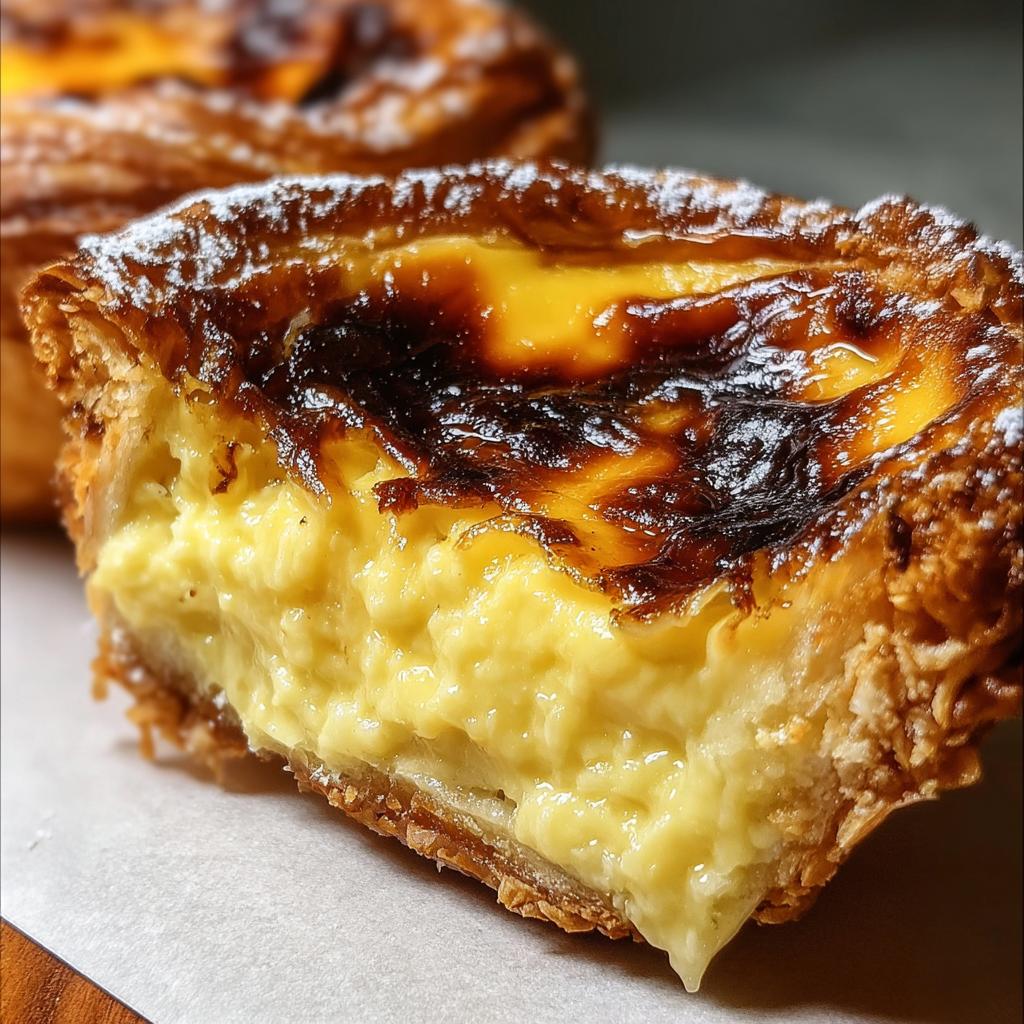
Portuguese Egg Tarts, famously known as Pastéis de Nata, are among Portugal’s most beloved pastries. These little golden treats feature crisp, flaky pastry shells filled with smooth, rich egg custard and finished with beautifully caramelized tops. Every bite offers a delightful contrast between the crunchy layers of pastry and the creamy sweetness of the filling, making them a favorite for breakfast, afternoon coffee, or dessert.
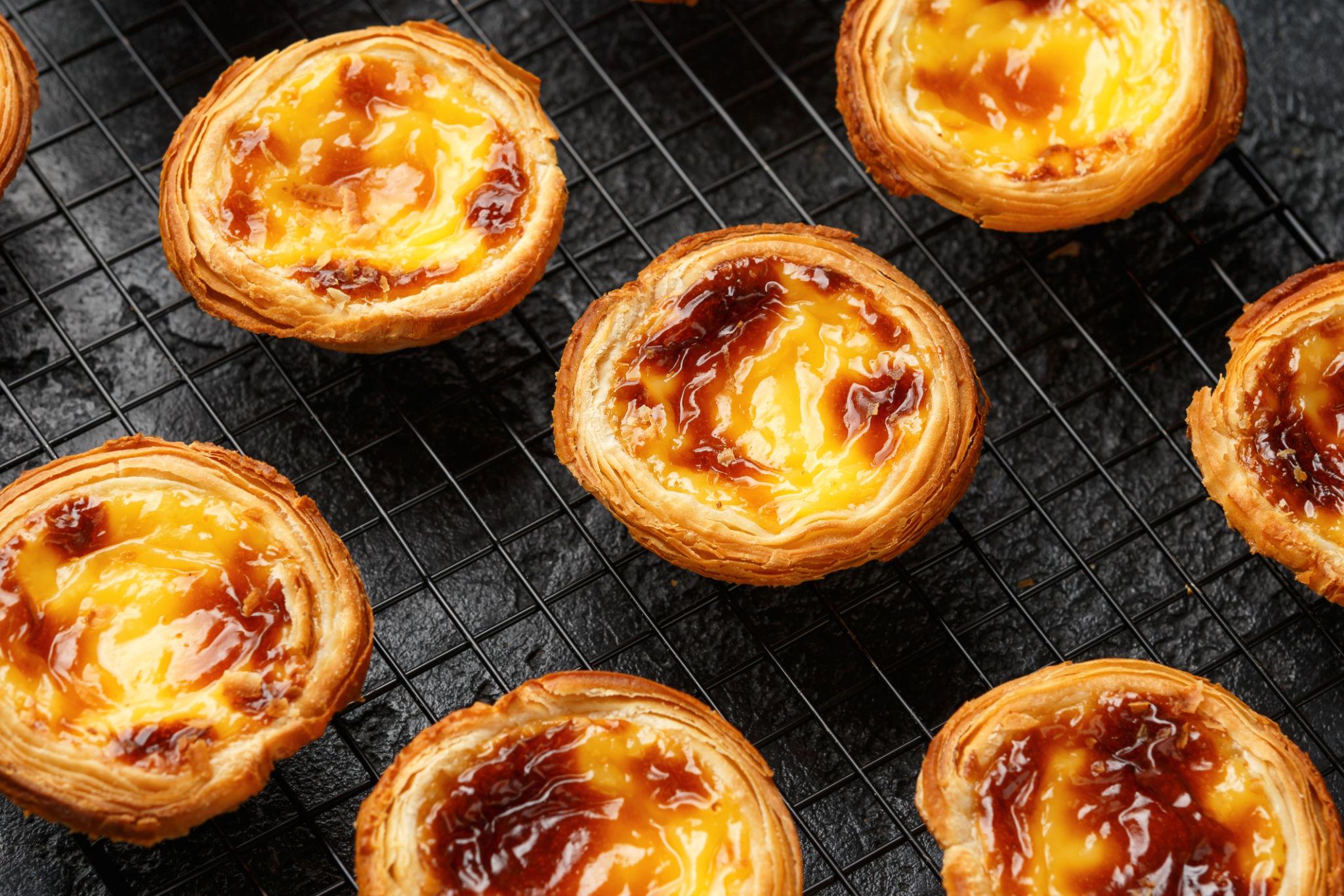
Portuguese Egg Tarts:
What makes Portuguese Egg Tarts so special is their simple combination of everyday ingredients transformed into something extraordinary. Egg yolks, sugar, milk, flour, and puff pastry come together to create a pastry that looks elegant but can be made at home with the right technique. A hint of vanilla, lemon zest, or cinnamon adds extra aroma and flavor, while a very hot oven helps create the signature dark spots on the custard.
Whether you have enjoyed these pastries in a traditional Portuguese bakery or are discovering them for the first time, homemade Pastéis de Nata are worth trying. They are perfect for sharing with family, serving at celebrations, or enjoying warm with a cup of coffee or tea. With prepared puff pastry and a straightforward custard recipe, you can recreate the charm of a Portuguese bakery in your own kitchen.
History:
Portuguese Egg Tarts are closely associated with Lisbon and the historic pastry tradition of Portugal. Their origins are commonly linked to monasteries and convents, where egg yolks were used extensively in sweets. Egg whites were often used for tasks such as clarifying wine or starching clothing, leaving extra yolks available for rich custards and pastries.One of the most famous versions is the Pastéis de Belém, traditionally associated with the Belém district of Lisbon. The pastry became widely celebrated during the nineteenth century, and its distinctive recipe has helped establish it as a symbol of Portuguese baking. Although Pastéis de Nata and Pastéis de Belém are closely related, the latter name refers specifically to the renowned Belém pastry tradition.Today, Portuguese Egg Tarts are enjoyed around the world. Bakeries in Portugal and many other countries offer their own versions, but the essential qualities remain the same: delicate pastry, silky custard, and a lightly charred surface. Making them at home is a delicious way to experience a small piece of Portugal’s culinary heritage.
Subscribe to our youtube channel Kitchenpedia for more delicious recipes and hit the like button if you enjoyed this youtubevideo. Share it with your friends and Family.
Portuguese Egg Tarts (Pastéis de Nata)

Ingredients
For the Pastry
- 1 sheet all-butter puff pastry, thawed if frozen
- A little flour for dusting
- Butter or nonstick spray for greasing the muffin tin, if needed
For the Custard Filling
- 6 large egg yolks
- ¾ cup granulated sugar
- 2 tablespoons all-purpose flour
- 1 cup whole milk
- ½ cup water
- 1 teaspoon vanilla extract
- 1 small strip of lemon peel or ½ teaspoon finely grated lemon zest
- 1 small cinnamon stick, optional
- A pinch of salt
For Serving
- Ground cinnamon, optional
- Powdered sugar, optional
Instructions
- Preheat your oven to 475°F (245°C), or as hot as your oven safely allows for this recipe. Traditional Portuguese egg tarts are baked at a high temperature to develop their signature caramelized custard tops.Lightly grease a standard muffin tin if necessary. Keep the puff pastry chilled until you are ready to shape it.
- Lightly dust your work surface with flour. Roll the puff pastry into a tight log, then cut it into 12 equal pieces.Place each piece cut-side down into a muffin cup. Use your fingers to press the pastry outward and upward, creating thin pastry shells with slightly thicker bases. Chill the tin while preparing the filling.
- Combine the sugar and water in a small saucepan. Add the cinnamon stick and lemon peel, if using.Bring the mixture to a gentle boil and cook for approximately 2–3 minutes, until the sugar dissolves and the syrup becomes slightly glossy. Remove from the heat and discard the cinnamon stick and lemon peel.
- In another saucepan, whisk the flour with a small amount of milk until smooth. Gradually whisk in the remaining milk and add a pinch of salt.Cook over medium-low heat, stirring constantly, until the mixture thickens slightly. Remove it from the heat and allow it to cool briefly.
- Slowly pour the warm sugar syrup into the milk mixture, whisking continuously. Let the mixture cool until warm rather than hot.In a separate bowl, gently whisk the egg yolks with the vanilla extract. Gradually whisk a little of the warm milk mixture into the yolks to temper them, then stir the yolk mixture back into the saucepan.For an especially smooth custard, strain the filling through a fine-mesh sieve.
- Remove the prepared pastry shells from the refrigerator. Carefully pour the custard into each shell, filling it approximately three-quarters full.Avoid overfilling, as the custard may puff up during baking. Leave a little space at the top to help prevent spills.
- Place the muffin tin in the preheated oven and bake for approximately 15–20 minutes, checking frequently near the end.The pastry should become crisp and golden, while the custard should set with dark caramelized spots on its surface. Oven temperatures vary, so adjust the baking time as needed. If your oven cannot safely reach the recommended temperature, use its highest suitable setting and expect a different finish.
- Remove the egg tarts from the oven and allow them to cool in the tin for about 5 minutes. Carefully loosen the edges and transfer the tarts to a wire rack.Serve them slightly warm or at room temperature. Sprinkle with cinnamon or powdered sugar if desired, and enjoy their crisp pastry and creamy custard filling.
Notes
-
Puff pastry matters: All-butter puff pastry offers a rich flavor and delicate, flaky texture.
-
Keep the pastry cold: Cold pastry produces better layers and is easier to handle.
-
Avoid overheating the custard: Let the milk mixture cool slightly before adding the egg yolks.
-
Strain the filling: This helps remove lumps and creates a smoother custard.
-
Do not overfill: Custard expands as it heats and may spill over the pastry edges.
-
Expect caramelized spots: The characteristic dark patches are part of the traditional appearance.
-
Use the right baking tin: A standard metal muffin tin helps the pastry cook and brown effectively.
-
Serve fresh when possible: The pastry is crispest shortly after baking.
Tips for Portuguese Egg Tarts:
- Preheat thoroughly: Allow your oven to reach the required temperature before baking.
- Roll the pastry tightly: A neat pastry log helps create attractive layers when cut into rounds.
- Press the dough evenly: Keep the pastry thin along the sides without making the base too thin.
- Whisk gently: Excessive whisking can introduce air bubbles into the custard.
- Temper the egg yolks: Add the warm liquid gradually to reduce the risk of scrambled eggs.
- Watch the final minutes: High-temperature baking can quickly change the tops from caramelized to burnt.
- Cool before removing: A short resting period helps the pastry shells hold their shape.
- Enjoy them on the day: For the best texture, serve the tarts soon after baking or briefly reheat them before serving.
FAQs for Portuguese Egg Tarts:
1. What are Portuguese Egg Tarts called in Portugal?
They are commonly called Pastéis de Nata. The famous pastries specifically associated with Belém in Lisbon are known as Pastéis de Belém.
2. What makes Portuguese Egg Tarts different from other custard tarts?
Portuguese Egg Tarts typically have flaky, layered pastry and custard baked at a high temperature, producing distinctive caramelized spots. Other custard tarts may have a shortcrust base and a smoother, paler filling.
3. Can I use store-bought puff pastry?
Yes. Store-bought puff pastry makes this recipe easier and quicker. Choose a good-quality pastry and keep it chilled until shaping.
4. Why did my custard turn lumpy?
The milk mixture may have been too hot when the egg yolks were added, or the flour may not have been mixed smoothly. Temper the yolks gradually and strain the custard before filling the pastry shells.
5. Why are my egg tarts not browning on top?
Your oven may not be hot enough, or the tarts may need additional baking time. Use the highest suitable oven setting, preheat thoroughly, and monitor them closely.
6. Can I prepare Portuguese Egg Tarts in advance?
You can prepare the custard and pastry shells separately a few hours ahead and keep them refrigerated. For the best results, fill and bake the tarts shortly before serving.
7. How should I store leftover egg tarts?
Because the filling contains eggs and milk, refrigerate leftovers in an airtight container within two hours of baking. They are best enjoyed within 2–3 days.
8. How do I reheat Portuguese Egg Tarts?
Place refrigerated tarts in an oven preheated to approximately 350°F (175°C) for 5–8 minutes, or until warmed through and crisp. Let them cool slightly before eating. Avoid prolonged microwaving, which can soften the pastry.
9. Can I make Portuguese Egg Tarts without lemon or cinnamon?
Yes. Lemon peel and cinnamon are optional flavorings. You can omit either or both while keeping the basic custard ingredients unchanged.
10. Can I make these tarts less sweet?
You can reduce the sugar modestly, although this may change the traditional flavor and texture. Make a small test batch before adjusting the sweetness significantly.
Conclusion:
Portuguese Egg Tarts are a wonderful example of how simple ingredients can create an unforgettable dessert. Their buttery, flaky pastry, creamy egg custard, and beautifully caramelized tops make them a delicious treat for almost any occasion.Although traditional Pastéis de Nata require a little attention to pastry shaping and oven temperature, the homemade version is achievable with store-bought puff pastry and a carefully prepared custard. Serve these golden pastries warm with coffee, share them with friends and family, or add them to your dessert menu for a taste of Portugal.Once you experience the contrast between the crisp shell and silky custard, these Portuguese Egg Tarts may become one of your favorite homemade pastries.