

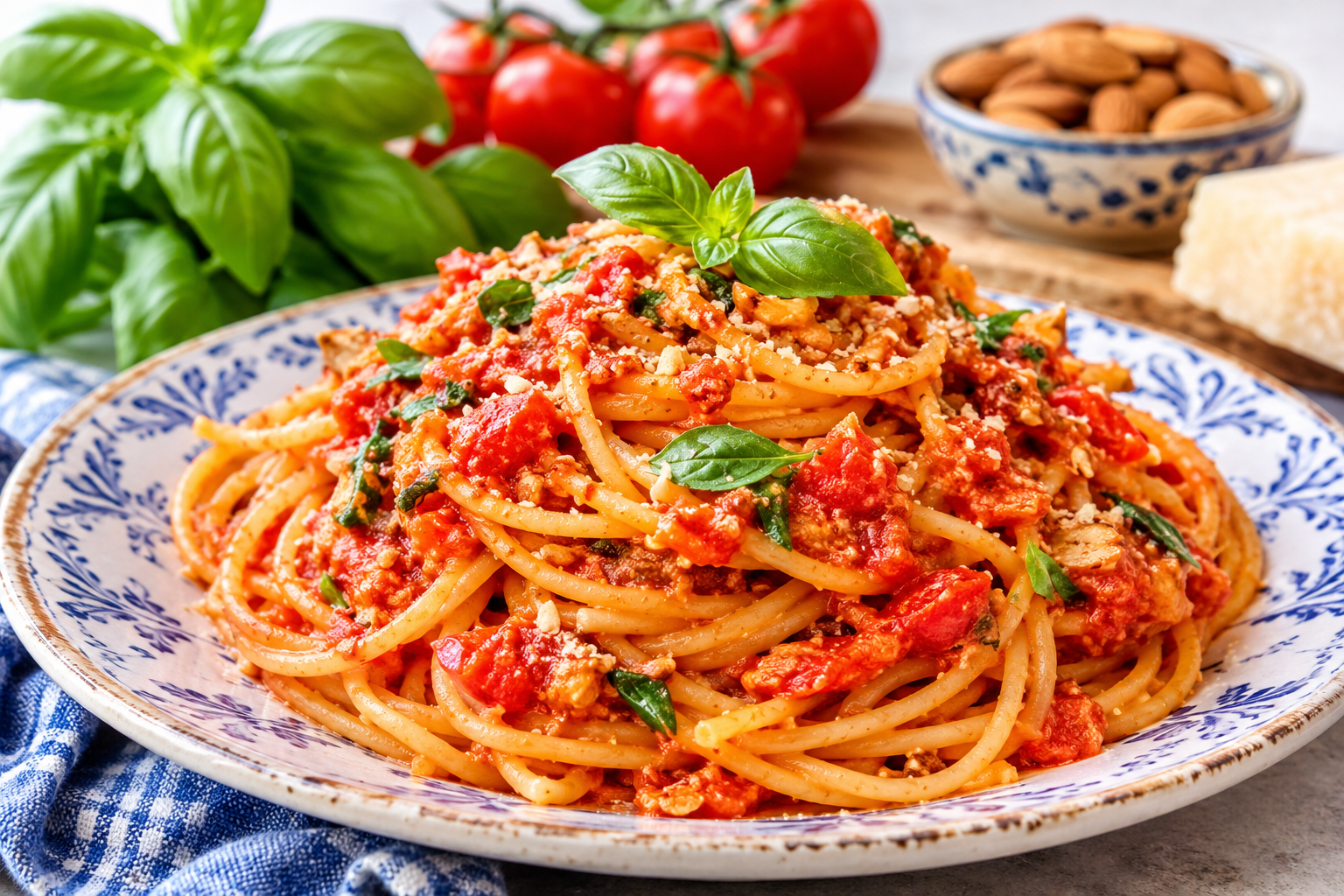
Pasta alla Trapanese is a delicious traditional Sicilian pasta dish that brings the bright, fresh flavors of the Mediterranean straight to your table. Originating in Trapani, a coastal city in western Sicily, this recipe combines ripe tomatoes, fragrant fresh basil, garlic, extra-virgin olive oil, and almonds to create a vibrant pesto that coats every piece of pasta beautifully. Unlike traditional Genoese pesto, which is made primarily with basil, pine nuts, and cheese, this Sicilian version features tomatoes and almonds for a distinctive balance of sweetness, nuttiness, and freshness.
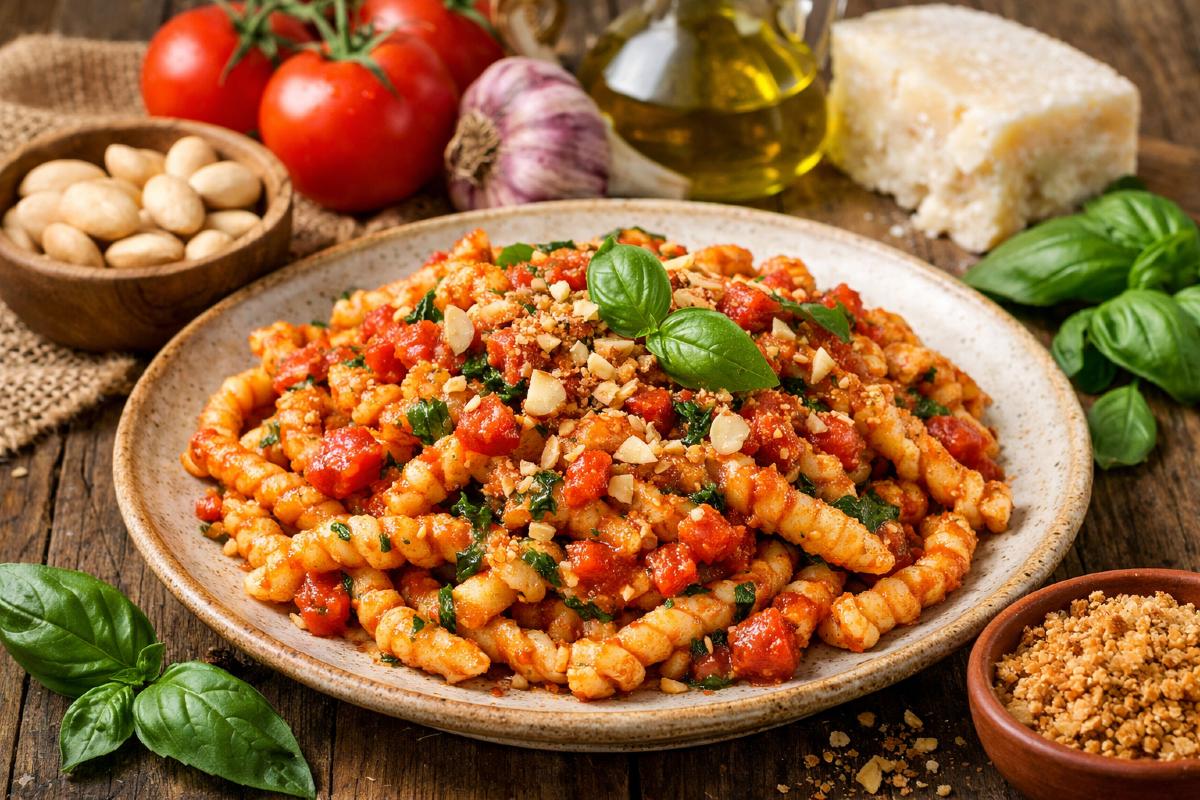
Pasta alla Trapanese:
One of the best things about Pasta alla Trapanese is its simplicity. You do not need complicated cooking techniques or expensive ingredients to prepare this flavorful Italian meal. The pesto can be made using a food processor, mortar and pestle, or blender, making it an accessible recipe for beginners and experienced home cooks alike. Traditionally, it is served with busiate, a twisted pasta from Sicily that holds the chunky sauce exceptionally well, although spaghetti, fusilli, and other pasta shapes work wonderfully too.
Whether you are preparing a quick weekday lunch, a relaxed family dinner, or an impressive Mediterranean-inspired meal for guests, Pasta alla Trapanese is an excellent choice. Its colorful appearance, fresh aroma, and satisfying texture make every serving special. Serve it with crusty bread, a crisp green salad, or grilled vegetables for a complete meal that celebrates the rustic charm of Italian home cooking.
History:
Pasta alla Trapanese comes from Trapani, a historic port city in Sicily, Italy. Its culinary traditions reflect the island’s diverse cultural influences, including Mediterranean trade, North African connections, and centuries of regional cooking. Almonds, tomatoes, garlic, olive oil, and herbs are common ingredients in Sicilian cuisine, making this pesto a natural expression of the region’s agricultural abundance.According to a popular culinary account, the dish developed through cultural exchanges between Sicilian sailors and visitors arriving from Genoa. Genoese sailors brought pesto traditions to Sicily, where local cooks adapted the preparation using ingredients readily available in the region. Almonds replaced pine nuts, while fresh tomatoes gave the sauce its characteristic red color and juicy texture.Today, Pasta alla Trapanese remains a beloved Sicilian specialty enjoyed in homes and restaurants throughout Italy and beyond. Although recipes vary slightly from kitchen to kitchen, the essential combination of tomatoes, almonds, basil, garlic, and olive oil preserves its distinctive character.
Subscribe to our youtube channel Kitchenpedia for more delicious recipes and hit the like button if you enjoyed this youtubevideo. Share it with your friends and Family.
Pasta alla Trapanese

Ingredients
For the pasta
- 12 ounces (340 g) busiate, spaghetti, or fusilli
- Salt, for the pasta water
- 1/2 cup reserved pasta cooking water, as needed
For the Trapanese pesto
- 1 pound (450 g) ripe tomatoes, chopped
- 1 cup fresh basil leaves, loosely packed
- 1/2 cup blanched or peeled almonds
- 2 garlic cloves, peeled
- 1/3 cup extra-virgin olive oil
- 1/2 teaspoon salt, or to taste
- 1/4 teaspoon freshly ground black pepper
- 1/3 cup finely grated Pecorino Romano or Parmesan cheese, optional
For garnish
- Fresh basil leaves
- A drizzle of extra-virgin olive oil
- Additional grated cheese, optional
- A few chopped almonds, optional
Instructions
- Wash the tomatoes and basil thoroughly. Chop the tomatoes into small pieces and peel the garlic cloves. If using whole almonds with their skins, blanch and peel them for a smoother, milder pesto, or leave the skins on for a more rustic texture.
- Place the almonds and garlic in a food processor. Pulse several times until the almonds are finely chopped but not completely powdered.Add the tomatoes and basil leaves. Pulse again until the mixture becomes a chunky sauce. Avoid blending for too long because the pesto should retain some texture rather than becoming completely smooth.
- Pour the extra-virgin olive oil into the tomato mixture. Add salt and freshly ground black pepper, then pulse briefly to combine.Taste the pesto and adjust the seasoning as needed. If you enjoy a richer flavor, stir in the grated Pecorino Romano or Parmesan cheese. For a vegan version, simply omit the cheese.
- Bring a large pot of water to a rolling boil. Add enough salt to season the water, then add the busiate or your chosen pasta.Cook according to the package instructions until al dente, meaning tender but still slightly firm when bitten. Before draining, reserve approximately half a cup of the pasta cooking water.
- Drain the pasta without rinsing it. Transfer the hot pasta to a large mixing bowl or return it to the pot after removing it from the heat.Add the tomato and almond pesto and toss thoroughly until the pasta is evenly coated. Add a little reserved pasta water if the sauce seems too thick. The starchy water helps the pesto cling to the pasta.
- Taste the pasta and add more salt, black pepper, olive oil, or grated cheese if necessary. If the tomatoes are particularly acidic, a small additional drizzle of olive oil can help balance the flavor.For the freshest basil aroma, add a few torn basil leaves just before serving.
- Divide the pasta among four serving plates. Garnish with fresh basil leaves, chopped almonds, and a little grated cheese if desired.Serve immediately while the pasta is warm and the pesto remains fresh and aromatic.
Notes
- Choose ripe tomatoes: Fully ripe tomatoes provide the best natural sweetness, color, and juiciness.
- Use fresh basil: Fresh leaves contribute the characteristic fragrance of Sicilian pesto.
- Avoid overprocessing: A slightly coarse pesto offers a more traditional, rustic texture.
- Select the right pasta: Busiate is traditional, but spaghetti, fusilli, and linguine work well.
- Reserve pasta water: The starchy water helps loosen the sauce and improves its consistency.
- Add cheese according to preference: Pecorino Romano gives a salty, sharp flavor, while Parmesan is milder.
- Taste before serving: Adjust the salt, pepper, olive oil, and acidity to suit your ingredients.
- Serve promptly: The pesto tastes freshest when mixed with the pasta shortly before serving.
Tips for Pasta alla Trapanese:
- Use high-quality olive oil. A good extra-virgin olive oil adds fruity flavor and helps bring the ingredients together.
- Toast the almonds lightly. A brief toast in a dry pan can deepen their nutty flavor. Let them cool before blending.
- Remove excess tomato liquid if needed. Very watery tomatoes can dilute the pesto, so drain a little liquid if the mixture becomes too thin.
- Use a mortar and pestle for a rustic result. Crushing the ingredients by hand creates a coarse texture and releases their aromas gradually.
- Keep the basil fresh and green. Add it toward the end of blending to reduce bruising and excessive oxidation.
- Do not rinse the pasta. Rinsing removes surface starch that helps the pesto cling to each strand or twist.
- Adjust the consistency gradually. Add pasta water one tablespoon at a time instead of making the sauce too thin.
- Make it your own. Add a pinch of red pepper flakes for heat or a few extra basil leaves for a stronger herbal flavor.
FAQs for Pasta alla Trapanese:
1. What is Pasta alla Trapanese?
Pasta alla Trapanese is a traditional Sicilian pasta dish served with pesto made from tomatoes, almonds, basil, garlic, and olive oil. It is known for its bright color, fresh flavor, and slightly nutty texture.
2. What makes Trapanese pesto different from traditional pesto?
Traditional Genoese pesto typically features basil, pine nuts, garlic, cheese, and olive oil. Trapanese pesto uses tomatoes and almonds as its defining ingredients, creating a fresher, juicier sauce with a distinctive Sicilian character.
3. Which pasta is best for Pasta alla Trapanese?
Busiate is the traditional choice because its twisted shape holds the chunky pesto well. However, spaghetti, fusilli, linguine, and penne are suitable alternatives.
4. Can I make Pasta alla Trapanese without cheese?
Yes. Cheese is optional, and the recipe can easily be made vegan by omitting Pecorino Romano or Parmesan. The tomatoes, basil, almonds, garlic, and olive oil still provide plenty of flavor.
5. Can I prepare the pesto in advance?
Yes. Prepare the pesto a day ahead and store it in an airtight container in the refrigerator. A thin layer of olive oil on the surface can help limit exposure to air. Stir before using and keep it refrigerated.
6. Can I use canned tomatoes instead of fresh tomatoes?
Yes, especially when fresh tomatoes are out of season. Use well-drained canned tomatoes and adjust the seasoning to account for their acidity and moisture. Fresh ripe tomatoes generally provide the brightest flavor.
7. Is Pasta alla Trapanese spicy?
The traditional version is not particularly spicy. However, you can add red pepper flakes or a small amount of fresh chili if you prefer a little heat.
8. How should I store leftovers?
Place leftover pasta in an airtight container and refrigerate promptly. For best quality and food safety, eat it within three to four days. Reheat gently with a splash of water or olive oil. Pesto stored separately may retain a fresher texture.
Conclusion:
Pasta alla Trapanese is a wonderful example of how simple ingredients can create an extraordinary meal. With ripe tomatoes, fragrant basil, crunchy almonds, garlic, and extra-virgin olive oil, this traditional Sicilian recipe delivers a fresh and satisfying taste of Mediterranean cooking. Its straightforward preparation makes it suitable for busy weeknights, while its vibrant appearance and distinctive pesto make it special enough for entertaining.