

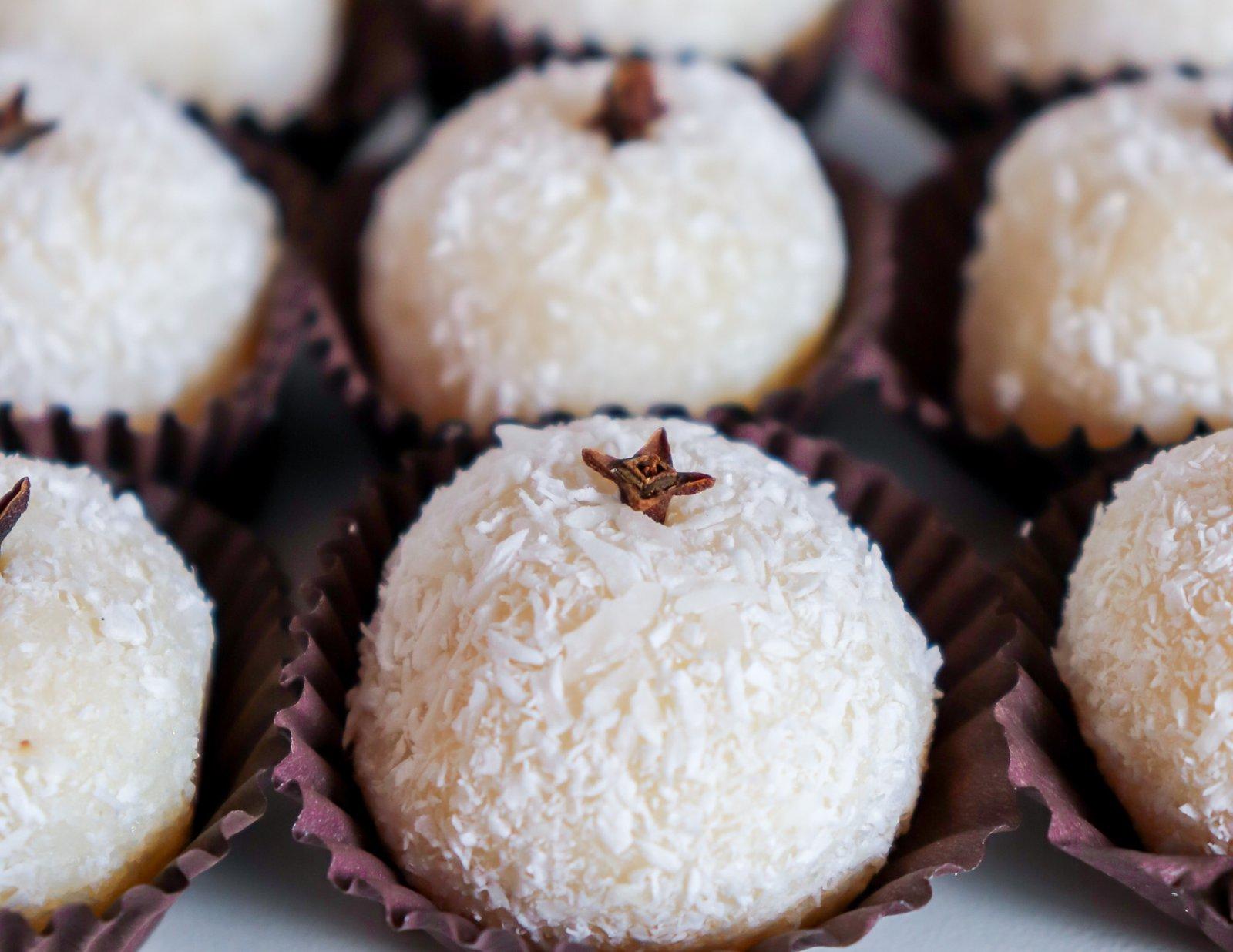
Beijinho de Coco, beautifully translated as “Little Coconut Kiss,” is a beloved Brazilian confection made with sweetened condensed milk, coconut, and butter. These tiny, creamy coconut sweets are traditionally rolled into bite-sized balls and decorated with shredded coconut and a single clove, creating an adorable and festive appearance.With their soft, chewy texture and rich coconut flavor, Beijinho is a close cousin of the famous Brazilian Brigadeiro.
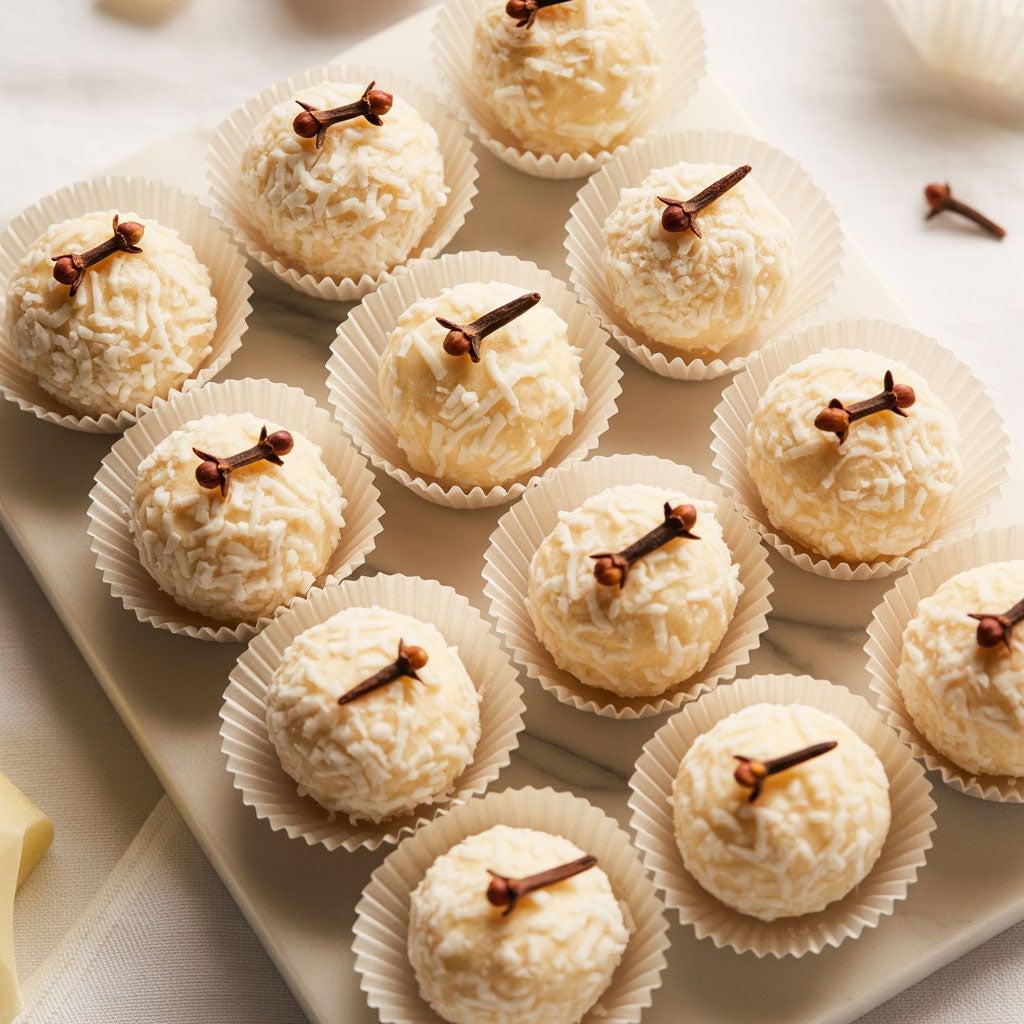
Beijinho de Coco:
While Brigadeiro is chocolate-based, Beijinho celebrates coconut, making it a wonderful choice for anyone who prefers a creamy tropical confection.These little coconut truffles are especially popular at Brazilian birthday parties, weddings, holidays, and family celebrations. They require only a few ingredients, don’t need an oven, and can be prepared ahead of time, making them an excellent addition to any dessert table.
History:
Beijinho is one of Brazil’s classic docinhos, or small sweets traditionally served at celebrations. The confection developed alongside other condensed-milk-based Brazilian sweets that became especially popular during the 20th century.
The name beijinho means “little kiss” in Portuguese, which perfectly describes these small, delicate coconut treats. Traditionally, each sweet is rolled in coconut and finished with a whole clove in the center, giving it its distinctive appearance and a subtle aromatic note.
Subscribe to our youtube channel Kitchenpedia for more delicious recipes and hit the like button if you enjoyed this youtubevideo. Share it with your friends and Family.
Beijinho de Coco

Ingredients
- 1 can (14 oz / 395 g) sweetened condensed milk
- 1 tablespoon unsalted butter
- ¾ cup finely shredded unsweetened coconut
- ½ teaspoon vanilla extract, optional
- Pinch of salt
- ¾ cup finely shredded coconut, for coating
- 20–24 whole cloves, optional, for decoration
Instructions
Combine the Ingredients
- Place the sweetened condensed milk, butter, shredded coconut, and a pinch of salt in a heavy-bottomed saucepan.Stir thoroughly to combine.
Cook the Mixture
- Place the saucepan over low to medium-low heat.Stir continuously with a wooden spoon or silicone spatula to prevent the mixture from sticking to the bottom.
Cook Until Thick
- Continue cooking for approximately 8–12 minutes.The mixture should become thick and glossy and begin pulling away from the sides and bottom of the saucepan.A good test is to run your spatula through the center. If the mixture briefly stays separated before coming back together, it is ready.
Add Vanilla
- Remove the saucepan from the heat.Stir in vanilla extract if using.Mix until completely incorporated.
Cool the Mixture
- Transfer the mixture to a lightly buttered plate or shallow dish.Spread it into an even layer and allow it to cool.Refrigerate for approximately 20–30 minutes, or until firm enough to handle comfortably.
Prepare the Coconut Coating
- Place the finely shredded coconut in a shallow bowl.Keep a small amount of butter nearby for greasing your hands.
Coat with Coconut
- Roll each coconut ball in shredded coconut until completely covered.Gently press the coconut onto the surface if necessary.
Serve
- Place each Beijinho in a small decorative paper candy cup.Serve immediately or refrigerate until ready to enjoy.
Notes
- Coconut: Finely shredded coconut gives the smoothest texture.
- Condensed milk: Use regular sweetened condensed milk rather than evaporated milk.
- Heat: Keep the cooking temperature low to prevent scorching.
- Stirring: Continuous stirring is important while the mixture cooks.
- Texture: Properly cooked Beijinho should be soft and chewy rather than runny.
- Cloves: Whole cloves are traditional but can be removed before eating.
- Coating: Use finely shredded coconut for an attractive finish.
- Cooling: Chilling makes the mixture much easier to roll.
Tips for Beijinho de Coco:
- Use a heavy-bottomed saucepan for even heat distribution.
- Sift or loosen the shredded coconut before using it if it has clumped together.
- Don’t increase the heat to speed up cooking.
- Stir around the edges and bottom of the pan to prevent burning.
- Butter your hands lightly before shaping each batch.
- Keep the finished Beijinho chilled until shortly before serving.
- Use small paper candy cups for an authentic party presentation.
- Toast half of the coating coconut for a delicious variation with deeper flavor.
FAQs for Beijinho de Coco:
Q: What does Beijinho de Coco mean?
Beijinho de Coco means “little coconut kiss” in Portuguese. It is a traditional Brazilian coconut sweet made from condensed milk, coconut, and butter.
Q: Is Beijinho the same as Brigadeiro?
They are similar Brazilian confections, but they have different main flavors. Brigadeiro is traditionally chocolate-based, while Beijinho is centered around coconut.
Q: Can I use sweetened shredded coconut?
Yes, but the finished Beijinho will be sweeter. Unsweetened coconut gives you better control over the overall sweetness.
Q: Can I make Beijinho without cloves?
Absolutely. Cloves are traditional for decoration but are not essential to the recipe.
Q: Why is my Beijinho too soft?
The mixture may not have been cooked long enough. Return it to the saucepan and cook over low heat for a few more minutes while stirring.
Q: Why did my Beijinho become hard?
It was probably cooked too long. Remove the mixture from the heat as soon as it becomes thick and pulls away from the pan.
Q: How should I store Beijinho?
Store the finished sweets in an airtight container in the refrigerator. Allow them to sit at room temperature briefly before serving.
Q: Can I freeze Beijinho?
Yes. Place the sweets in an airtight freezer-safe container with parchment between layers. Thaw them in the refrigerator before serving.
Conclusion:
Beijinho de Coco is a charming Brazilian treat that transforms a few simple ingredients into creamy, chewy, coconut-filled little sweets. Its delicate texture, rich condensed-milk flavor, and beautiful coconut coating make it an irresistible addition to any dessert table.Whether you’re preparing Brazilian sweets for a birthday party, holiday celebration, wedding, or simply want a delicious homemade coconut treat, Beijinho is easy to make and wonderfully satisfying. Add the traditional clove for an authentic presentation, or decorate them with toasted coconut, white chocolate curls, or colorful sprinkles for your own creative touch.