

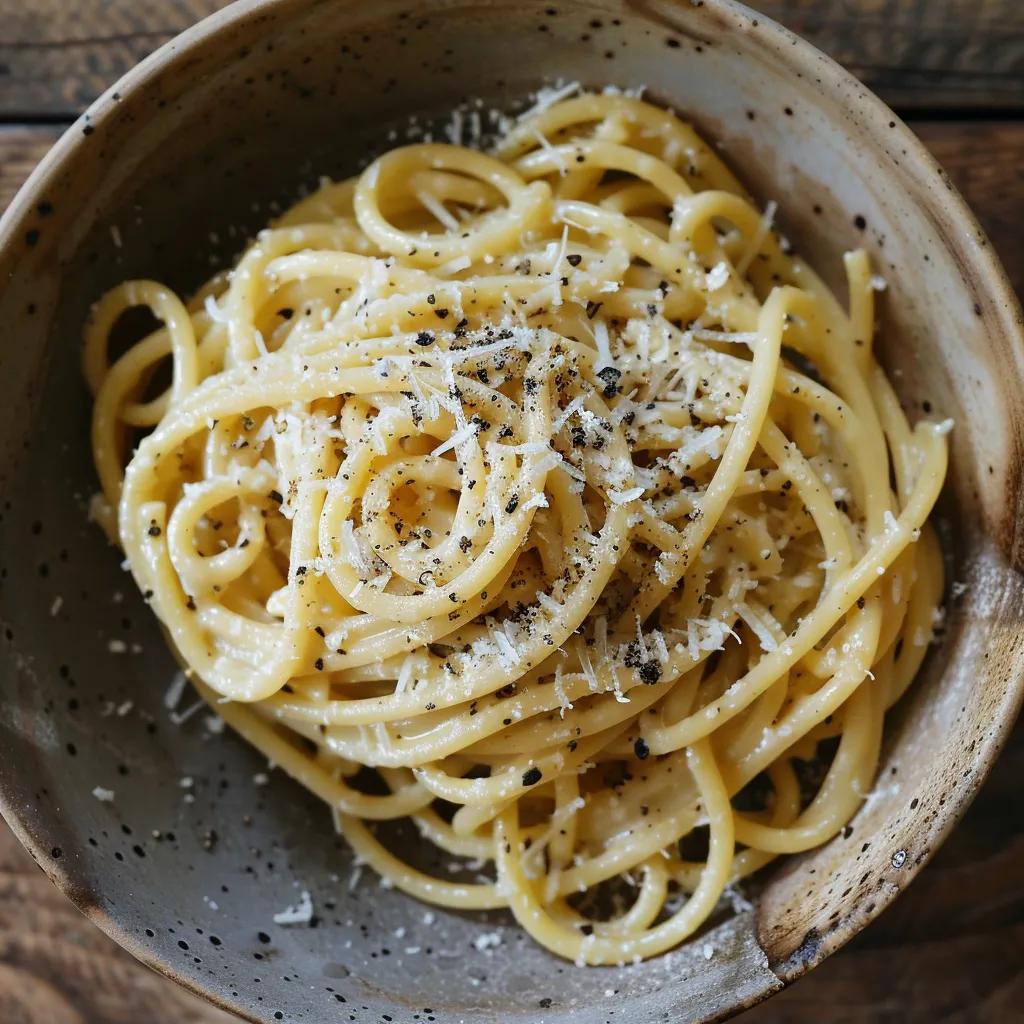
Bucatini Cacio e Pepe is one of Rome’s most beloved pasta dishes, celebrated for transforming just a handful of humble ingredients into an intensely flavorful meal. Thick, hollow strands of bucatini are coated in a silky sauce made from sharp Pecorino Romano cheese, freshly cracked black pepper, and starchy pasta water. The result is creamy and luxurious without requiring cream.The name Cacio e Pepe translates simply to “cheese and pepper.” The dish represents the beauty of Roman cooking, where quality ingredients and careful technique matter more than a long ingredient list.
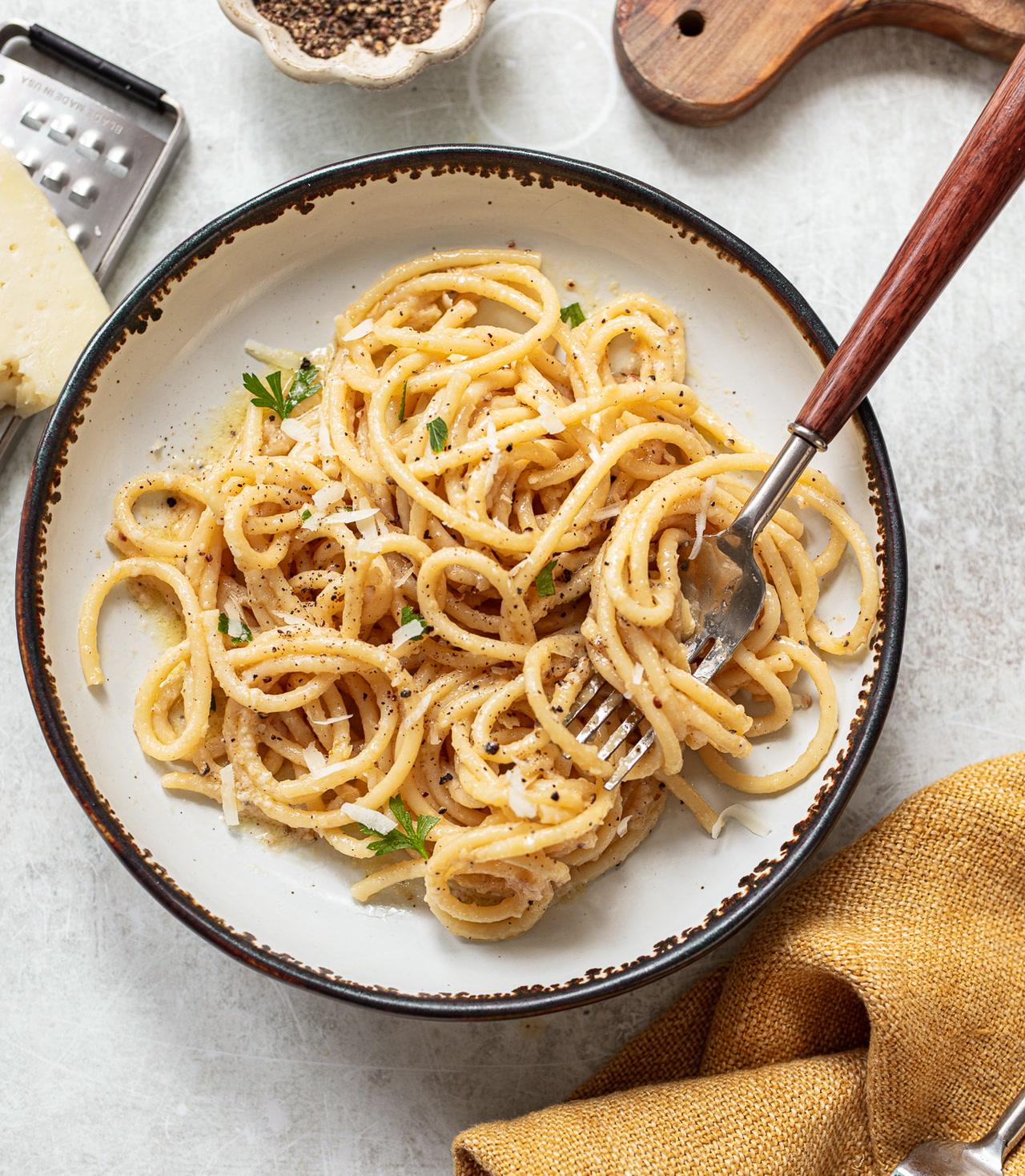
Bucatini Cacio e Pepe:
Toasting the black pepper releases its warm aroma, while pasta water emulsifies with the finely grated cheese to create a smooth sauce that clings beautifully to every strand of pasta.Traditionally associated with Roman and Lazio cuisine, Cacio e Pepe has humble pastoral roots and is often described as a shepherd’s meal. Bucatini makes an especially satisfying version because its thick strands capture the peppery Pecorino sauce both on the outside and inside the hollow center.
History:
Cacio e Pepe is deeply rooted in the culinary traditions of Rome and the Lazio region of Italy. The dish is traditionally made with Pecorino Romano, a sheep’s-milk cheese produced in the region and surrounding areas, along with black pepper and pasta.Its rustic reputation is closely connected with shepherds and rural workers who needed practical foods made from ingredients that were relatively easy to transport and store. Pecorino cheese, dried pasta, and black pepper were ideal pantry staples for this purpose.Over time, Cacio e Pepe moved from simple rural meals into Roman trattorias and restaurants, where it became one of the city’s signature pasta dishes. Although the recipe looks simple, achieving a smooth sauce without cream requires technique. The key is combining finely grated Pecorino with properly controlled pasta water while avoiding excessive heat that could make the cheese clump.
Subscribe to our youtube channel Kitchenpedia for more delicious recipes and hit the like button if you enjoyed this youtubevideo. Share it with your friends and Family.
Bucatini Cacio e Pepe

Ingredients
- 12 ounces (340 g) bucatini
- 1½ cups finely grated Pecorino Romano cheese
- 2 teaspoons freshly cracked black pepper
- 1–1½ cups reserved pasta water
- 1 teaspoon extra-virgin olive oil, optional
- Salt, for the pasta water
- Additional finely grated Pecorino Romano
- Freshly cracked black pepper
Instructions
Grate the Pecorino
- Finely grate the Pecorino Romano.For the smoothest sauce, grate the cheese very finely. Larger shreds are more likely to melt unevenly and form clumps.Set the cheese aside.
Toast the Black Pepper
- Place a large skillet over medium heat.Add the freshly cracked black pepper.Toast for approximately 1–2 minutes, stirring occasionally, until the pepper becomes highly aromatic.Be careful not to burn it.
Cook the Bucatini
- Bring a large pot of water to a boil.Add a moderate amount of salt. Pecorino Romano is already quite salty, so the pasta water does not need to be heavily salted.Add the bucatini and cook until just al dente, following the package instructions.
Reserve the Pasta Water
- Before draining the pasta, reserve at least 1½ cups of the hot pasta water.This starchy water is essential for creating the creamy Cacio e Pepe sauce.
Add Pasta Water to the Pepper
- Pour approximately ½ cup of hot pasta water into the skillet containing the toasted black pepper.Swirl or stir gently.Allow it to simmer briefly so the pepper infuses the water with its warm, spicy flavor.
Prepare the Cheese Mixture
- Place the finely grated Pecorino Romano in a bowl.Slowly add a small amount of warm pasta water while stirring constantly.Continue adding water little by little until the cheese forms a smooth, thick paste.The water should be warm rather than violently boiling.
Add the Bucatini
- Transfer the drained bucatini directly into the skillet with the pepper and pasta water.Toss thoroughly so the pasta becomes coated.Turn the heat to low or remove the skillet from direct heat.
Add the Pecorino Mixture
- Add the Pecorino mixture gradually while tossing the pasta continuously.Add more reserved pasta water a little at a time as needed.The goal is to create a smooth, glossy sauce that coats every strand.
Serve Immediately
- Divide the Bucatini Cacio e Pepe between four bowls.Finish with additional Pecorino Romano and freshly cracked black pepper.Serve immediately while the sauce is silky and warm.
Notes
- Pecorino Romano is traditional: Its sharp, salty flavor is essential to the classic character of Cacio e Pepe.
- Grate finely: Finely grated cheese melts much more smoothly than coarse shreds.
- Use fresh pepper: Freshly cracked pepper has significantly more aroma than pre-ground pepper.
- Save pasta water: Never skip this step because the starchy water is central to the sauce.
- Avoid excessive heat: Very high heat can cause the Pecorino to clump.
- Bucatini works beautifully: Its hollow center captures the sauce and makes every bite flavorful.
- Cream is unnecessary: Traditional Cacio e Pepe achieves its creamy texture through emulsification.
- Serve immediately: The sauce thickens quickly as it cools.
Tips for Bucatini Cacio e Pepe:
- Grate the cheese before cooking so everything is ready when the pasta reaches al dente.
- Use freshly cracked pepper for a stronger and more aromatic flavor.
- Toast the pepper gently rather than burning it.
- Do not oversalt the pasta water because Pecorino Romano is naturally salty.
- Reserve plenty of pasta water in case you need to adjust the sauce.
- Keep the cheese away from intense direct heat when incorporating it.
- Toss continuously to encourage the cheese and starch to emulsify.
- Serve immediately for the smoothest sauce and best texture.
FAQs for Bucatini Cacio e Pepe:
1. What does Cacio e Pepe mean?
Cacio e Pepe means “cheese and pepper” in Italian. The traditional dish combines Pecorino Romano, black pepper, pasta, and pasta water.
2. Why is Cacio e Pepe called a shepherd’s pasta?
The dish is often associated with shepherds and rural workers because its basic ingredients—dried pasta, aged cheese, and black pepper—were practical foods that could be stored and transported.
3. Can I use Parmesan instead of Pecorino Romano?
You can, but the flavor will be milder. Pecorino Romano has the sharper, saltier character traditionally associated with Cacio e Pepe.
4. Why did my cheese become clumpy?
The cheese may have been exposed to excessive heat, added too quickly, or mixed with water that was too hot. Finely grated cheese and gentle heat help create a smooth sauce.
5. Can I use spaghetti instead of bucatini?
Yes. Spaghetti is a common choice for Cacio e Pepe. Bucatini is particularly enjoyable because its hollow center holds the sauce.
6. Does authentic Cacio e Pepe contain cream?
Traditional Cacio e Pepe does not require cream. Its creamy texture comes from an emulsion of Pecorino Romano, starchy pasta water, and the pasta’s natural starch.
7. Can I add garlic or butter?
You can create variations, but traditional Roman Cacio e Pepe is intentionally simple and does not require garlic or butter.
8. Why should I serve it immediately?
As the pasta cools, the Pecorino sauce thickens and can become less silky. Serving immediately gives you the smoothest texture.
Conclusion:
Bucatini Cacio e Pepe is a perfect example of how Italian cooking can turn a few humble ingredients into something extraordinary. The combination of nutty Pecorino Romano, fragrant black pepper, and starchy pasta water creates a sauce that is rich, silky, savory, and wonderfully satisfying.The secret is not adding more ingredients—it is mastering the technique. Finely grate the cheese, toast the pepper gently, reserve plenty of pasta water, and keep the heat controlled when combining everything. When done correctly, the result is a beautifully emulsified sauce that clings to every strand of bucatini.Whether you’re preparing a quick weeknight dinner or exploring classic Roman cuisine, this Cacio e Pepe is a timeless pasta recipe worth mastering.