

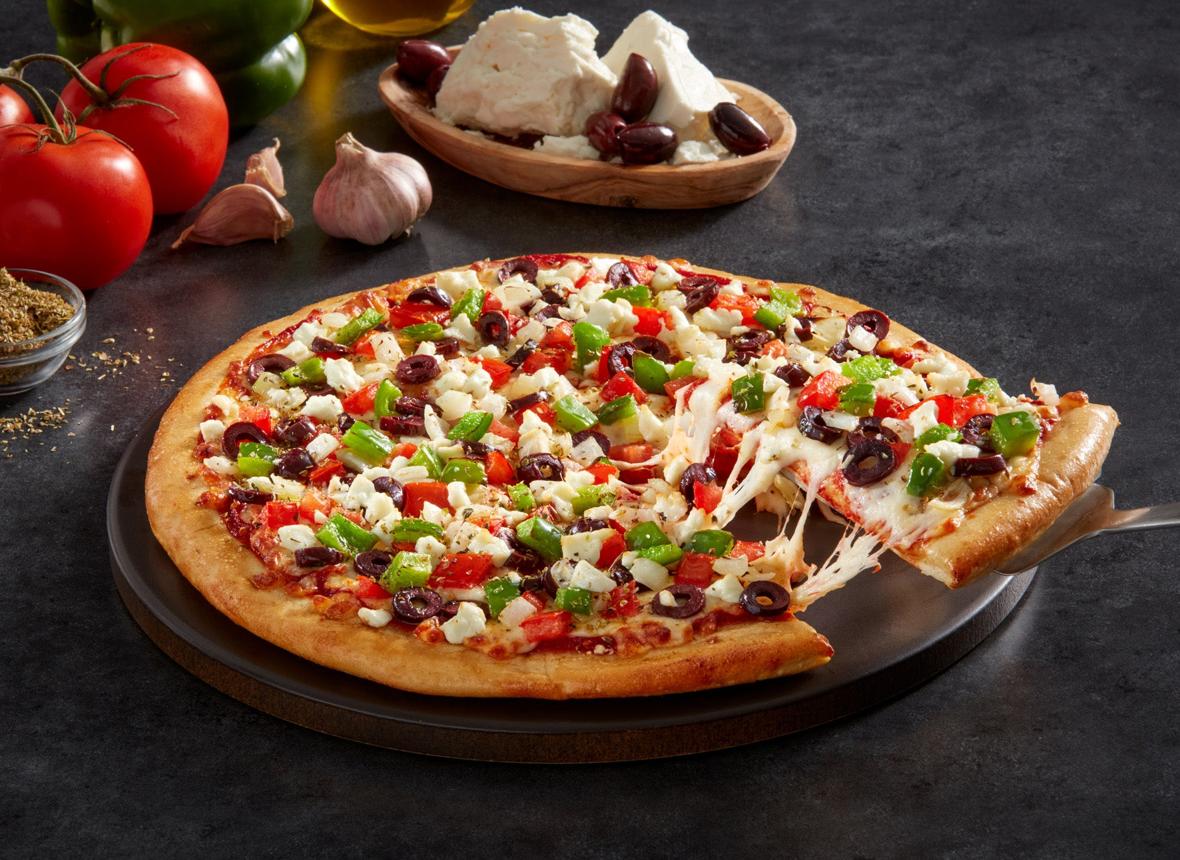
Greek Pizza is a delicious Mediterranean-inspired dish that brings together a crisp, golden crust, tangy feta cheese, juicy tomatoes, colorful vegetables, and briny Kalamata olives. Unlike traditional pizzas loaded with heavy toppings, this Greek-style version celebrates fresh ingredients and bold Mediterranean flavors. A sprinkle of oregano, a drizzle of olive oil, and a generous scattering of cheese create a beautiful balance of savory, tangy, and refreshing tastes in every slice.
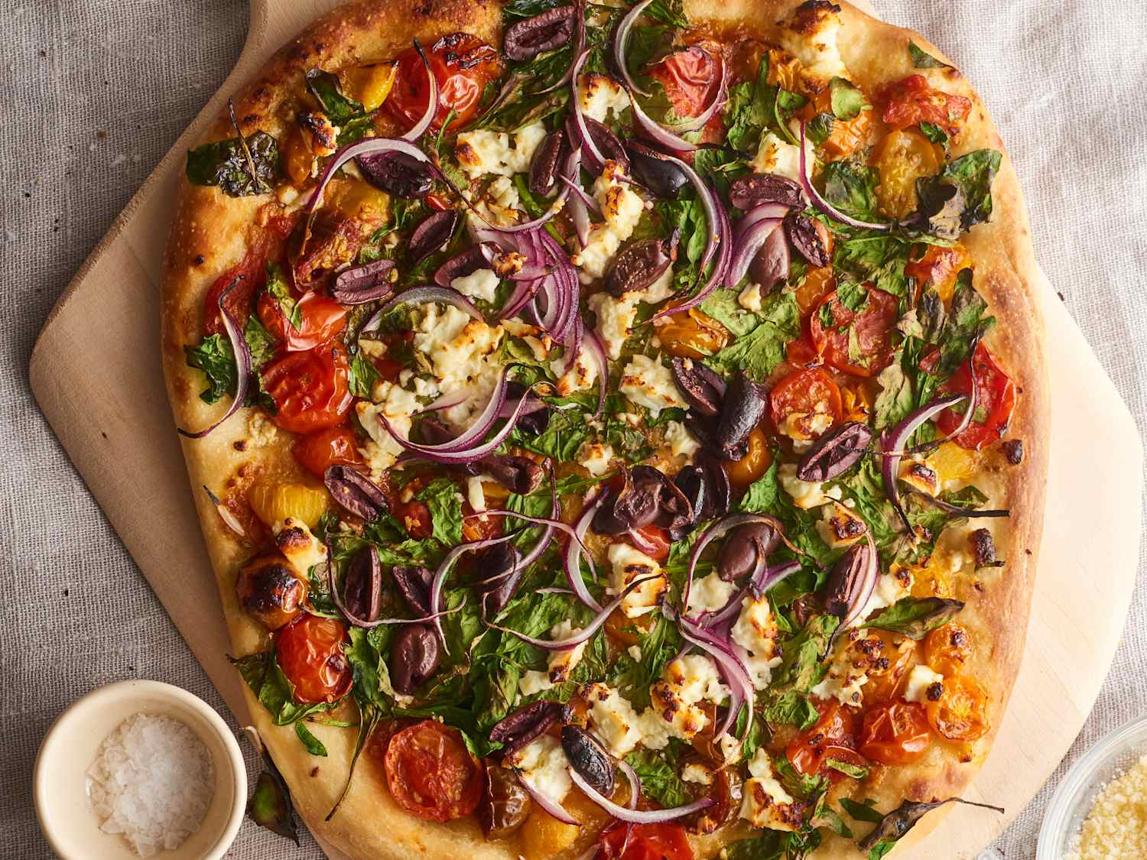
Greek Pizza:
One of the best things about homemade Greek Pizza is its versatility. You can prepare it with homemade or store-bought pizza dough, a light tomato sauce or olive oil base, and your favorite Greek-inspired toppings. Red onions add a little sharpness, bell peppers contribute sweetness and crunch, and feta cheese provides the distinctive salty flavor that makes this pizza special. Mozzarella can also be added for a deliciously melty texture, while fresh spinach gives the pizza extra color.
Whether you’re preparing a quick family dinner, hosting a weekend gathering, or planning a casual pizza night, Greek Pizza is an excellent choice. It pairs beautifully with a fresh Greek salad, roasted vegetables, or a simple lemon dressing. Easy to customize and full of Mediterranean character, this homemade pizza is a wonderful way to enjoy familiar pizza comfort with a fresh, flavorful twist.
History:
Pizza has its roots in Italy, but Greek immigrants helped shape a distinctive pizza tradition in the United States. Greek-style American pizza is often associated with a thicker, airy crust, an oregano-forward tomato sauce, and a generous layer of cheese. It became especially popular in New England, where Greek-American restaurant owners developed their own regional approach to preparing pizza.Greek Pizza topped with feta, Kalamata olives, spinach, tomatoes, and red onions represents another popular interpretation inspired by the ingredients of Greek cuisine. These toppings reflect the Mediterranean tradition of combining vegetables, olive oil, herbs, and flavorful cheeses.Although there is no single traditional recipe for Greek Pizza, its appeal lies in the way it brings together familiar pizza techniques and Greek-inspired ingredients. The result is a colorful, savory dish that can be adapted to different crust styles, sauces, and personal preferences.
Subscribe to our youtube channel Kitchenpedia for more delicious recipes and hit the like button if you enjoyed this youtubevideo. Share it with your friends and Family.
Greek Pizza

Ingredients
For the Pizza Base
- 1 pound (450 g) prepared pizza dough
- 1 tablespoon olive oil, for brushing
- 1 tablespoon cornmeal or flour, for dusting if needed
For the Sauce
- ½ cup pizza sauce or thick tomato sauce
- 1 garlic clove, finely minced
- ½ teaspoon dried oregano
- ¼ teaspoon freshly ground black pepper
For the Toppings
- 1 cup shredded mozzarella cheese
- ¾ cup crumbled feta cheese
- ½ cup Kalamata olives, pitted and halved
- 1 cup cherry tomatoes, halved
- ½ medium red onion, thinly sliced
- ½ green bell pepper, thinly sliced
- 1 cup fresh baby spinach
- 1 teaspoon dried oregano
- 1 tablespoon extra-virgin olive oil
- Salt, to taste
- Freshly ground black pepper, to taste
Instructions
- Preheat your oven to 245°C (475°F), or to the highest temperature recommended for your pizza dough and baking equipment.If you have a pizza stone or steel, place it in the oven while it preheats. A hot baking surface helps the bottom of the crust become crisp and golden.
- Place the dough on a lightly floured surface. Stretch or roll it into a circle approximately 12 inches in diameter.Transfer the dough to a parchment-lined baking tray or a pizza peel dusted lightly with flour or cornmeal. Leave the edges slightly thicker to create a delicious crust.
- In a small bowl, combine the tomato sauce, minced garlic, oregano, and black pepper.Stir until evenly mixed. Taste the sauce before adding salt because feta and olives can contribute plenty of saltiness to the finished pizza.
- Spread the tomato sauce evenly over the dough, leaving approximately ½ inch around the edges for the crust.Use a thin, even layer rather than adding too much sauce. Excess moisture can prevent the center of the pizza from cooking properly.
- Sprinkle the shredded mozzarella over the sauce. Distribute the crumbled feta cheese across the pizza.Mozzarella provides the familiar melted-cheese texture, while feta adds a distinctive tangy, salty flavor that complements the vegetables.
- Arrange the halved cherry tomatoes, red onion, bell pepper, spinach, and Kalamata olives evenly over the cheese.Avoid overcrowding the pizza with too many toppings. A balanced layer allows the crust to cook properly and helps each ingredient retain its flavor.
- Sprinkle dried oregano and freshly ground black pepper over the toppings. Drizzle lightly with extra-virgin olive oil.Add a small amount of salt only if needed. If you enjoy a little heat, sprinkle on some red pepper flakes
- Bake the pizza for approximately 12–18 minutes, depending on your oven and the thickness of the crust.The edges should turn golden brown, the mozzarella should melt, and the toppings should become tender. If the bottom needs more color, move the pizza to a lower oven rack for the final few minutes.Use caution when handling the hot baking tray or pizza stone.
- Remove the pizza from the oven and let it rest for 2–3 minutes before slicing.Finish with chopped fresh parsley or basil and, if desired, a light drizzle of olive oil. Resting briefly helps the cheese settle and makes the slices easier to serve.
- Cut the pizza into six to eight slices and serve while warm.Pair it with Greek salad, roasted vegetables, or a light cucumber salad for a satisfying Mediterranean-inspired meal. You can also offer lemon wedges or extra feta on the side for additional flavor.
Notes
- Choose good-quality dough: Fresh pizza dough produces a flavorful crust with a pleasant texture.
- Use authentic-style feta: Greek feta adds the characteristic tangy flavor associated with Mediterranean ingredients.
- Drain wet ingredients: Pat olives and other moisture-rich toppings dry before adding them.
- Avoid too much sauce: A thin layer helps prevent a soggy center.
- Balance the cheese: Mozzarella provides meltiness, while feta contributes saltiness and tang.
- Slice vegetables thinly: Thin slices cook more evenly during the short baking time.
- Adjust salt carefully: Feta and Kalamata olives are already salty.
- Serve fresh: Greek Pizza tastes best when the crust is crisp and the cheese is still warm.
Tips for Greek Pizza:
- Preheat thoroughly: A fully heated oven helps create a crisp crust
- Bring dough to room temperature: Slightly relaxed dough is easier to stretch without tearing
- Use a pizza stone or steel: If available, it can improve bottom browning and crispness.
- Do not overload the toppings: A lighter layer allows the dough to cook evenly.\
- Use ripe cherry tomatoes: They add sweetness and freshness to the savory cheese.
- Add fresh herbs after baking: Parsley or basil retains its bright flavor when added at the end.
- Customize your vegetables: Artichokes, roasted peppers, and mushrooms make excellent additions.
- Let the pizza rest briefly: A few minutes of resting makes cleaner slices and reduces the risk of burning your mouth.
FAQs for Greek Pizza:
1. What makes Pizza different from regular pizza?
Greek-inspired pizza commonly features feta cheese, Kalamata olives, red onion, tomatoes, spinach, and oregano. These ingredients create a Mediterranean flavor profile that differs from more traditional mozzarella-and-tomato combinations.
In the United States, the term Greek pizza can also refer to a regional style with a thicker, airy crust and a distinctive tomato sauce.
2. Does Pizza traditionally use tomato sauce?
Not always. Some Mediterranean-inspired versions use a light tomato sauce, while others use olive oil and garlic as the base. Both options work well with feta, olives, and fresh vegetables.
3. Can I make Pizza without mozzarella?
Yes. You can omit mozzarella and use feta alone for a stronger, tangier flavor. The pizza will have less of the familiar stretchy cheese texture, but it can still be delicious.
4. Is Pizza vegetarian?
This version is vegetarian if you use cheese made without animal-derived rennet and check that the other ingredients contain no meat products. You can add extra vegetables such as artichokes, mushrooms, or zucchini.
5. Can I use store-bought pizza dough?
Absolutely. Store-bought dough saves time and works well for homemade Greek Pizza. Follow the package instructions for preparation and baking, adjusting the cooking time to suit your oven.
6. How do I prevent my pizza from becoming soggy?
Use a properly preheated oven, avoid excess sauce, drain wet toppings, and do not overload the dough. Baking on a preheated pizza stone or steel can also help create a crisp base.
7. Can I prepare Pizza ahead of time?
Yes. Chop the vegetables, crumble the feta, and prepare the sauce ahead of time. Refrigerate the prepared ingredients separately and assemble the pizza just before baking for the best texture.
8. What other toppings work well on Pizza?
Artichoke hearts, roasted red peppers, mushrooms, zucchini, sun-dried tomatoes, and fresh herbs are excellent choices. Grilled chicken can also be added if you prefer a nonvegetarian version.
9. Can I make Greek Pizza gluten-free?
Yes. Use certified gluten-free pizza dough and verify that the sauce and toppings meet your dietary requirements. Follow the dough manufacturer’s baking instructions because gluten-free crusts may need different temperatures or cooking times.
10. Can Greek Pizza be cooked in an air fryer?
Yes, if your air fryer basket or oven-style air fryer can accommodate the pizza. Use a suitable small dough base, add a moderate amount of toppings, and cook according to your appliance’s instructions until the crust is cooked and the cheese has melted. Avoid overcrowding the basket.
11. How should I store leftover Greek Pizza?
Refrigerate leftovers in an airtight container within two hours of cooking and consume them within 3–4 days. Reheat in an oven or air fryer to help restore the crust’s crispness.
12. What should I serve with Greek Pizza?
Greek salad, cucumber and tomato salad, roasted vegetables, lemon potatoes, or a simple bowl of olives are excellent accompaniments. These sides complement the pizza without overwhelming its Mediterranean flavors.
Conclusion:
Greek Pizza is a colorful, delicious way to enjoy the familiar comfort of homemade pizza with the fresh, bold flavors of Mediterranean cooking. Tangy feta, juicy tomatoes, Kalamata olives, crisp red onion, and aromatic oregano combine to create a satisfying meal with plenty of character.Whether you’re making it for a busy weeknight dinner, a weekend pizza party, or a relaxed family gathering, this recipe is easy to customize to suit your preferences. Use your favorite pizza dough, adjust the vegetable toppings, and experiment with different herbs to make the recipe your own.Serve it hot with a fresh Greek salad or roasted vegetables for a delicious Mediterranean-inspired feast. Once you try this homemade Greek Pizza, it may become a favorite alternative to your usual pizza night.