

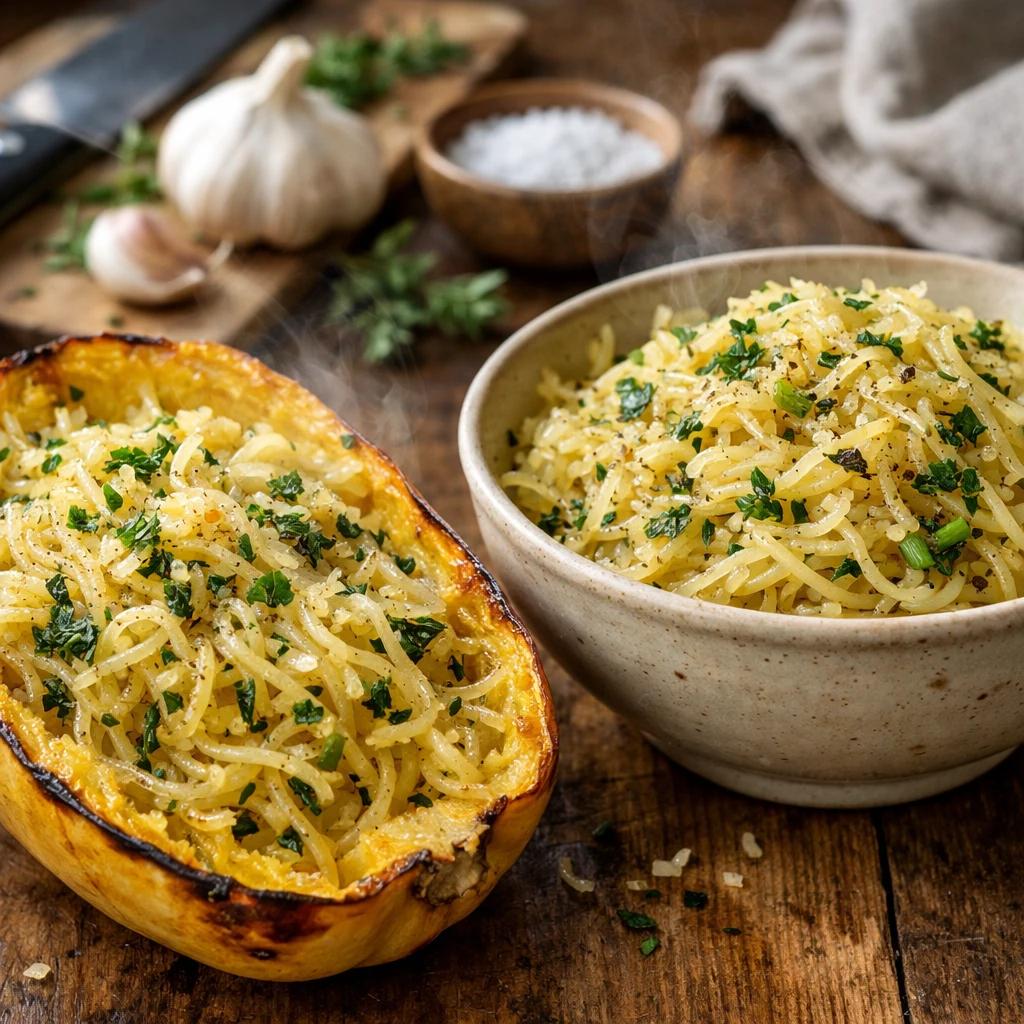
Herbed Spaghetti Squash is a simple, fragrant, and delicious way to enjoy this naturally noodle-like vegetable. Tender strands of roasted spaghetti squash are tossed with olive oil, garlic, fresh parsley, basil, oregano, and Parmesan cheese for a light yet flavorful dish that works beautifully as either a side or a vegetarian main course.
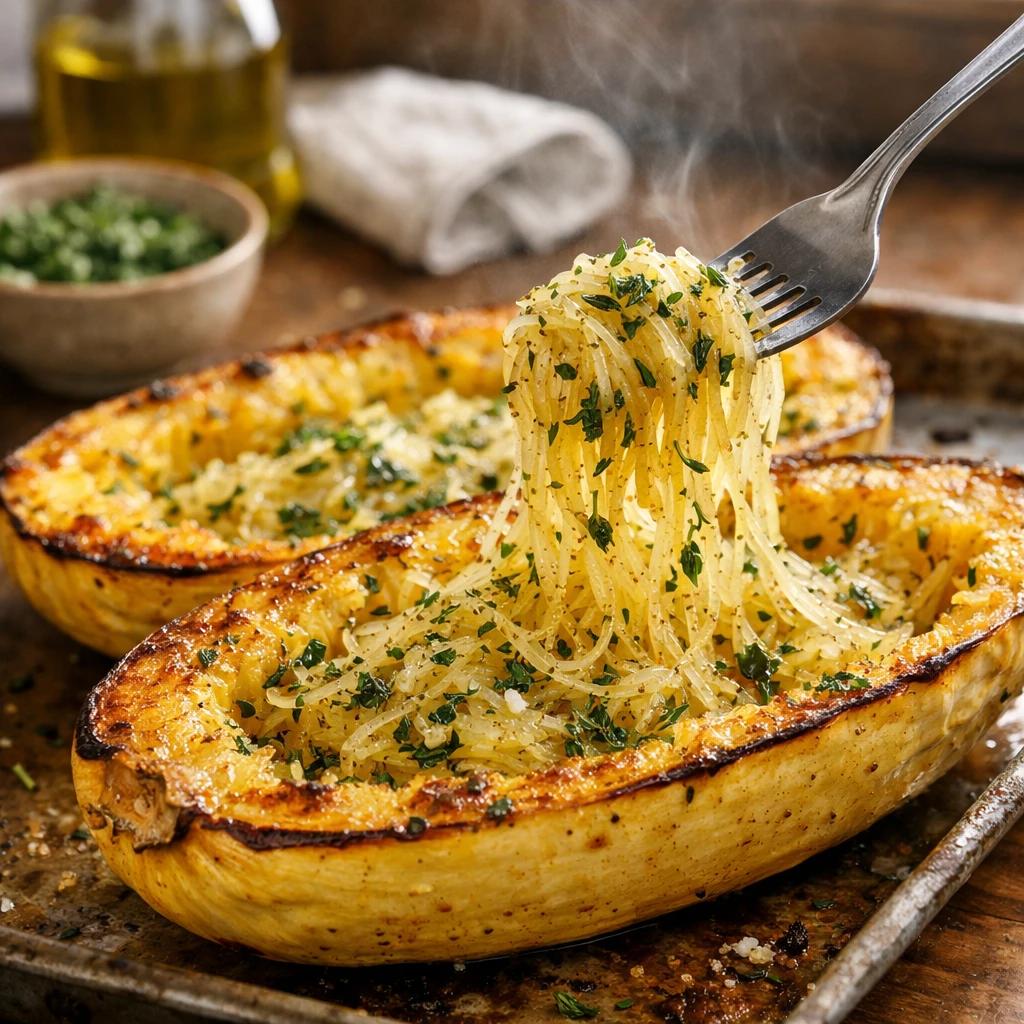
Herbed Spaghetti Squash:
Roasting the squash brings out its subtle sweetness while creating strands with a pleasant texture. Fresh herbs add brightness and aroma, while garlic and Parmesan provide savory depth. A small squeeze of lemon at the end balances the richness and makes the flavors taste even fresher.
This easy recipe is ideal for busy weeknights because the squash can be roasted ahead of time and quickly finished in a skillet. It pairs well with grilled chicken, fish, shrimp, roasted vegetables, or a simple salad and can easily be adapted with different herbs and seasonings.
History:
Spaghetti squash is a winter squash recognized for its unusual flesh, which separates into long strands after cooking. It has become increasingly popular in modern American cooking as a vegetable alternative to traditional pasta.
The combination of squash, olive oil, garlic, herbs, and Parmesan is inspired by simple Mediterranean and Italian-style cooking, where fresh herbs and quality ingredients are often used to create flavorful dishes without complicated sauces. Herbed Spaghetti Squash brings those elements together in an easy modern preparation.
Subscribe to our youtube channel Kitchenpedia for more delicious recipes and hit the like button if you enjoyed this youtubevideo. Share it with your friends and Family.
Herbed Spaghetti Squash

Ingredients
For the Spaghetti Squash
- 1 medium spaghetti squash, approximately 3 pounds
- 1½ tablespoons extra-virgin olive oil
- ½ teaspoon salt
- ¼ teaspoon freshly ground black pepper
For the Herb Mixture
- 2 tablespoons fresh parsley, finely chopped
- 2 tablespoons fresh basil, finely chopped
- 1 tablespoon fresh oregano, chopped
- 2 cloves garlic, finely minced
- 1 tablespoon extra-virgin olive oil
- 1 tablespoon fresh lemon juice
- ½ teaspoon lemon zest
- ¼ cup freshly grated Parmesan cheese
Instructions
Prepare the Spaghetti Squash
- Preheat the oven to 400°F (200°C).Carefully cut the spaghetti squash in half lengthwise.Use a spoon to scoop out the seeds and stringy center.Brush the cut sides with olive oil and season with salt and black pepper.Place the squash cut-side down on a baking sheet.
Roast the Squash
- Roast for approximately 35–45 minutes, depending on the size of the squash.The flesh should be tender enough to pierce easily with a fork but should still have enough structure to form distinct strands.Remove from the oven and allow it to cool for several minutes.
Create the Squash Strands
- Turn the squash halves cut-side up.Use a fork to gently scrape the flesh from end to end, separating it into long spaghetti-like strands.For particularly moist squash, transfer the strands to a colander and allow excess moisture to drain for a few minutes.
Prepare the Herbs
- While the squash is roasting, combine the chopped parsley, basil, oregano, garlic, olive oil, lemon juice, and lemon zest in a small bowl.Stir well to create a fragrant herb mixture.Set aside.
Warm the Squash
- Place a large skillet over medium-low heat.Add the remaining tablespoon of olive oil.Add the cooked spaghetti squash strands.Gently toss for approximately 2–3 minutes until warmed through.
Add the Herb Mixture
- Pour the prepared herb mixture over the warm squash.Toss gently with tongs until the herbs, garlic, and olive oil are evenly distributed.Cook for another 1–2 minutes.Avoid cooking the fresh herbs for too long, as prolonged heat can diminish their bright flavor.
Add Parmesan
- Turn off the heat.Sprinkle the Parmesan cheese over the squash.Gently toss until the cheese is distributed throughout the strands.Taste and adjust the salt and black pepper.
Garnish and Serve
- Transfer the herbed spaghetti squash to a serving dish.Garnish with additional fresh parsley, basil, Parmesan, and a little lemon zest.Serve warm.
Notes
- Choose a firm squash: Select a spaghetti squash that feels heavy for its size and has firm, unblemished skin.
- Avoid overcooking: Overcooked squash can become soft and watery instead of forming distinct strands.
- Fresh herbs: Fresh parsley and basil provide a brighter flavor than dried herbs.
- Herb substitutions: Chives, thyme, cilantro, or rosemary can be used according to preference.
- Parmesan: Freshly grated Parmesan melts and distributes better than pre-shredded cheese.
- Lemon: Add lemon near the end to preserve its fresh flavor.
- Moisture: Drain very wet squash before adding the herbs.
- Serving temperature: This dish is best served warm, although it can also be enjoyed at room temperature.
Tips for Herbed Spaghetti Squash:
- Roast instead of boiling: Roasting produces deeper flavor and helps prevent excessive water absorption.
- Scrape gently: Use a fork lightly to create strands without turning the squash into mush.
- Don’t burn the garlic: If using a skillet, keep the heat moderate when warming the herb mixture.
- Use quality olive oil: Since the oil is part of the finished dish, a flavorful extra-virgin olive oil makes a noticeable difference.
- Add herbs near the end: This preserves their fresh aroma and color.
- Taste before adding salt: Parmesan already contains salt, so additional seasoning may be minimal.
- Add lemon gradually: Start with a small amount and increase according to taste.
- Serve immediately: Fresh herbs and Parmesan are at their best when the squash is freshly prepared.
FAQs for Herbed Spaghetti Squash:
1. What herbs go well with spaghetti squash?
Parsley, basil, oregano, thyme, rosemary, chives, and sage all pair well with spaghetti squash.
2. Can I use dried herbs?
Yes. If fresh herbs are unavailable, use dried Italian seasoning, oregano, basil, or thyme. Because dried herbs are more concentrated, use smaller amounts.
3. Why is my spaghetti squash watery?
Spaghetti squash naturally contains a considerable amount of moisture. Roasting rather than boiling and allowing the cooked strands to drain can help reduce excess liquid.
4. Can I prepare the squash ahead of time?
Yes. Roast and scrape the squash into strands, then refrigerate them in an airtight container for up to several days. Reheat gently before adding the herbs.
5. Can I add protein?
Absolutely. Grilled chicken, shrimp, salmon, turkey, or tofu can turn this side dish into a complete meal.
6. Can I make this recipe vegan?
Yes. Simply leave out the Parmesan or replace it with nutritional yeast or a dairy-free Parmesan alternative.
7. Can I use frozen spaghetti squash?
Yes. Thaw it completely and drain as much excess moisture as possible before seasoning.
8. How should I store leftovers?
Store leftovers in an airtight container in the refrigerator for 3–4 days. Reheat gently in a skillet or microwave.
Conclusion:
Herbed Spaghetti Squash is a wonderfully simple recipe that lets fresh herbs, garlic, olive oil, lemon, and Parmesan transform tender squash into a flavorful and versatile dish. Roasting gives the squash a naturally sweet flavor and satisfying texture, while the fresh herbs provide brightness and aroma.
Serve it alongside chicken, seafood, or roasted vegetables, or enjoy a generous portion as a light vegetarian meal. With its simple ingredients and easy preparation, this herbed spaghetti squash is a delicious way to add more vegetables to your dinner table without sacrificing flavor.