

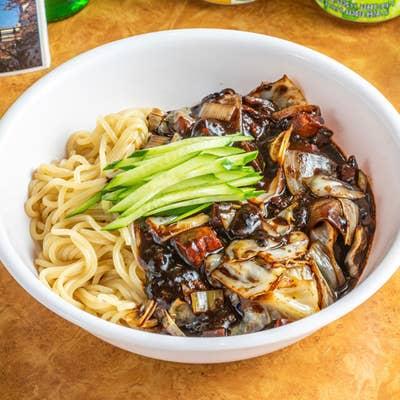
Jajangmyeon is a beloved Korean noodle dish featuring thick, chewy noodles covered in a rich, glossy black bean sauce. This vegetarian version replaces meat with mushrooms and vegetables while keeping the deep savory flavor and comforting texture that make jajangmyeon so popular.The star of the dish is chunjang, a Korean fermented black bean paste with a salty, earthy, slightly sweet flavor.

Jajangmyeon:
When cooked with onions, zucchini, cabbage, mushrooms, and a touch of sugar, it develops into a thick and aromatic sauce that clings beautifully to the noodles.Vegetarian Jajangmyeon makes a satisfying lunch or dinner and is surprisingly easy to prepare at home. Toss the hot noodles with the warm black bean sauce, garnish with fresh cucumber, and enjoy a comforting Korean meal packed with rich umami flavor.
History:
Jajangmyeon has its roots in Chinese-style noodles and developed into a distinctly Korean dish. It is strongly associated with Chinese-Korean cuisine, particularly restaurants established by Chinese immigrants in Korea.The dish became increasingly popular in Korea during the 20th century and eventually became a familiar part of everyday Korean food culture. Its combination of inexpensive ingredients, filling noodles, and flavorful sauce helped make it a popular comfort food.Traditional jajangmyeon commonly contains pork, but vegetarian versions are also enjoyed by replacing the meat with mushrooms, tofu, or additional vegetables. The essential character of the dish comes from the black bean sauce, onions, and noodles.
Subscribe to our youtube channel Kitchenpedia for more delicious recipes and hit the like button if you enjoyed this youtubevideo. Share it with your friends and Family.
Vegetarian Jajangmyeon

Ingredients
For the Noodles
- 400–450 g fresh or dried jajangmyeon noodles
- Water, for boiling
- 1 teaspoon sesame oil, optional
For the Vegetarian Black Bean Sauce
- 4 tablespoons chunjang (Korean black bean paste)
- 2 tablespoons vegetable oil
- 1 medium onion, diced
- 1 small zucchini, diced
- 1 cup green cabbage, chopped
- 150 g mushrooms, sliced
- 1 small carrot, diced
- 3 cloves garlic, minced
- 1 tablespoon soy sauce
- 1 tablespoon sugar
- 1 teaspoon sesame oil
- 1½ cups vegetable broth or water
- 1 tablespoon cornstarch
For Garnish
- ½ cucumber, julienned
- 2 green onions, finely sliced
- Toasted sesame seeds, optional
Instructions
Prepare the Vegetables
- Wash and prepare all the vegetables.Dice the onion, zucchini, cabbage, and carrot into small, evenly sized pieces. Slice the mushrooms and mince the garlic.Keeping the vegetables relatively small helps them cook evenly and makes the sauce easier to eat with the noodles.
Prepare the Chunjang
- Heat a large skillet or wok over medium heat.Add the vegetable oil and chunjang.Stir-fry the black bean paste gently for about 1–2 minutes.This step helps mellow the raw, slightly bitter edge of the paste and develops a deeper roasted flavor.Be careful not to burn the chunjang.
Cook the Aromatics
- Add the diced onion and minced garlic to the pan.Stir-fry for approximately 2–3 minutes until the onion begins to soften and the garlic becomes fragrant.
Add the Vegetables
- Add the carrot, zucchini, cabbage, and mushrooms.Stir-fry everything together for approximately 4–5 minutes.The vegetables should soften slightly while still retaining some texture.
Build the Sauce
- Add the soy sauce, sugar, and vegetable broth or water.Stir thoroughly to combine the black bean paste with the liquid and vegetables.Bring the mixture to a gentle simmer.Reduce the heat slightly and cook for approximately 5–7 minutes, allowing the flavors to blend.
Cook the Noodles
- While the sauce is cooking, bring a large pot of water to a boil.Cook the jajangmyeon noodles according to the package instructions until tender but pleasantly chewy.Drain the noodles thoroughly.If necessary, rinse them briefly according to the noodle package instructions to prevent excessive sticking.
Assemble the Jajangmyeon
- Divide the hot noodles among four serving bowls.Spoon a generous amount of the warm vegetarian black bean sauce over each portion.Top with julienned cucumber and sliced green onions.Sprinkle with toasted sesame seeds if desired.
Serve
- Serve the jajangmyeon immediately while the noodles and sauce are hot.Before eating, mix the noodles thoroughly with the black bean sauce so every strand becomes coated in the rich, glossy sauce.
Notes
- Chunjang is essential: Korean black bean paste gives jajangmyeon its characteristic flavor and color.
- Vegetable choices: Mushrooms, zucchini, cabbage, carrots, and onions work especially well.
- Sugar: A small amount balances the salty and earthy flavor of the black bean paste.
- Sauce consistency: The sauce should be thick enough to coat the noodles without becoming overly stiff.
- Noodles: Fresh jajangmyeon noodles provide an especially chewy texture, but dried noodles can also be used.
- Soy sauce: Use it sparingly because chunjang already contains salt.
- Sesame oil: Add it toward the end for the best aroma.
- Garnish: Fresh cucumber provides a pleasant cool and crunchy contrast to the rich sauce.
Tips for Jajangmyeon:
- Fry the chunjang gently before adding liquid to develop a richer flavor.
- Do not burn the black bean paste, as burnt chunjang can become bitter.
- Cut vegetables evenly so they cook at approximately the same rate.
- Keep some vegetable texture rather than cooking everything until completely soft.
- Use cold water for the cornstarch slurry to prevent lumps from forming.
- Cook the noodles just until chewy because overcooked noodles can become soft and sticky.
- Make the sauce slightly thick because it will loosen when mixed with the hot noodles.
- Mix before eating so the black sauce coats the noodles evenly.
FAQs for Jajangmyeon:
Q: What is Jajangmyeon?
Jajangmyeon is a popular Korean noodle dish made with thick wheat noodles and a savory black bean sauce. The sauce is traditionally prepared with chunjang and vegetables and may contain meat, although vegetarian versions are also delicious.
Q: What is chunjang?
Chunjang is a Korean fermented black bean paste used to make jajangmyeon. It has a dark color and a deep, salty, earthy flavor with a characteristic fermented taste.
Q: Is vegetarian Jajangmyeon vegan?
It can be vegan when prepared with plant-based ingredients. Check the chunjang and noodle labels because some packaged products may contain animal-derived ingredients.
Q: Can I use regular black bean sauce?
For the most authentic Korean-style flavor, Korean chunjang is recommended. Chinese black bean sauce has a different flavor profile and will produce a different dish.
Q: What vegetables can I add?
You can customize the dish with mushrooms, zucchini, cabbage, carrots, onions, potatoes, bell peppers, or other vegetables you enjoy.
Q: Can I add tofu?
Yes. Cubed firm tofu can be added for extra protein. Pan-fry the tofu separately until lightly golden before adding it to the sauce.
Q: Can I make Jajangmyeon spicy?
Yes. Add Korean chili flakes, fresh chili, or a small amount of Korean chili paste if you enjoy spicy food. Traditional jajangmyeon is generally more savory than spicy.
Q: How should I store leftovers?
Store the noodles and sauce separately in airtight containers in the refrigerator. Reheat the sauce gently and prepare fresh or reheated noodles before serving.
Conclusion:
Vegetarian Jajangmyeon is a delicious way to enjoy one of Korea’s most comforting noodle dishes without meat. The combination of chewy noodles, caramelized vegetables, earthy mushrooms, and rich fermented black bean sauce creates a deeply satisfying meal with plenty of texture and flavor.The key to excellent jajangmyeon is gently frying the chunjang, allowing the vegetables to develop flavor, and thickening the sauce until it becomes glossy enough to coat every noodle. Finish the dish with fresh cucumber and green onions for a refreshing contrast.Whether you are already a fan of Korean cuisine or trying jajangmyeon for the first time, this vegetarian version is an easy, hearty, and flavorful meal that is perfect for lunch, dinner, or a comforting weekend feast.