

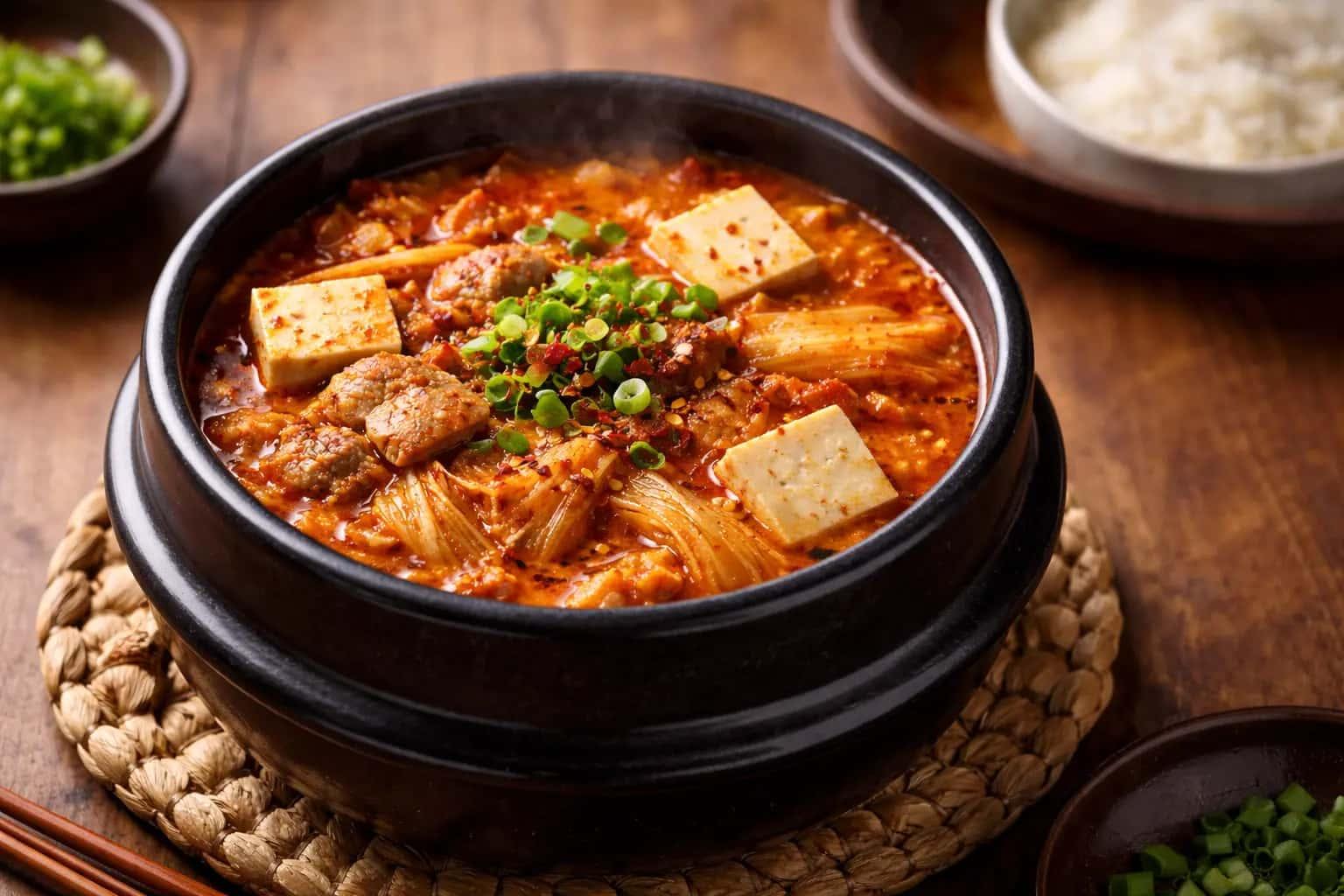
Kimchi Jigae, also known as Kimchee Soup or Kimchi Stew, is one of the most popular and comforting dishes in Korean cuisine. This flavorful stew is made with fermented kimchi simmered in a rich and savory broth with tofu, vegetables, and your choice of pork, beef, seafood, or other proteins.The key to a delicious Kimchi Jigae is well-fermented kimchi.
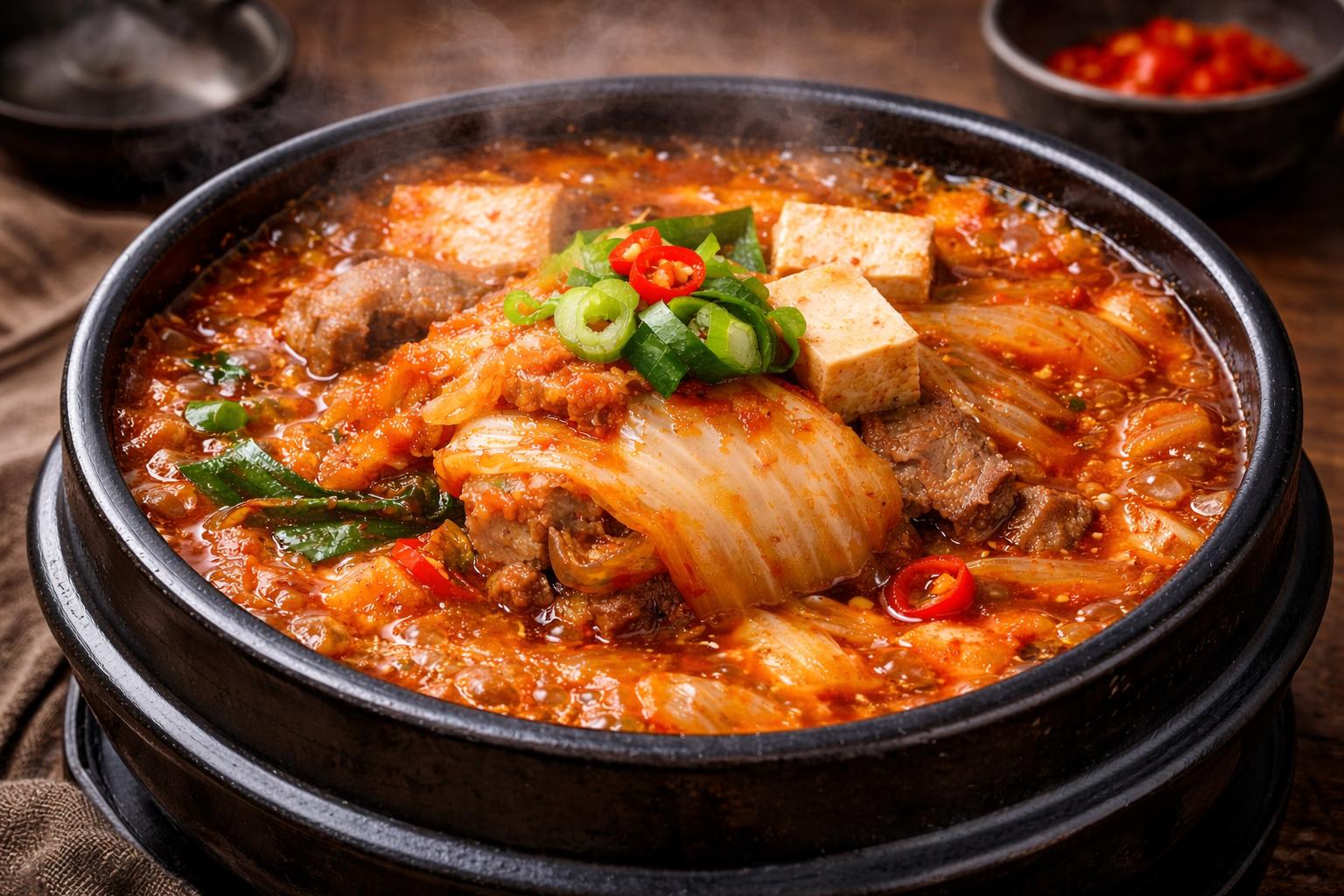
Kimchi Jigae:
As the kimchi slowly cooks, its tangy and spicy flavor becomes deeper and richer, creating a comforting broth that is perfect for serving with steamed rice. Soft tofu absorbs the delicious flavors of the stew while adding a silky texture.Kimchi Jigae is a warm, satisfying, and versatile dish that can easily be customized according to your taste. Whether prepared for a quick family dinner or enjoyed on a cold day, this classic Korean stew delivers bold flavors in every spoonful.
History:
Kimchi has been an essential part of Korean cuisine for centuries, and Kimchi Jigae developed as a practical and delicious way to use aged, fermented kimchi. Older kimchi has a stronger, tangier flavor, making it particularly suitable for cooking in soups and stews.Over time, different versions of Kimchi Jigae became popular, with ingredients such as pork, tuna, beef, seafood, and tofu added to create variations of the classic dish. Today, it remains one of Korea’s most beloved home-style comfort foods.
Subscribe to our youtube channel Kitchenpedia for more delicious recipes and hit the like button if you enjoyed this youtubevideo. Share it with your friends and Family.
Kimchi Jigae

Ingredients
- 2 cups well-fermented kimchi, chopped
- 1 cup kimchi juice
- 250 g pork belly or pork shoulder, thinly sliced
- 1 small onion, sliced
- 1 small zucchini, sliced
- 2 spring onions, chopped
- 1 tablespoon cooking oil
- 1 tablespoon gochujang
- 1 tablespoon gochugaru
- 3 cloves garlic, minced
- 1 tablespoon soy sauce
- 1 teaspoon sesame oil
- 1 teaspoon sugar, optional
- Black pepper, to taste
Instructions
Prepare the Ingredients
- Chop the kimchi and slice the pork and vegetables. Cut the tofu into medium-sized cubes and prepare the remaining ingredients.
Cook the Pork
- Heat a large pot over medium heat and add the cooking oil. Add the pork and cook until lightly browned.
Add the Kimchi
- Add the chopped kimchi to the pot with the pork. Stir-fry for approximately 4–5 minutes until the kimchi becomes fragrant and slightly softened.
Add the Aromatics
- Add the minced garlic, gochujang, and gochugaru. Stir gently for about one minute to combine the flavors.
Add the Broth
- Pour in the broth and kimchi juice. Add soy sauce and bring the mixture to a gentle boil.
Simmer the Stew
- Reduce the heat and allow the stew to simmer for approximately 15 minutes so the flavors can develop.
Finish Cooking
- Simmer for another 8–10 minutes until the vegetables are tender and the tofu is heated through.
Serve
- Serve the Kimchi Jigae immediately while hot, accompanied by freshly steamed rice.
Notes
- Well-fermented kimchi provides the best flavor.
- Older kimchi is generally better for cooking than very fresh kimchi.
- Pork adds richness, but other proteins can also be used.
- Adjust the amount of gochugaru according to your spice preference.
- Add tofu gently to prevent it from breaking.
- Kimchi juice adds extra tanginess and depth.
- Taste before adding extra salt because kimchi can be naturally salty.
- Serve the stew immediately while it is hot.
Tips for Kimchi Jigae:
- Stir-fry the kimchi before adding the broth for a deeper flavor.
- Use pork belly for a richer and more traditional taste.
- Simmer the stew slowly to allow the flavors to blend.
- Add the tofu toward the end of the cooking process.
- Use an earthenware pot for a traditional Korean-style presentation.
- Add a little sugar only if the kimchi is extremely sour.
- Prepare the stew in advance and reheat gently for even deeper flavor.
- Serve with steamed rice to balance the spicy and tangy broth.
FAQs for Kimchi Jigae:
1. What is Jigae?
Kimchi Jigae is a traditional Korean stew made with fermented kimchi, tofu, vegetables, broth, and often pork or another protein.
2. Is Kimchi Jigae very spicy?
It can be moderately spicy, depending on the kimchi, gochujang, and gochugaru used. The spice level can easily be adjusted.
3. What type of kimchi is best?
Well-fermented and slightly sour Napa cabbage kimchi is usually the best choice.
4. Can I make Jigae vegetarian?
Yes. Use vegetable broth, vegetarian kimchi, tofu, and mushrooms instead of pork.
5. Can I use canned tuna?
Yes. Tuna Kimchi Jigae is a popular variation of this dish.
6. What should I serve with Jigae?
Steamed rice, Korean side dishes, roasted seaweed, and pickled vegetables pair beautifully with this stew.
7. Can I store leftovers?
Yes. Store leftovers in an airtight container in the refrigerator for up to 2–3 days.
8. Can Kimchi be frozen?
Yes, the broth and kimchi freeze well. However, the texture of tofu may change after freezing and thawing.
Conclusion:
Kimchi Jigae is a deeply comforting Korean stew filled with the bold, tangy, spicy, and savory flavors of fermented kimchi. Combined with tender protein, soft tofu, and fresh vegetables, this hearty dish creates a satisfying meal that is perfect for any occasion. Serve it steaming hot with a bowl of rice and enjoy one of the most beloved and flavorful dishes in Korean cuisine.