

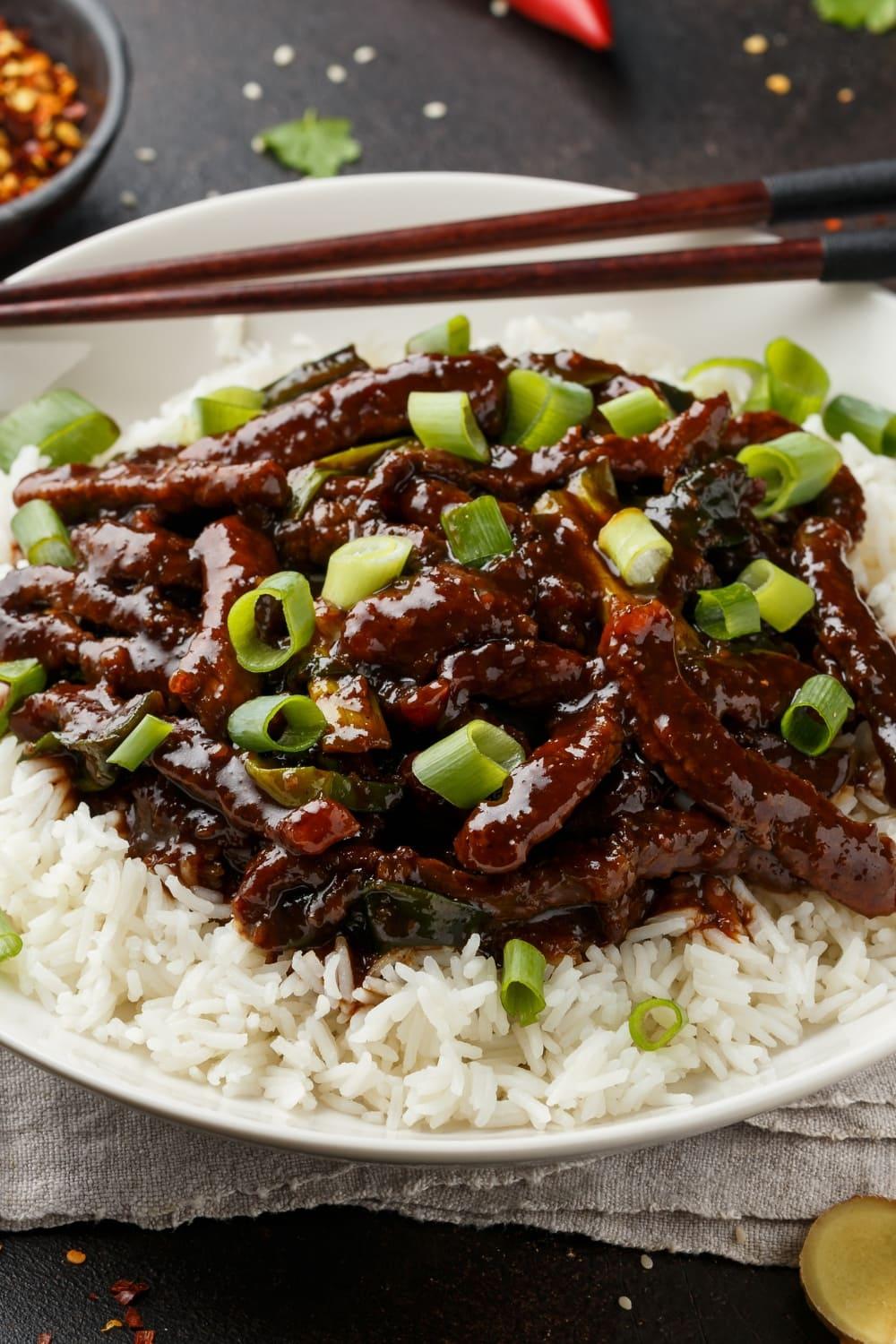
Mongolian Beef and Spring Onions is a popular Chinese-American style dish featuring thinly sliced beef cooked until beautifully browned and coated in a glossy, sweet-and-savory sauce. Fresh spring onions add a bright, aromatic flavor that balances the richness of the beef and sticky glaze.
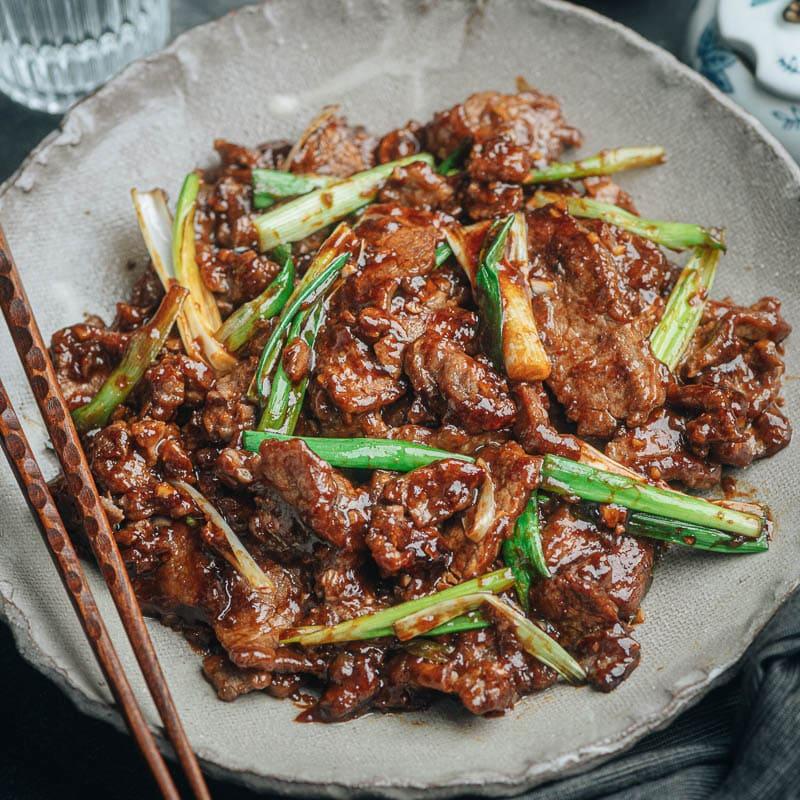
Mongolian Beef and Spring Onions:
The secret to this recipe is the combination of thinly sliced beef, a light cornstarch coating, and high-heat cooking. The beef develops beautifully caramelized edges while remaining tender inside. The sauce brings together soy sauce, brown sugar, garlic, ginger, and a touch of sesame oil for an irresistible balance of salty, sweet, and aromatic flavors.
This homemade version is quick enough for a weeknight dinner and tastes wonderfully similar to restaurant-style Chinese takeout. Serve it over steamed jasmine rice or noodles, with extra spring onions scattered on top for a simple and satisfying meal.
History for Mongolian Beef and Spring Onions:
Despite its name, Mongolian Beef is generally considered a Chinese-American restaurant dish, rather than a traditional dish from Mongolia. It became popular in North American Chinese restaurants, where beef was combined with sweet soy-based sauces and vegetables.
The dish is particularly known for its generous use of green onions or spring onions. Modern versions vary in sweetness, spice, and cooking technique, but the characteristic combination of tender beef, caramelized sauce, and fresh onions remains central to the dish.
Subscribe to our youtube channel Kitchenpedia for more delicious recipes and hit the like button if you enjoyed this youtubevideo. Share it with your friends and Family.
Mongolian Beef

Ingredients
For the Beef
- 1½ pounds flank steak or sirloin steak
- 1 tablespoon soy sauce
- 1 tablespoon Shaoxing wine or dry sherry
- 1 teaspoon sesame oil
- ½ teaspoon freshly ground black pepper
- ¾ cup cornstarch
- 2–3 tablespoons vegetable or peanut oil, for cooking
For the Mongolian Sauce
- ½ cup soy sauce
- ⅓ cup brown sugar
- ½ cup beef broth or water
- 1 tablespoon hoisin sauce
- 1 tablespoon rice vinegar
- 1 teaspoon sesame oil
- 4 cloves garlic, minced
- 1 tablespoon fresh ginger, grated
- ½ teaspoon crushed red pepper flakes, optional
For the Spring Onions
- 6–8 spring onions or green onions
- 1 tablespoon vegetable oil
Optional Garnishes
- Toasted sesame seeds
- Fresh red chili slices
- Additional sliced spring onions
- Fresh cilantro
Instructions
- Place the beef in the freezer for approximately 15–20 minutes to make slicing easier.Slice the beef thinly against the grain.Thin slices will cook quickly and remain tender.
- Place the sliced beef in a bowl.Add soy sauce, Shaoxing wine, sesame oil, and black pepper.Toss well and allow the beef to marinate for approximately 15 minutes.
- Place cornstarch in a shallow dish.Add the marinated beef and toss until lightly coated.Shake off any excess cornstarch.
- In a bowl, combine soy sauce, brown sugar, beef broth, hoisin sauce, rice vinegar, sesame oil, garlic, ginger, and red pepper flakes if using.Whisk well and set aside.
- Trim the spring onions and cut them into approximately 2-inch pieces.Separate the white and green portions if desired.The white portions can be cooked longer, while the green portions can be added toward the end for freshness.
- Heat a large wok or skillet over high heat.Add 2–3 tablespoons of vegetable or peanut oil.Add the beef in batches and cook for approximately 2–4 minutes, turning occasionally, until browned and lightly crisp around the edges.Transfer the cooked beef to a plate.
- Add the white portions of the spring onions to the wok.Stir-fry for approximately 1 minute.Add the green portions and cook for another 30 seconds.Remove some spring onions for garnish if desired.
- Pour the prepared sauce into the hot wok.Bring it to a gentle simmer.Cook for approximately 2–3 minutes until the brown sugar dissolves and the sauce becomes glossy.
- Add the cooked beef back to the wok.Toss quickly until every piece is coated in the sticky sauce.Cook for another 1–2 minutes.
- Remove from heat.Top with additional spring onions, toasted sesame seeds, and sliced red chili if desired.Serve immediately over steamed jasmine rice or noodles.
Notes
- Flank steak is ideal: It becomes tender when sliced thinly against the grain.
- Don't skip the brief chilling: Slightly chilled beef is easier to slice thinly.
- Use cornstarch lightly: Too much coating can make the sauce excessively thick.
- Cook beef in batches: This helps create browned edges instead of steaming.
- Brown sugar provides the signature sweetness: Adjust it according to your preference.
- Don't overcook spring onions: They should retain some freshness and texture.
- Watch the sauce: Sugar can burn if cooked over excessively high heat.
- Serve immediately: The beef is at its best while the sauce is hot and glossy.
Tips for Perfect Mongolian Beef:
- Always slice the beef against the grain.
- Cut the beef as thinly as possible without making it difficult to handle.
- Pat the beef dry before coating it.
- Make sure the wok is hot before adding the beef.
- Avoid overcrowding the cooking surface.
- Prepare the sauce before beginning the stir-fry.
- Add spring onions at different stages for both cooked and fresh flavor.
- Serve with freshly steamed rice to absorb the delicious sauce.
FAQ’s for Mongolian Beef and Spring Onions:
1. Why is it called Mongolian Beef?
Despite its name, Mongolian Beef is generally considered a Chinese-American restaurant dish rather than a traditional Mongolian recipe.
2. What beef is best for Mongolian Beef?
Flank steak is an excellent choice. Sirloin, skirt steak, or another tender beef cut can also be used as long as it is sliced thinly against the grain.
3. Can I make Mongolian Beef less sweet?
Yes. Reduce the brown sugar to your preferred level. You can also add a little extra rice vinegar to balance the sweetness.
4. Can I make it spicy?
Absolutely. Add dried red chilies, chili garlic sauce, crushed red pepper flakes, or fresh chili slices.
5. Can I add vegetables?
Yes. Bell peppers, broccoli, carrots, snow peas, mushrooms, and zucchini can all be added. Keep them slightly crisp.
6. Can I use chicken instead of beef?
Yes. Thinly sliced chicken thighs or chicken breast can be substituted, although cooking times may vary.
7. Can I make this gluten-free?
Yes. Use gluten-free soy sauce or tamari and choose certified gluten-free hoisin sauce and other packaged ingredients.
8. How should I store leftovers?
Store cooled leftovers in an airtight container in the refrigerator for up to 3–4 days. Reheat gently in a skillet or microwave.
Conclusion:
Mongolian Beef and Spring Onions is a wonderfully satisfying Chinese-American style dish featuring tender beef, caramelized edges, fresh spring onions, and a glossy brown sugar-soy glaze. The combination of sweet, salty, savory, and aromatic flavors makes it an excellent choice whenever you’re craving flavorful homemade takeout.
For the best results, slice the beef thinly against the grain, cook it quickly over high heat, and add the sauce only after the beef has developed a beautiful browned exterior. Finish with plenty of fresh spring onions and serve over steaming jasmine rice or noodles for an easy restaurant-style dinner.