
Persian Rice, commonly known as Chelo, is one of the most treasured staples of Iranian cuisine. Famous for its delicate, fluffy texture and fragrant aroma, Persian is carefully cooked using a traditional steaming method that separates each grain perfectly. One of its most beloved features is the crispy golden crust at the bottom of the pot, called tahdig, which is considered a delicacy.
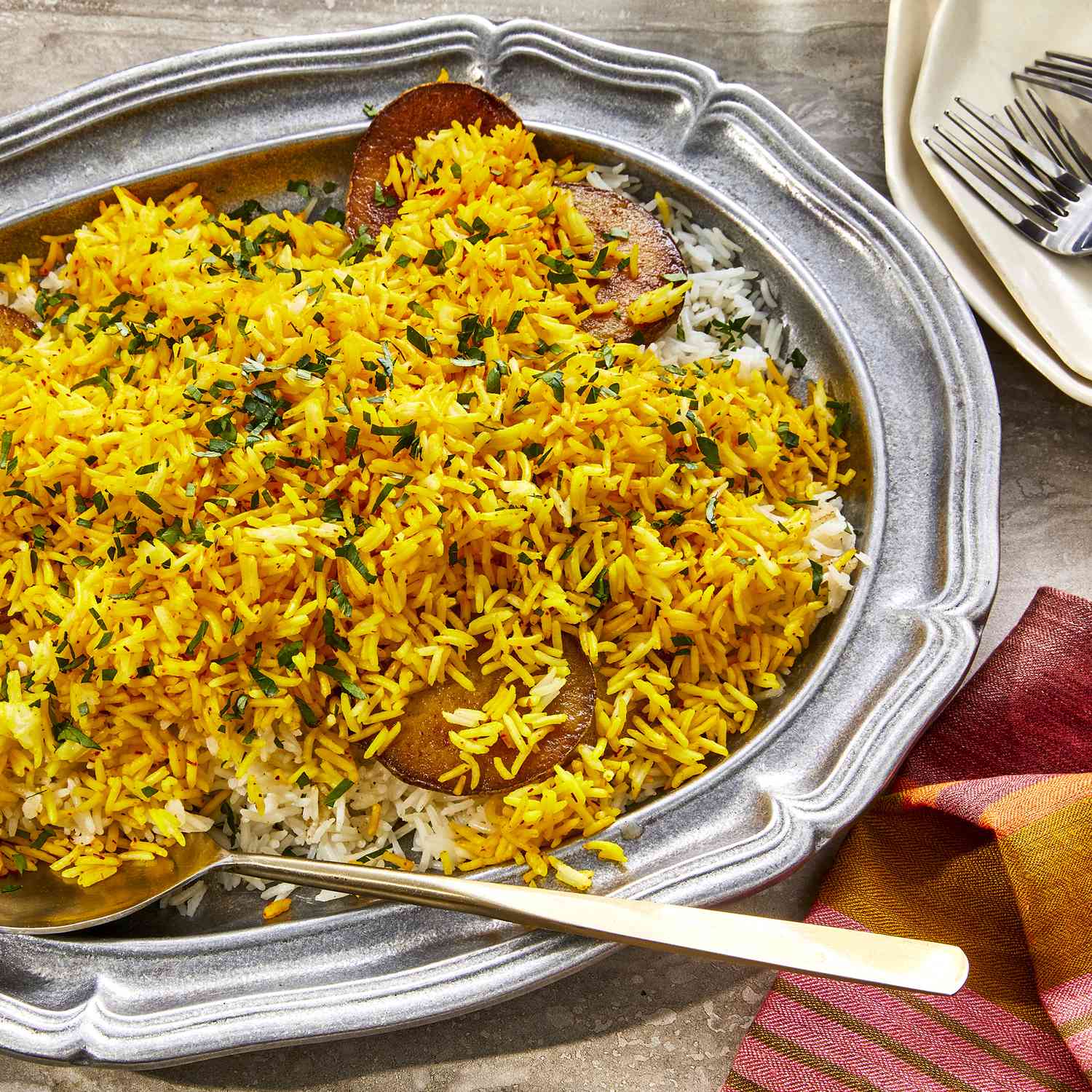
Persian Rice:
In Persian households, rice is much more than just a side dish. It is often served alongside stews, grilled meats, and vegetable dishes, forming the centerpiece of many meals. The preparation requires patience and technique, but the result is incredibly light rice with a crunchy layer that everyone at the table eagerly awaits.What makes Persian rice unique is the process of soaking, parboiling, and steaming the rice to achieve long, separate grains. Often flavored with saffron, butter, or oil, this dish offers a subtle richness that pairs beautifully with a wide variety of Persian dishes.
History:
Rice has been an essential ingredient in Persian cuisine for centuries. The cultivation of rice spread widely across Iran, particularly in the northern regions near the Caspian Sea. Over time, Persian cooks perfected techniques to produce fluffy rice with distinct grains and the famous tahdig crust.
Historically, rice dishes were often served during royal banquets and celebrations in ancient Persia. The art of cooking rice was considered a sign of culinary mastery. Today, Persian rice remains a symbol of tradition and hospitality, appearing at everyday meals as well as special occasions and celebrations.
Subscribe to our youtube channel Kitchenpedia for more delicious recipes and hit the like button if you enjoyed this youtubevideo. Share it with your friends and Family.
Persian Rice (Chelo): Fluffy Saffron-Scented Rice

Ingredients
- 2 cups basmati rice
- 8 cups water
- 2 tablespoons salt
- 3 tablespoons vegetable oil or butter
- 2 tablespoons plain yogurt (optional, for tahdig)
- 1 tablespoon saffron threads
- 3 tablespoons hot water (for saffron)
Instructions
- Rinse the basmati rice several times until the water runs clear.
- Soak the rice in salted water for about 30 minutes.
- Bring 8 cups of water to a boil in a large pot and add the soaked rice.
- Boil for about 6–8 minutes until the rice is slightly tender but still firm.
- Drain the rice in a colander and rinse briefly with lukewarm water.
- Heat oil in the pot and add yogurt mixed with a small amount of rice to form the tahdig base.
- Layer the remaining rice into the pot in a pyramid shape.
- Mix saffron with hot water and drizzle some over the rice.
- Cover the pot with a lid wrapped in a clean kitchen towel and steam on low heat for 30–35 minutes.
- When done, gently fluff the rice and carefully remove the crispy tahdig from the bottom.
Notes
- High-quality basmati rice works best for Persian rice.
- Soaking the rice helps achieve long, separate grains.
- Tahdig can be made with potato slices or flatbread.
- Saffron adds both aroma and color.
- The lid should be wrapped in a towel to absorb steam.
- Cooking on low heat prevents burning.
- Persian rice is traditionally served on a large platter.
- Tahdig is often placed on top or served separately.
Tips for Persian Rice:
- Rinse rice thoroughly to remove excess starch.
- Do not overcook rice during the boiling step.
- Use a heavy-bottomed pot for even heat.
- Allow enough steaming time for perfect fluffiness.
- Warm the saffron water before mixing for stronger flavor.
- Keep the heat low during steaming.
- Add butter on top for extra richness.
- Let the pot rest for 5 minutes before serving.
FAQs for Persian Rice:
1. What is tahdig?
Tahdig is the crispy golden rice crust formed at the bottom of the pot during cooking.
2. What type of rice is best for Persian?
Long-grain basmati rice is ideal for achieving fluffy grains.
3. Can Persian be made without saffron?
Yes, saffron is optional but adds traditional flavor and color.
4. Why is rice soaked before cooking?
Soaking helps the grains cook evenly and remain long and separate.
5. Can I add vegetables to Persian?
Yes, variations include herbs, beans, or vegetables.
Conclusion:
Persian or Chelo, is a masterpiece of simplicity and technique. Its fluffy texture, fragrant saffron aroma, and irresistible crispy tahdig make it a standout dish in Persian cuisine. Whether served with stews, grilled meats, or vegetables, this classic rice dish brings elegance and tradition to the table.