

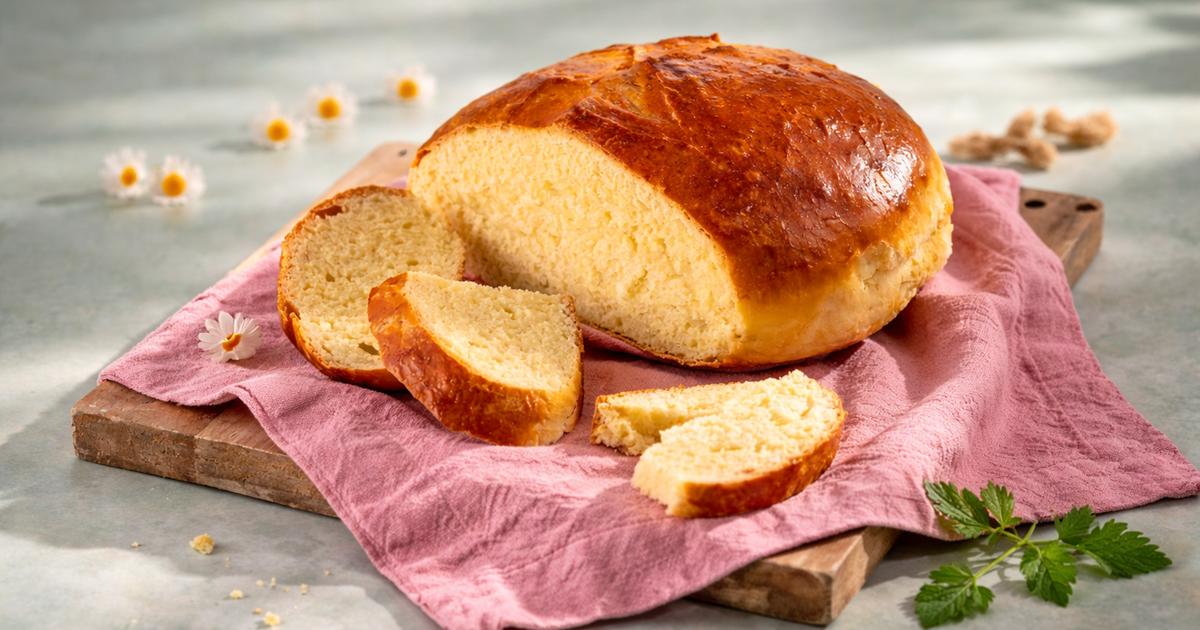
Portuguese Sweet Bread, traditionally known as Massa Sovada, is a soft, rich, slightly sweet bread that holds a special place in Portuguese food culture. Famous for its beautiful golden-brown crust, fluffy interior, and delicate buttery flavour, this traditional bread is enjoyed during holidays, family celebrations, and everyday meals.

Portuguese Sweet Bread:
Made with simple ingredients such as flour, milk, eggs, butter, sugar, yeast, and lemon zest, Portuguese Sweet Bread has a wonderfully tender texture and a lightly sweet taste. Its aroma while baking fills the kitchen with warmth and makes it difficult to wait until the loaf has cooled.Whether you enjoy it freshly baked with butter, toasted for breakfast, or served alongside a cup of coffee or tea, this homemade Portuguese Sweet Bread is a delicious treat. Follow this easy step-by-step recipe to create a beautiful traditional loaf in your own kitchen.
History:
Portuguese Sweet Bread has a long history connected to the baking traditions of Portugal, particularly the Azores Islands. It is commonly called Massa Sovada, which means kneaded or beaten dough, referring to the traditional process of thoroughly working the dough to develop its soft, elastic texture.The bread became especially associated with Easter celebrations and the Feast of the Holy Spirit. In some traditions, it is served with a boiled egg baked into the bread, symbolizing new life and renewal.Historically, families prepared large batches for religious celebrations, weddings, community gatherings, and other special occasions. Recipes varied between islands and families, with some adding lemon zest, cinnamon, fennel, nutmeg, or anise for extra fragrance.
Subscribe to our youtube channel Kitchenpedia for more delicious recipes and hit the like button if you enjoyed this youtubevideo. Share it with your friends and Family.
Portuguese Sweet Bread

Ingredients
For the dough
- 4 cups (500 g) all-purpose flour
- ¾ cup (150 g) granulated sugar
- 2¼ teaspoons (7 g) active dry yeast
- ¾ cup (180 ml) warm whole milk
- 3 large eggs
- ½ cup (115 g) unsalted butter, softened
- 1 teaspoon salt
- 1 tablespoon fresh lemon zest
- 1 teaspoon vanilla extract
For the egg wash
- 1 egg
- 1 tablespoon milk
Instructions
- Pour the warm milk into a small bowl. Add the active dry yeast and one tablespoon of the measured sugar. Stir gently and leave for approximately 5–10 minutes until the mixture becomes foamy.Make sure the milk is warm rather than hot, as excessive heat can damage the yeast.
- In a large mixing bowl, combine the flour, remaining sugar, salt, and optional cinnamon. Mix everything thoroughly so the ingredients are evenly distributed.
- Add the eggs, activated yeast mixture, lemon zest, and vanilla extract to the flour mixture. Mix until a soft dough begins to form.
- Gradually add the softened butter, mixing a little at a time. Continue kneading until the butter is fully incorporated and the dough becomes smooth and elastic.
- Transfer the dough to a lightly floured surface. Knead for approximately 10–15 minutes by hand, or use a stand mixer with a dough hook.The dough should feel soft, slightly tacky, and stretchy. Avoid adding too much extra flour, as this can make the finished bread dense.
- Place the dough in a lightly greased bowl. Cover with a clean kitchen towel or plastic wrap.Leave it in a warm place for approximately 1½–2 hours, or until it doubles in size.
- Gently press the dough to release excess air. Shape it into a smooth round loaf and place it in a greased round baking pan or on a parchment-lined baking tray.Alternatively, divide the dough into two equal portions to make smaller loaves.
- Cover the shaped dough and allow it to rise again for approximately 45–60 minutes, until noticeably puffy.This second rise helps create the bread's soft, airy texture.
- Whisk one egg with one tablespoon of milk in a small bowl. Gently brush the mixture over the surface of the bread.Sprinkle a little granulated sugar on top if desired.
- Preheat your oven to 350°F (180°C).Bake the bread for approximately 35–40 minutes, or until the top becomes beautifully golden brown and the centre is fully cooked.If the surface browns too quickly, loosely cover it with aluminium foil during the remaining baking time.
- Remove the bread from the oven and allow it to rest in the pan for approximately 10 minutes.Transfer it to a wire rack and let it cool before slicing.
Notes
- Fresh yeast: Check that your yeast is active before preparing the dough.
- Warm milk: Use lukewarm milk to activate the yeast properly.
- Soft butter: Allow butter to soften at room temperature before mixing.
- Kneading: Proper kneading is essential for developing the gluten structure.
- Rising time: Allow enough time for both dough rises.
- Lemon zest: Fresh lemon zest provides a pleasant citrus fragrance.
- Egg wash: Brushing the dough creates a beautiful golden crust.
- Cooling: Let the bread cool before slicing to preserve its soft interior.
Tips for Portuguese Sweet Bread:
- Use good-quality bread flour if you prefer a slightly chewier texture.
- Measure flour accurately to avoid making the dough too dry.
- Add butter gradually rather than adding it all at once.
- Knead until the dough becomes smooth and elastic.
- Keep the dough covered during rising to prevent it from drying out.
- Avoid rushing the second rise because it contributes to a lighter loaf.
- Check the centre with a food thermometer; approximately 190°F (88°C) indicates that the loaf is cooked.
- Store the cooled bread in an airtight container to maintain freshness.
FAQs for Portuguese Sweet Bread:
1. What is Portuguese Sweet Bread called in Portugal?
Portuguese Sweet Bread is commonly called Massa Sovada, particularly in the Azores. On mainland Portugal, the term Pão Doce is also used for sweet bread.
2. What makes Portuguese Sweet Bread different from regular bread?
It contains more sugar, eggs, milk, and butter than ordinary bread. These ingredients give it a richer flavour, softer texture, and slightly sweet taste.
3. Is Portuguese Sweet Bread traditionally eaten at Easter?
Yes. It is traditionally associated with Easter celebrations and the Feast of the Holy Spirit, particularly in the Azores.
4. Can I make Portuguese Sweet Bread without a stand mixer?
Absolutely! You can prepare it by hand. Knead the dough for approximately 10–15 minutes until smooth and elastic.
5. Why is my Sweet Bread dense?
Dense bread can result from inactive yeast, insufficient kneading, too much flour, or inadequate rising time. Allow the dough to double in size before shaping.
6. Can I add cinnamon to Sweet Bread?
Yes. Cinnamon, nutmeg, fennel, and anise are popular optional flavourings in different regional and family recipes.
7. How should I store Sweet Bread?
Once completely cooled, store it in an airtight container or tightly wrapped at room temperature for approximately 3–4 days.
8. Can Portuguese Bread be frozen?
Yes. Slice the completely cooled loaf, wrap the slices individually or in small portions, and freeze for up to 2 months for best quality. Thaw at room temperature before serving.
Conclusion:
Portuguese Sweet is a wonderful traditional recipe that combines simple ingredients with beautiful baking traditions. Its soft, fluffy interior, buttery flavour, delicate sweetness, and golden crust make it a delicious choice for breakfast, afternoon tea, and holiday celebrations. Although preparing the dough requires patience, the results are absolutely worth the effort. With proper kneading, enough rising time, and careful baking, you can create a homemade loaf that tastes just as comforting as traditional Portuguese bakery bread. Serve it with butter, honey, jam, or coffee and share this delicious Portuguese speciality with your family and friends. Try this Portuguese Sweet recipe and bring a little taste of Portugal into your kitchen!