

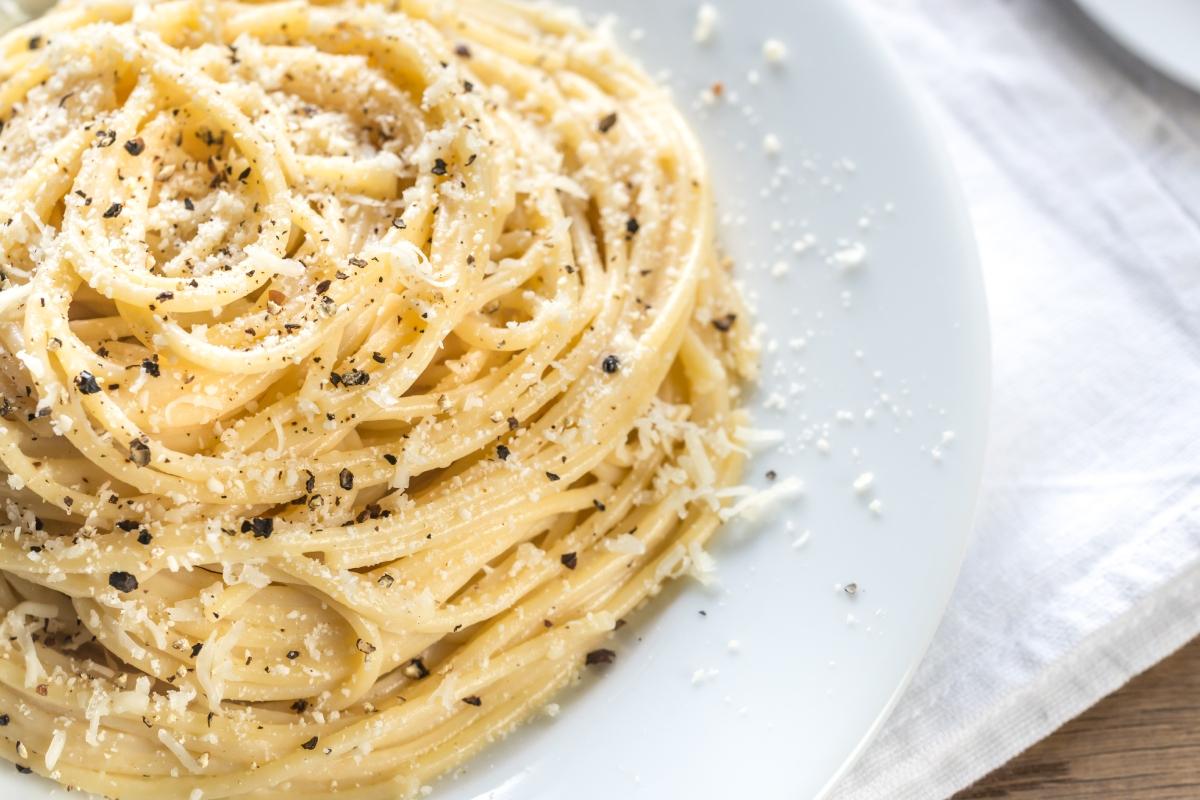
Spaghetti Cacio e Pepe is one of Italy’s most iconic pasta dishes, celebrated for its extraordinary simplicity and unforgettable flavor. Originating in Rome, this timeless recipe requires only a handful of ingredients—spaghetti, Pecorino Romano cheese, freshly cracked black pepper, and pasta water—yet delivers a creamy, luxurious sauce without using butter or cream. Every strand of pasta is coated in a silky cheese emulsion, making it one of the finest examples of authentic Italian cooking.The beauty of Cacio e Pepe lies in its technique rather than its ingredient list.
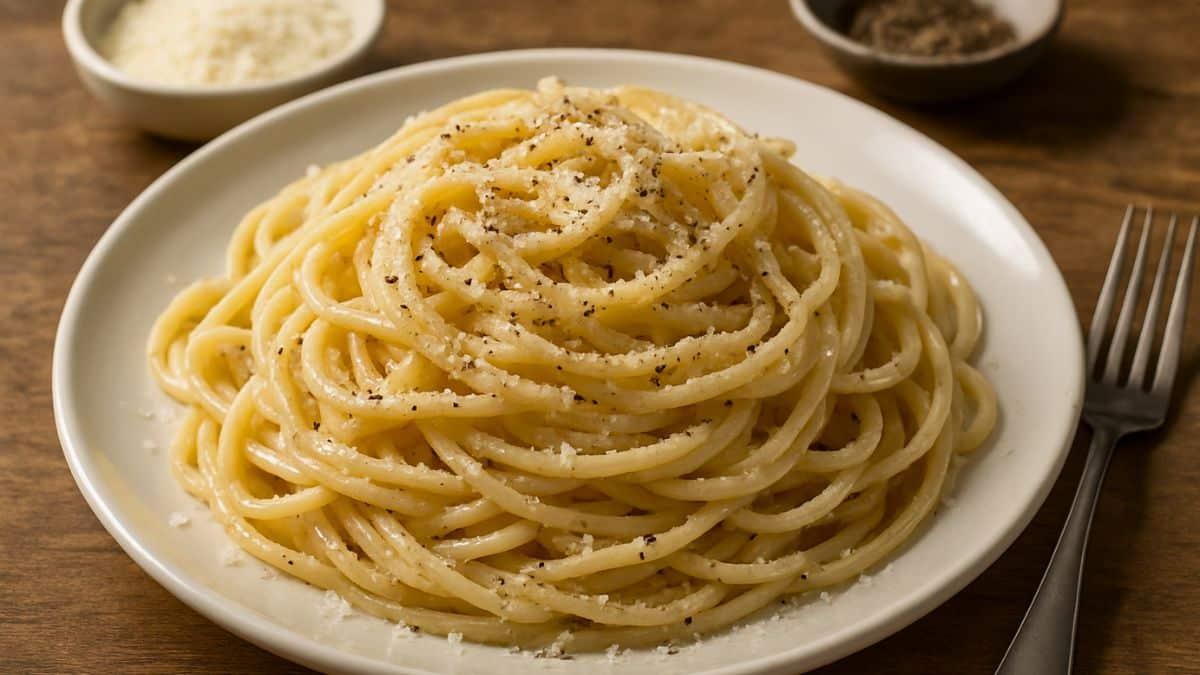
Spaghetti Cacio e Pepe:
By carefully combining finely grated Pecorino Romano with starchy pasta water, a smooth, velvety sauce is created that clings perfectly to the spaghetti. Freshly toasted black pepper adds a bold, aromatic warmth that balances the salty richness of the cheese, resulting in a dish that is both elegant and deeply satisfying.Whether you’re preparing a quick weeknight dinner or serving a traditional Italian meal for guests, Spaghetti Cacio e Pepe is a perfect choice. Ready in just 20 minutes, this classic Roman recipe proves that simple, high-quality ingredients can create an unforgettable dining experience.
History:
Cacio e Pepe dates back to ancient Rome and was traditionally enjoyed by shepherds who spent long periods traveling through the countryside. They carried durable ingredients such as dried pasta, aged Pecorino Romano cheese, and black pepper, all of which could be stored without refrigeration. These pantry staples formed the foundation of a nourishing and portable meal.
The name “Cacio e Pepe” literally translates to “cheese and pepper” in the Roman dialect. Pecorino Romano, a hard sheep’s milk cheese produced in central Italy, has been a cornerstone of Roman cuisine for centuries. Combined with freshly ground black pepper, it creates the dish’s distinctive bold and savory flavor.
Today, Cacio e Pepe is considered one of the four classic Roman pasta dishes, alongside Carbonara, Amatriciana, and Gricia. It remains a symbol of Italian culinary tradition, admired worldwide for its simplicity, elegance, and perfect balance of flavors.
Subscribe to our youtube channel Kitchenpedia for more delicious recipes and hit the like button if you enjoyed this youtubevideo. Share it with your friends and Family.
Spaghetti Cacio e Pepe: The Authentic Roman Pasta Recipe with Pecorino Romano and Black Pepper

Ingredients
For the Pasta
- 12 ounces (340 g) spaghetti
- 2 cups finely grated Pecorino Romano cheese
- 2 teaspoons freshly cracked black pepper
- 1½ cups reserved pasta cooking water
- Salt for boiling water
Optional Garnish
- Additional Pecorino Romano cheese
- Freshly cracked black pepper
Instructions
- Bring a large pot of lightly salted water to a boil.
- Cook the spaghetti until al dente according to the package instructions.
- Reserve about 1½ cups of the pasta cooking water before draining the pasta.
- While the pasta cooks, toast the freshly cracked black pepper in a large skillet over medium heat for 1–2 minutes until fragrant.
- Add about ½ cup of the reserved pasta water to the skillet and bring it to a gentle simmer.
- Transfer the cooked spaghetti to the skillet and toss to coat.
- Remove the skillet from the heat.
- Slowly add additional reserved pasta water, a little at a time, until a smooth, creamy sauce forms and coats the spaghetti evenly.
- Serve immediately with extra Pecorino Romano cheese and freshly cracked black pepper.
Notes
- Use authentic Pecorino Romano for the traditional flavor.
- Finely grate the cheese to ensure it melts smoothly.
- Reserve enough pasta water before draining.
- Freshly cracked black pepper provides the best aroma.
- Remove the pan from the heat before adding the cheese to prevent clumping.
- Stir constantly to create a silky emulsion.
- Serve immediately for the best texture.
- Avoid pre-grated cheese, as it may not melt properly.
Tips for Spaghetti Cacio e Pepe:
- Use bronze-cut spaghetti for better sauce adhesion.
- Toast the pepper to enhance its flavor.
- Stir vigorously while adding the cheese.
- Add pasta water gradually to control the sauce consistency.
- Avoid overheating the sauce after the cheese is added.
- Warm your serving bowls to keep the pasta hot.
- Use freshly grated cheese just before cooking.
- Pair with a crisp green salad and crusty Italian bread.
FAQs for Spaghetti Cacio e Pepe:
1. What does “Cacio e Pepe” mean?
It means “cheese and pepper” in the Roman dialect, referring to the two key ingredients: Pecorino Romano cheese and black pepper.
2. Why doesn’t the recipe use cream?
The creamy texture comes naturally from emulsifying grated Pecorino Romano with hot, starchy pasta water.
3. Can I substitute Parmesan cheese?
You can, but authentic Cacio e Pepe is traditionally made only with Pecorino Romano.
4. Why did my cheese clump?
The pan may have been too hot. Remove it from the heat before adding the cheese and stir continuously.
5. What pasta is best?
Spaghetti is traditional, though tonnarelli, bucatini, or rigatoni are also excellent choices.
6. Can I make it ahead of time?
It’s best enjoyed immediately, as the sauce thickens as it cools.
7. Is this recipe vegetarian?
Yes, provided the Pecorino Romano used is made without animal rennet if strict vegetarian standards are required.
8. What can I serve with Cacio e Pepe?
Serve it with roasted vegetables, Caesar salad, grilled asparagus, garlic bread, or a light antipasto platter.
Conclusion:
Spaghetti Cacio e Pepe is a shining example of authentic Italian cuisine, proving that a few simple, high-quality ingredients can create an extraordinary meal. The combination of perfectly cooked spaghetti, bold black pepper, and creamy Pecorino Romano sauce delivers a rich yet balanced flavor that has delighted generations. Quick, elegant, and deeply satisfying, this Roman classic deserves a place in every home cook’s recipe collection.