

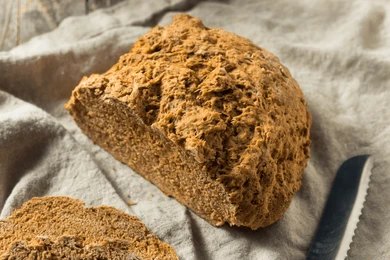
Irish Brown Bread is a classic rustic bread known for its hearty texture, nutty flavor, and wholesome ingredients. Made primarily with whole wheat flour, buttermilk, baking soda, and a touch of salt, this bread is simple yet incredibly satisfying. Unlike yeast breads, Irish brown bread uses baking soda as a leavening agent, making it quick and easy to prepare at home.

Irish Brown Bread:
The bread has a slightly dense crumb and a rich earthy flavor that pairs beautifully with butter, jam, soups, and stews. Its crunchy crust and tender interior make it a staple on Irish tables, especially for breakfast or alongside comforting meals. Many people enjoy it warm with a thick spread of creamy butter melting into the slices.Today, Irish brown bread remains a beloved part of Irish culinary tradition. Found in homes, bakeries, and pubs across Ireland, this wholesome loaf continues to be celebrated for its simplicity, nourishment, and deep connection to Irish heritage.
History:
Irish brown bread developed from traditional Irish soda bread, which became popular in the 19th century after baking soda became widely available. Ireland’s climate favored oats and hardy grains rather than fine wheat, so wholemeal flour was commonly used in bread making.
Because yeast was expensive and sometimes difficult to obtain, Irish households relied on baking soda and acidic buttermilk to help bread rise quickly. This method allowed families to bake fresh bread daily without long fermentation times.Irish brown bread became a staple food across rural Ireland and is still widely served in restaurants and pubs today. It is especially popular with hearty soups, smoked salmon, and traditional Irish breakfasts.
Subscribe to our youtube channel Kitchenpedia for more delicious recipes and hit the like button if you enjoyed this youtubevideo. Share it with your friends and Family.
Irish Brown Bread – Hearty, Rustic, and Wholesome

Ingredients
- 2 cups whole wheat flour
- 1 cup all-purpose flour
- 1 teaspoon baking soda
- 1 teaspoon salt
- 1½ cups buttermilk
- 1 tablespoon honey or sugar (optional)
- 2 tablespoons melted butter (optional)
Instructions
- Preheat your oven to 375°F (190°C). Lightly grease a baking pan or line it with parchment paper.
- In a large bowl, combine whole wheat flour, all-purpose flour, baking soda, and salt.
- Pour in the buttermilk and mix gently until a soft dough forms.
- Turn the dough onto a lightly floured surface and shape it into a round loaf.
- Place the dough on the baking sheet and cut a deep cross on the top. This helps the bread cook evenly.
- Bake for 35–40 minutes until the crust is golden brown and the loaf sounds hollow when tapped.
- Allow the bread to cool slightly before slicing. Serve warm with butter or jam.
Notes
- Buttermilk reacts with baking soda to help the bread rise.
- The dough should be soft but not sticky.
- Do not overmix the dough to avoid tough bread.
- Whole wheat flour gives the bread its signature nutty flavor.
- A cross cut on top allows heat to reach the center.
- Traditional recipes often include oats or bran.
- The bread tastes best fresh the same day.
- It can also be toasted the next day for breakfast.
Tips for Irish Brown:
- Use fresh baking soda for the best rise.
- Handle the dough gently to keep the bread tender.
- Add rolled oats on top for a rustic look.
- If buttermilk is unavailable, mix milk with lemon juice.
- Bake in a cast iron skillet for a crisp crust.
- Let the bread rest before slicing.
- Serve with Irish butter for authentic flavor.
- Store wrapped in cloth to maintain texture.
FAQs for Irish Brown:
1. What is the difference between Irish brown and soda bread?
Irish brown uses whole wheat flour, while traditional soda bread often uses white flour.
2. Can I make this bread without buttermilk?
Yes, mix 1 tablespoon of lemon juice or vinegar with 1 cup of milk as a substitute.
3. Why do you cut a cross on top?
Traditionally it helps the bread bake evenly and allows steam to escape.
4. Can Irish brown be frozen?
Yes, slice it and freeze for up to two months.
5. What foods pair well with Irish brown?
Soups, stews, smoked salmon, butter, honey, and fruit preserves.
6. How do I keep the bread moist?
Store it wrapped in cloth or in an airtight container.
Conclusion:
Irish Brown is a timeless staple that celebrates the simplicity of traditional Irish baking. With its hearty texture, nutty flavor, and rustic appearance, this bread brings warmth and comfort to any meal. Easy to prepare and deeply satisfying, Irish brown bread continues to be a beloved classic enjoyed across generations.