

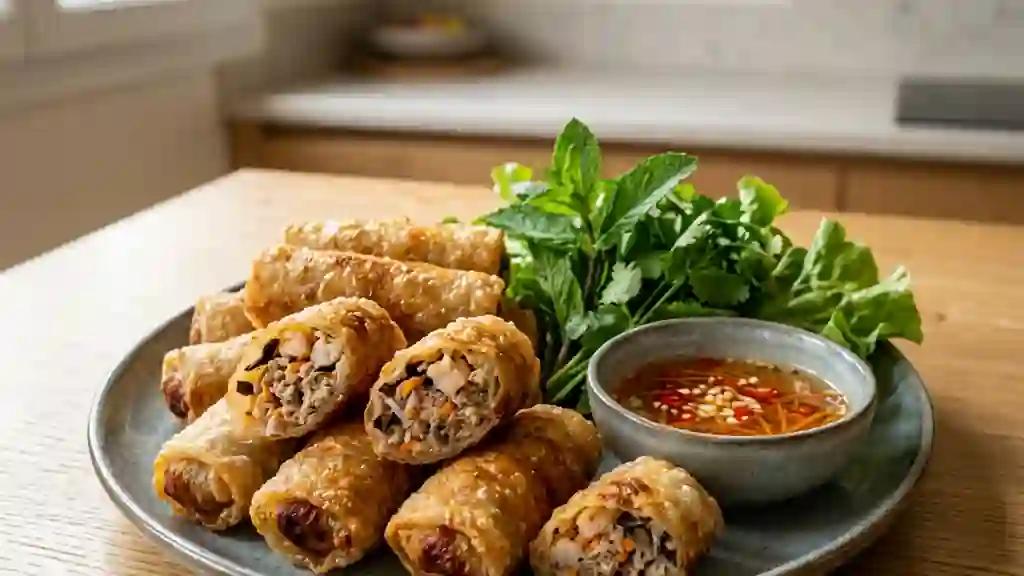
Authentic Vietnamese Spring Rolls, commonly known as Nem Ran in northern Vietnam and Cha Gio in southern Vietnam, are wonderfully crisp fried rolls filled with a savory mixture of meat, seafood, mushrooms, vegetables, and aromatic seasonings. Wrapped in delicate rice paper and fried until golden and crunchy, these rolls offer an irresistible contrast between a crisp exterior and a flavorful, tender filling.
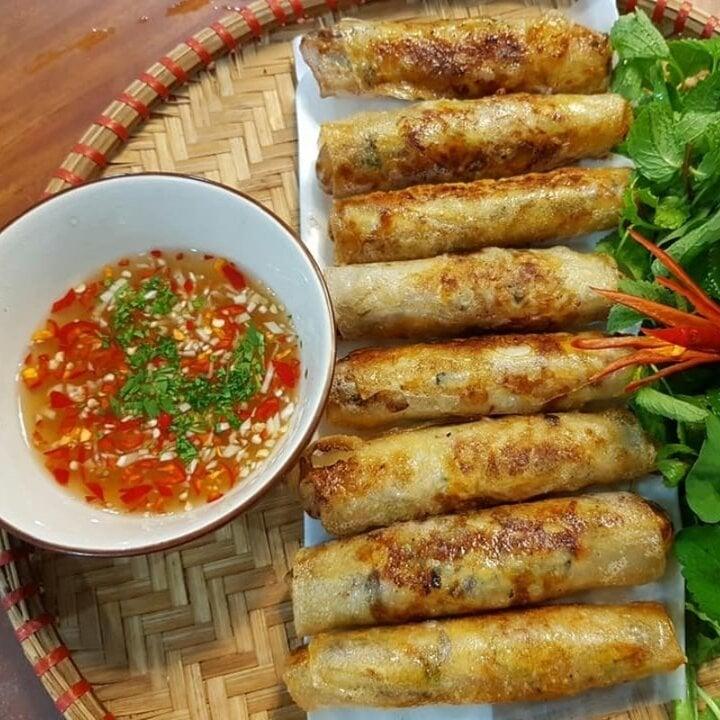
Authentic Vietnamese Spring Rolls:
The filling can vary from family to family, but a traditional-style combination often includes ground pork, shrimp, wood ear mushrooms, carrots, glass noodles, onion, and seasonings. The ingredients are finely chopped or minced so that they blend together beautifully inside the wrapper. When fried, the filling becomes aromatic and juicy while the rice-paper wrapper develops a delicate, blistered crunch.
Vietnamese fried spring rolls are commonly enjoyed as an appetizer, snack, or component of a larger meal. They are especially delicious served with fresh lettuce, herbs, pickled vegetables, and Nuoc Cham, the sweet, salty, sour, and spicy Vietnamese dipping sauce. Whether served for a family gathering, holiday meal, or weekend dinner, these golden rolls are always a crowd-pleaser.
History:
Fried spring rolls have a long-standing place in Vietnamese cuisine, although their exact historical development is complex and influenced by broader Asian culinary traditions. In Vietnam, the dish developed distinctive regional and family variations.In northern Vietnam, the rolls are commonly called Nem Ran, while Cha Gio is the name widely used in southern Vietnam. The ingredients and wrapping techniques can differ between regions, with some versions using pork as the main protein and others incorporating shrimp, crab, or additional vegetables.Vietnamese spring rolls are often associated with festive meals and special occasions, but they are also widely enjoyed in everyday cooking. Their combination of savory filling, crispy wrapper, fresh herbs, and dipping sauce reflects the Vietnamese preference for balancing richness with freshness and acidity.
Subscribe to our youtube channel Kitchenpedia for more delicious recipes and hit the like button if you enjoyed this youtubevideo. Share it with your friends and Family.
Authentic Vietnamese Spring Rolls

Ingredients
For the Filling
- ½ pound (225 g) ground pork
- 4 ounces (115 g) peeled raw shrimp, finely chopped
- 1 ounce (30 g) dried wood ear mushrooms
- 2 ounces (55 g) dried glass noodles
- 1 medium carrot, finely grated
- ½ small onion, finely minced
- 2 cloves garlic, minced
- 1 small shallot, finely minced
- 1 tablespoon fish sauce
- 1 teaspoon soy sauce
- ½ teaspoon freshly ground black pepper
- ½ teaspoon salt, or to taste
For Wrapping
- 20–24 Vietnamese rice-paper wrappers
- Warm water, for softening wrappers
For Frying
- Neutral high-heat cooking oil, enough for deep or shallow frying
For Serving
- Fresh lettuce leaves
- Fresh mint
- Fresh cilantro
- Thai basil, optional
- Pickled carrots and daikon
- Fresh cucumber
- Nuoc Cham dipping sauce
- Fresh red chili, optional
Instructions
Soak the Mushrooms
- Place the dried wood ear mushrooms in warm water and soak for approximately 20–30 minutes until softened.Drain thoroughly, remove any tough sections, and finely chop the mushrooms.Wood ear mushrooms provide a pleasant chewy texture that is characteristic of many traditional-style Vietnamese spring roll fillings.
Soak the Glass Noodles
- Place the dried glass noodles in warm water and soak until softened.Drain well and cut them into short pieces using kitchen scissors.Avoid leaving excess water in the noodles because a wet filling can make the rice-paper wrappers difficult to handle.
Prepare the Filling Ingredients
- Finely chop the shrimp.Grate the carrot and finely mince the onion, garlic, and shallot.For the best texture, keep the ingredients finely chopped rather than turning them into a completely smooth paste.
Mix the Filling
- In a large bowl, combine the ground pork, chopped shrimp, wood ear mushrooms, glass noodles, carrot, onion, garlic, shallot, and egg.Add fish sauce, soy sauce, sugar, black pepper, and salt.Mix gently but thoroughly until everything is evenly distributed.Do not overwork the mixture, as this can make the filling dense.
Test the Seasoning
- Before wrapping all the rolls, cook a tiny portion of the filling in a skillet.Taste it and adjust the seasoning if necessary.This simple step ensures the finished spring rolls have the flavor you want.
Prepare the Rice Paper
- Fill a wide shallow dish with warm water.Dip one rice-paper wrapper into the water briefly, just until it becomes flexible.Do not soak it for too long because it will continue softening as you work.Place the softened wrapper on a clean, slightly damp surface.
Allow the Rolls to Dry Slightly
- Arrange the uncooked rolls on a clean tray without allowing them to touch each other.Let them rest for approximately 10–15 minutes.This brief resting period helps the outer surface become slightly less wet and can encourage better crisping during frying.
Heat the Oil
- Heat neutral cooking oil in a deep, heavy pan or wok to approximately 325–350°F (165–175°C).Avoid overheating the oil because the rice paper can brown before the filling cooks properly.
Fry the Spring Rolls
- Carefully place a few spring rolls into the hot oil, leaving enough space between them.Fry in batches for approximately 6–8 minutes, turning occasionally, until golden brown and crisp.Avoid overcrowding the pan because it can lower the oil temperature.
Drain
- Remove the spring rolls using tongs or a slotted spoon.Place them on a wire rack or paper towels to drain excess oil.Allow them to rest for a few minutes before serving.
Serve
- Arrange the crispy spring rolls on a serving platter.Serve with lettuce leaves, fresh mint, cilantro, cucumber, pickled vegetables, and Nuoc Cham.For a traditional Vietnamese-style eating experience, wrap a spring roll in lettuce with herbs and dip it into Nuoc Cham before eating.
Notes
- Rice Paper: Use Vietnamese rice-paper wrappers specifically suitable for frying when possible.
- Filling: Keep the filling relatively dry to prevent wrappers from tearing.
- Shrimp: Finely chopped shrimp provide flavor and texture without making the filling watery.
- Mushrooms: Wood ear mushrooms add a characteristic chewy texture.
- Wrapping: Do not over-soak rice paper because it becomes fragile.
- Oil Temperature: Maintain a steady temperature for even cooking and crisp results.
- Frying: Fry in batches to prevent the oil temperature from dropping too much.
- Serving: Nuoc Cham and fresh herbs provide acidity and freshness that balance the fried rolls.
Tips for Authentic Vietnamese Spring Rolls:
- Keep the Filling Dry: Excess moisture is one of the biggest causes of torn or soft spring rolls.
- Chop Ingredients Finely: Smaller pieces make the filling easier to roll and distribute evenly.
- Do Not Overfill: A moderate amount of filling produces tighter, more attractive rolls.
- Use Warm Water Carefully: Briefly soften the rice paper rather than fully soaking it.
- Leave Space Between Rolls: Rice-paper wrappers can become sticky after soaking, so keep uncooked rolls separated.
- Control Oil Temperature: A thermometer makes it easier to maintain consistent frying temperature.
- Use a Wire Rack: Draining on a rack allows air to circulate around the rolls and helps preserve their crispness.
- Double-Fry for Extra Crispness: For an especially crunchy exterior, fry the rolls once until lightly golden, rest briefly, then fry again until deeply golden and crisp.
FAQs for Authentic Vietnamese Spring Rolls:
1. What are Vietnamese Spring Rolls called?
They are commonly called Nem Ran in northern Vietnam and Cha Gio in southern Vietnam.
2. Are Vietnamese Spring Rolls the same as fresh spring rolls?
No. Vietnamese fried spring rolls such as Nem Ran and Cha Gio are cooked until crisp. Fresh Vietnamese rolls, commonly called Goi Cuon, are wrapped in softened rice paper and served without frying.
3. Can I use only pork?
Yes. Shrimp can be omitted and replaced with additional ground pork.
4. Can I make these spring rolls with shrimp only?
Yes. Finely chopped shrimp can be used as the primary filling, although the texture will be different from the pork-and-shrimp version.
5. Can I make Vietnamese Spring Rolls vegetarian?
Yes. Replace the meat and seafood with finely chopped mushrooms, tofu, cabbage, carrots, glass noodles, and other vegetables. Use a vegetarian fish sauce alternative.
6. Why do my spring rolls become soft?
Excess moisture, low oil temperature, overcrowding the pan, or storing the fried rolls while they are still hot can cause them to lose their crispness.
7. Can I bake Vietnamese Spring Rolls?
Yes, although the texture will not be exactly the same as deep-fried rolls. Brush or spray them lightly with oil and bake until golden and crisp.
8. Can I air-fry them?
Yes. Lightly brush the rolls with oil and air-fry until golden and crisp, turning halfway through cooking. Cooking times vary between air fryers.
9. What sauce is served with Vietnamese Spring Rolls?
Nuoc Cham is the classic accompaniment. Its sweet, sour, salty, and spicy flavors balance the richness of the crispy rolls.
10. Can I freeze Vietnamese Spring Rolls?
Yes. Uncooked rolls can be frozen in a single layer before transferring them to a freezer-safe container. Cook them from frozen or thaw carefully according to your preferred method, making sure the filling reaches a safe temperature.
Conclusion:
Authentic Vietnamese Spring Rolls, known as Nem Ran or Cha Gio depending on the region, are a delicious combination of crisp rice-paper wrappers and savory, aromatic filling. Ground pork, shrimp, wood ear mushrooms, glass noodles, carrots, onion, and herbs create a wonderfully textured center while careful frying produces the signature golden crunch.The best way to enjoy these spring rolls is with plenty of fresh lettuce, fragrant herbs, crunchy vegetables, and a bowl of Nuoc Cham for dipping. The contrast between crispy, savory rolls and bright, fresh accompaniments makes every bite balanced and satisfying.Whether you prepare them for a festive Vietnamese meal, a family dinner, an appetizer platter, or a special weekend cooking project, these crispy spring rolls are guaranteed to bring authentic Vietnamese-inspired flavor and irresistible texture to the table.