

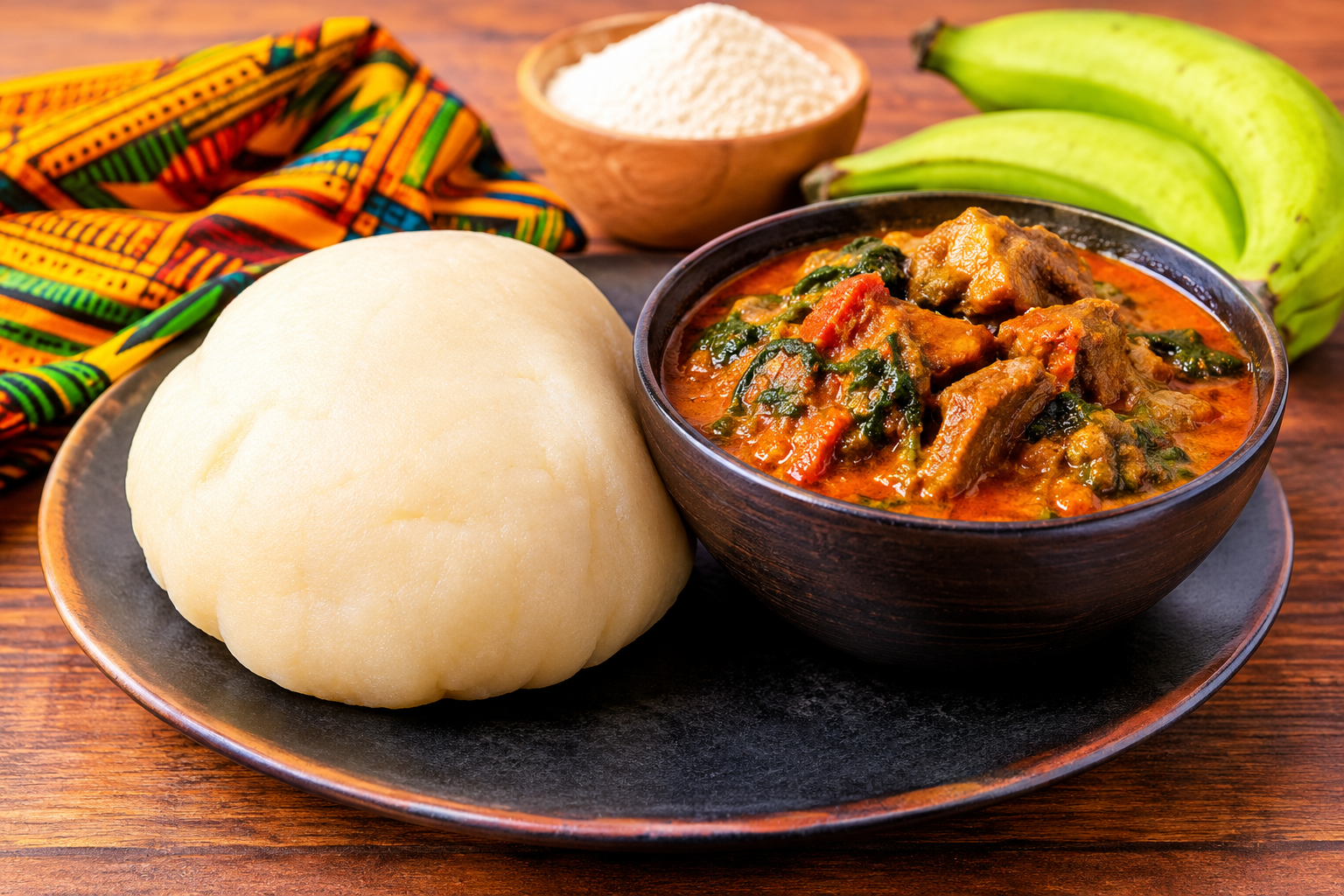
Fufu is a beloved West African staple known for its soft, smooth, and stretchy texture. This traditional dish complements flavorful soups, rich stews, and spicy sauces. Its simple ingredients make it a satisfying addition to everyday meals.
Fufu:
Across West Africa, families prepare fufu using cassava, yams, plantains, or other starchy ingredients. Each region has its own preparation methods and favorite combinations. However, the goal remains the same: creating a smooth dough with a tender, elastic consistency.
Making homemade fufu is easier when you follow the right technique. With a few ingredients and careful stirring, you can prepare this delicious African staple in your kitchen. Serve it with groundnut soup, egusi soup, or a hearty vegetable stew for an authentic meal.
History of Fufu:
Fufu has deep roots in West and Central African food traditions. It is particularly popular in Ghana, Nigeria, Côte d’Ivoire, Cameroon, and neighboring countries. Over generations, communities developed different preparation methods using locally available crops.
Traditionally, cooks boiled cassava, yams, or plantains before pounding them with large wooden mortars and pestles. This process created the characteristic smooth and stretchy consistency. Today, instant fufu flour and processed cassava products make preparation quicker and more convenient.
Although recipes vary across regions, fufu remains an important part of family meals, celebrations, and cultural gatherings. Its versatility also makes it popular among African communities worldwide.
Subscribe to our youtube channel Kitchenpedia for more delicious recipes and hit the like button if you enjoyed this youtubevideo. Share it with your friends and Family.
Fufu

Ingredients
- 2 cups instant fufu flour
- 3–4 cups water, divided
- Additional warm water as needed
Instructions
- First, measure the fufu flour into a clean, heavy-bottomed saucepan. Remove any lumps by breaking them apart with a spoon.
- Gradually add approximately half the water while stirring. Mix thoroughly until the flour forms a smooth, lump-free mixture.
- Place the saucepan over medium heat. Stir continuously as the mixture thickens and begins forming a dough.
- Reduce the heat to low and continue stirring firmly with a sturdy wooden spoon. Fold and press the dough against the sides of the pan until it becomes smooth and elastic.
- If the fufu feels too stiff, add a small amount of hot water. Conversely, if it remains too soft, continue cooking and stirring until it firms up.
- Cover the saucepan and cook over low heat for another 3–5 minutes, if needed. Stir again to distribute the heat evenly and ensure the flour cooks thoroughly.
- Finally, divide the warm fufu into individual portions using a wet spoon. Shape each portion into a smooth mound and serve immediately with your favorite African soup.
Notes
-
Choose the right flour: Use cassava-based fufu flour or a suitable instant fufu blend.
-
Check the package: Different flour varieties require different water ratios.
-
Use a sturdy spoon: A strong wooden spoon makes thick dough easier to stir.
-
Avoid lumps: Mix the flour thoroughly before the mixture thickens.
-
Control the heat: Medium heat helps the mixture thicken, while low heat supports even cooking.
-
Stir consistently: Continuous stirring prevents sticking and uneven cooking.
-
Serve it warm: Fufu tastes best when freshly prepared and soft.
-
Choose suitable accompaniments: Pair it with soups or stews that complement its mild flavor.
Expert Tips for Better recipe:
- Start with less water and add more gradually to control the consistency.
- Wet your spoon slightly when shaping the dough to prevent sticking.
- Use a heavy-bottomed saucepan to reduce the risk of scorching.
- Stir firmly in different directions for a smoother finish.
- Keep the heat low once the dough becomes thick.
- Avoid adding too much water at once because the mixture can become sticky.
- Cover leftover promptly and refrigerate it in an airtight container.
- Reheat refrigerated fufu with a little water, stirring until thoroughly hot.
FAQ’s :
1. What is it made of?
Fufu can be made from cassava, yams, plantains, or combinations of starchy ingredients. Instant varieties often use processed cassava or blended flours.
2. What does it taste like?
Fufu has a mild, slightly earthy flavor that depends on its ingredients. Its soft, dough-like texture makes it ideal for pairing with flavorful soups.
3. Is it a Ghanaian or Nigerian dish?
Fufu is enjoyed in both Ghana and Nigeria, as well as many other African countries. However, ingredients and preparation methods vary by region.
4. What do you eat with it?
Popular accompaniments include egusi soup, groundnut soup, okra soup, light soup, and various vegetable or meat stews.
5. Is it gluten-free?
Traditional cassava-based fufu is naturally gluten-free. However, check packaged flour labels for additional ingredients and possible cross-contamination.
6. Can I make it without pounding?
Yes. Instant fufu flour allows you to prepare fufu without a mortar and pestle. Simply follow the package directions and stir until smooth.
7. How should I store leftover ?
Place cooled leftovers in an airtight container and refrigerate promptly. For best quality, consume within 2–3 days and reheat thoroughly.
8. Why is sticky or too hard?
Excess water can make fufu sticky, while insufficient moisture or excessive cooking can make it hard. Adjust the water gradually and stir until the desired texture develops.
Conclusion:
Is a comforting traditional African staple that brings flavor, texture, and cultural heritage to the dining table. Its mild taste pairs beautifully with rich soups and spicy stews. Moreover, instant fufu flour makes this traditional dish accessible to home cooks everywhere.
With the right water ratio, steady stirring, and careful cooking, you can prepare smooth, delicious fufu in approximately 20 minutes. Try this easy recipe and enjoy a classic West African meal with your favorite homemade soup.