

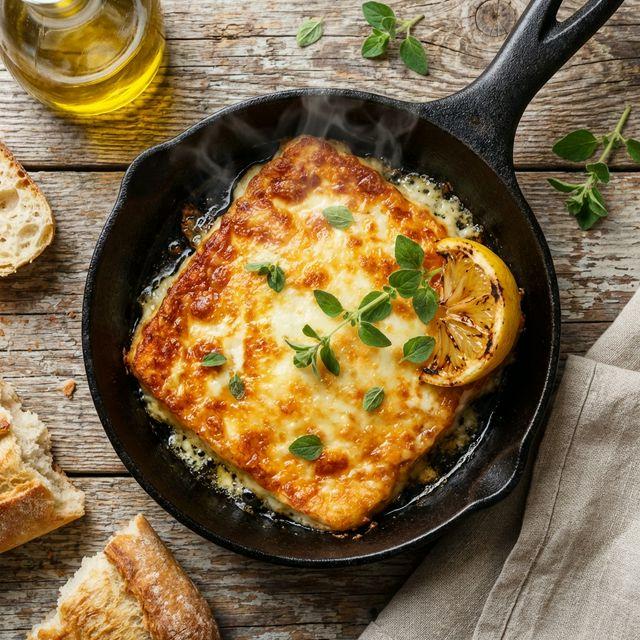
Greek Saganaki is a beloved Greek appetizer featuring a thick slice of cheese that is lightly coated and pan-fried until beautifully golden on the outside while remaining soft and wonderfully melty inside. It is traditionally served sizzling hot with a generous squeeze of fresh lemon.The dish is famous for its dramatic presentation and irresistible contrast of textures.
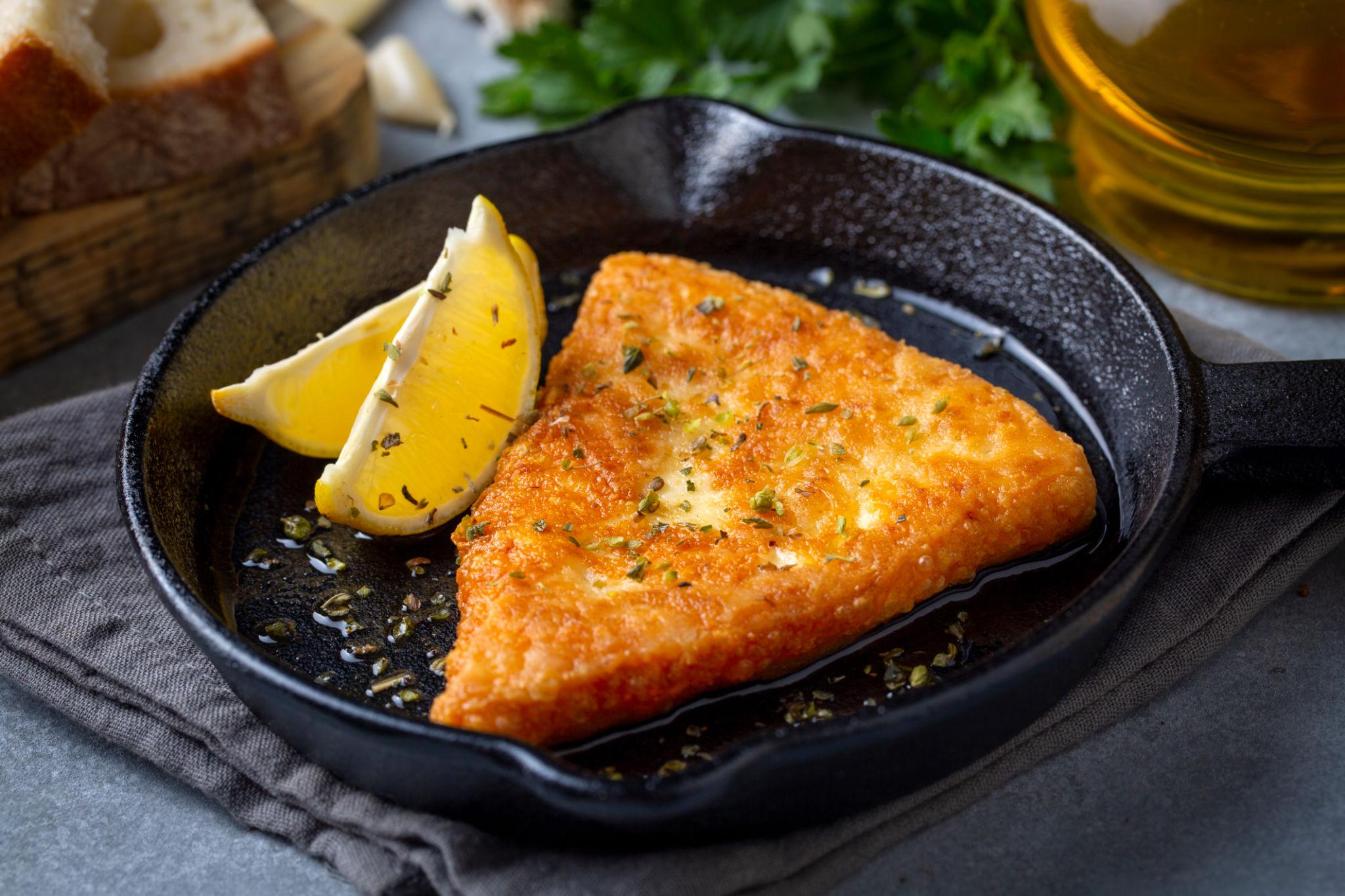
Greek Saganaki:
The crisp, golden exterior gives way to warm, salty, creamy cheese, while fresh lemon cuts through the richness and adds a bright Mediterranean finish.Saganaki is wonderfully simple and quick to prepare, making it ideal for appetizers, mezze platters, dinner parties, or a special Greek-inspired meal. Serve it with warm crusty bread, olives, tomatoes, and fresh herbs for a memorable appetizer.
History:
The word saganaki refers to the small, two-handled frying pan traditionally used to prepare dishes served sizzling at the table. The name comes from the Turkish word sahan, referring to a shallow metal cooking vessel.Greek cuisine uses the term for several dishes prepared in this style, but cheese saganaki is perhaps the best-known version outside Greece. Traditionally, firm cheeses such as kefalotyri, graviera, or kefalograviera are used because they can withstand high heat without completely melting away.The familiar restaurant tradition of bringing the sizzling cheese to the table and finishing it with lemon has made Saganaki one of the most recognizable Greek appetizers around the world.
Subscribe to our youtube channel Kitchenpedia for more delicious recipes and hit the like button if you enjoyed this youtubevideo. Share it with your friends and Family.
Greek Saganaki

Ingredients
- 8 ounces (225 g) kefalotyri, graviera, or kefalograviera cheese
- ½ cup all-purpose flour
- 2–3 tablespoons water
- Fresh lemon wedges, for serving
- 1 tablespoon fresh parsley, chopped
- ½ teaspoon dried oregano
- Freshly ground black pepper, optional
Instructions
- Cut the cheese into thick slices approximately ½–¾ inch (1.5–2 cm) thick.
- Shake off the excess water. The slightly damp surface helps the flour adhere.
- Place the flour on a shallow plate.
- Shake off any excess flour.
- Heat the olive oil in a heavy skillet over medium-high heat.
- Cook for approximately 2–3 minutes per side, or until the outside becomes golden brown and crisp.
- Transfer the sizzling cheese to a serving plate.
- Sprinkle with a little oregano, parsley, and freshly ground black pepper if desired.
- Serve while piping hot with crusty bread and Mediterranean sides.
Notes
- Use firm cheese: Kefalotyri and graviera are excellent choices.
- Keep slices thick: Thin slices can melt too quickly.
- Don't over-flour: A light coating is enough.
- Use a hot pan: Proper heat helps create a golden crust quickly.
- Don't overcrowd: Fry in batches if necessary.
- Lemon is important: Its acidity balances the rich cheese.
- Serve immediately: Saganaki is best while hot and crisp.
- Avoid flambéing unless experienced: The famous flaming presentation requires appropriate precautions and is not necessary for delicious Saganaki.
Tips for Greek Saganaki:
- Chill the cheese briefly before cooking if it feels too soft.
- Dry the cheese well before coating it.
- Use just enough flour to create a thin crust.
- Preheat the skillet before adding the cheese.
- Don’t use excessive oil; the cheese should be pan-fried rather than submerged.
- Flip only once when possible for an even crust.
- Add lemon immediately after cooking.
- Serve with bread to enjoy the warm cheese and lemony juices.
FAQs for Greek Saganaki:
Q: What cheese is traditionally used for Saganaki?
Firm Greek cheeses such as kefalotyri, graviera, and kefalograviera are traditional choices.
Q: Can I make Saganaki with halloumi?
Yes. Halloumi is a good alternative because it holds its shape well when heated, although its flavor and texture differ from traditional Greek Saganaki cheese.
Q: Is Saganaki always flaming?
No. Flaming Saganaki is a restaurant-style presentation. Traditional pan-fried Saganaki does not need to be flambéed.
Q: Why do I dip the cheese in water?
A brief dip helps the flour adhere to the cheese and creates a better coating during frying.
Q: Why did my cheese melt completely?
The cheese may have been too soft, the slices may have been too thin, or the pan may not have been hot enough. Use a firm cheese cut into thick slices.
Q: Can I make Saganaki without flour?
Yes, depending on the cheese. However, flour creates the characteristic crisp exterior and helps protect the cheese during frying.
Q: What should I serve with Saganaki?
Serve it with crusty bread, Kalamata olives, tomatoes, cucumber, roasted vegetables, lemon wedges, or a Greek salad.
Q: Can I prepare Saganaki ahead of time?
It is best cooked immediately before serving. Once cooled, the cheese loses its crisp exterior and becomes firmer.
Conclusion:
Greek Saganaki is proof that a handful of quality ingredients can create an extraordinary appetizer. Firm Greek cheese develops a beautifully golden crust in the skillet while staying soft and warm inside, and the final squeeze of fresh lemon provides the perfect balance.
Serve this sizzling appetizer immediately with crusty bread, olives, fresh vegetables, and herbs. Whether you’re preparing a Greek mezze platter or simply looking for an impressive appetizer, Saganaki delivers bold Mediterranean flavor with very little effort.