


Indonesian Ratatouille with Tempeh is a colorful, wholesome, and deeply flavorful vegetable dish inspired by the rich culinary traditions of Indonesia. Combining tender eggplant, zucchini, tomatoes, bell peppers, and aromatic spices with hearty tempeh, this dish transforms simple ingredients into a satisfying meal. Unlike classic French ratatouille, this Indonesian-inspired version uses Southeast Asian seasonings to create a bolder and more aromatic flavor profile.Tempeh is the star ingredient that makes this vegetable stew especially satisfying. Made from fermented soybeans, tempeh has a firm texture and nutty flavor that pairs beautifully with soft, saucy vegetables.
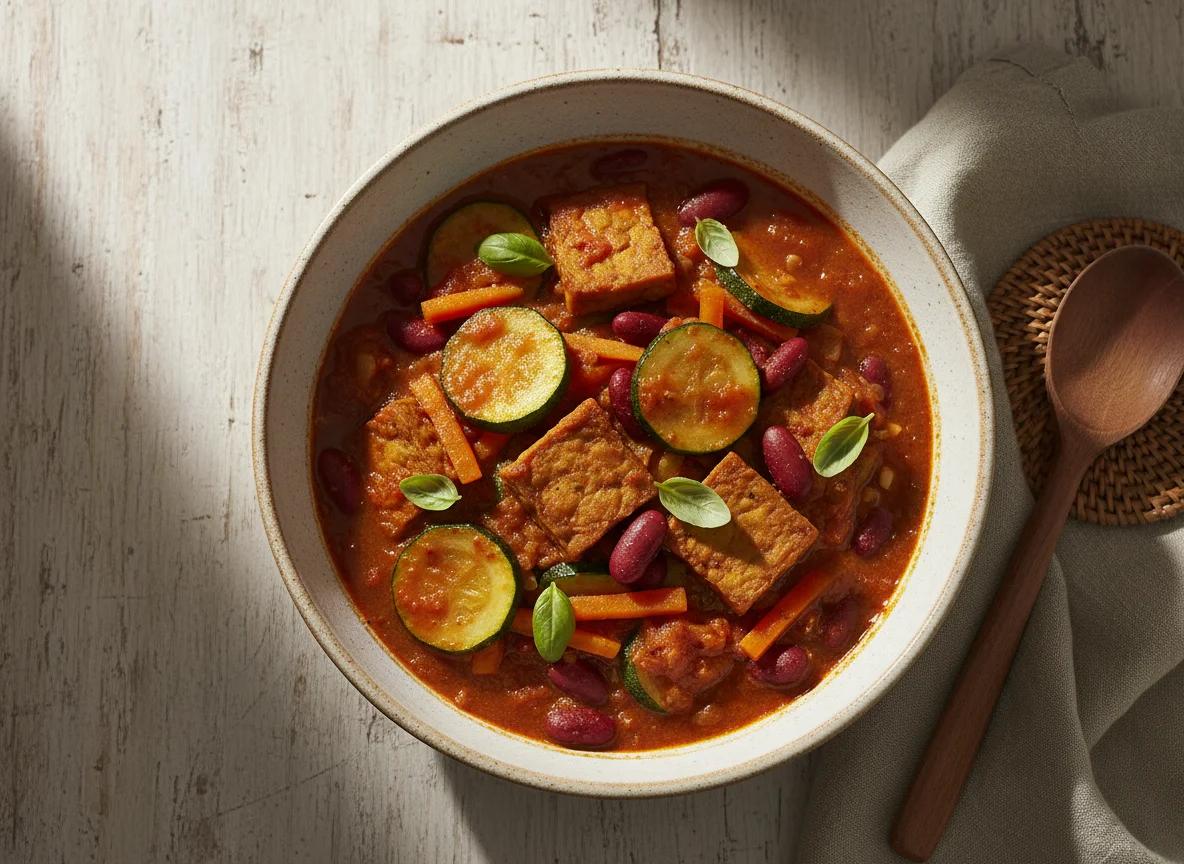
Indonesian Ratatouille with Tempeh:
When the tempeh is pan-fried until golden before being added to the stew, it develops a deliciously crisp exterior while remaining hearty inside.This Indonesian Ratatouille with Tempeh is perfect for anyone looking for a comforting plant-based meal that does not sacrifice flavor. Serve it with steamed jasmine rice, brown rice, noodles, or crusty bread for a complete lunch or dinner. A finishing touch of fresh herbs, lime juice, or crispy fried shallots makes this colorful dish even more irresistible.
History:
Traditional ratatouille is a vegetable-based dish associated with the Provence region of France and is typically made with ingredients such as eggplant, zucchini, tomatoes, onions, peppers, garlic, and herbs. Over time, vegetable stews inspired by similar techniques have appeared in many cuisines around the world.Indonesian cuisine has its own long tradition of cooking vegetables with aromatic spices, chilies, garlic, shallots, soy-based ingredients, coconut, and fermented foods. Tempeh is particularly important in Indonesian cooking and has been part of the country’s food culture for generations.This Indonesian-style ratatouille is best understood as a fusion-inspired dish rather than a single traditional Indonesian recipe. It combines the vegetable-forward concept of ratatouille with Indonesian ingredients and flavors, creating a comforting stew that feels both familiar and distinctly Southeast Asian.
Subscribe to our youtube channel Kitchenpedia for more delicious recipes and hit the like button if you enjoyed this youtubevideo. Share it with your friends and Family.
Indonesian Ratatouille with Tempeh

Ingredients
For the Tempeh
- 8 ounces (225 g) tempeh, cut into bite-sized cubes
- 1 tablespoon soy sauce
- 1 teaspoon lime juice
- 1 teaspoon grated ginger
- 1 tablespoon vegetable oil
For the Vegetable Stew
- 1 medium eggplant, diced
- 1 medium zucchini, diced
- 1 red bell pepper, chopped
- 1 yellow bell pepper, chopped
- 2 medium tomatoes, diced
- 1 small onion, finely chopped
- 1-inch piece fresh ginger, grated
- 1–2 red chilies, finely chopped
- 1 tablespoon soy sauce
- ½ teaspoon ground cumin
- ½ teaspoon smoked paprika
- 1 cup vegetable broth
- 1 tablespoon vegetable oil
- 1 teaspoon brown sugar or palm sugar
- Black pepper, to taste
For Finishing
- 1 tablespoon fresh lime juice
- 2 tablespoons chopped fresh cilantro
- 2 tablespoons crispy fried shallots, optional
- Sliced red chili, optional
- Lime wedges, for serving
Instructions
Prepare the Tempeh
- Cut the tempeh into small, even cubes. If you prefer a milder flavor, steam the tempeh for about 10 minutes before cooking. This can soften its texture and make it more receptive to the seasonings.Place the tempeh in a bowl and toss with soy sauce, lime juice, and grated ginger. Allow it to marinate for 10 minutes while preparing the vegetables
Brown the Tempeh
- Heat 1 tablespoon of vegetable oil in a large skillet or Dutch oven over medium heat.Add the marinated tempeh pieces and cook for approximately 6–8 minutes, turning occasionally, until golden brown on several sides.Transfer the tempeh to a plate and set aside.
Cook the Aromatics
- Add another small splash of oil to the same pan if necessary.Add the chopped onion and cook for 3–4 minutes until softened. Add the garlic, ginger, and chopped chili.Cook for another 1–2 minutes until fragrant.
Add the Spices
- Add the coriander, cumin, turmeric, and smoked paprika.Stir continuously for about 30 seconds. Toasting the spices briefly helps release their aroma and gives the finished stew greater depth.
Create the Sauce
- Stir in the tomato paste, soy sauce, brown sugar, and vegetable broth.Season lightly with salt and black pepper.Bring the mixture to a gentle simmer.
Simmer
- Reduce the heat to low and partially cover the pan.Simmer for 15–20 minutes, stirring occasionally, until the vegetables are tender but not completely mushy.The eggplant should become soft and silky while the peppers and zucchini retain some texture.
Finish the Dish
- Turn off the heat and stir in the fresh lime juice.Taste and adjust the seasoning. Add more soy sauce for saltiness, chili for heat, or lime juice for brightness.
Garnish and Serve
- Transfer the Indonesian Ratatouille with Tempeh to a serving bowl.Top with fresh cilantro, crispy fried shallots, and sliced chili if desired.Serve immediately with steamed rice, noodles, or another favorite accompaniment.
Notes
- Tempeh: Steaming tempeh before cooking is optional but can give it a softer texture and milder flavor.
- Eggplant: Smaller eggplants tend to have a tender texture and fewer large seeds.
- Spice Level: Use one chili for mild heat or increase the amount for a fiery dish.
- Soy Sauce: Adjust according to the saltiness of your soy sauce.
- Vegetables: Feel free to add mushrooms, green beans, carrots, or spinach.
- Consistency: For a thicker stew, simmer uncovered for several additional minutes.
- Tempeh Texture: Fry the tempeh separately first so it develops a golden exterior instead of becoming too soft in the sauce.
- Serving: Fresh lime juice added at the end keeps the flavors bright and balanced.
Tips for Indonesian Ratatouille with Tempeh:
- Brown the Tempeh Well: Give the tempeh enough time in the pan to develop golden edges and a slightly crisp texture.
- Do Not Overcook the Vegetables: Keep some vegetables slightly firm for a more enjoyable contrast with the soft eggplant.
- Bloom the Spices: Briefly frying the spices with the aromatics creates a more fragrant and flavorful base.
- Use Fresh Ginger: Freshly grated ginger provides a brighter flavor than dried ginger powder.
- Balance the Flavors: Indonesian-inspired dishes often benefit from balancing salty, sweet, spicy, sour, and savory flavors.
- Add Lime Last: Fresh lime juice tastes brighter when added after cooking rather than simmered for a long time.
- Use a Wide Pan: A wide skillet helps the vegetables cook evenly and allows excess moisture to evaporate.
- Make It Ahead: The stew can taste even better after resting because the flavors have time to blend.
FAQs for Indonesian Ratatouille with Tempeh:
1. What is Indonesian Ratatouille with Tempeh?
It is an Indonesian-inspired vegetable stew that combines ratatouille-style vegetables with tempeh and Southeast Asian seasonings such as ginger, chili, garlic, coriander, turmeric, soy sauce, and lime.
2. Is this recipe vegan?
Yes. When prepared with plant-based ingredients, this recipe is completely vegan.
3. What is tempeh?
Tempeh is a fermented soybean food traditionally associated with Indonesia. It has a firm texture and nutty flavor and is commonly used as a plant-based protein.
4. Can I use tofu instead of tempeh?
Yes. Firm or extra-firm tofu can replace tempeh. Pan-fry the tofu until golden before adding it to the stew.
5. Can I make this dish less spicy?
Absolutely. Reduce or omit the fresh chilies for a milder version.
6. Can I add coconut milk?
Yes. Add about ½ cup coconut milk toward the end of cooking for a richer, creamier variation.
7. What vegetables can I substitute?
You can use mushrooms, green beans, carrots, spinach, squash, or other vegetables that hold up well during simmering.
8. What should I serve with this recipe?
Steamed jasmine rice is an excellent choice. Coconut rice, noodles, quinoa, and crusty bread also work well.
9. Can I prepare this recipe ahead of time?
Yes. Prepare the vegetable stew ahead of time and gently reheat it before serving. For the best texture, keep the tempeh slightly crisp by frying it separately and adding it during reheating.
10. How can I make the sauce more flavorful?
Use fresh garlic, ginger, chilies, good-quality soy sauce, and a squeeze of lime juice. Crispy fried shallots also provide excellent flavor and texture.
Conclusion:
Indonesian Ratatouille with Tempeh is a delicious meeting point between Mediterranean-style vegetable cooking and the bold flavors of Indonesian cuisine. Tender vegetables simmer together with aromatic spices while golden tempeh adds satisfying texture and plant-based protein.
The combination of savory soy sauce, warming spices, fresh ginger, chili, natural sweetness, and bright lime creates a beautifully balanced dish. It is comforting enough for a family dinner while being colorful and nutritious enough for everyday healthy cooking.