

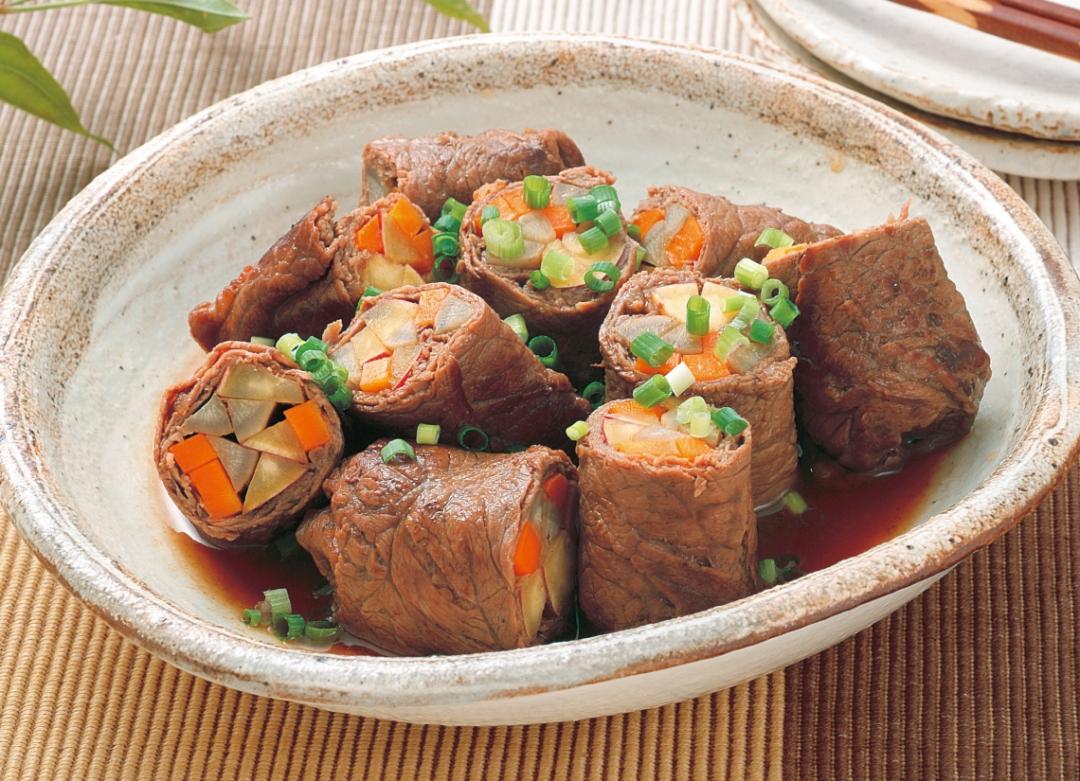
Japanese Beef Rolls are a delicious Japanese-inspired dish made by wrapping thin slices of beef around fresh vegetables, then cooking them until tender and coating them with a rich, sweet-and-savory sauce. Often prepared with green beans, carrots, asparagus, or scallions, these attractive rolls combine juicy beef with crisp vegetables and classic Japanese flavours.
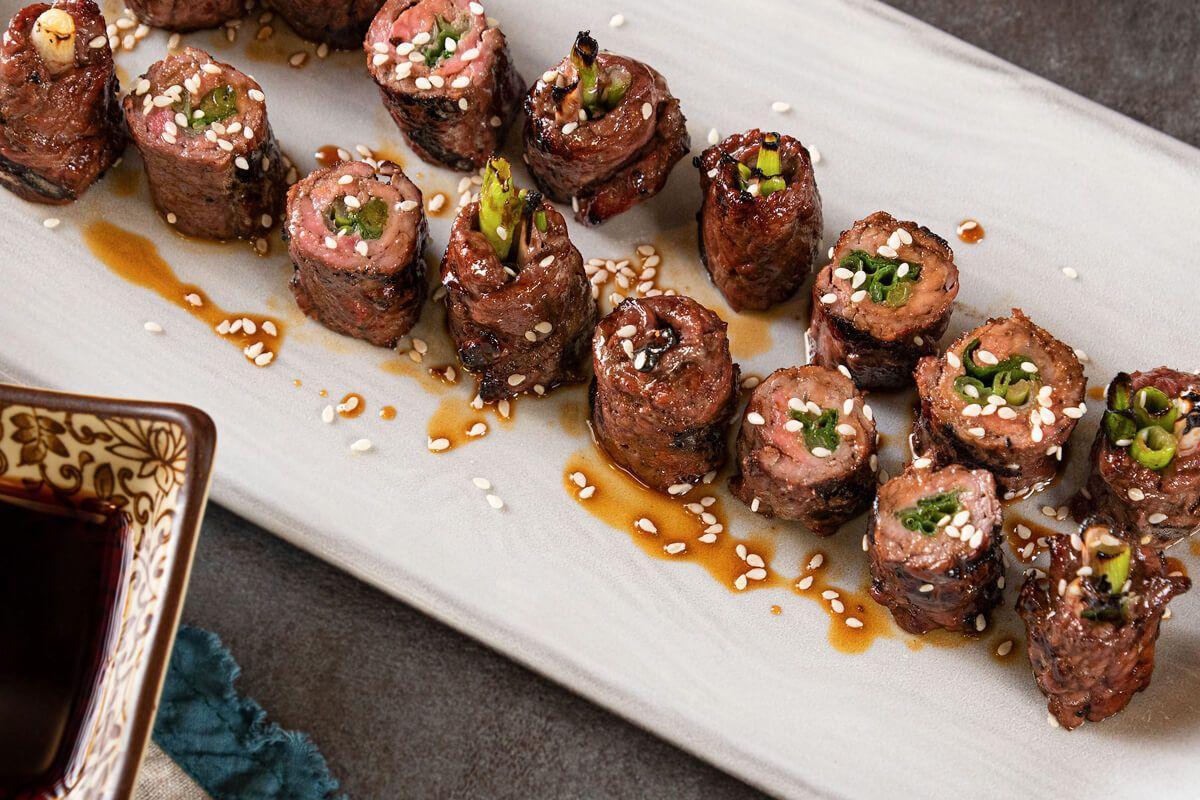
Japanese Beef Rolls:
Known as niku maki when meat is wrapped around vegetables, Japanese beef rolls are popular in home cooking and bento-style meals. The sauce commonly includes soy sauce, mirin, sake, and a little sugar, creating a glossy coating that complements the natural flavor of the beef. The rolls are easy to serve individually and look beautiful when sliced into bite-sized pieces.
This Japanese Beef Rolls recipe is perfect for family dinners, lunch boxes, special occasions, or an Asian-inspired meal at home. With simple ingredients and straightforward instructions, you can prepare a restaurant-style dish without complicated techniques. Serve the rolls with steamed rice, miso soup, or a refreshing cucumber salad for a satisfying meal.
History of Japanese Beef Rolls:
Japanese beef rolls are associated with niku maki, a Japanese cooking style in which thinly sliced meat is wrapped around vegetables or other fillings. The technique reflects the Japanese tradition of preparing compact, flavorful dishes that combine different textures in a single bite.Beef became more widely incorporated into Japanese cuisine during the Meiji period, beginning in 1868, when Japan increasingly adopted and adapted aspects of Western food culture. Dishes featuring beef gradually developed alongside traditional Japanese ingredients and cooking methods.Today, beef-and-vegetable rolls appear in many home-cooking variations. Some are pan-fried and glazed with soy-based sauce, while others are grilled or simmered. This recipe uses a simple stovetop method and a classic sweet-savory glaze.
Subscribe to our youtube channel Kitchenpedia for more delicious recipes and hit the like button if you enjoyed this youtubevideo. Share it with your friends and Family.
Japanese Beef Rolls

Ingredients
For the Beef Rolls
- 1 pound (450 g) thinly sliced beef, suitable for quick cooking
- 1 medium carrot, cut into thin matchsticks
- 150 g green beans, trimmed
- 1 tablespoon neutral cooking oil
- 1/4 teaspoon salt, or to taste
- 1/4 teaspoon ground black pepper
- Toothpicks, as needed
For the Japanese Sauce
- 3 tablespoons soy sauce
- 2 tablespoons mirin
- 1 tablespoon sake or water
- 1 tablespoon sugar
- 1 teaspoon freshly grated ginger
- 1 small garlic clove, minced (optional)
- 2 tablespoons water, if needed
For Garnishing
- 1 teaspoon toasted sesame seeds
- 1 scallion, thinly sliced
- A pinch of red pepper flakes, optional
Instructions
- Wash the green beans and trim their ends. Peel the carrot and cut it into thin matchsticks approximately the same length as the green beans.Bring a saucepan of water to a boil. Blanch the green beans and carrots for 1–2 minutes, then transfer them to cold water to stop the cooking. Drain thoroughly and pat dry.The vegetables should be slightly tender but still firm enough to hold their shape inside the beef.
- Arrange the thinly sliced beef on a clean cutting board. If the slices are large, cut them into strips approximately 3–4 inches wide.Season lightly with salt and black pepper. Avoid adding too much salt because soy sauce will provide most of the seasoning.If the beef slices are thick, gently flatten them with a meat mallet to make rolling easier.
- In a small bowl, combine the soy sauce, mirin, sake or water, sugar, grated ginger, and optional minced garlic.Stir until the sugar dissolves. Taste the mixture and adjust the sweetness if necessary.Set the sauce aside while you assemble the rolls.
- Place a small bundle of green beans and carrot sticks near one end of each beef slice.Roll the beef tightly around the vegetables, keeping the filling tucked inside. Depending on the size of the slices, you may need one or two slices per roll.Secure each roll with a toothpick if necessary. Place the seam underneath to help prevent the rolls from opening during cooking.
- Heat the cooking oil in a large skillet over medium-high heat.Place the beef rolls seam-side down in the pan. Cook, turning them carefully with tongs, until the beef is browned on all sides.Work in batches if necessary to avoid overcrowding the skillet. Browning the rolls helps develop a deeper flavor.
- Reduce the heat to medium and pour the prepared sauce into the skillet.Turn the rolls gently so the sauce coats them evenly. Simmer for several minutes, turning occasionally, until the sauce thickens slightly and the beef is fully cooked.If the sauce reduces too quickly before the beef is cooked through, add a tablespoon or two of water and continue cooking. Use a food thermometer to check that the beef reaches a safe internal temperature appropriate for the cut and preparation; for whole-muscle beef steaks, the USDA recommendation is 145°F (63°C) followed by a three-minute rest. Ground beef, if used, should reach 160°F (71°C).
- Allow the sauce to bubble gently until it forms a shiny coating around the beef rolls.Remove the skillet from the heat and carefully remove all toothpicks before serving, or clearly alert diners if any remain.Sprinkle with toasted sesame seeds and sliced scallions.
- Arrange the Japanese Beef Rolls on a serving platter. Spoon the remaining sauce over the top.Serve hot with steamed Japanese rice, miso soup, pickled vegetables, or a simple green salad.
Notes
- Choose thinly sliced beef: Thin slices roll more easily and cook quickly. Shabu-shabu or sukiyaki-style beef can work well.
- Keep the vegetables dry: Excess water can make the rolls slippery and cause the sauce to become diluted.
- Blanch firm vegetables first: Carrots and green beans benefit from brief blanching before rolling.
- Avoid overfilling: A small bundle of vegetables makes the rolls easier to close and cook evenly.
- Secure the seams: Place the seam side down first to help the rolls hold their shape.
- Control the heat: Brown the beef first, then reduce the heat when adding the sauce to prevent the sugar from burning.
- Check doneness: Cooking time depends on the thickness of the beef. Ensure the center is safely cooked.
- Remove toothpicks: Always remove toothpicks before serving, especially when preparing the rolls for children.
Tips for Japanese Beef Rolls:
- Partially freeze the beef: Chilling the beef briefly can make it easier to slice thinly if you are cutting it yourself.
- Use colorful vegetables: Carrots, asparagus, and green beans create an attractive filling.
- Do not overcrowd the pan: Cook in batches so the beef browns rather than steams.
- Balance the sauce: Add a little water if it becomes too concentrated or salty.
- Try a richer flavor: A small amount of extra ginger adds freshness and warmth.
- Slice before serving: Let the rolls rest briefly, then cut them in half to reveal the colorful filling.
- Prepare ahead: Blanch the vegetables and mix the sauce in advance, then assemble just before cooking.
- Store leftovers safely: Refrigerate cooked rolls in an airtight container within two hours and use within 3–4 days. Reheat leftovers to 165°F (74°C).
FAQs for Japanese Beef Rolls:
1. What are Beef Rolls called in Japanese?
They are often called niku maki, meaning meat rolls. The name can describe different preparations in which meat is wrapped around vegetables or other fillings.
2. What kind of beef is best for Beef Rolls?
Thinly sliced ribeye, sirloin, or other tender beef cuts work well. Sukiyaki-style beef slices are especially convenient because they are designed to cook quickly.
3. Can I make Beef Rolls without mirin?
Yes. Substitute a small amount of water with a little extra sugar, or use a suitable nonalcoholic mirin alternative. The flavor will be slightly different.
4. Which vegetables can I use for the filling?
Green beans and carrots are classic choices for this version. Asparagus, scallions, bell peppers, and thinly sliced mushrooms can also be used.
5. Can I prepare Japanese Beef Rolls ahead of time?
Yes. You can blanch the vegetables, prepare the sauce, and assemble the rolls several hours ahead. Keep them covered in the refrigerator and cook them shortly before serving.
6. Can I freeze Japanese Beef Rolls?
For best texture, freeze the assembled uncooked rolls on a tray until firm, then transfer them to a freezer-safe container. Thaw them in the refrigerator before cooking. Cooked rolls can also be frozen, although the vegetables may soften after thawing.
7. What should I serve with Japanese Beef Rolls?
Steamed rice, miso soup, edamame, Japanese cucumber salad, or pickled vegetables are excellent choices. The rolls also work well as part of a bento lunch.
8. How do I stop the beef rolls from falling apart?
Roll the beef tightly, avoid overfilling it, and position the seam underneath when placing each roll in the skillet. Toothpicks can provide extra support during cooking.
9. Can I make this recipe less sweet?
Absolutely. Reduce the sugar to 1 teaspoon or omit it if you prefer a more savory sauce. Taste the sauce before adding it to the pan.
10. Are Japanese Beef Rolls suitable for meal prep?
Yes. They can be portioned with rice and vegetables for convenient lunches. Refrigerate promptly, keep them in airtight containers, and reheat thoroughly before eating.
Conclusion:
Japanese Beef Rolls are a flavorful way to enjoy tender beef, colorful vegetables, and a delicious Japanese-inspired soy glaze in one dish. The combination of savory beef, naturally sweet carrots, and crisp green beans makes every bite satisfying.Whether you serve them for a weeknight dinner, a family gathering, or a bento lunch, these rolls are attractive, versatile, and easy to customize. Pair them with steamed rice and your favorite Japanese sides for a complete meal that brings comforting Japanese-inspired flavors to your table.